
Saturday 24th August
Wrenched out of bed at 3:50am for a 4:20 taxi, I did the final turndown of the house while Shona slumbered on; her usual fine art of maximising sleep and getting up and out of the door in minutes.
Our 6am flight to Amsterdam and onward connection to Kilimanjaro airport in Tanzania were long but uneventful. Customs was a fairly painful mess of multiple crossing queues and pushy people. No baggage belts here, our bags were to be found scattered in the baggage hall, but everything was in one piece.
Now around 8pm, we were met by the brilliantly-named Mufasa (Lion King reference #1!) and transferred to the hotel in Arusha for the night.
Sunday 25th
After breakfast, our driver and safari guide, Frank, collected us and we set out for the Ngorongoro crater in a weathered Toyota Landcruiser. Frank is local, born at the foot of the nearby mount Meru. He knows Safari well, doing this job for the past 10 years. His English is a little sparse, but his knowledge is full… it just takes a bit of linguistic tango to get it out.
A three hour drive from Arusha, the town soon gives way to arable lands, then a sparse forest of Acacia, Candelabra trees and much to my delight, a few squat and rotund Baobab trees. The lands are dotted with small herds of goats and cows tended exclusively by Masai men in colourful dress and their customary prodding/whacking sticks. These are Masai lands; and without official identity or passports, the tribes people retain the freedom to roam across Tanzania and Kenya without impediment.
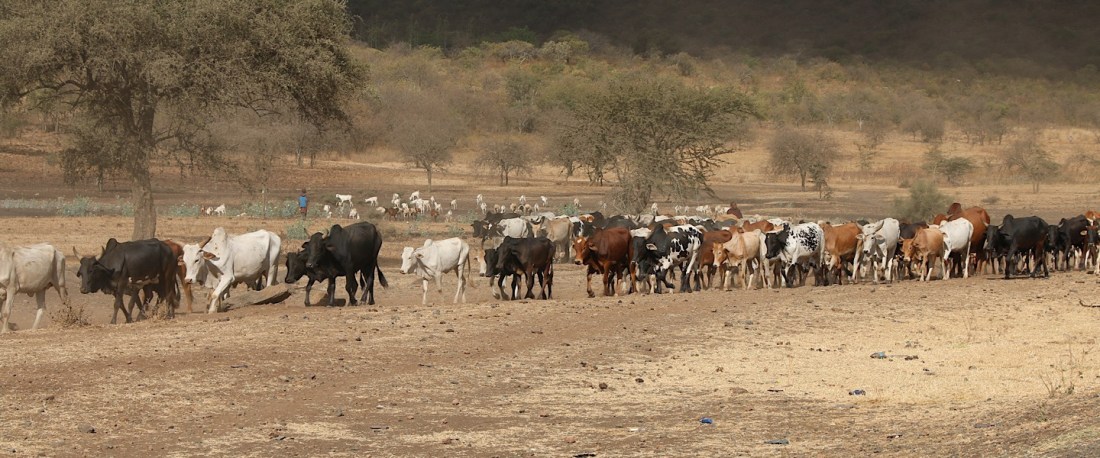 Masai tending their herd
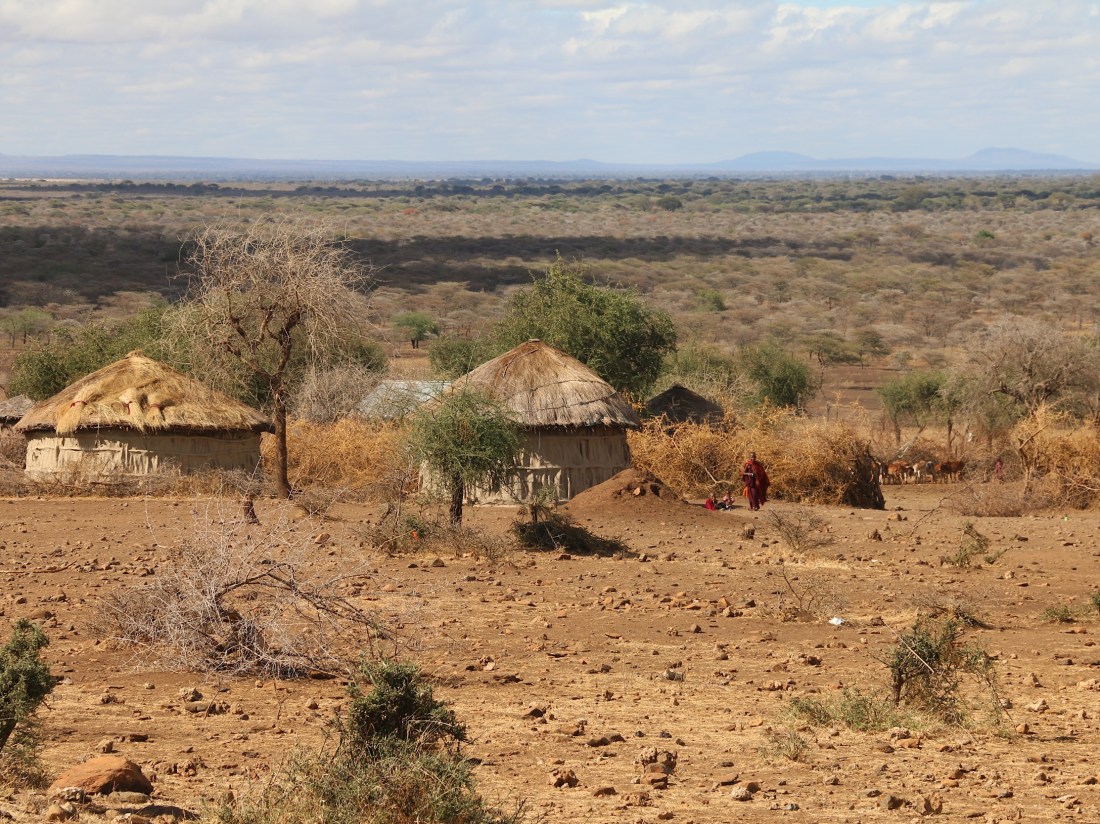
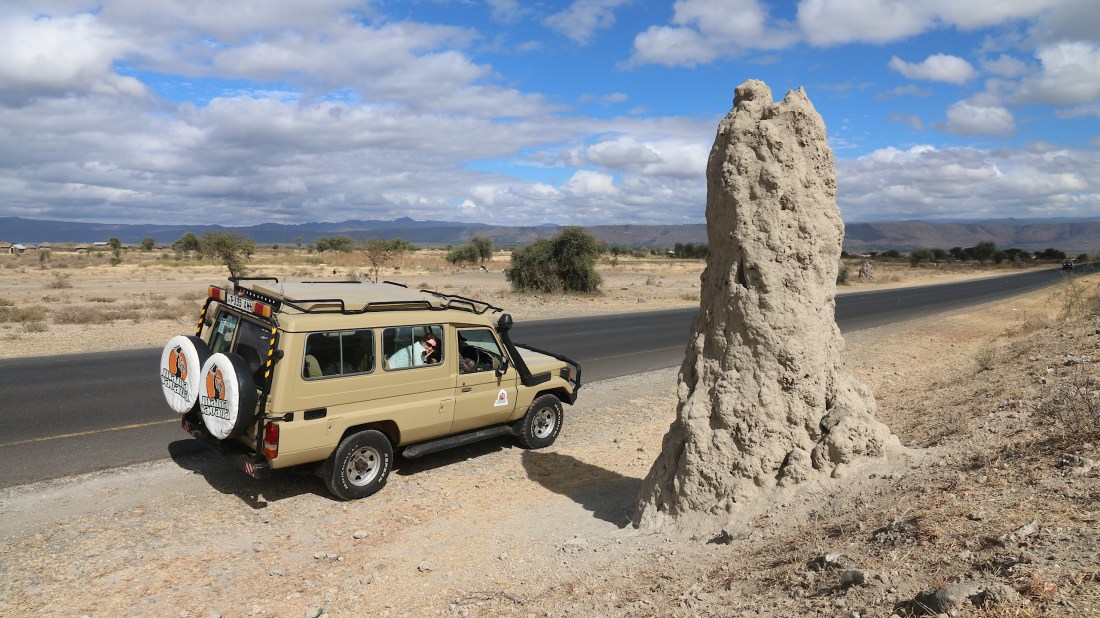
The going started smoothly enough but on entering the Ngorongoro preserve (UNESCO World Heritage site #116), we were treated to our first “African Massage”.
We started climbing the walls of the crater, which were formed 3 million years ago, not from meteor impact as I had thought, but from a massive volcanic eruption. Ngorongoro forms part of the Rift Valley, where the tectonic plates separate, creating a thinner layer of mantle, Ngorongoro was one of a chain of volcanos along this still active valley. Originally the height of Mount Kilimanjaro, a cataclysmic eruption 3 millions years ago destroyed the mountain, showering thousands of square kilometres with rock and ash, creating the vast Serengeti plains surrounding the volcano.
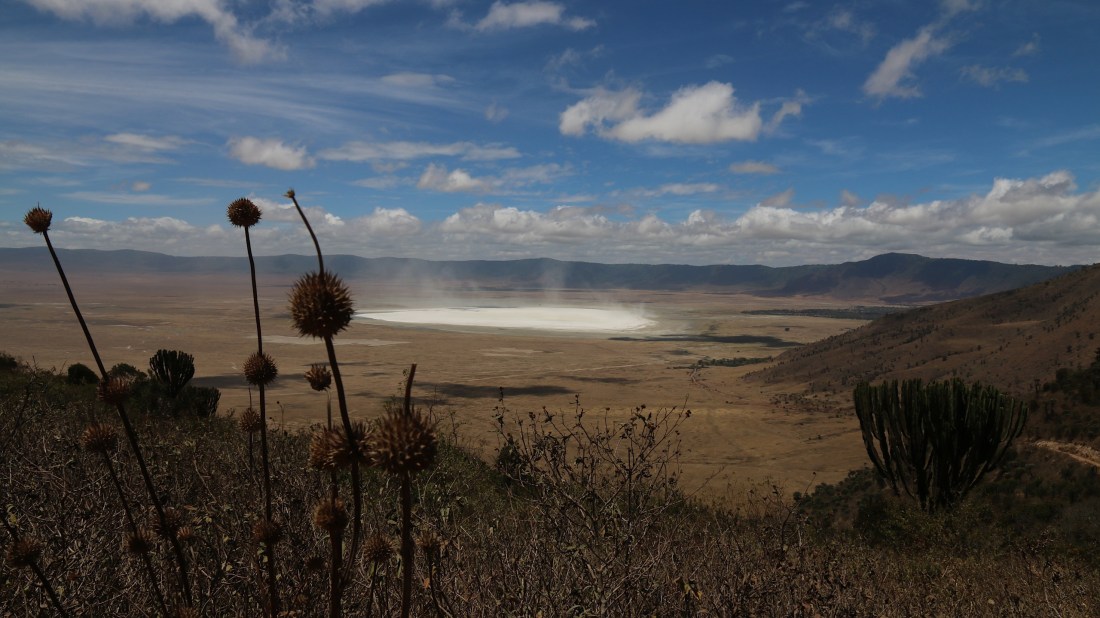
The crater formed as the cooling layer of lava and ash within the depleted volcano collapsed, sinking to create the worlds largest complete caldera. 20 kilometres across, Ngorongoro contains 300 square kilometres of protected habitat within the 2100ft high crater walls.
A winding dusty road runs up to the crater through lush vegetation; home to baboons, velvet monkeys, giraffe and rare black rhinos. The road is shared with other safari vehicles and tankers carrying fuel, supplies and water to lodges and small villages around the crater and beyond into the Serengeti.
Frank drives well, knowing the road’s dusty, rutted and water-eroded features and safely overtaking the tankers on the journey up to the rim. We came across an accident on the way up the crater walls. An HGV had careened off the road coming down the slopes. It had only happened moments before we arrived, but a large crowd had gathered to watch the spectacle. Frank speaks to a local who tells him the driver had died. His brakes had failed. We learn later that there were three people in the cab; all dead.

We stop at the top, getting our first view into the massive caldera:
We can’t see animals from up here, but soon start our descent and before long, we’re stopping… Zebra! (Shona’s excited, Zebras are her favourite); Thomson’s Gazelle, Waterbuffalo… and somehow Frank spots some shapes under a distant tree and we’re treated to our first view of a pride of lions.

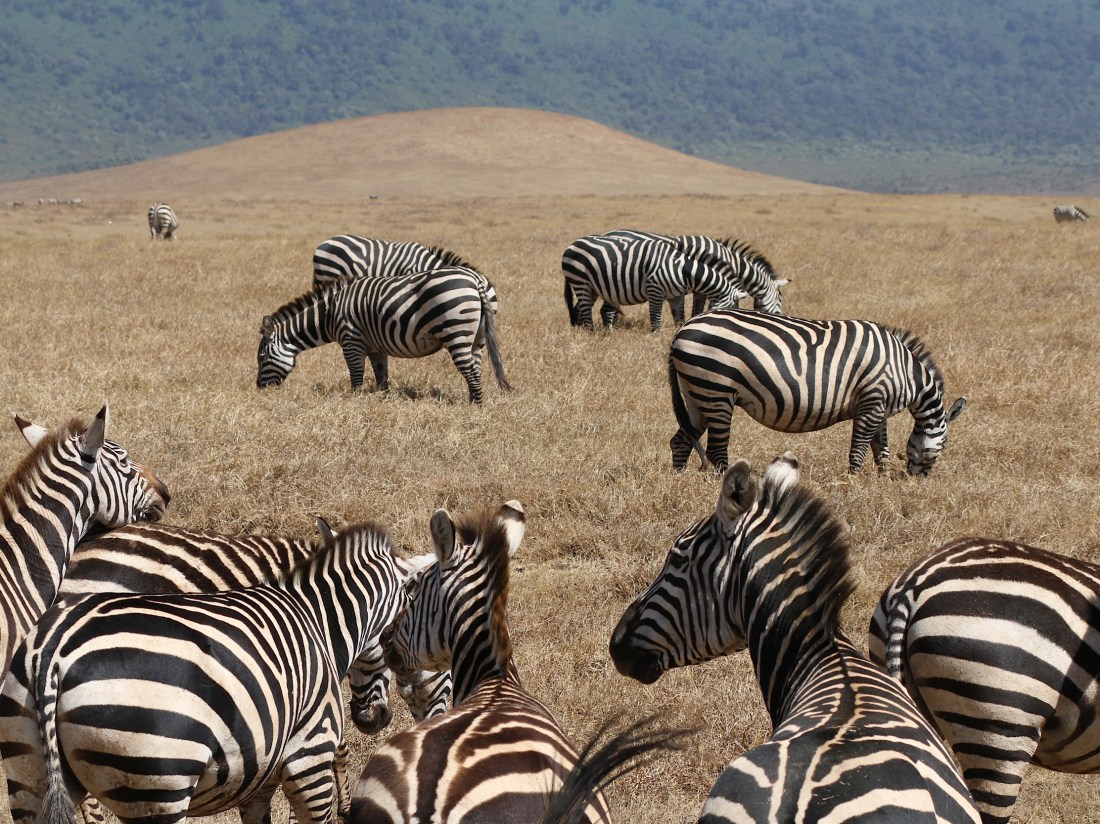
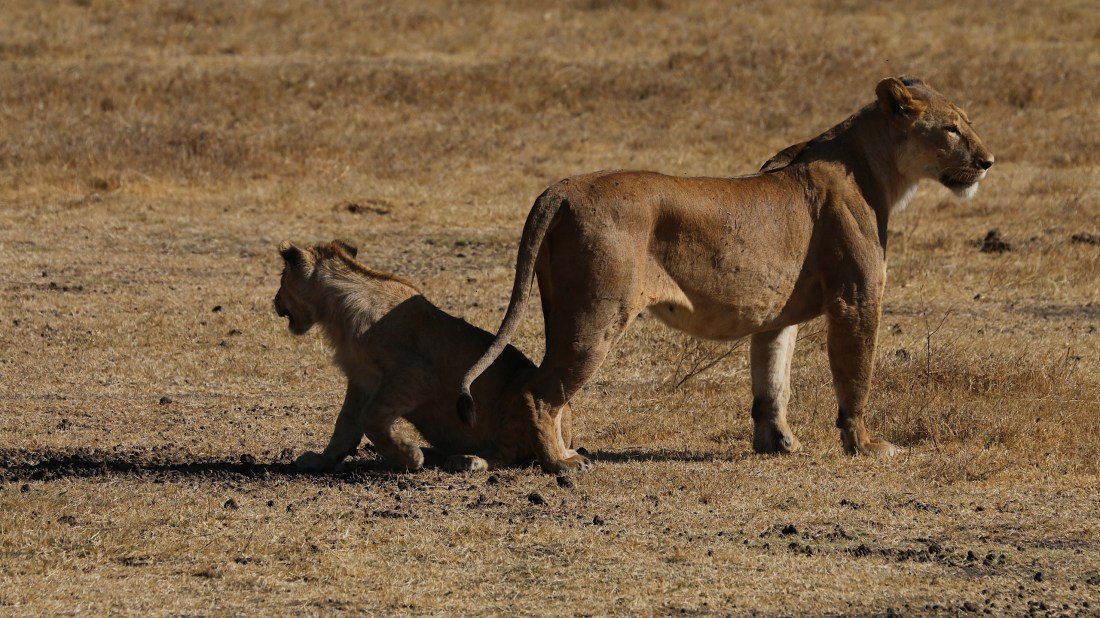
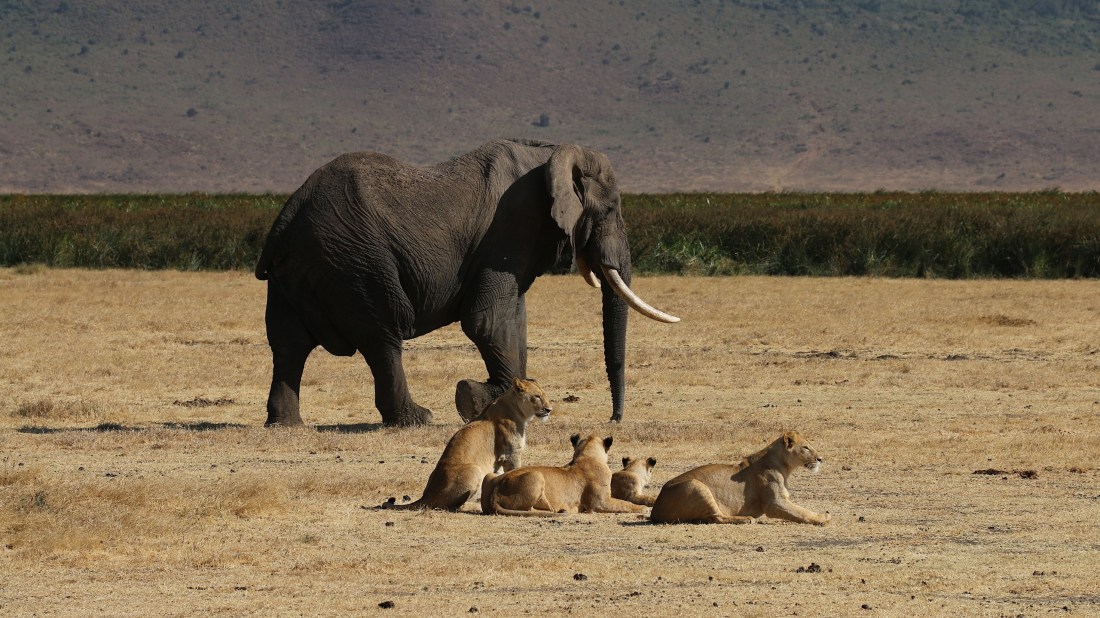
As we descend further into the crater, we realise why Ngorongoro is protected from human hand – the volume and density of wildlife is incredible. In just one day, we saw thousands of animals, including an elephant/lion standoff, hippos, giraffe, zebra, gazelle, buffalo and jackal and a rare black rhino sighting. The birds were stunning in colour and ubiquitous. We ended the day in a lodge just outside the park, exhausted from the 10 hour drive, but buzzing from an exceptional day.

 Travels with Sklaroffs