
Leaving the lodge early on the 26th, we headed back into the Ngorongoro conservation area; back up the windy, bumpy road and disappearing into the cloud blanketing the rim of the crater. Passing by the descent route into the crater, we continued along the rim, before dropping down the other side into the vast plains bordering the Serengeti.
We passed by another accident here; a safari truck had careered off the road the day before. The truck was pretty mangled. Asking Frank, apparently there was a another death here. Seatbelts aren’t worn (we had none in our vehicle), and Frank commented that more junior guides don’t know how to drive on the rutted, sandy roads.
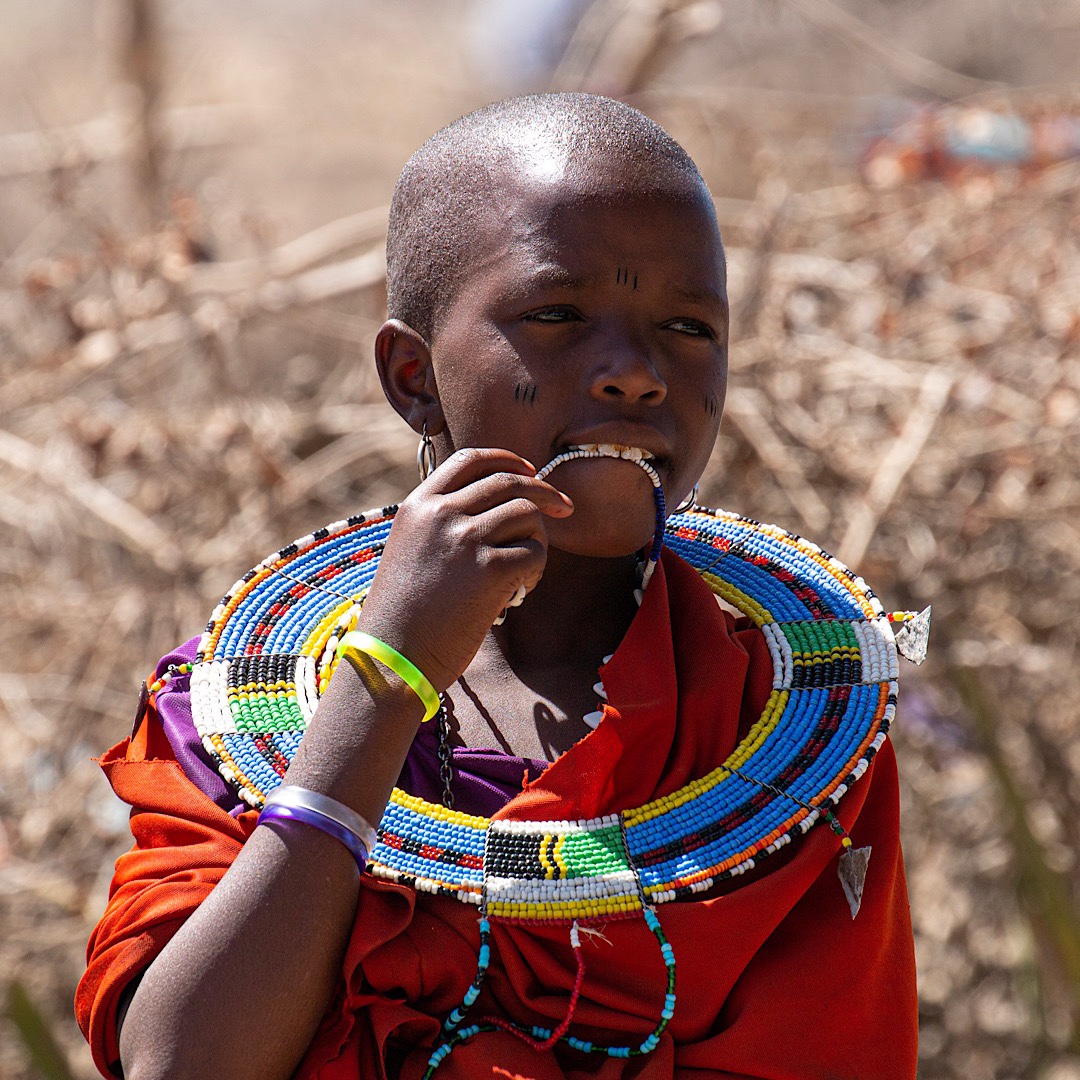
Down onto the plains, the trees become more sporadic. We still see Masai wandering alongside the dusty road, often with goats or sheep in tow. We pull off the road to visit a Masai camp. The temporary camps are built in concentric circles, often around a central tree. In the centre, bordered by a wicker fence, the animals are penned in for the night. Outside of the fence is a gap for socialising, and bordering this, small circular huts, made of branches and mud, and finally, an outer fence to keep out lions and hyena.
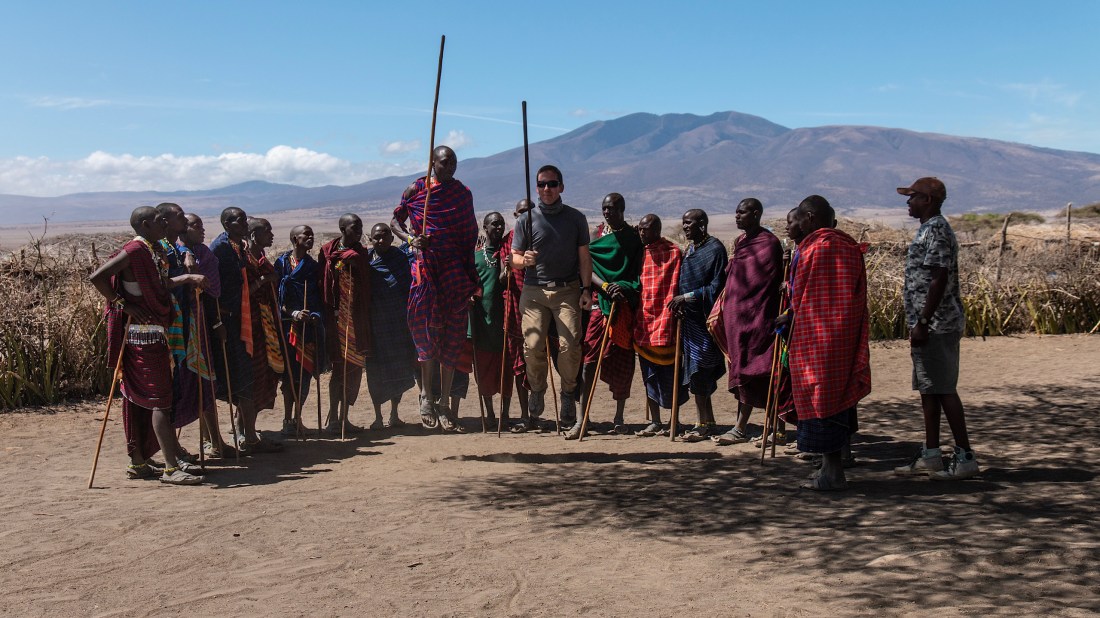
We’re welcomed with a dance (I was forced to participate), then a competition between men and women, seeing who can jump the highest along to a rhythmic chant (again, I join in). Next, we step inside one of the huts. Two beds either side, one for the children and one the parents. Each hut will have one woman in it, but depending on the night, there may not be a man. The Masai are Polygamous and have many wives.

The beds are wooden platforms, covered in a cow hide. No mattresses or pillows here. In the middle of the hut lies a fire pit for warmth and light. I couldn’t stand up inside, and the Masai are much taller than me. Shona was fine.
While surprisingly cool and quiet, the huts were dark, dingy and cramped. Hard to imagine a life lived in these conditions; particularly when other facets of daily life bear such hardship. Tending cattle in a dust bowl – the harsh winds driving relentless dust into exposed faces, only amplified by the beating sun. The only food eaten is that from their livestock – the Masai exclusively eat meat, blood and milk. How their bodies have adapted to gain all necessary nutrients from this limited diet is beyond me.
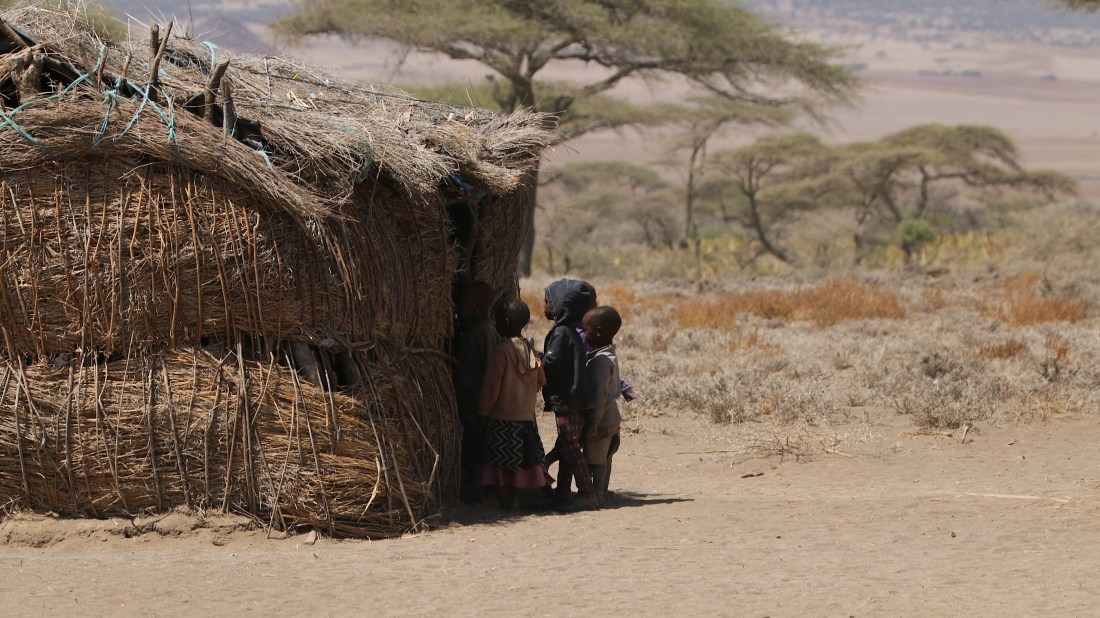

We paid our dues (charged dollars to visit and buy trinkets, which the Masai use to buy water… and mobile phones, judging by the solar chargers on the roofs!), and headed off towards the Serengeti.
We stopped briefly at a large monument with two giant skulls on top. This marks the location of ‘The Cradle of Humankind’; where two separate species of Hominins were discovered, our earliest known ancestors; dating back 1.84m years.
We drive for a couple of hours, before entering The Serengeti. Gazelle dot the plains, some atop termite mounds keeping lookout – tails wagging automatically at any sign of danger. We see warthog snuffling around and distant troupes of elephants slowly meandering across the brush.
 Travels with Sklaroffs