
The next two days are spent in the Serengeti. Unlike Ngorongoro, the Serengeti is a wide open plain, stretching from Tanzania into Kenya; 14,750 sq km in size. It’s big.
As we leave the Ngorongoro park areas, the land looks increasingly arid; brush land, sparse with trees and shrubs and very flat and dusty. Shona and I exchange looks in the back of the land cruiser, signalling a desire to head back to the rich lands of the crater. We drove on in the bone-rattler for a couple of hours, very little to see other than a great deal of dust; caking our clothes, grit in our mouths.
As we head into the central-southern Serengeti, a network of dirt tracks start to appear, and we see the dust-trails of other safari trucks billowing across the plains. Frank knows where he’s going. He also has a CB system which connects him to all the other safari guides; irrespective of the company they belong to – everyone works together here. Sporadic Swahili sparks through the radio; Frank fires off a few comments from time to time; replies come, often interspersed with laughter. The guide network provide clues to where the animals are. We’re all after the same sights: Lions; Elephants; Crocs; and the rare Leopards and Cheetahs and Black Rhinos.
Antelopes are very common across the Serengeti. We see many types, from the large Eland and Topi, to the Heartebeast and Grant’s Gazelle, and the ubiquitous Impala and Thomson’s Gazelle (a 500,000 strong population), which bound off the paths we travel along:

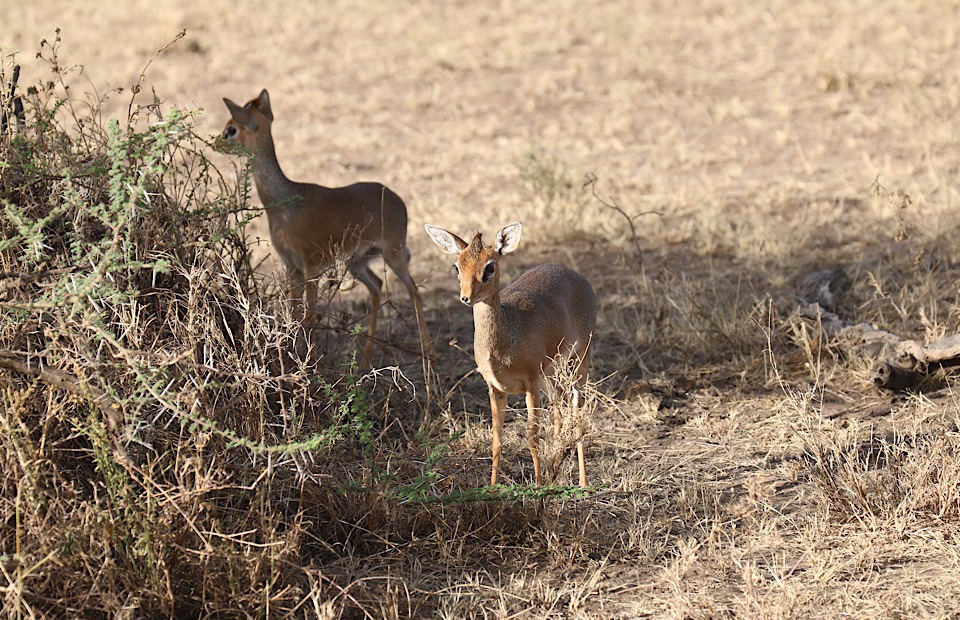
Less common are the tiny dik-diks, which are generally only seen in the evenings, but are especially cute:
Before long, we’re treated to the reason for the Serengeti’s reputation as the finest national park in Africa. Frank, through his local knowledge, remarkable spotting skills, and monitoring of radio brings us to a herd of elephants, drinking from a watering hole, just metres from our vehicle:

We watch them drink, the adults and matriarch protecting the babies in the middle of the herd, before they have their fill, and wander off – unphased by our presence. We drive 10 metres and park next to a pride of lions, lazing in the sun:

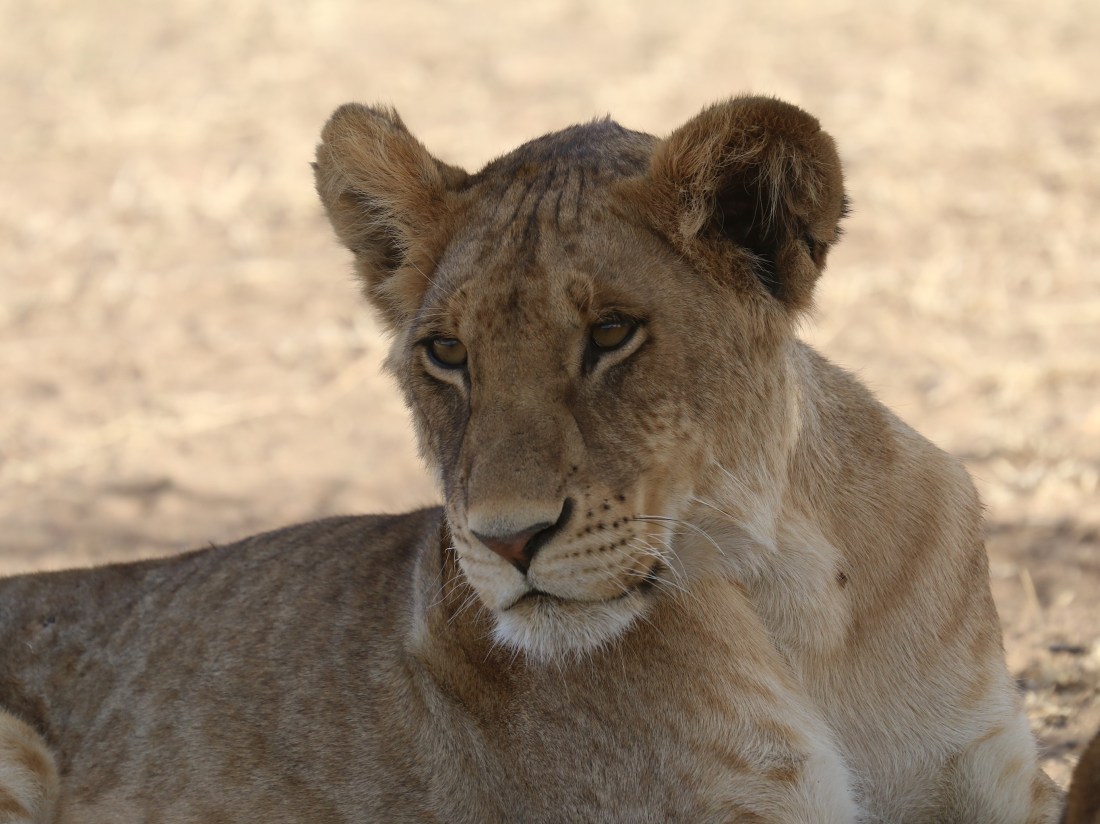
Lion-spotting continues, and by the end of our two days in the Serengeti, we’ve seen over 60 wild lions including a pair mating. Here are a couple of our favourites:
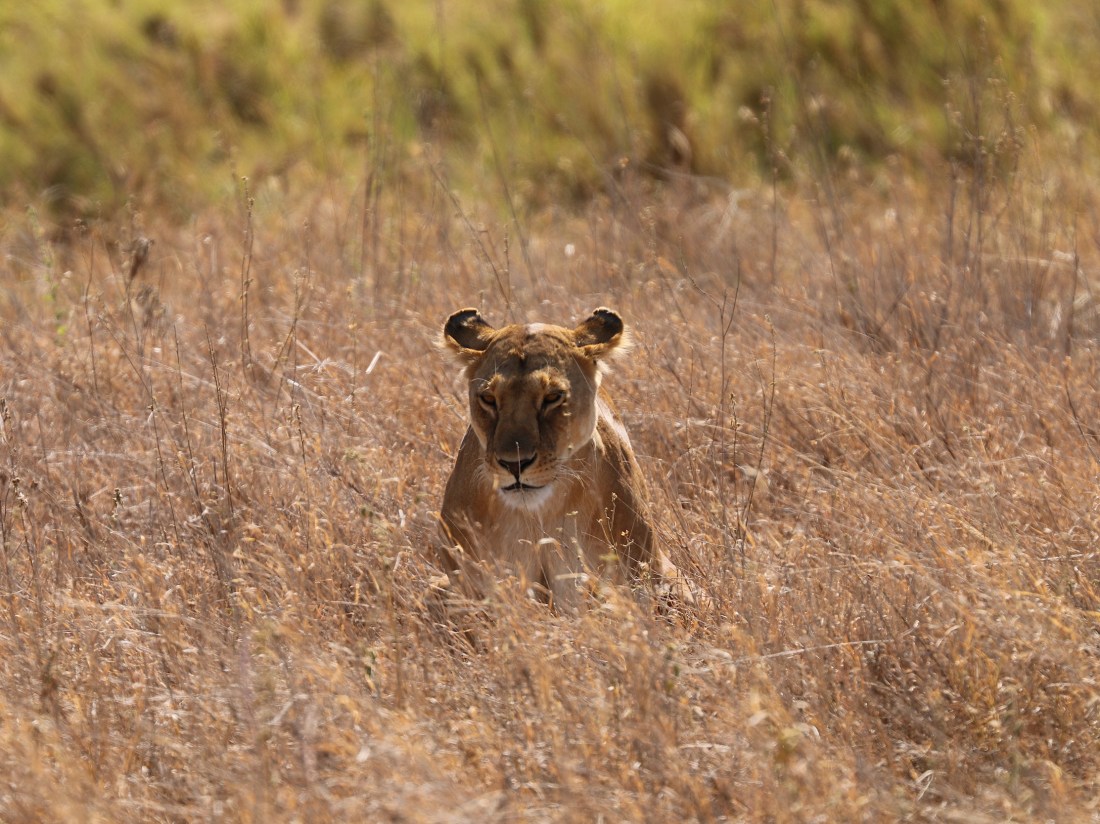

Needs a caption… anyone?
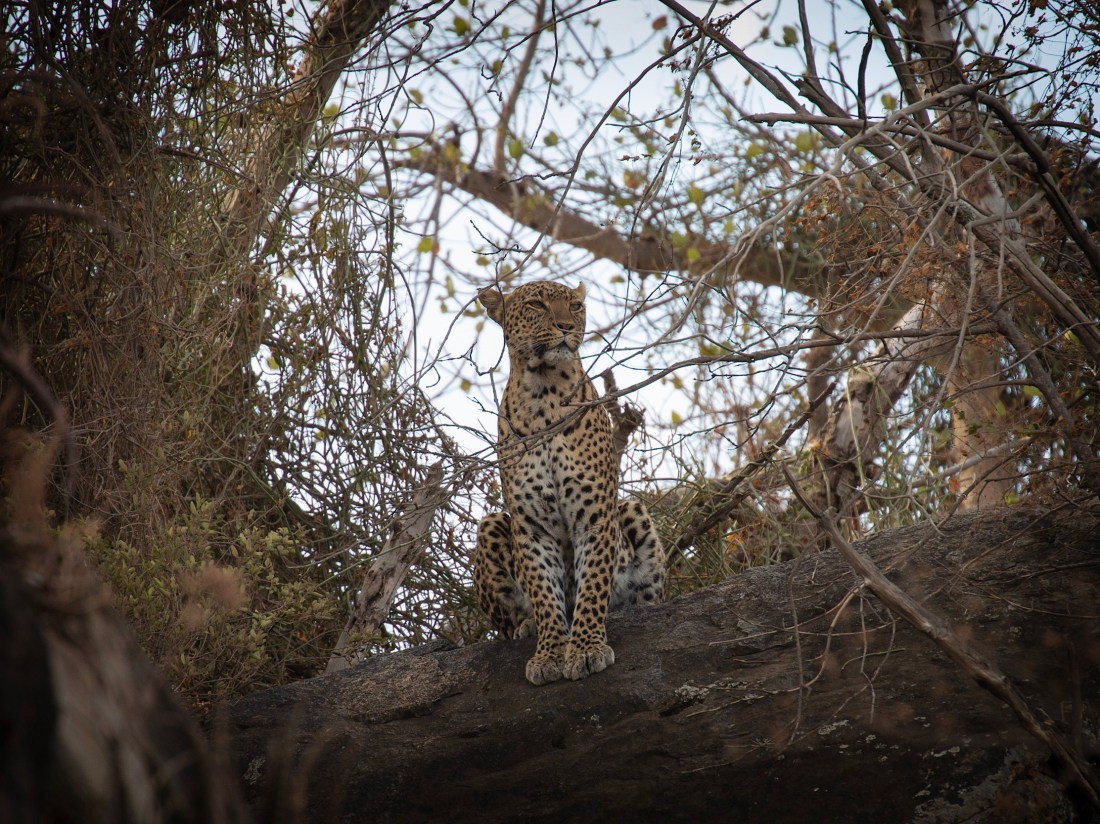
Next Frank takes us on a Cheetah hunt. Not literally; rightly these lands are protected. We head out into grassier plains; fewer trees – prime Cheetah territory. We have limited luck; a very distant siting of a pair of Cheetah sat looking for prey. We then search outcropping of rock for the elusive leopards. They preference these rocks; returning there with their prey and to raise their young. We’re in luck, we spot a beautiful leopard perched on his rock. It has cubs nearby but we don’t see them:
After an exhilarating day, we headed to our bed for the night. We’re staying in the park campsite, in tents. We arrive at ours – more glamping than camping, it has a proper toilet and a hot shower!
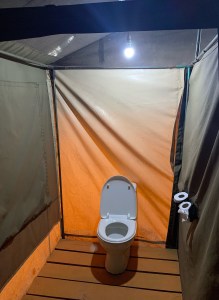
However, all that separates us from the wildlife are thin canvas walls, and overnight, we are woken frequently by chattering of hyenas, and responses from the low, guttural roars of very nearby lions. We were given very fair warning not to open the zippered windows to see what was outside, so we lie inside, blind to the snuffling, the rustling and the very deliberate pawing at the tent walls.
 Travels with Sklaroffs