
Arusha
Driving back into Arusha on our return from the Serengeti, we started to get a feel for how people live in Tanzania. A country of 55 million people in a country four times the size of the UK, Tanzania benefits from Safari and sunshine tourism from all over the world. However the local economy remains very underdeveloped.
My first observation was how everybody was busy. The roads were packed with people transporting goods; women labouring under large bundles of wood; people cycling on ancient bikes, or dilapidated scooters carrying large bales of maize on the back.

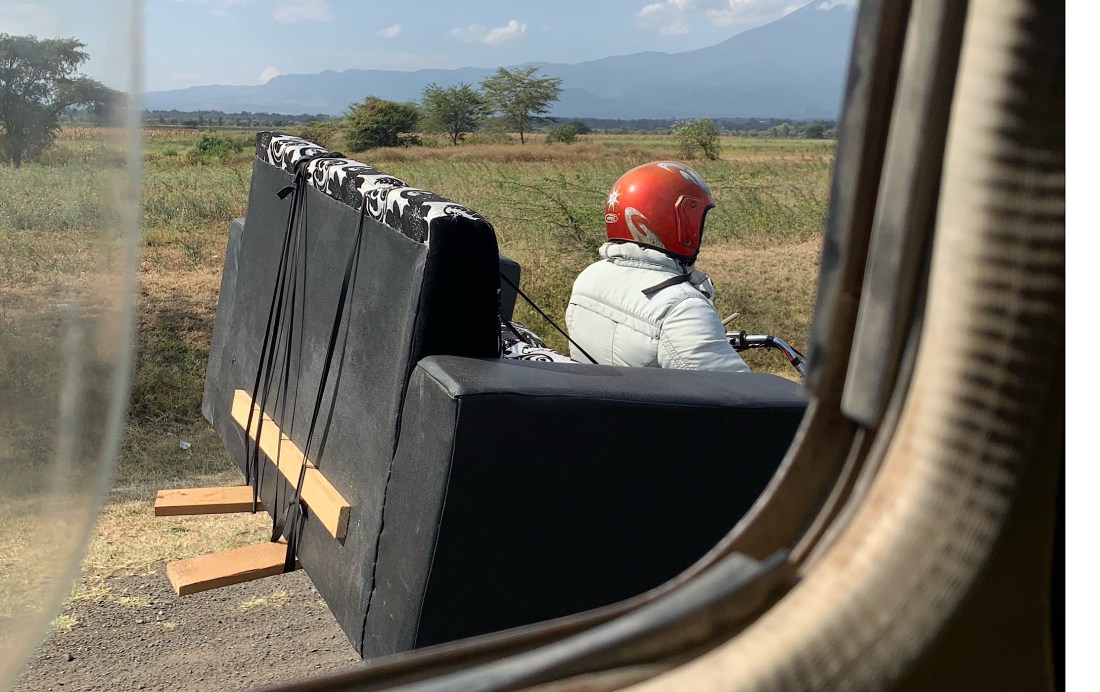
Wooden carts pulled by invisible beasts of burden, loaded with various crops or lumber. We drove past one chap on a motorbike with a sofa on the back:
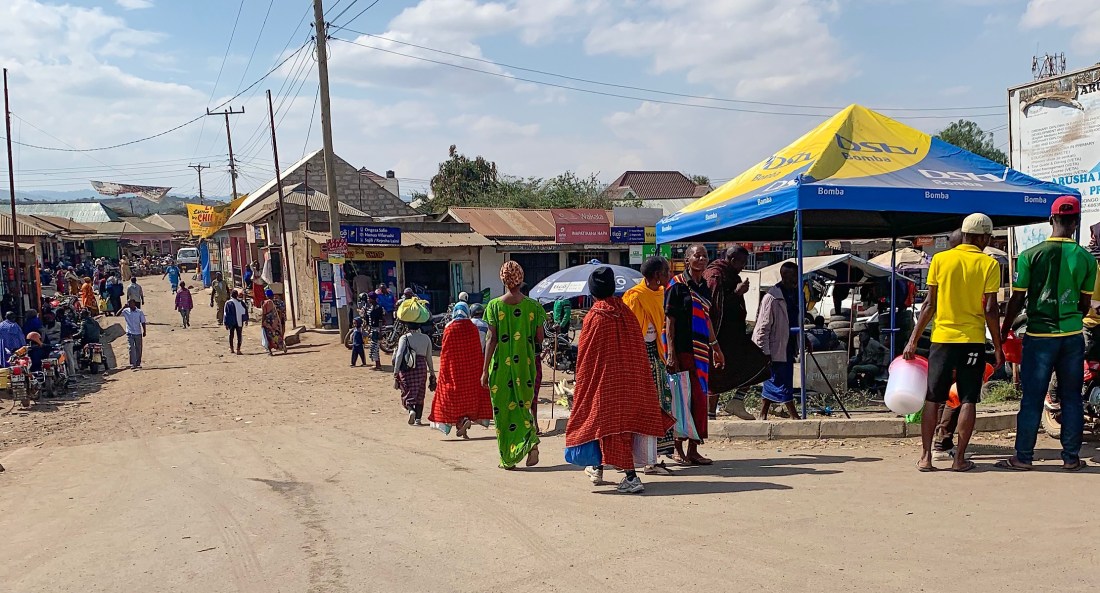
In the towns, everybody was hustling. There was no sign of big business here; no office blocks or large shops. Instead small garage-like outlets providing every service you could need, from welding to car tyre fitting, to groceries or haircuts. Groups of men sit on scooters – the local taxis waiting for fares. Between the shops and alongside the roads, street peddlers filled the gaps, selling their limited wares – a few pairs of shoes; some home-made carrier bags; bags of nuts. The women were all dressed in amazing colours; often with heavy loads balanced on their heads.
Zanzibar
After staying in Arusha for the night, we made our way to the Kilimanjaro airport for our flight to Stone Town, Zanzibar. A smooth flight, we were met at the tiny airport and driven the hour and a half to the other side of the island.
We initially drove through the ‘new’ part of Stone Town. It looked anything but new. Single-storey buildings lined the streets; lines of lock-up garages open onto the roads as individual businesses. Between the garages and the road, unfinished dirt pavements are dotted by piles of rubble; presumably waste from the construction process, never removed. There’s rubbish, dust and rubble everywhere.
We feel very uncomfortable and very privileged. This is a functioning economy, but people are poor. Unemployment sits at around 10% and the average wage is very low at £129 a month (2018 figures). Tourism is key and provides vital injection of cash into the economy. Everywhere, people are trying to hawk tourist goods or sell services. I was ‘helped’ to take out cash at an ATM (cost me $1); to wash and dry my hands in every public restroom (another $1). And while we know that bringing our tourist dollar does support the locals, it never reduces the impact and feelings of guilt at seeing poverty on this scale.
Breezes Beach Resort
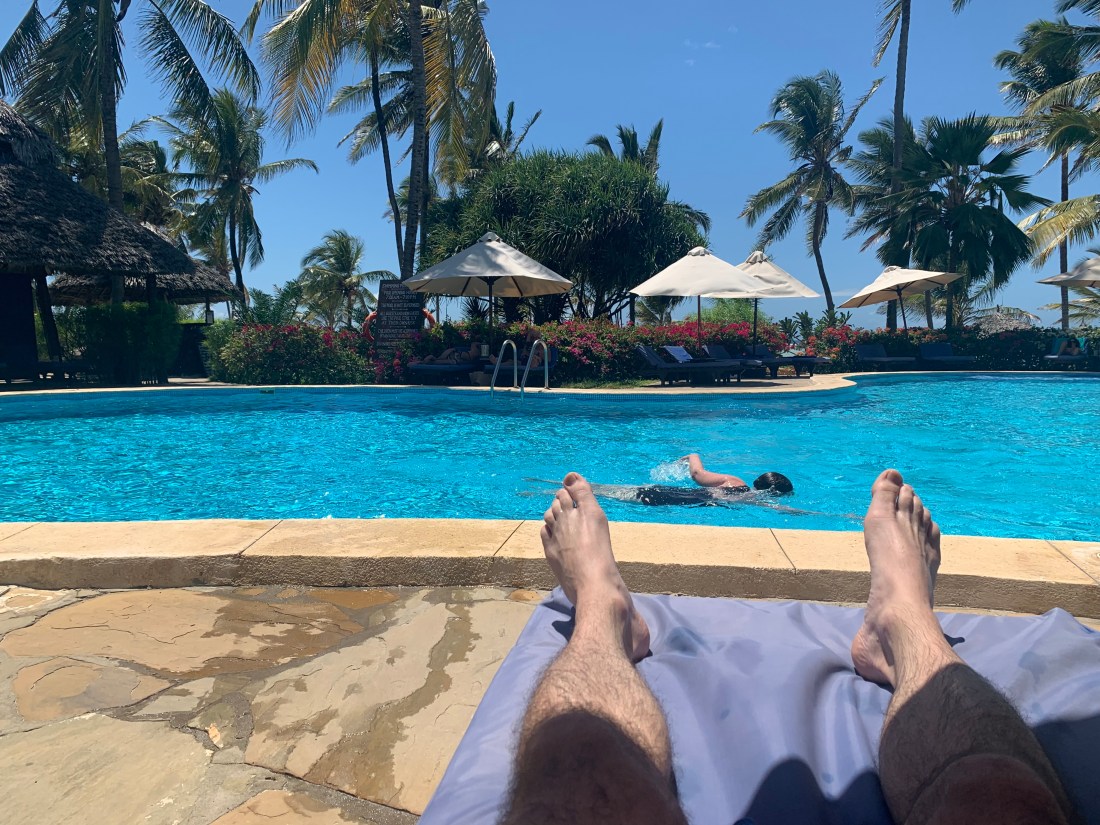
Arriving at our resort, the contrast against this backdrop was palpable. An oasis of beautiful grounds, a lovely air-conditioned suite with private terrace. A stunning 30m pool and a huge beach (at low tide).
We came to Zanzibar to dive. We’ve dived in the Indian Ocean before, in the Maldives and it was spectacular. We’d provisionally booked up for 8 dives through the dive centre attached to our resort.
The morning after arriving, we headed down to the centre and got geared up – full 5mm wetsuits and lots of weights. This wasn’t going to be the warm shallow reef dives we’ve gotten used to. Shona had taken a seasickness tablet, as we’d been warned the day before that the boats were quite small and subject to a bit of bouncing around.
Worst. Dives. Ever. The journey out to our first dive site took us over large rolling waves. We’d arrived at a new moon and the tides were over 4m. This caused both big swell, poor visibility, and when under, massive surge. I was feeling ropey going down the first dive. Sea life was pretty minimal, and none of the larger sharks, turtles or rays that we were hoping for.
Surfacing after the first dive, I was now very green. Shona was feeling it too. We had to wait out a ‘surface interval’ (necessary time between dives to prevent nitrogen bubbles releasing into the bloodstream leading to decompression sickness, or ‘The Bends’… a good idea). Unfortunately, this surface interval was sat out on the tiny dive boat, which was being tossed around on the waves like a lost flipflop.
Shona was sick. And I was in some state by the time we went back under, but there’s less movement underwater, so down we went, for another pretty poor dive. Coming back ashore, we both started to improve, but decided that we wouldn’t dive the following day. Or the next. Or the next.
Instead, we spent our time swimming, going to the gym or a run, eating copious amounts of good food and (in Shona’s case) catching up with sleep. It was pretty idyllic and very relaxing.
Last Day
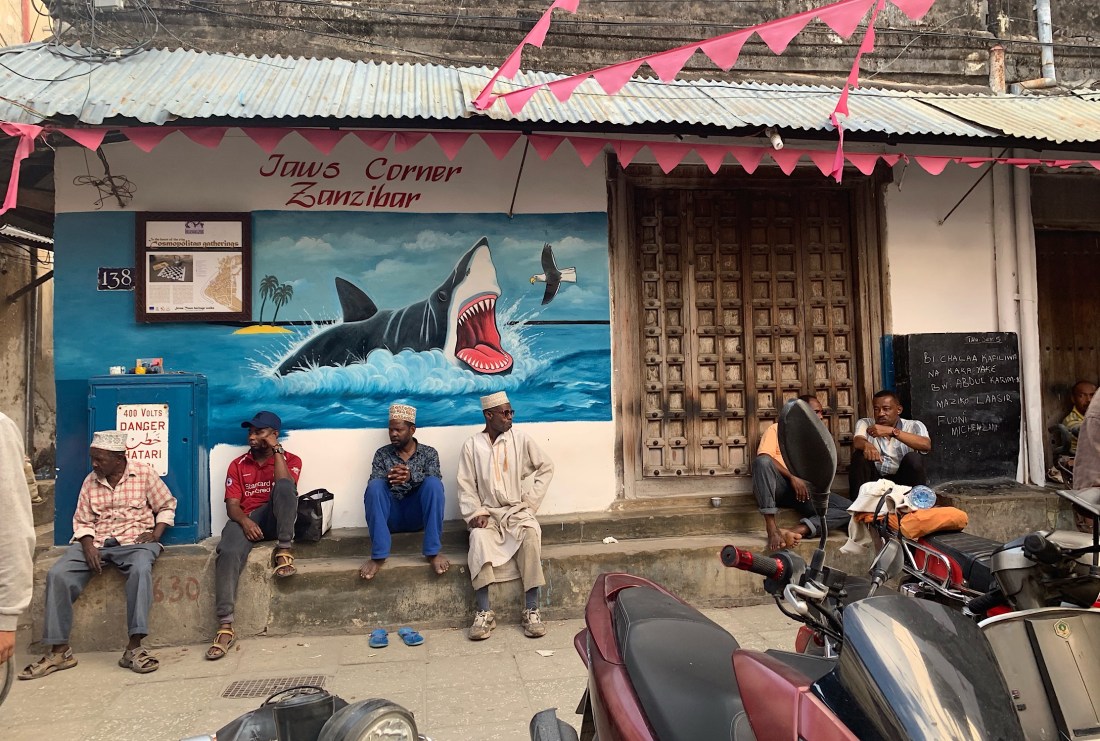
On our final day, we left the hotel early and headed to Stone Town, for a guided tour around the old town. A chequered history, Stone Town was the centre for the South East African slave trade for centuries. We visited the slave auction house and seeing the absurdly cramped underground holding pens for 70+ slaves, the iron shackles, and the harrowing museum telling the history of the trade, both instantiated by, and later being outlawed by Britain, we were again hit by white-guilt.
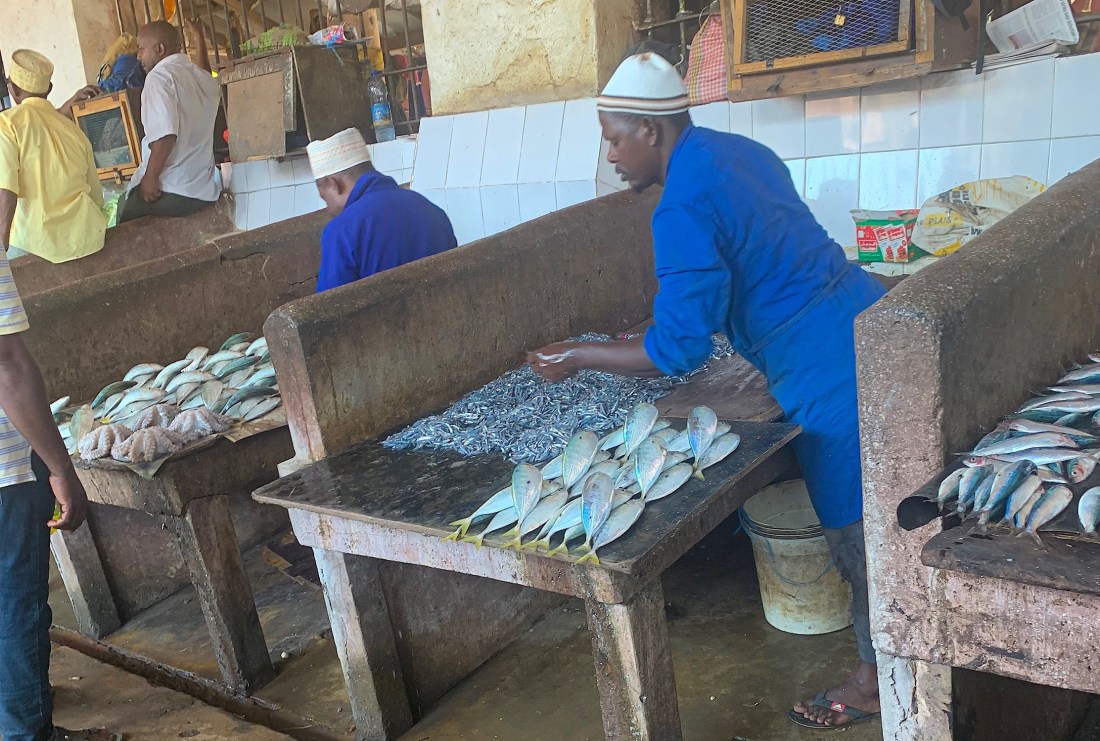
After the museum, we stopped by a local market/auction house selling fruits, nuts, vegetables and the days’ catch of fish (huge Marlin, Tuna, Barracuda and less pleasingly, Manta Ray, Parrot Fish and rarer delights of the ocean)
After lunch, we saw the birthplace of Freddy Mercury – a celebrated figure, despite the Tanzanian attitude towards homosexuality, which can carry a life prison term.
Zanzibar was an overseas territory of Oman from the late 1700’s and under the protectorate of Britain until 1963. The island had been ‘governed’ (ruled) by the Sultanate of Zanzibar for centuries, however when Britain withdrew this support, in 1964 the locals ejected the last Sultan – who now lives in the UK – and became part of the republic of Tanzania. We visited the historic dilapidated residences of the Sultans, an old Portuguese fort. A bit of a shrine stuck in a 1960’s time warp.
Our flight from Zanzibar on Precision Airways was due to depart at 20:30 for a connecting flight from Dar Es Salaam in mainland Tanzania to Amsterdam, so after a great little tour of Stone Town, we headed to the Airport.
Precision Airways don’t live up to their name and the flight was 45 minutes late (even the excellent app Flightradar didn’t know where they were). A rushed transfer and we made it onto our overnight flight to Amsterdam, where I’m sitting now, on a 5 hour layover before our last hop back to Edinburgh.
And here endeth our African trip. A cracking couple of weeks. The blog will likely be silent for the next 9 weeks, as I get my arse in gear planning and preparing for the next big adventure… Next stop, China (after a quick trip to Luxembourg in October).
 Travels with Sklaroffs