
We’re back on the road. We have embarked on the first leg of a 7 country, 12 week tour around Asia, Australia and the South Pacific.
China. Days 1 – 5
Leaving on Friday morning, we transferred via London, to land after a sleepless flight in Shanghai on Saturday morning.
Shanghai.
A city of 24 million people. The largest city of the the most populous country in the world. The financial centre of China, with a glittering skyline and palpable wealth.
We came with preconceptions of China. We expected a huge culture shock, anticipating real challenges with poverty, language, food, and the cultural norms.
I’m delighted to say that the preconceptions have been broadly misplaced. Shanghai is huge, but it’s modern, absurdly clean, and efficient. The smog we expected was minimal. Since the ‘war on pollution’ was announced in 2014, China has spent 100’s of billions drastically reducing the levels of particulates across its cities, extending residents’ lifespans by years. Removing coal-fired power stations and boilers, reducing traffic, mandating electric scooters (also called silent killers, as without engines, they glide around, killing folk). All of this has led to a vast improvement in air quality, at an eye-watering speed; only made possible by China’s political system. This would have taken decades in other parts of the world.
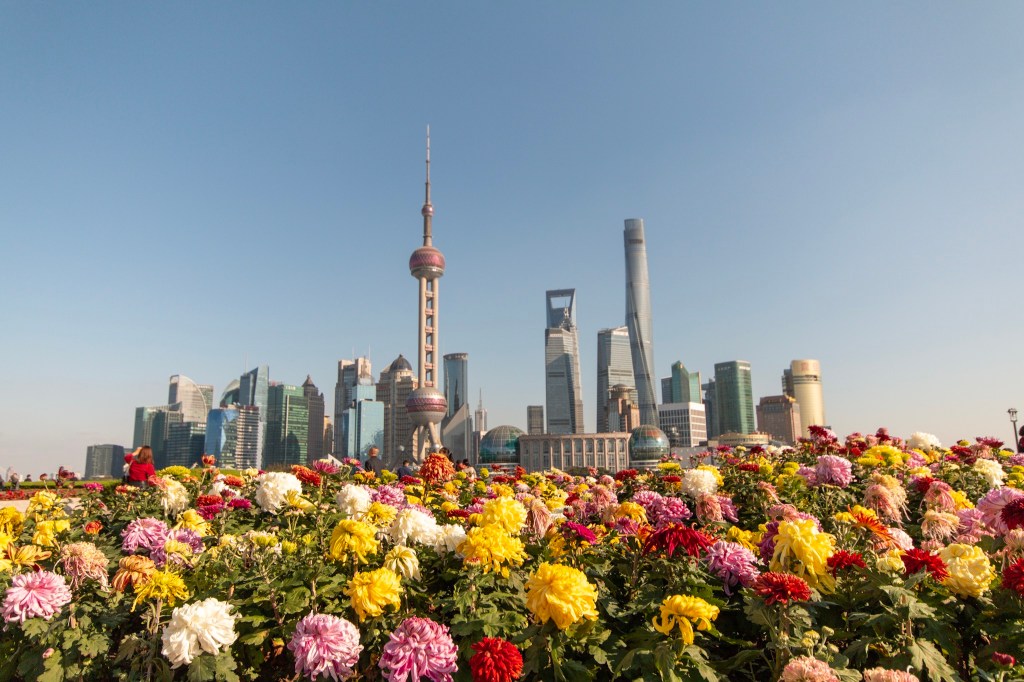
We spent our first day catching up on a little sleep, then wandering down to The Bund, a riverside walk overlooking the towering financial district island. We headed to a shopping area, replete with glittering malls, packed with the nouveaux riche hungrily gorging at the trough of luxury goods.
Shona spotted that we were walking against the tide on a pavement. Looking up, we realised that like the traffic, people walked on the right hand pavement. And returned on the opposite side. This rule-obeyance was evident everywhere, with the whiff of oppression.
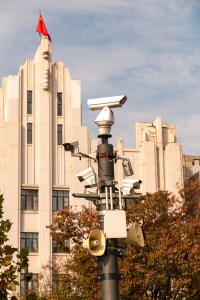
There’s a lot of surveillance. Large camera rigs monitor The Bund and police and security services roam, perhaps to prevent a repeat of the 2014 Chinese New Year tragedy where 36 people were crushed to death, but this is modern China, where you are monitored. Where you need a passport to catch a train. Where if you tried to book another journey with the same passport, you would be denied… even on another route.
We are on a group tour across China – booked for ease of travel, in a country where English is sparsely spoken. We met our group that evening, and shared a buffet dinner. It’s a large group of 16 people, plus our tour leader; conventionally named Alan. They seem like a good bunch; usual mix of couples and singles. Mostly Australians, with a smattering of Kiwi and Danish.
After dinner, we all slink back to our rooms, in various stages of jet lag. Shona and I sleep through the night… the usual false dawn lulling us into a false sense of security that we’ve fixed it. We spend the next day touring around Shanghai, visiting temples and seeing the towering skyscrapers up close. We spot a shop selling the Chinese version of Tesla. They look uncannily like Tesla’s.
Xitang
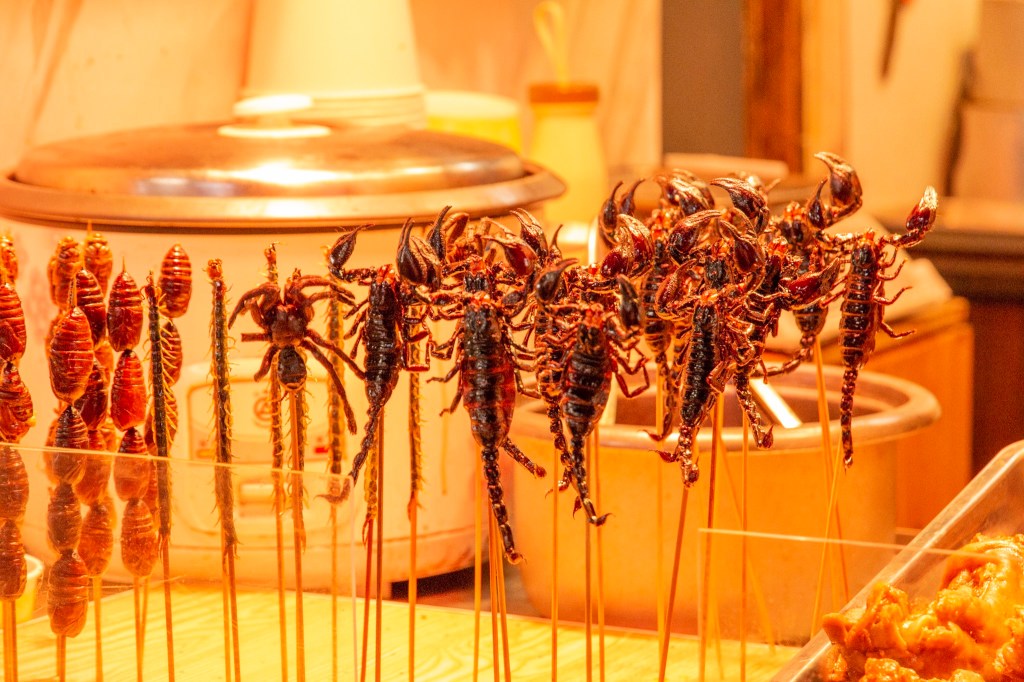
After the tour, we make our way by bus to Xitang (pronounced something like ‘shit-tang’). We fall asleep en route. Overnight at Xitang and a 03:50 awakening for Ben, we wander into the old ‘Watertown’ the next day. For 1000 years, this site has been the province of locals who lived and fished on rivers crisscrossing their way through dwellings. Now, it’s a tourist attraction, appearing in the blockbuster film Mission Impossible 3. With myriad stalls selling tat or very ancient food; old reheated pork knuckles or trotters, tarantulas and scorpions on sticks, random meat (very possibly Dog), it’s a place to be a little wary. I tried a scorpion leg. It was crunchy.
We found a reputable place to eat, ordering by pointing at pictures of food, and receiving something that didn’t resemble the picture, but tasted good. We then walked around a little more before leaving to get back to the hotel for 14:15 to get a bus back to Shanghai for a 18:00 overnight train to Xi’an (pronouced something like ‘She-an’).
The overnight train was described as an ‘original experience’. The 15.5 hour journey is on a traditional trains comprising ‘hard sleeper’ corridors of bunk beds, or the ‘soft-sleeper’ 4-bed lockable rooms. We were booked on the hard sleeper, on advice of our booking agent. We’d been told we’d be with our group in rooms of 6 people and if we upgraded, we’d be sharing with strangers in unlocked compartments.
It transpired that this wasn’t true. Alan advised that we’d all been booked on bottom bunks, spread along an open corridor (basically a hostel on wheels). No privacy, no locks, drop toilets, and as there isn’t anywhere to sit in the evening, the locals above us would be sitting on our bottom bunks until lights out.
Shona and I upgraded. We managed to change our tickets at the station for about £12 and along with another couple in our group (and a small amount of negotiation with a local woman on the train), we shared a cabin with Shaun and Kayla from Australia. We all slept pretty well and woke up the next morning to arrive into Xi’an (‘She-an’).
Xi’an
Xi’an is a medium sized city; a snip at 10 million people. Long before we draw into the station, we pass farmland, which gives way to hundreds upon hundreds of identical residential tower blocks. Many of these are under construction and they appear randomly dotted in the scrubland, connected by large concrete flyovers. A large power station belches out smoke in the middle of this mass suburban sprawl. One of many hints of the challenges facing a communist society adopting capitalism.
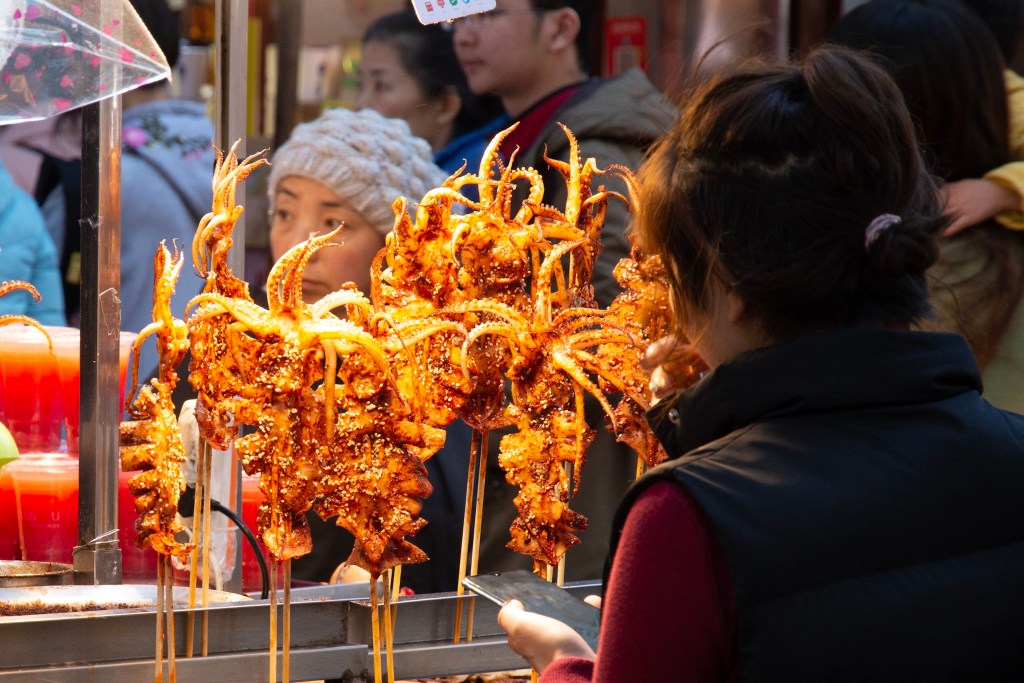
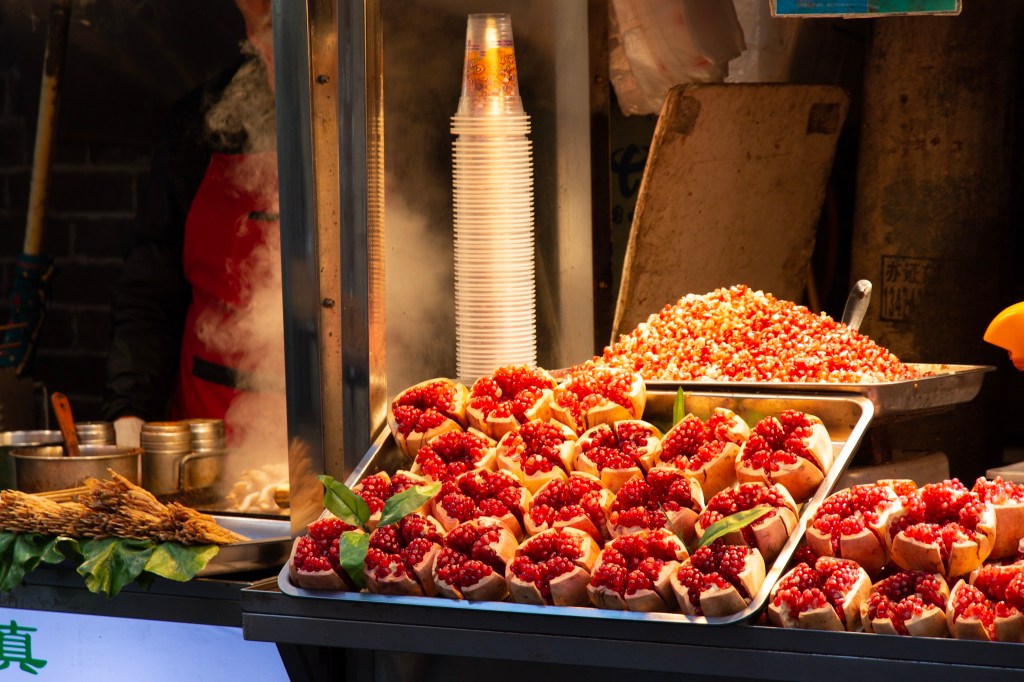
Our hotel is basic, but fine. After checking in, we tour around the city, exploring the Muslim Quarter which is awash with crazy food stalls selling flattened fried squid, or tripe, or all manner of bizarre looking, mostly inedible local delicacies.
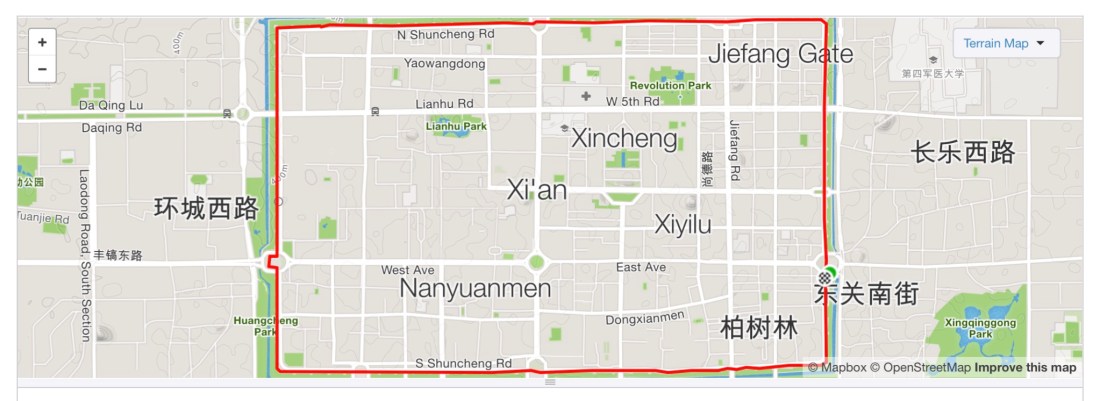
From there, we make our way to the 600 year old city wall. At 12m high, and 14m wide at the top, it dominates the city. Climbing onto the wall, we hired bicycles and pedalled our way the 14km around the wall, creating my favourite ever Strava Route:
Later that evening, we took in a huge light show celebrating 70 years of the People’s Republic of China. Along a wide promenade, extending 1.5km, this enormous display speaks to the bourgeoning wealth of this country and the tradition of celebration.

The main reason for visiting Xi’an was for the Terracotta Army. Discovered in 1974 by four farmers digging a well, 8000 individual terracotta statues, chariots and horses have now been identified, lining up in funerary protection of Qin Shi Huang, the first emporer of China. Most of the 200 BC statues remain buried, awaiting the preservation methods needed to maintain the integrity and colours of the unique sculptures.
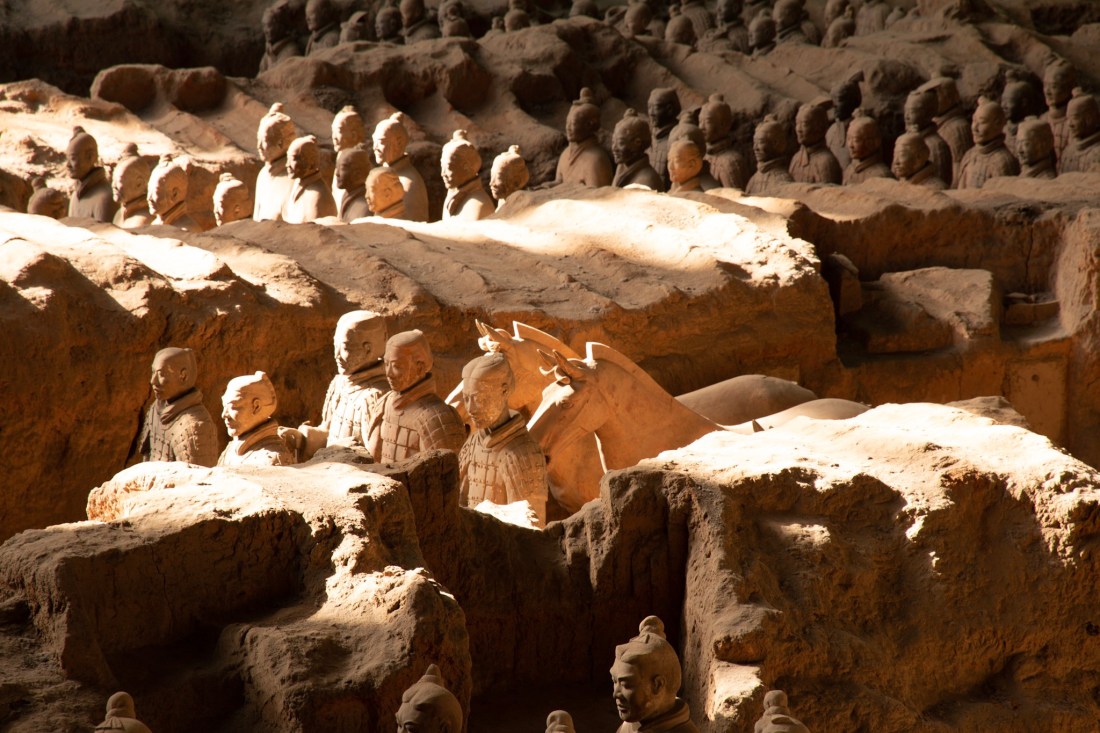
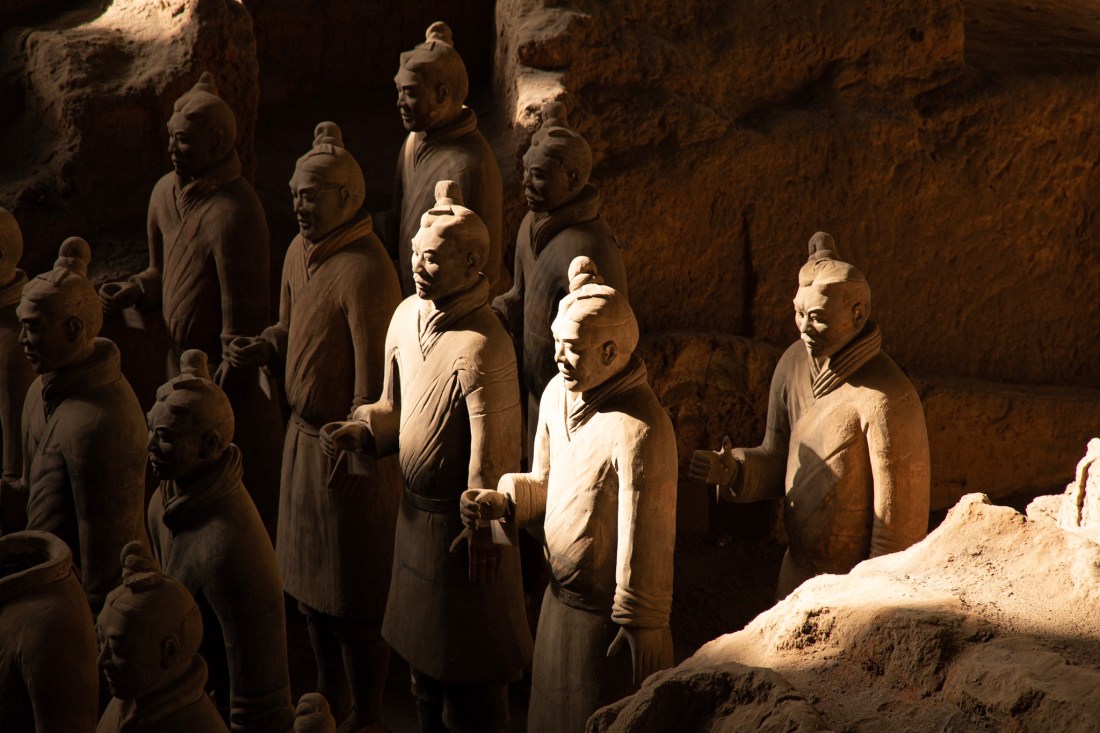
The complex is an impressive sight; huge buildings now house the excavation activity. The first – where 1000 warriors are on display is enormous; the size of an aircraft hanger. Here, the statues have been painstakingly restored, as the vast majority have been found in many pieces, shattered by the collapse of wooden beams holding up the burial earth above the rows of warriors.
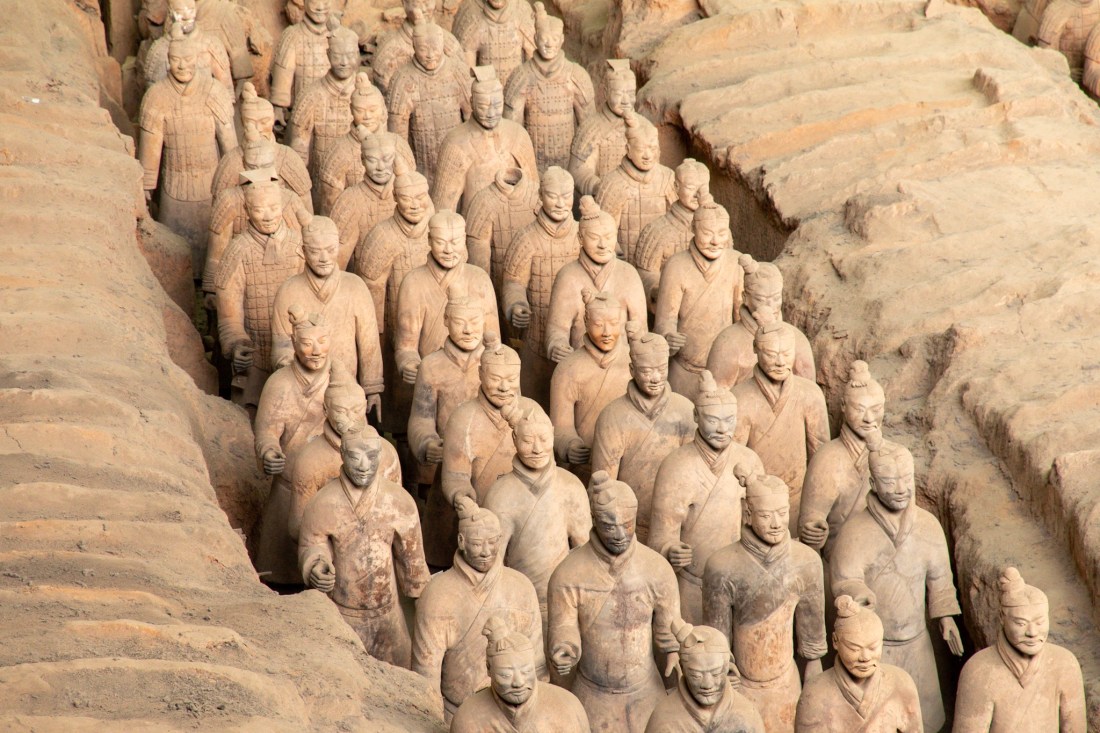
It’s an awe-inspiring sight, and reminds us of the sheer size, scale, and deep history of China.
 Travels with Sklaroffs