
Day 6 was a travel day. Turns out, China is quite big. It takes a while to get to places. We were up early and headed to the train station in Xi’an to catch a bullet train to Beijing. We were on one of the older trains which topped out at about 300kph. They’ve recently launched a new breed running at 350kph, which are apparently luxurious. China builds bullet train infrastructure at a third of the cost that it takes other countries. I asked if this was because labour and raw materials are so cheap. Apparently China has also developed a range of impressive machinery to speed up the track deployment, and prefab concrete stanchions. Also, it is very easy to relocate people, the greater good being more important than personal inconvenience. More on this in a future post…
The train journey was 4.5hrs, followed by another 4 hour bus ride to Miyun, where we stayed at a farmer’s homestay for the night, playing Mahjong after dinner.
The next day, we had breakfast, hopped back on the bus and drove to the Jinshanling section of the Great Wall. It was about -3ºc and as we’re visiting China outside of the tourist season, the place is deserted. We made our way up the many steps and paved pathways towards the wall. Heating up as we climbed, layers were discarded until we reached the top of the first section.
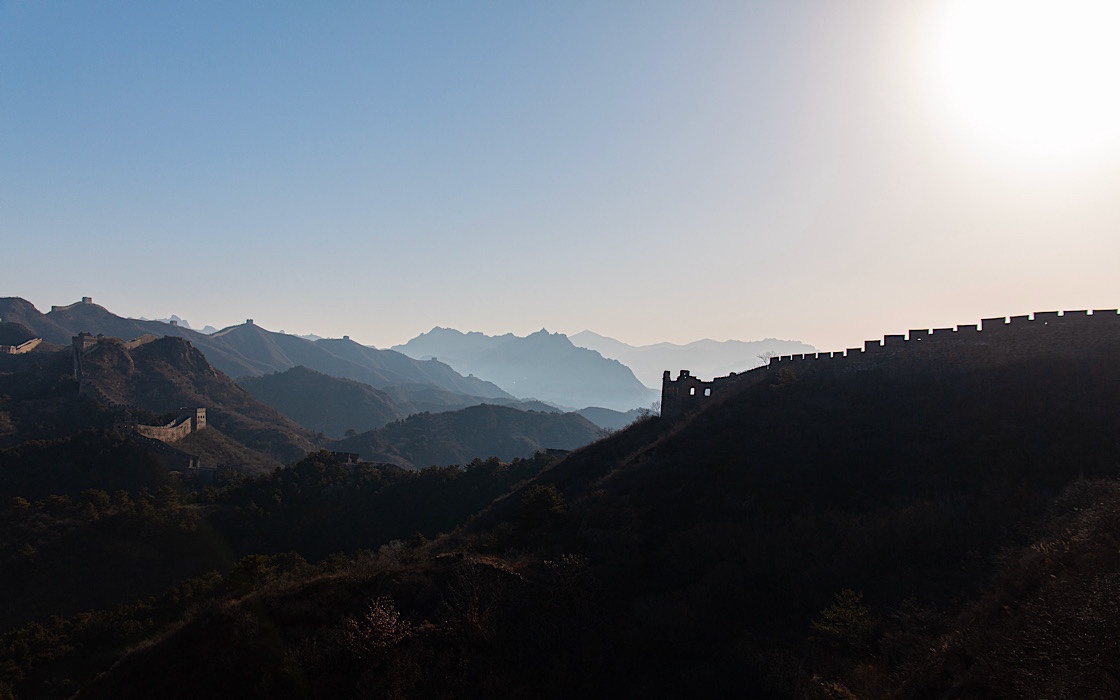
We were greeted with a breathtaking view; morning mist cast into relief a multi-leaved cascade of mountains, the rising sun silhouetting the Great Wall’s escarpments. Our eyes follow the ancient defences, snaking along the ridgeline, dotted with watchtowers at the peaks.
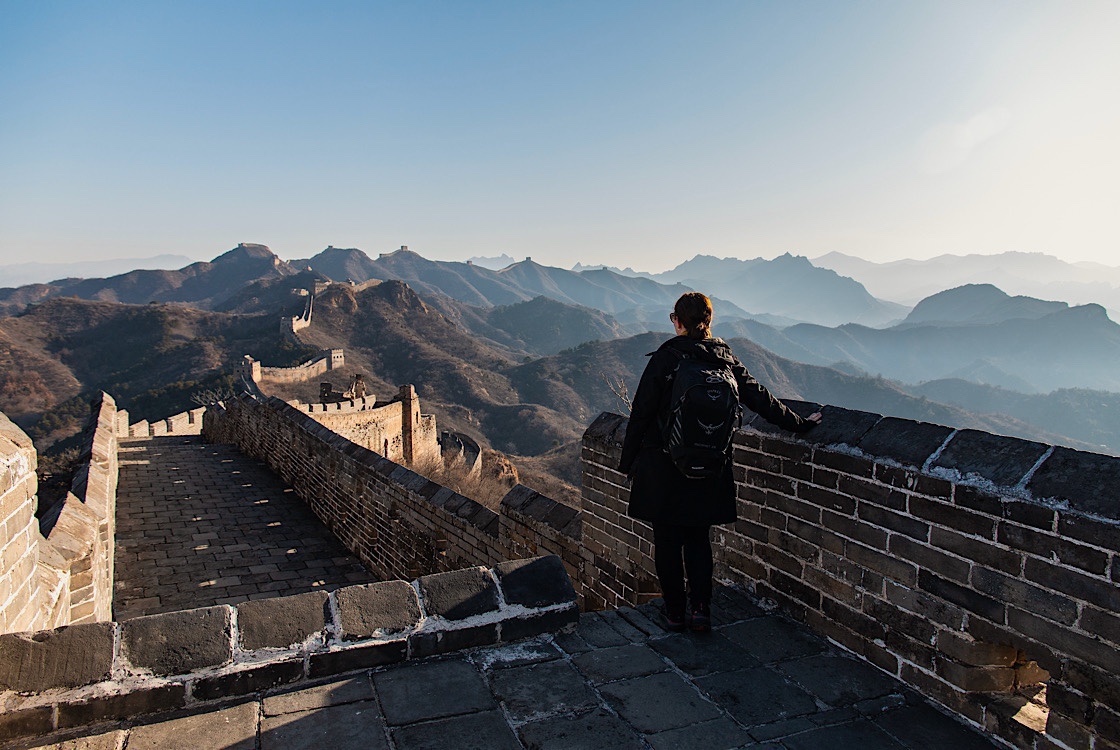
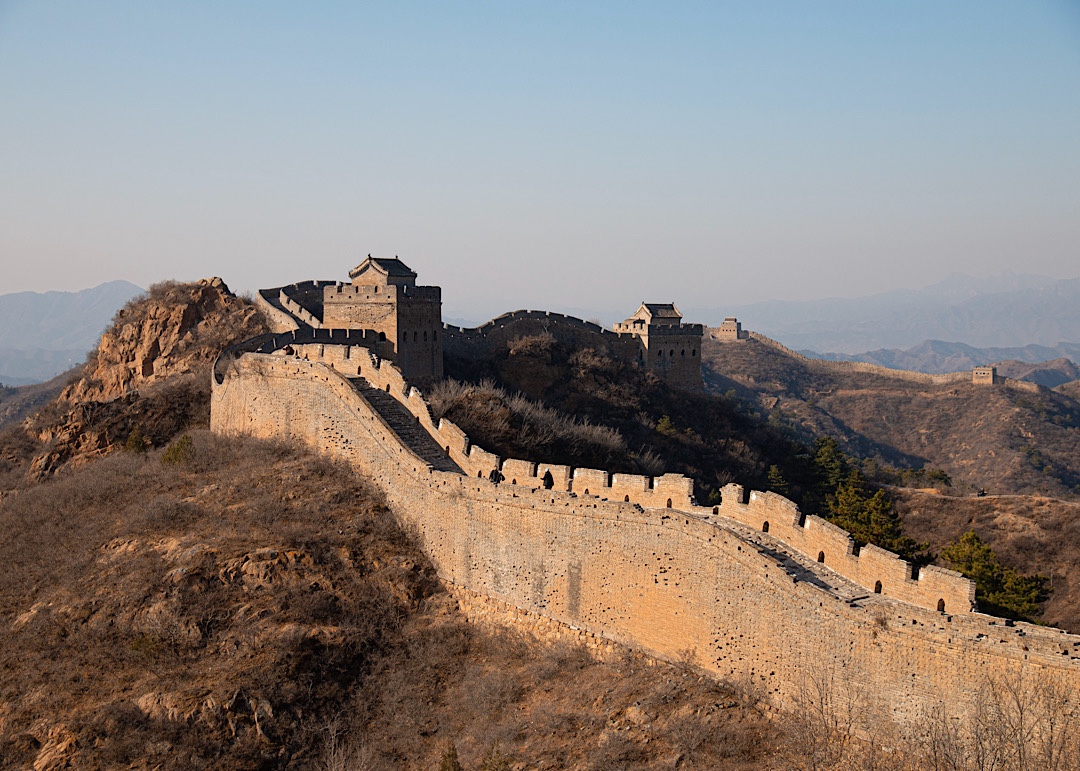
As we make our way along the undulating path, the vista expands revealing more detail; some sections crumbling down the mountainside, others patched to allow our passage. We meet a handful of Chinese visitors braving the crisp morning but otherwise, we have the whole ridgeline to our group. It’s a privilege to take in such an iconic and awesome sight in such serenity.
We spend several hours walking along the wall, climbing steep eroded staircases and breathing in the scenery, the highlight of our trip to China.


After descending down a path from the wall, we stop for lunch before the bus ride back to Beijing. Here was our first exposure to real Beijing traffic. It’s not an enjoyable experience; between the crazy driving, the Kamakazi scooters, the congestion and the pollution.
On the way back to the hotel, we stop to see a show, telling the story of a young boy joining a Kung Fu school, excelling at his art, but falling foul of lusting after a fairy in his dreams. It was a visual spectacle and an aerobic feat; but it wasn’t really Kung Fu.
After another very long day, we get back to the hotel late, and collapse into bed for an early start for a trip into Beijing to visit Tiananmen Square, and the Forbidden City.
Beijing is cold and shrouded in smog. We get a public bus into town, and join thousands of other visitors in Tiananmen Square. Most of the visitors are Chinese. The place is revered in China. The seat of the Chinese parliament, the location of Chairman Mao’s mausoleum, and of course the stage for the 1989 student protests that led to international outcry and a dark period in China’s recent history.


We wandered through the milling crowds of the Forbidden City and met at the other end. We all hopped on a public bus and headed for a walking tour around a Hutong, a Ming dynasty residential area of Mongolian design. Here we’re joined by an odd man on a bicycle. He proceeds to show us his Fighting Crickets, once a sport on which fortunes were won and lost in China. The sport is now outlawed along with gambling, but the fact that this fella still had the crickets and all the accoutrements of the game suggest that some underground cricket battles rage on.

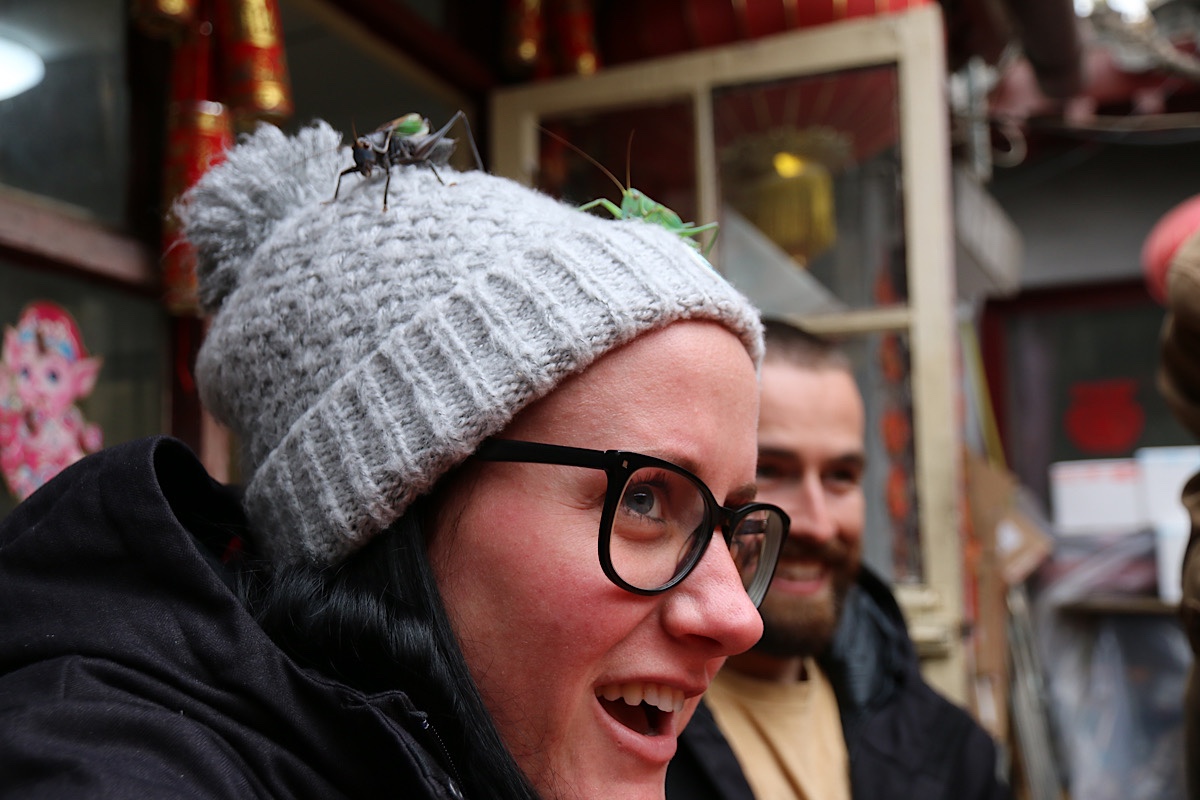
A few weren’t sure about handling the crickets. I said that they can bite. One then bit Kayla.
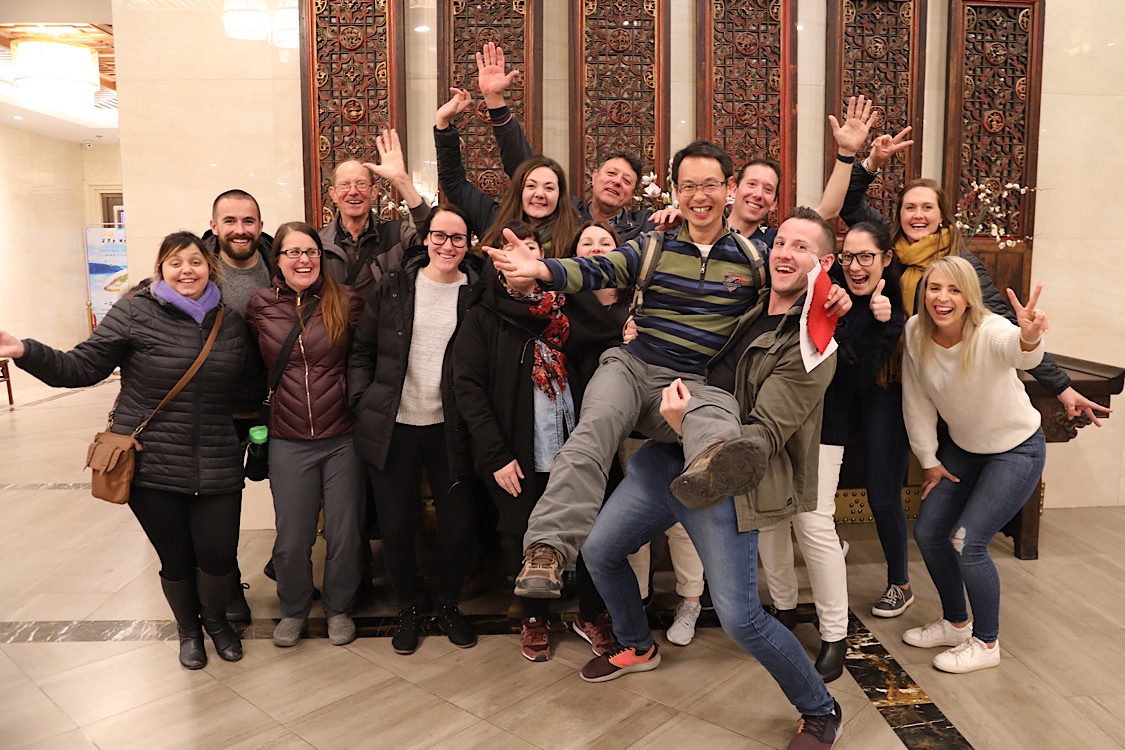
After the cricket fighting demo, we headed for a traditional Chinese tea ceremony, before returning back to our hotel for an hour or so before our last meal with the group followed by a few drinks.
The following day, people started dispersing. Many heading home, some moving onto other destinations. Emma was off to North Korea… brave girl. Eight of us weren’t leaving until the following day, so navigated public transport (bus & subway) we visited the Temple of Heaven, another UNESCO World Heritage site, and the Pearl Market – hugely discounted goods, and a haven for barter.
At the Temple of Heaven, we met a little girl called Butterfly. Butterfly was practicing her English and asked us how long we had been in Beijing. After we told her, she announced: “I have been in Beijing for six years, because I was born in Beijing and I am six”. She giggled at this, and so did we.
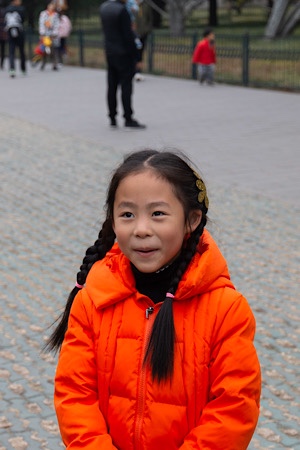
Many Chinese people give themselves English names. When learning English, this little girl came across the word Butterfly. It was the first word she liked, so she kept it.
We checked out of our hotel that afternoon. Our flight to Nepal was at 7am the following day. With the conjestion in Beijing, we were warned to leave a couple of hours to get there, and with a 2 hour check-in, the thought of a 2:30am start didn’t appeal. We booked into an airport hotel (Cordis Beijing – singularly the best airport hotel we’ve ever stayed in – nicer than most 5* hotels!). We hopped a taxi to the airport and felt awful for the driver who forgot to start the meter and was visibly distressed throughout the journey. Apparently it’s illegal not to run the meter, and everything is monitored in China. We tipped well. I hope he’s okay.
So, after 9 days, we leave China. It’s been an amazing place to visit. I would love to come back, but to see more of the country’s beautiful natural scenery. I wouldn’t rush back to the cities. I’ll post a broader piece on Chinese culture, politics, society and economy. It’s been an enlightening and educational toe-dip into this massive, complex country.
 Travels with Sklaroffs