
We spent one further night on Infiniti, as it sailed overnight to dock back in Cebu harbour at Mactan island. Along with our Swiss compatriot Tobi, we caught a ferry from the island to Cebu City harbour, where we went through a convoluted ticketing process, involving passports, ticket purchase, stamping, check-in, bag-drop and finally boarding, to catch a very uncomfortable 2 hour ferry to Bohol island.
Bohol
We parted ways with Tobi at Tagbileran port, and after a bit of negotiating with various drivers, hopped in a jerry-rigged trike – a motorbike with dodgy frame attached to carry an additional 2 (often 5) passengers – to transfer to our hotel, the Peacock Garden up in the hills above Baclayon.

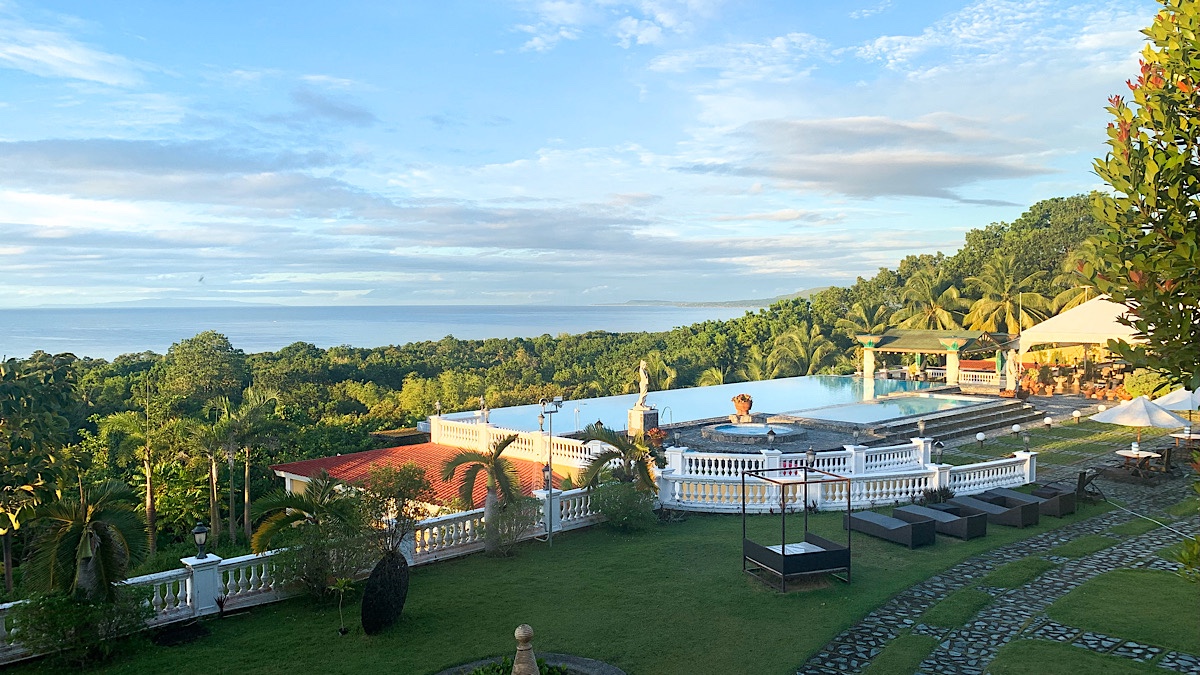
Our hotel was nearly deserted, but it was lovely. Set in rainforest, with a view over the ocean, we had a comfortable, clean room, a balcony overlooking the stunning vista, good food and service, and the crowning jewel of the place, a stunning 35m infinity pool. After a spot of lunch, we went for a good long swim in the pool, then chilled for the rest of the day, decompressing and trying to get over our land-sickness (we’re both swaying a wee bit after a week on a boat).
Our second day on Bohol started with another swim, before a car collected us for a tour around some of the key sights of the island. The two things I wanted to see were the Chocolate Hills, and Tarsiers.
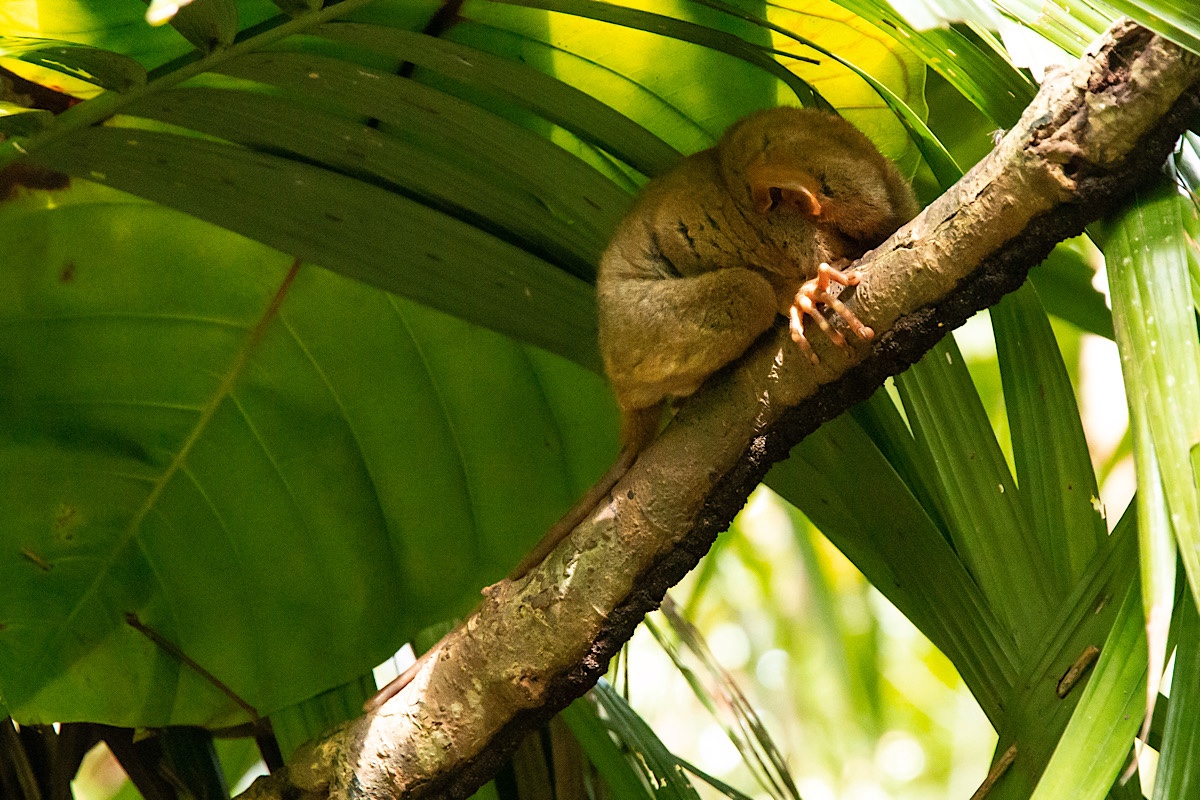
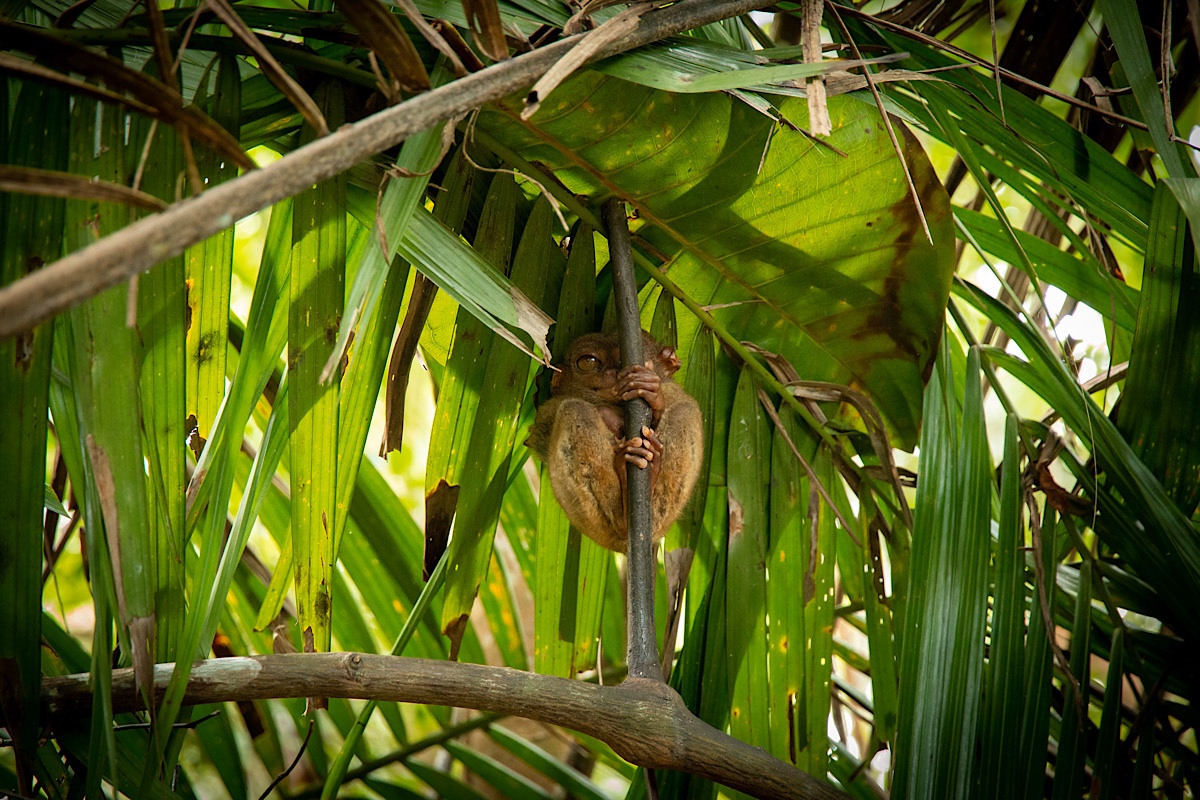
Tarsiers are the smallest primates on earth. Sharing characteristics with other endangered species (one infant per pregnancy, prized for medicines, hunted by everything, thought to be cute as pets, etc), they are protected in a sanctuary on Bohol. We paid the £1.20 entrance fee and wandered around the enclosure. Each nocturnal Tarsier was sleeping or half-asleep under a leaf, guarded by a human warden to quietly point to the spot they’re resting. They’re so small and absurdly cute:
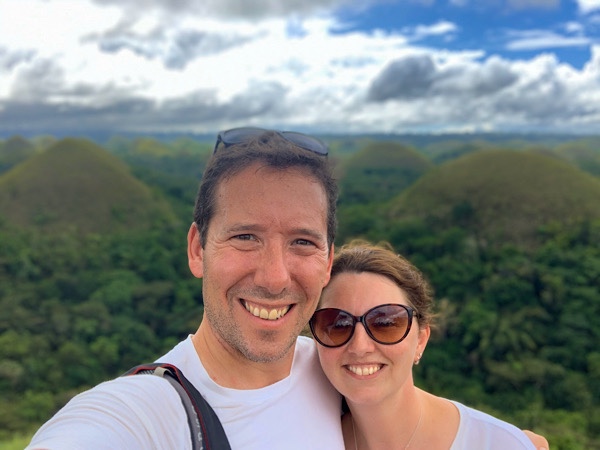
The Chocolate Hills are so-called for their peculiar conical shape and the chocolate colour they turn in the dry season. They currently have a brown hue, although we’re here in the wet season (as we are shortly reminded). They were a strange and captivating sight – hundreds of perfectly shaped mounds undulating away towards the horizon. They are known as ‘cockpit karst’ hills, formed through geomorphological processes including dissolution of limestone by rainfall and surface water, and subaerial erosion by rivers, apparently. A stunning example of conical karst topography, I think you’d agree.
We ascended a few hundred steps to a viewing platform, as the skies darkened around us. After a few rapidly snapped photos, we started our descent, and the heavens opened.

Our driver collected us to take to the port, for a ferry back to Cebu. Racing at speed along flooded roads in torrential rain, the drive was pretty precarious – particularly down one winding stretch of road known locally as ‘Chicken Intestine’. We made it in one piece and boarded our boat, upgrading to a more expensive seat for a slightly more comfortable, if utterly freezing (higher price = more aircon) journey back to Cebu.
Cebu/Mactan
When we got back to Cebu City from Bohol, our taxi driver tried to avoid heavy traffic, heading down a side street, he was forced to drive through almost a foot of water flooding a road. Heavy rains had hit the day before, and as confirmed by a chef we were chatting to at a local restaurant, the infrastructure here can’t cope, so during the rainy season, the drains all back up and the city floods.
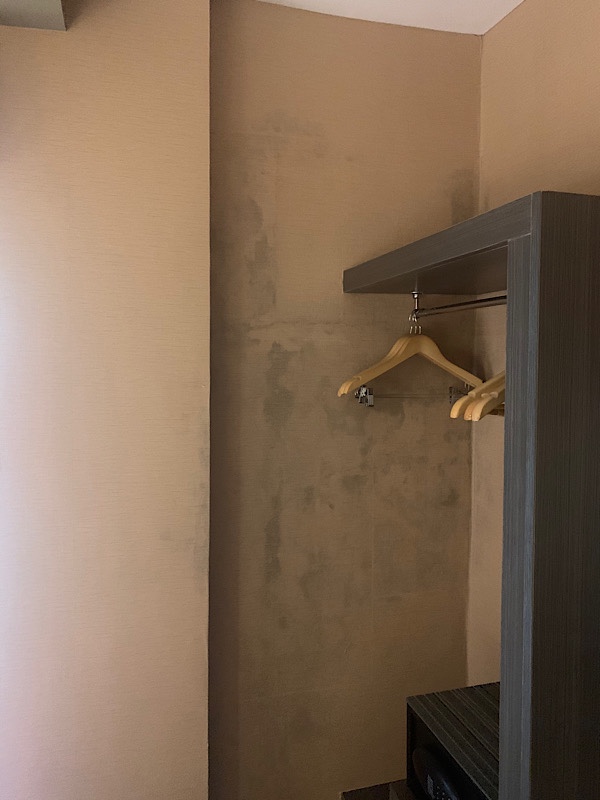
We stayed again at the Eloise Royal Suites Hotel. A grand-sounding, but dingy little hotel on a busy, grimy street. We’d stayed here the first night, before we boarded Infiniti, and had been upgraded to a reasonable room – clean, big enough, good aircon. This time, with no incentive to ensure we returned, we were shown to a pokey, noisy room that stank of damp. We had to get moved twice, as both rooms had entire walls of mould.
We’ve not seen much of Cebu itself, but Mactan island (where we are) isn’t somewhere we’d rush to visit again. It’s very crowded, with horrendous traffic and dangerous roads. Pavements have been largely cannibalised for other purposes, and often you dice with death walking on the road as a thousand scooters hair past you, blaring their little horns.
I noticed pipes running along on top of the pavements, often creating trip hazards as they turned up and into the houses lining the narrow walkways. It was only when I saw a junction terminal at the end of the street did I realise that these were gas lines. Sometimes, they’ve been covered in a layer of concrete, creating a curved bulge in the middle of the path; but generally, 10-15 of them run down the pavements, crisscrossing each other in a hazardous spaghetti. With crazy electricity cabling above, gas lines underfoot, and open drains running along the street, this is like a city turned inside out; capillaries, veins and arteries all exposed to the elements.
Palawan
The next morning we high-tail it out of Cebu and board a Philippines Airlines plane to Puerto Princesa, the capital of Palawan island.
This is to be our base for a couple of nights, staying the small Dolce Vita hotel, close to the airport. The hotel is comfortable enough (aircon, bed, shower), although it’s largely deserted. We drop off some laundry at a local laundrette, which weighing in at just over 5kg, is to cost us less than £2. We take a wander towards the town centre, but the heat, traffic, and closed shops (it’s Sunday) turn us back before too long.
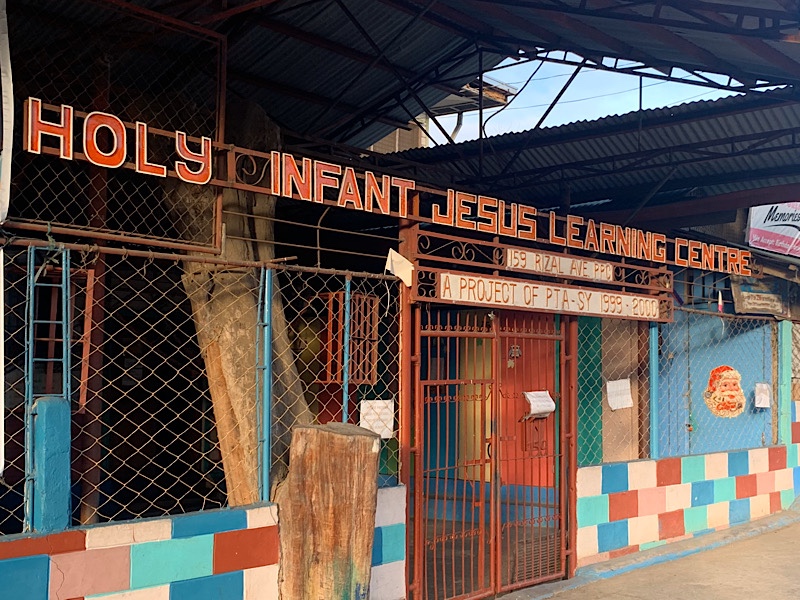
We walked down to Puerto Princesa Baywalk Park that evening, which despite being one of the main attractions, is little more than a waterfront walk, and a few ramshackle stalls/restaurants that don’t look too clever. On our way back, we stopped in an air conditioned shopping mall for some reprieve from the high humidity, and had some dinner in one of the restaurants there. The food continues to underwhelm. On our walk back, I spot a school:
The following morning, we’re collected by bus for a 2 hour hot, winding journey to the entrance to the Puerto Princesa Subterranean River National Park. This was voted as one of the New7Wonders of Nature in 2012 and is a UNESCO World Heritage site. We transfer from bus to a local trimaran, and in the choppy water, the wiry captain ferries us around to the secluded beach which marks the sea delta to the river.
Joining several other groups of tourists, mainly locals enjoying a holiday, we are given hard hats to wear with our life jackets and clamber into a large canoe, as we are paddled into the yawning mouth of the cave.
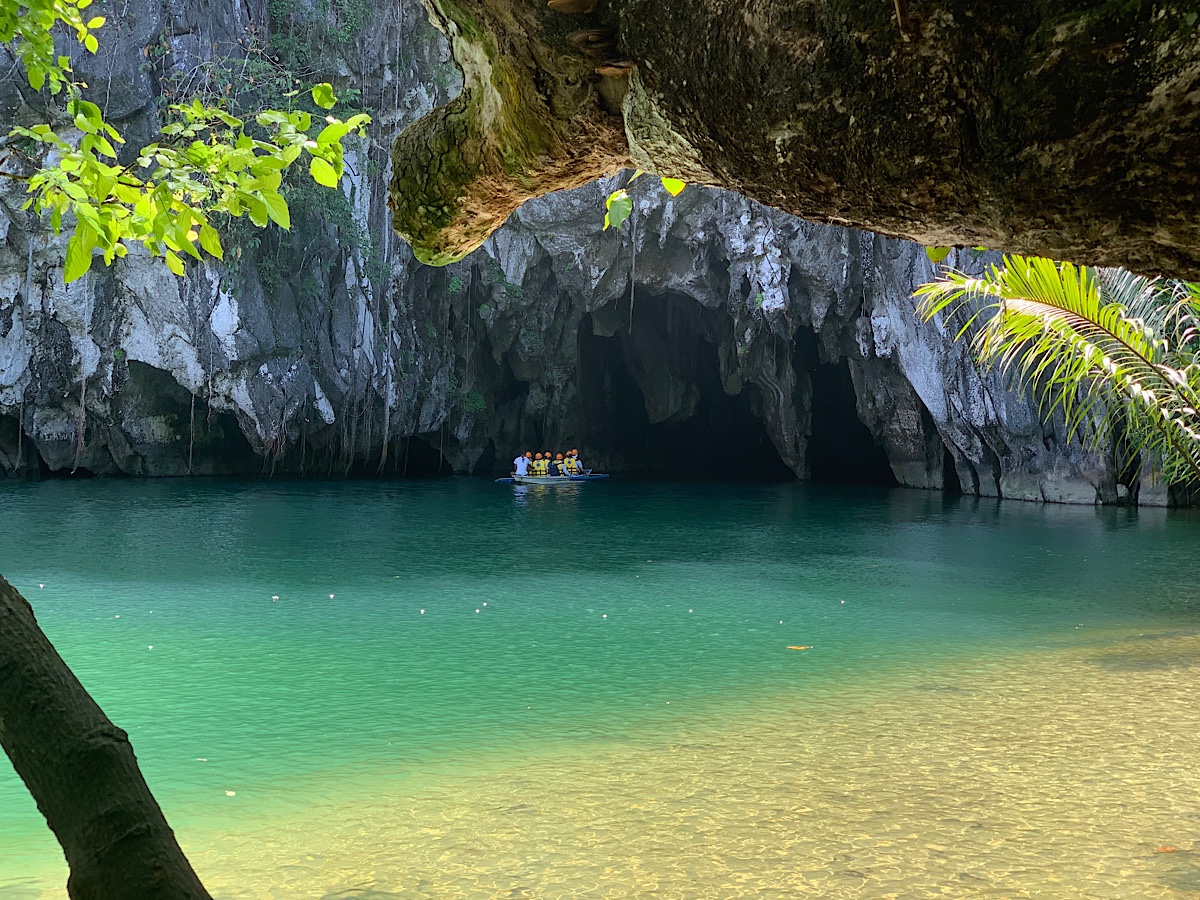
As we penetrate inside the cave, the flap of wings are the first thing we hear. Expecting bats, it’s actually swallows nesting in the still-lit entrance to the river. Casting deeper inside, the beat of swallows wings are replaced by the echo-location calls, and leathery whispers of bats. Looking up, thousands of tiny bats, feasting only on mosquitos, line the crevices in the massive stalagtites hanging from the ceiling. We’re warned to keep our mouths closed when looking up. Cold drips are a blessing, warm drips are not.
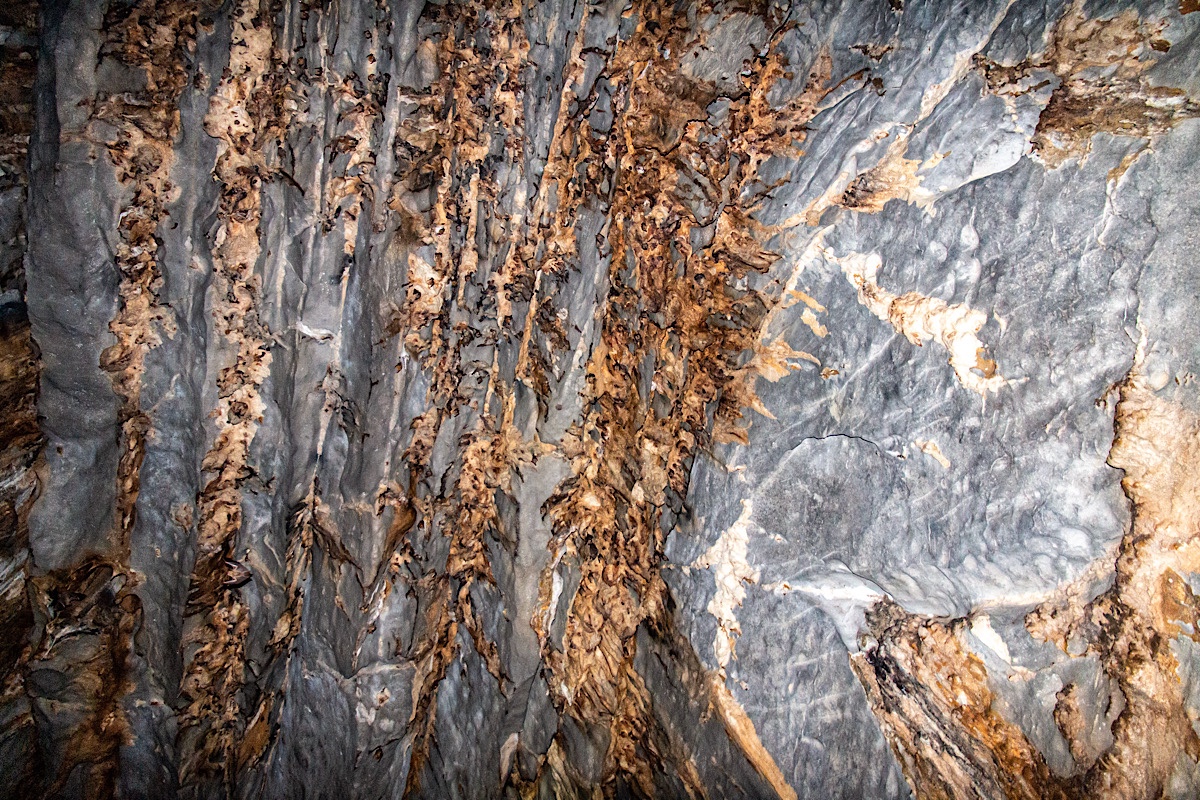
As we glide deeper upstream, we enter a vast cavern known as the cathedral; the ceiling towering 60m high above us, and stalagmites forming a cave floor, home to snakes, spiders and scorpions. The cave system is beautiful and untouched. Protected since its discovery, here you won’t find artificial lights or music, or platforms or graffiti. This is a unique river system whose inhabitants thrive, and the impact of humans is limited.
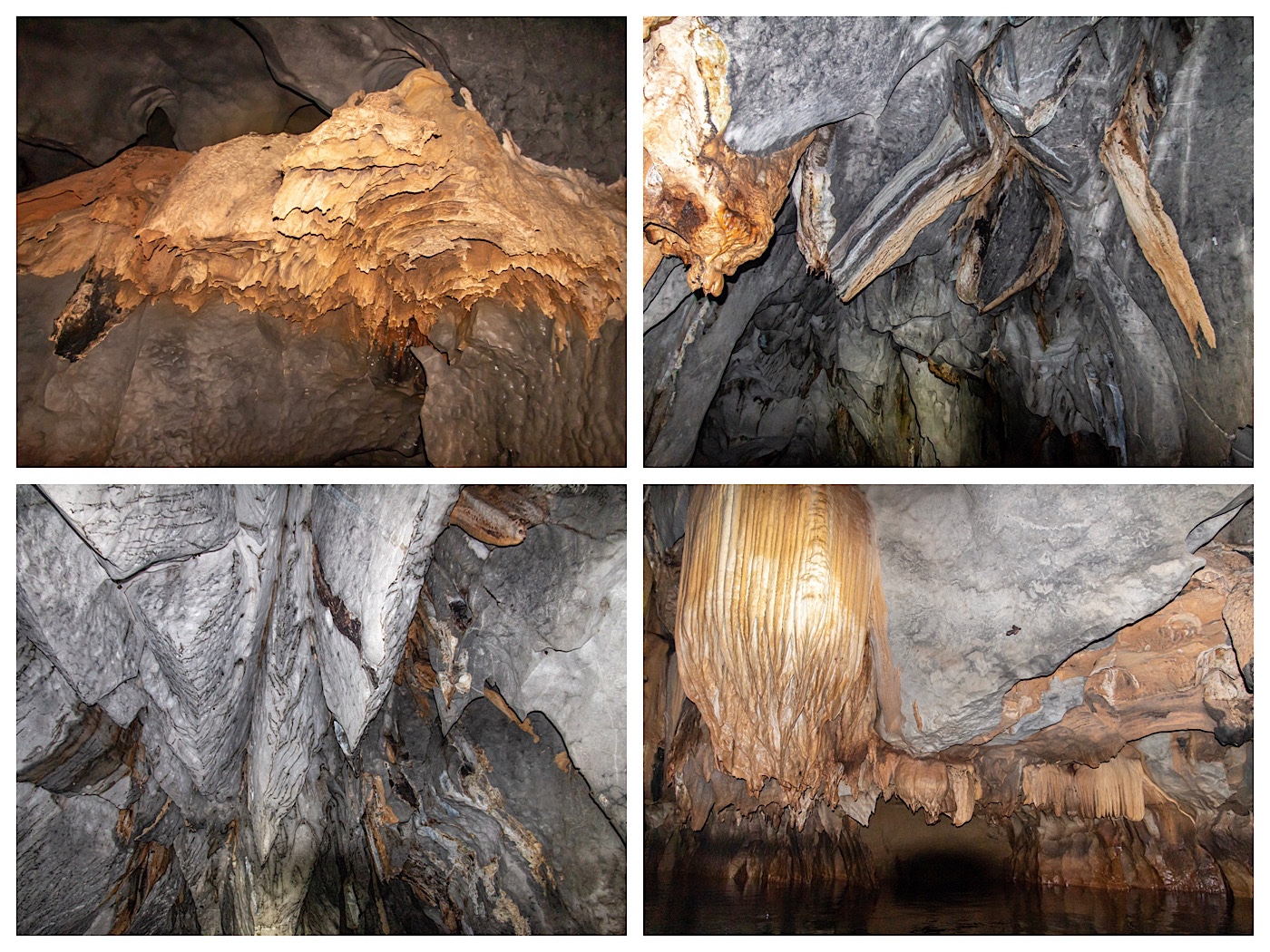
The entire subterranean river is 8.3km long. Along with the masses, we only travel 1.5km into the gloom, but it’s possible to go another 3km before you need to either climb, or dive to get into the second chamber.
After getting back to shore, we have a bite to eat and transfer back to the hotel, picking up our fresh laundry (excitement!) en-route. We have a decent dinner at a local ‘Mexican fusion’ restaurant and retire for the evening. Tomorrow, we leave Puerto Princesa, and travel by van the 6 hours to El Nido, at the northern tip of Palawan, where our story will resume…
 Travels with Sklaroffs