
We’re met after breakfast by Alberto, a local guide who is going to take us into our first National Park. Corcovado is on the Osa Peninsular, and is one of few untouched rainforest wildernesses; we’re told hosting more biodiversity by size than any other region on Earth.
We board a small local boat and make our way around the peninsular to a ranger’s station, disembarking on a rocky shore at the edge of the rainforest.
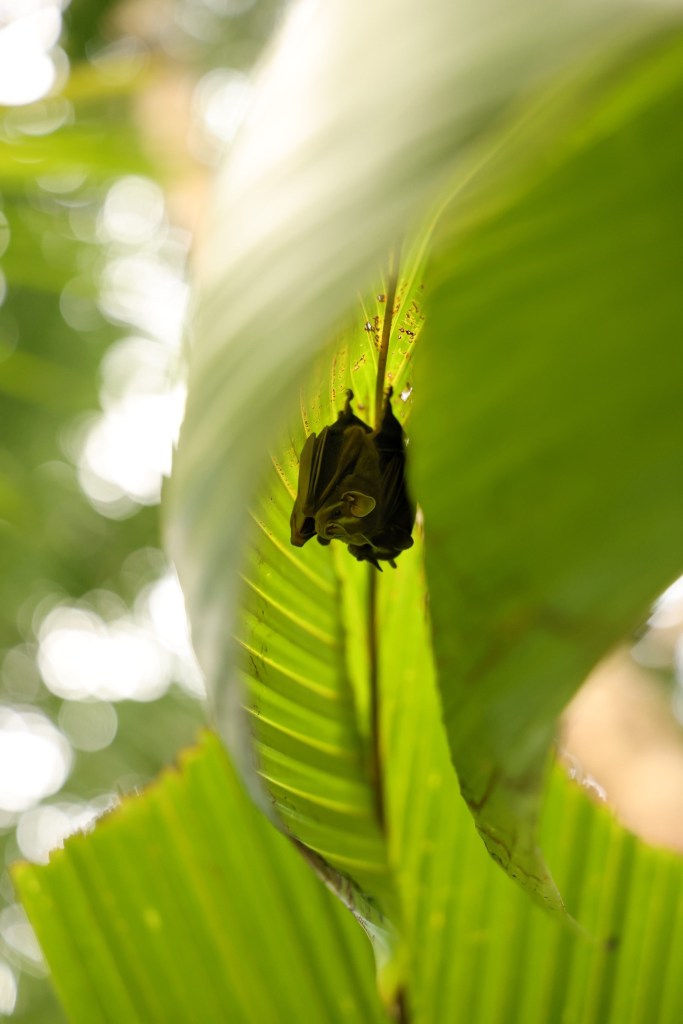
Alberto doesn’t move quickly, seeming to want to talk about the wildlife more than actually find it, but we make our way into the forest along a dedicated trail, spotting colourful butterflies, raccoon-like White-Nosed Coatimundi, and spider monkeys high in the trees. Another Fer-de-lance rests under a log, and Alberto marks its position with twigs and leaves to alert others.
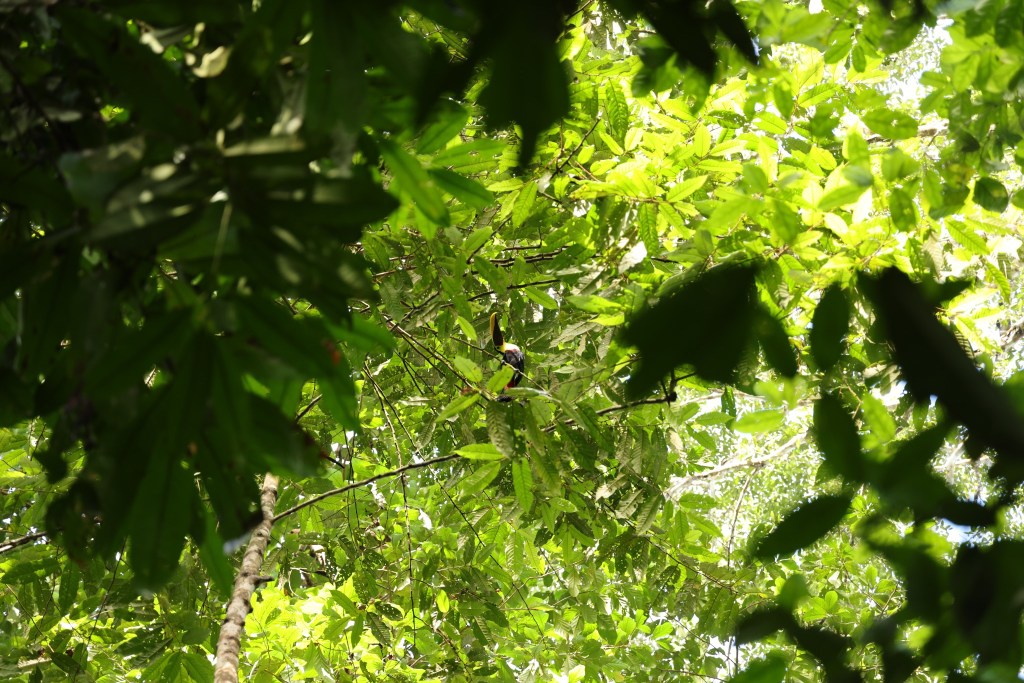
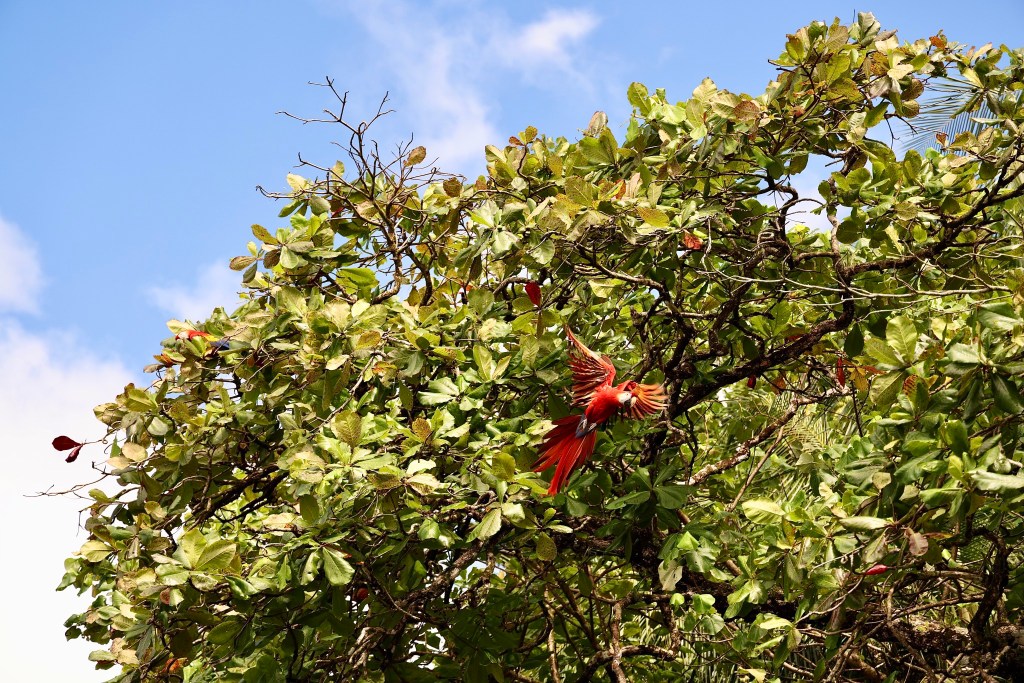
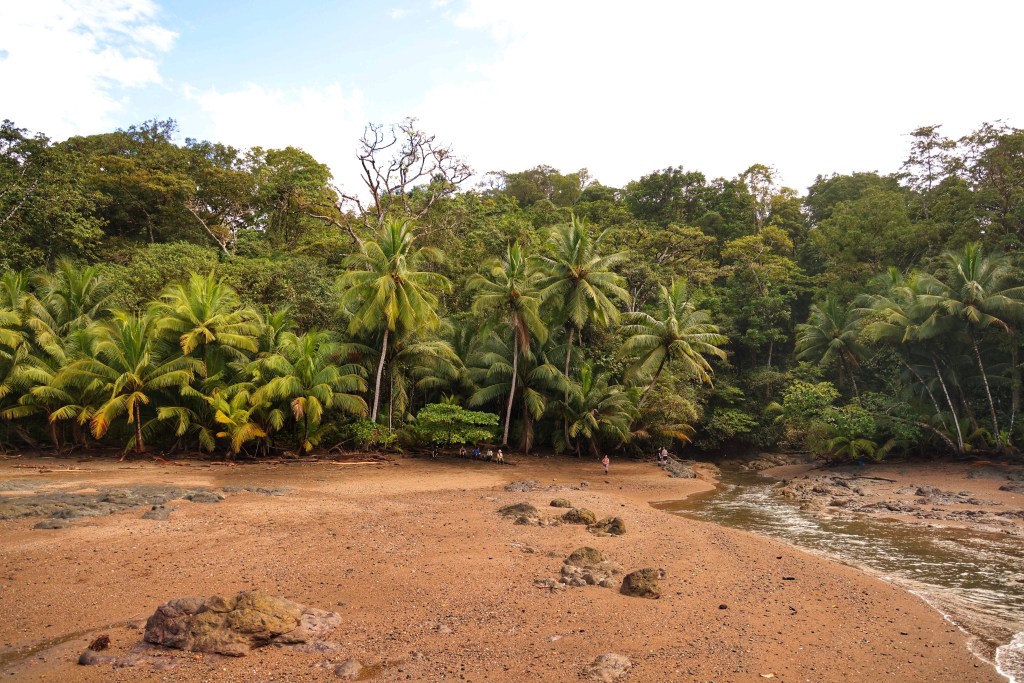
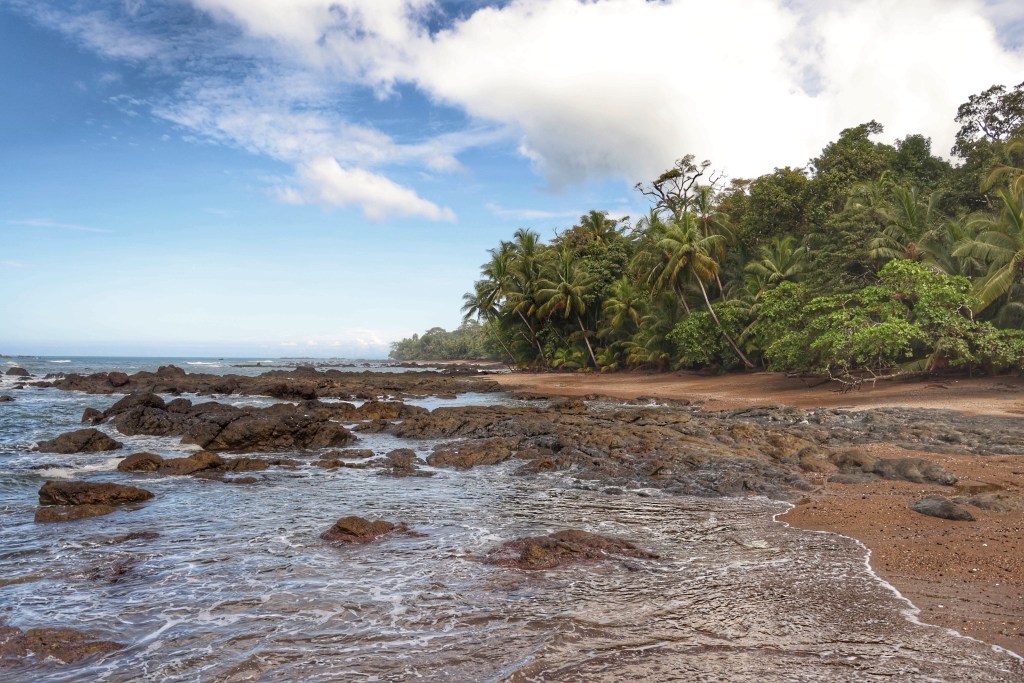
We spot a colourful Toucan, looking entirely improbable, as we make our way out of the forest onto a beautiful tropical shoreline. Here, we are rewarded with our first sighting of a sloth with a baby sloth, hanging high in a tree. As we strain to get a good view, one of our group spots two stunning Lapas or Macaws landing in a nearby tree, full of Macaw-friendly fruit. We watch as the birds (with beautiful plumage) use their dexterous claws and beaks to crack open the fruit and eat the tasty nuts inside.

Returning to the rangers station, we have a brief snack before heading out for another hike. About 20 minutes in, Alberto spots fresh Tapir tracks leading off into the forest. Leaving our group on the path, he heads off in pursuit, stating that he’ll be back in 2 minutes. 25 long minutes pass, and Arlet – a rainforest guide herself – is clearly worried. We agree that we should head back towards the rangers station to raise the alarm. We leave a message scrawled in the dirt for him, and split the group in two – the faster of us up front. As we’re making fast pace along the trail, we suddenly spot Alberto still wandering around the rainforest, following Tapir tracks. Arlet is not impressed. Ben is also not impressed. Alberto doesn’t seem to understand the problem and is entirely defiant about his endeavour.

We head back to the station and after another very lacklustre walk with Alberto, prepare to head back to the boat. As we watch the boat come into shore, the young captain over-cooks the approach and manages to beach it side-on. He and his crew-mate try, without success, to turn the bow of the boat towards the waves, in order to enable them to push it back out to sea, but it’s very heavy and the tide is receding. We pile in to help and after a lot of physical effort, timed with the breaking waves, we manage to both turn and re-float the boat.
As we’re boarding, the swell is pretty high, and the stern of the boat is rising and falling hard. There aren’t enough crew to help maintain stability, and two of our party fall getting into the boat. As we’re helping people get onboard, a large wave rolls in – as Cindy, our 61 year old Taiwanese friend is attempting to board. She doesn’t manage to pull herself onto the boat and as the wave passes under the hull, it crashes down and pushes back towards shore. Cindy screams. The boat has landed on her leg, trapping it between hull and sand. We dive over and help lift her into the boat, but she’s gone white with pain.
Cindy is still wearing her Gumboots, and one of them has filled with blood. We manage to get her seated – there’s no choice but to get her back to Drake Bay by boat. She’s clearly in shock. We give her some water and a little colour returns, but she’s in a lot of pain. A 20 minute boat ride back to the bay, and two of us help her off the boat, half-carrying her to shore. Removing her boot, Cindy’s ankle is in a bad way. She has a deep exposed laceration and we suspect much more. Arlet and Alberto arrange a taxi and she’s whisked off to a local clinic.
Later that evening, Cindy’s back, she’s been stitched up and the local doctor (strangely) doesn’t think there’s a break, but has recommended an x-ray when we get back to civilisation. We help Cindy into a new room (avoiding the 80 steps the rest of us have up to our rooms), and put her into bed, giving her some painkillers I had with me. Later the doctor comes back to assess her. The ankle has ballooned and the doctor gives her a shot to reduce the swelling, and painkillers. Shona sleeps in Cindy’s room for the night to assist if she needs help.
The next morning, Cindy is in good spirits and is able to hobble around without help. However, the doctor is not happy with the injury and says that she needs to be flown back to San Jose for immediate assessment. So, as we pack up our stuff and head off back to Sierpe, Cindy’s left in Drake Bay, waiting for transport to a tiny airport to board a 12 seater plane to the city.
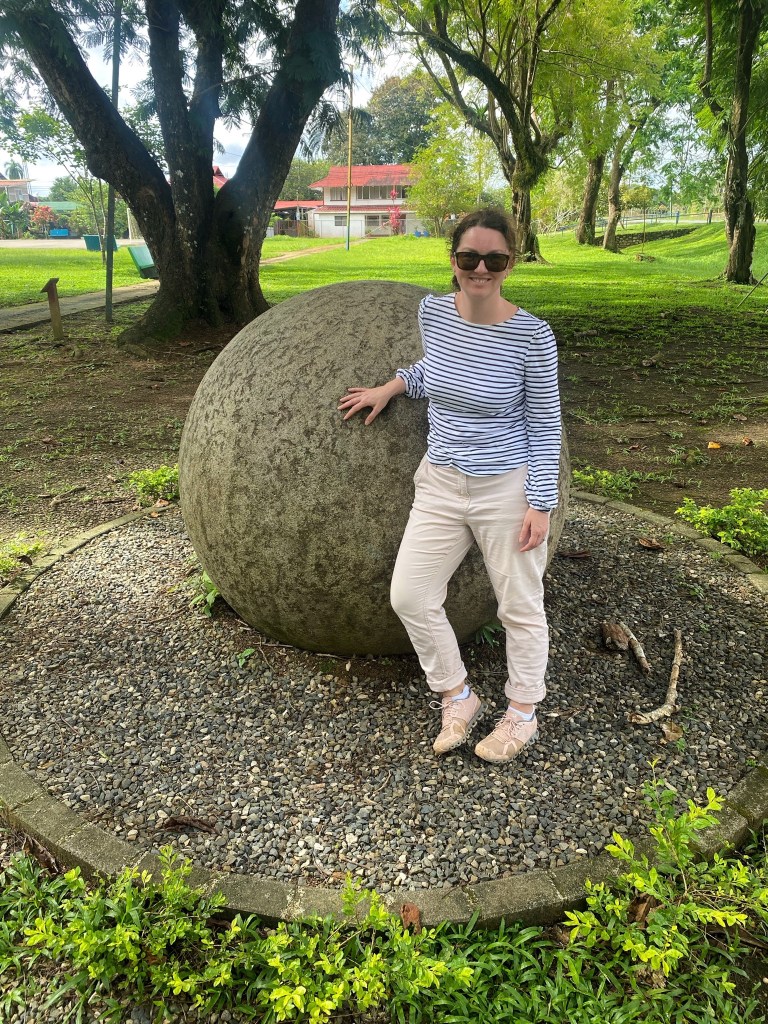
We take the return boat-ride minus one of our party, and meet a driver in Sierpe. At the dock we notice a few strange stone balls dotted around. Arlet says she’ll explain, and our driver takes us to a non-descript park where 5 or 6 of these various-sized stone spheres resolutely sit on display. The nearest is about 1.5m in diameter and must weigh many tons. Arlet explains that the spheres date from between 500 and 800 AD, from a pre-Colombian civilization known as the Diquís. They range from 0.7m to 2.57m in diameter and there are at least 60 of them, all found in the same small area. They are geometrically almost perfect spheres and to this day, their purpose is a complete mystery. We all conclude Aliens. World Heritage site number 139. Tick.
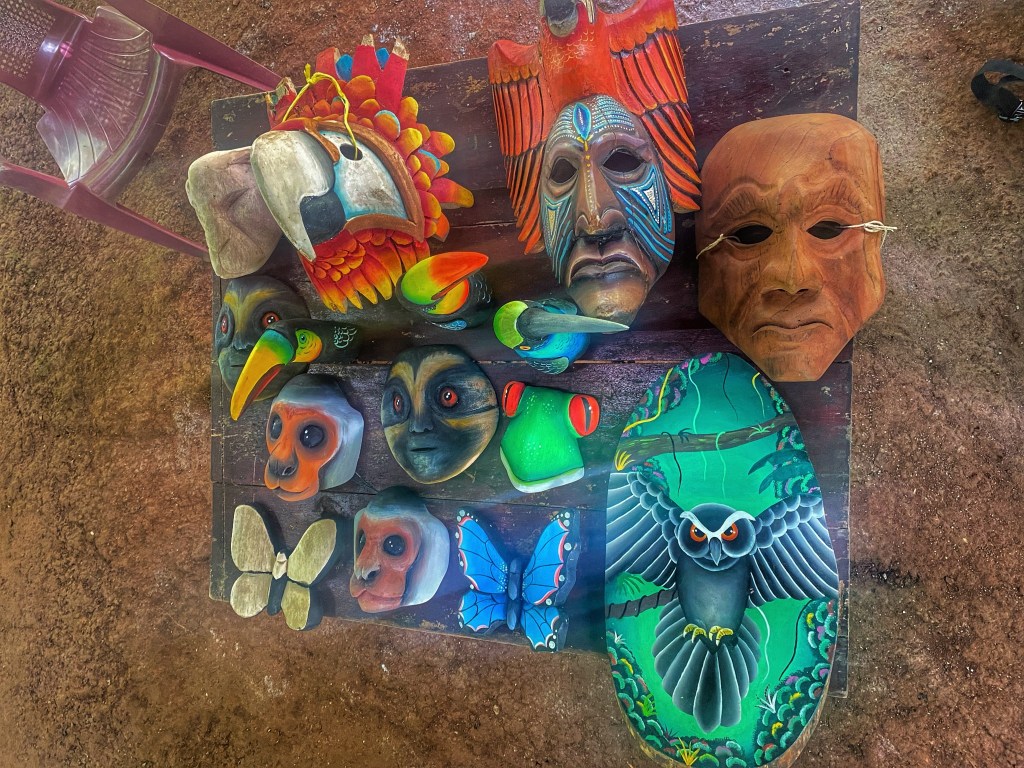
Our next stop is to visit a small indigenous village. The residents have lived in this spot for over 500 years, tending the land, and preserving traditions of carving and dancing. We join them and have our shot at carving and painting masks used in their ceremonies. Our efforts are pretty good, but the work is made easier by the medium being Balsa wood. We have a tasty lunch before leaving the village and making the drive to Manuel Antonio National Park.
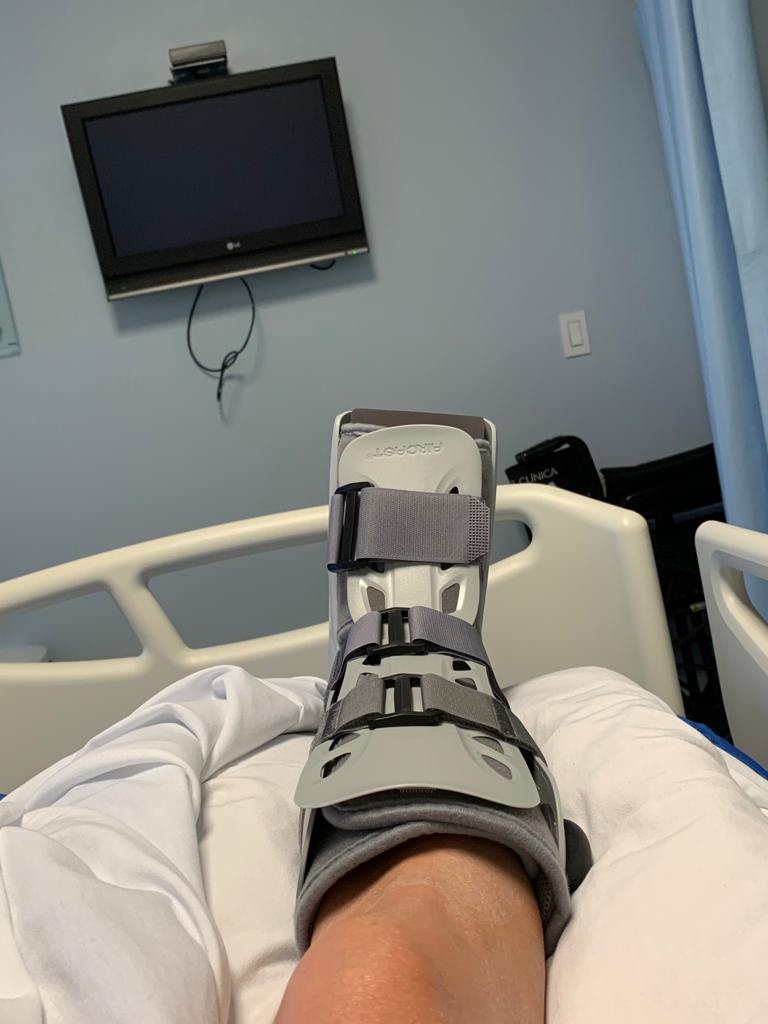
When we arrive, we get news on Cindy. She’s made it to San Jose, and has eventually been assessed. As we suspected, it’s not good news. She’s been hospitalised, given strong antibiotics to treat an infection that’s set in, has fractured her ankle, and needs two operations. Cindy’s holiday is over, but she’ll remain in Costa Rica for a while yet.
 Travels with Sklaroffs