
Our next two days in Cape Town were a whirlwind of sights, food, history and weather. On our second day, we went for a run along the coast, the Atlantic waves crashing over the sea wall as we shook off the travels from the day before. As we returned, the skies darkened and the heavens opened. Following breakfast at our hotel – waited on by the ever-so-chatty Ashley (who is obsessed with his flower arrangements) – we donned rain jackets and made our way over to the Robben Island ferry terminal to check sailings. As feared the inclement weather had suspended all ferries. New plan needed.
The Internet suggested that despite the rain, Table Mountain was open, and with the cloud blanket that had hung over the mountain over the previous day lifting, we took the chance. We taxi’d to the cable car, briefly toyed with hiking up, before quickly deciding that it looked like an almighty hassle – particularly with the unpredectable conditions. The cable car was a surprise. They packed us in, but much to our delight, we were told to step slightly back from the windows, as the whole floor began to rotate. We all got a stunning view on the way up to 1086m above sea level.
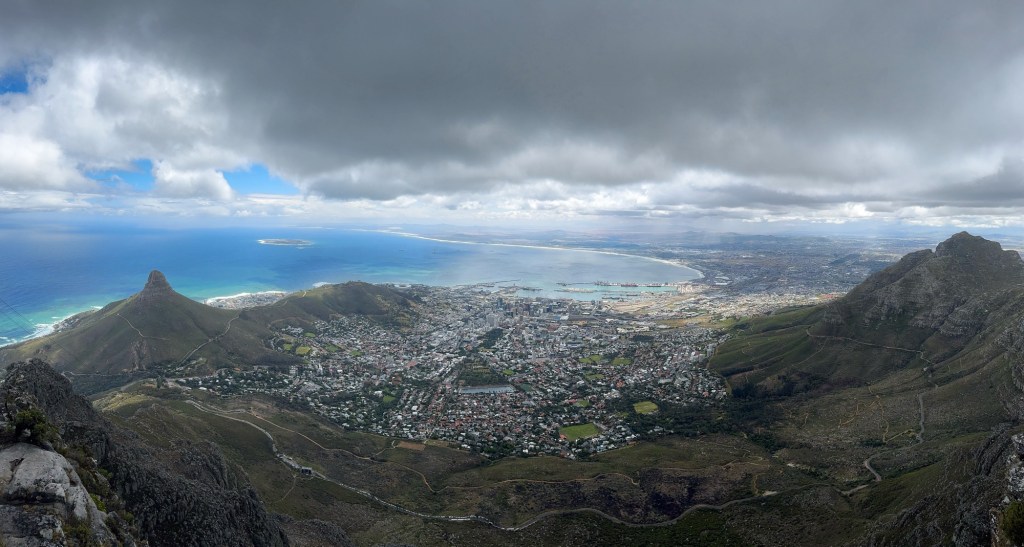
Not particularly lofty, but the mountain affords a stunning view back over the Cape Town valley, and surrounding peaks. Apparently one of the 7 natural wonders (how many lists are there?!), stunning views, which we felt really privileged to see given the weather. It was decidedly cold and windy up there, and following a walk along the weaving pathways across the tabletop, the rains descended again just as we headed back down.
We taxi’d back to the hotel, and feeling suitably ripped off (unmetered cab – he seemed pretty happy with the fare!), we stopped for an excellent lunch at the Den Anker restaurant (fillet steak bites and goats cheese salad for me), before heading back to the hotel for a rest.
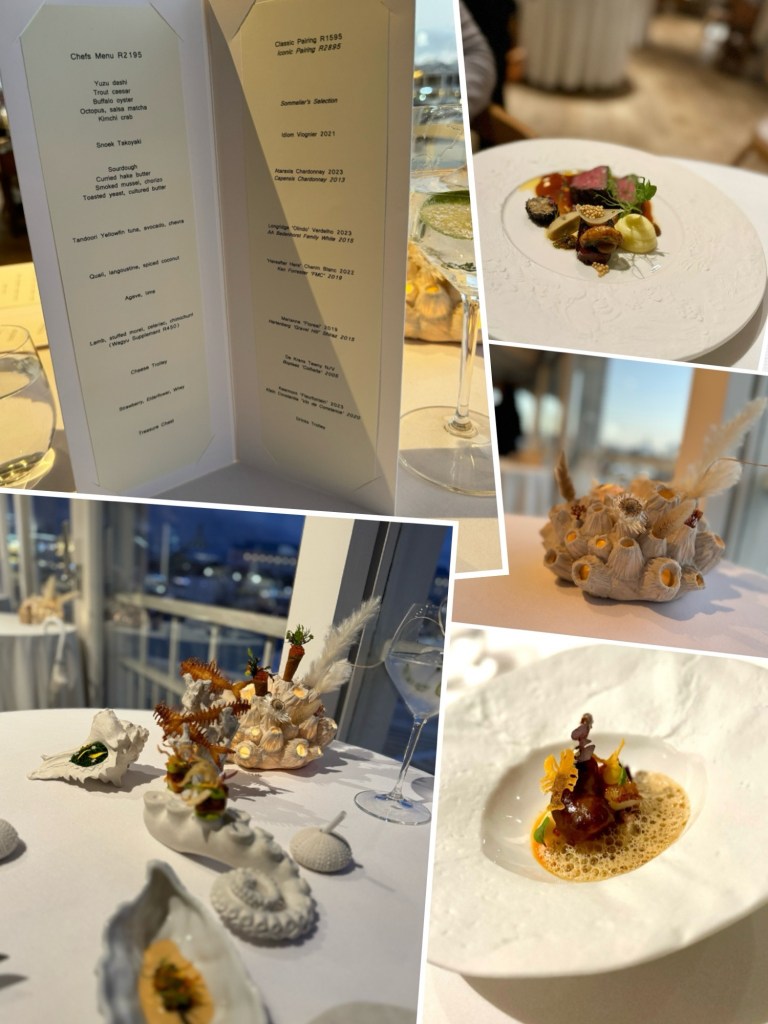
The afternoon was spent wandering around the local shops, before a simply stunning meal at The Pier restaurant. I’d booked this several months ago after a rare piece of holiday research. I’d mostly forgotten about it and aside from knowing it was highly rated, we went in blind. We both felt a little underdressed, and rightly so. I’d accidentally booked us into a Michelin 2-Star restaurant with a 9 course taster menu. It was nothing short of a spectacular theatrical feast. I won’t go into each dish but here are a few of the pics. Happy diners.
Day 3 we decided to explore more of the city. We walked from the V&A Waterfront into the town centre, visiting the Castle of Good Hope, a pentagonal c17th fortress and one of the oldest buildings in South Africa. From here, we wandered up to the District 6 Museum, which told the story of the townships, clearances and Apartheid.
Leaving the museum, we were confronted by the reality that the divide is still very real. A beggar approached us, and while not aggressive, it was a sudden reminder that the poverty levels here are stark, and still divide the country on racial lines. While we saw some white homelessness, the class/race divide seem inextricably correlated. As we walked back, we both felt quite exposed and embarrassed in our nice clothing, surrounded by homelessness, poverty and pockets of destitution. Humbling.
When back at the port, we grabbed a quick early lunch (served by the wonderfully named waiter: ‘Innocent’). We then joined the queue to visit the UNESCO World Heritage site, Robben Island – the ex-Leper (spare a shekel?) colony and prison island for South Africa’s political prisoners of Apartheid.
Seals joined us at the port and were spotted on the boat ride to and from the island. On arrival, we were taken through a crash course in history of Apartheid and the horrendous lengths that a ruling party will go to, to protect its domination. We saw and heard from ex-prisoners about the terrible conditions and tortures that inmates suffered. Inmates with familiar names, like Robert Sobukwe, Jacob Zuma and the first black president of South Africa, Nelson Mandela.


 Travels with Sklaroffs