
At 7:30am on the morning of 3rd December, we’re met at the hotel by a bus alongside 16 others eagerly awaiting its arrival. Rudy, the driver, is a larger than life local ‘fixer’ who is transporting us to Punterenas, a Costa Rican port on the Pacific coast. It’s a long and circuitous journey – the traffic is bad in Costa Rica, and this weekend is a national holiday.
Arriving at the port, we rejoin our bags and immediately climb onto small ribs or ‘Pangas’, and motor our way around the port to board the Okeanos Aggressor I, a dedicated dive boat which is going to take us 550km deep into the Pacific Ocean, to a small volcanic tropical island, the source of centuries of pirate lore – Cocos Island.
I’ve known about Cocos Island since I was six years old. I liked Pirates. My father and his friends created a roaming treasure hunt for me and my friends for my sixth birthday. It involved following detailed clues, challenging puzzles (for a six year old), a trip to the ocean to discover further buried clues and eventually the lifting of a massive boulder to discover the buried treasure, using a carefully placed wooden lever that the frame of a six year old boy could lift.
This adventure was based around the various histories of Blackbeard, Benito Bonito, Flint and other famous pirates and on the fiction of Robert Louis Stevenson, whose Treasure Island was itself inspired by the very real Cocos Island. Many years later, Cocos Island was Stephen Spielberg’s muse for Isla Nublar – the home of Jurassic Park.
Cocos Island today is known for three things:
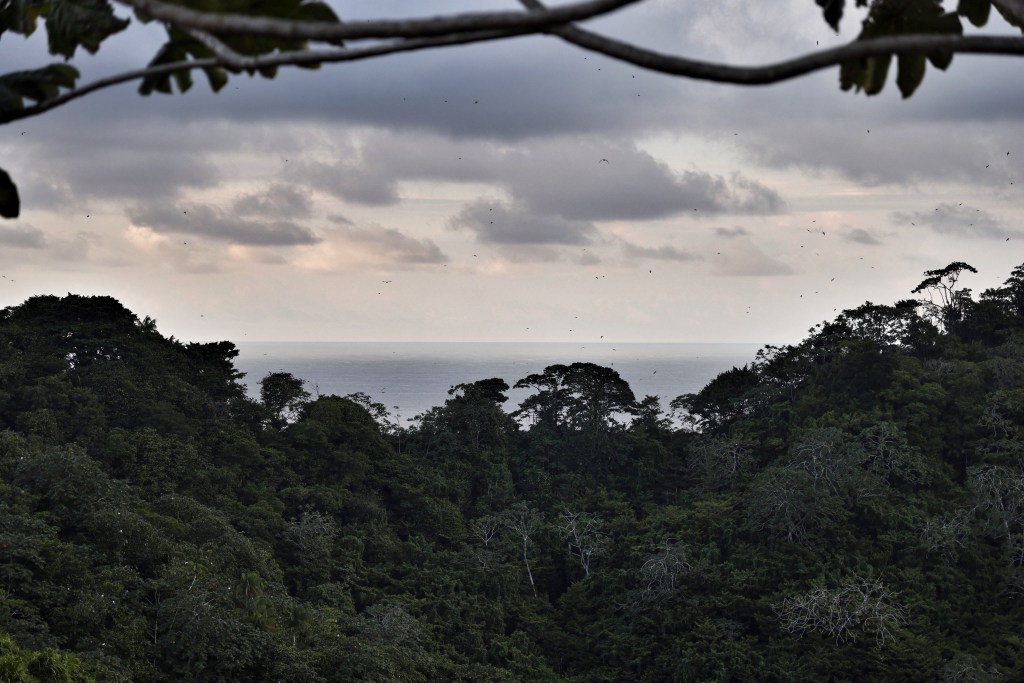
1. Its unique biodiversity – it is the only tropical island in the eastern Pacific with a tropical rainforest; a densely forested outcropping receiving 7 metres of rain a year (yes, metres). The island and its seas are protected by the Costa Rican government. Fishing is illegal, and it’s uninhabited – with the exception of a few rangers who patrol the island.
2. Two significant treasures are buried somewhere on this island – Benito Bonito’s vast haul of pirated booty, and more historically important, the Treasure of Lima. A vast documented haul looted from Central and South America by the Spanish, but subsequently hidden by a rogue British captain whose job it was to transport the bounty back to Spain. He secreted the vast treasure on Cocos and while captured and taken back to Cocos to unearth the treasure’s location, this real-life Ben Gunn escaped into the jungle, never to be seen again.
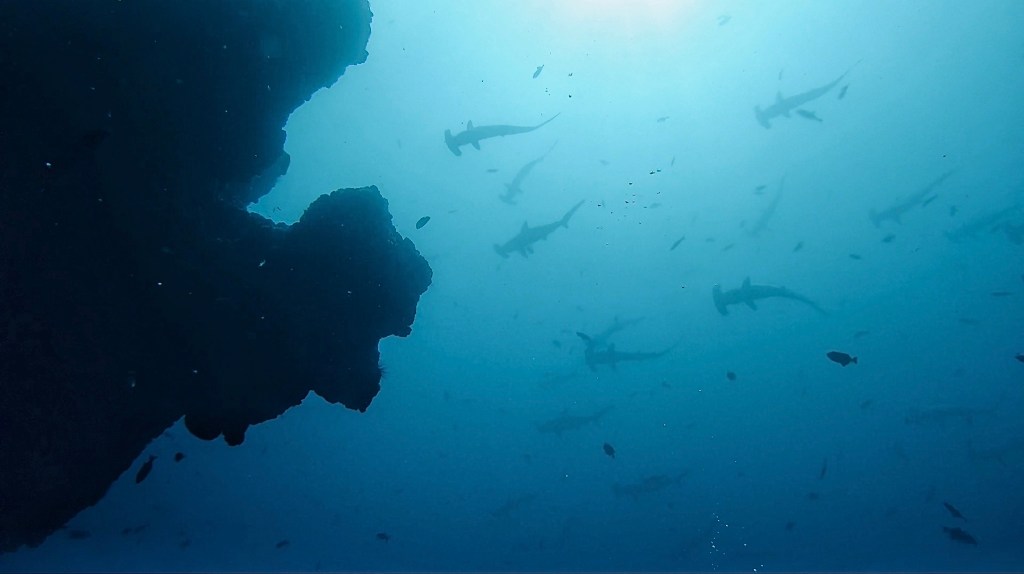
3. Sharks. This pinnacle of rock in the Pacific Ocean benefits from nutrient flows both from the island and carried on oceanic currents. This rich water attracts plankton and corals, which attracts fish, which in turn brings predators. Cocos is famous in the dive community for huge schools of Scalloped Hammerhead sharks, Galapagos Sharks, Black-tips, White-tips reef sharks and recently, an incursion of the more aggressive Tiger Sharks – one such shark killed a diver here in 2017. Threats aside, it’s a Mecca for divers – one of the most remote dive locations on the planet, and on almost every top 10 list of dives on the planet.
It was a 36 hour crossing to get to the island. Most of us took the sea sickness tablets. Some who didn’t suffered. Others who did, also suffered – badly, and for the whole crossing. We thankfully survived relatively unscathed, sleeping for much of the trip due to the soporific effect of the pills.
We arrived early in the morning of the second day, awaking early to the clattering of crew preparing the ship. We stepped out to find ourselves moored in a tropical bay, one side looking out to the vast Pacific, and the other to a small beach surrounded by rising, impenetrable cliffs draped in verdant green. There was no hanging around. We’d prepared our gear during the crossing and after an impressive breakfast, we split into two groups (Panga 1 and Panga 2) and headed for our ‘check dive’ – to assess everyone’s competence and allow us each to test our buoyancy and kit. A relatively shallow dive at 20m or so, we drifted over a coral garden, and within minutes had spotted one of the famous residents of Cocos – a solo Hammerhead gliding past us.
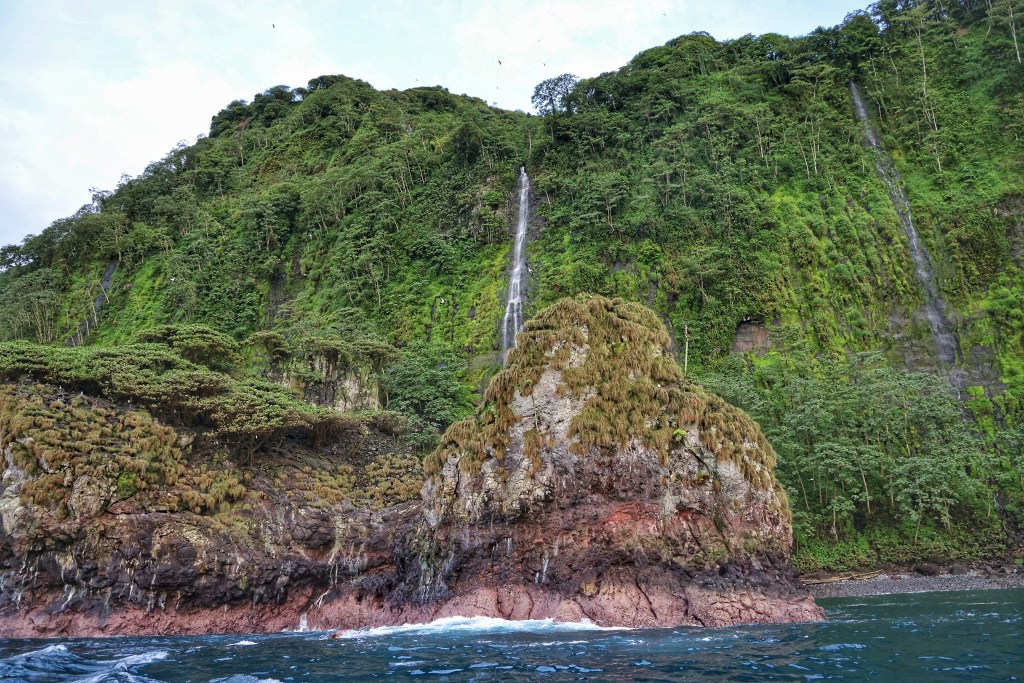

What followed for the next 7 days was a lived reality of the diver’s mantra: “Eat, Sleep, Dive, Repeat”. We dived 3 times a day at various locations around the island, each dive was deep – usually 30m+, sometimes with challenging current, always with spectacular large pelagic life.
We witnessed an iconic spectacle of a shiver of Scalloped Hammerhead sharks ripple above us, silhoutted against the morning light. We hunted for, and found Tiger sharks lurking in the gloom. (When I say hunted for, it really was a stalking effort – creeping along the wall, hiding behind rocks, prepared to leap out at them, underwater cameras ready). We encountered an Oceanic Manta Ray – rare at this time of year, alongside numerous Marble and Spotted Eagle rays. Close encounters with Galapagos sharks were a daily event, as we settled near cleaning stations, watching the Butterfly and Angel fish clean parasites from the skin of the sharks – and watching the sharks shake with what seemed like pleasure, behind their dead eyes. We heard the clicking and whistles of dolphins and saw them darting above us. We saw a Blacktip feeding frenzy, which one of our group found herself in the middle of (she was delighted, our dive guide was not). And after every dive, we excitedly returned to the boat to exchange sightings and stories and tried not to show our jealousy at what each other spotted.
Most of the divers we were with were not casual leisure divers – they were seasoned pro’s. Over half of the group were dive instructors and dive masters, owning and running dive schools in Canada or Switzerland. We were amongst the least experienced, but consider ourselves significantly more so after a challenging but exceptional week under these spectacular waters.
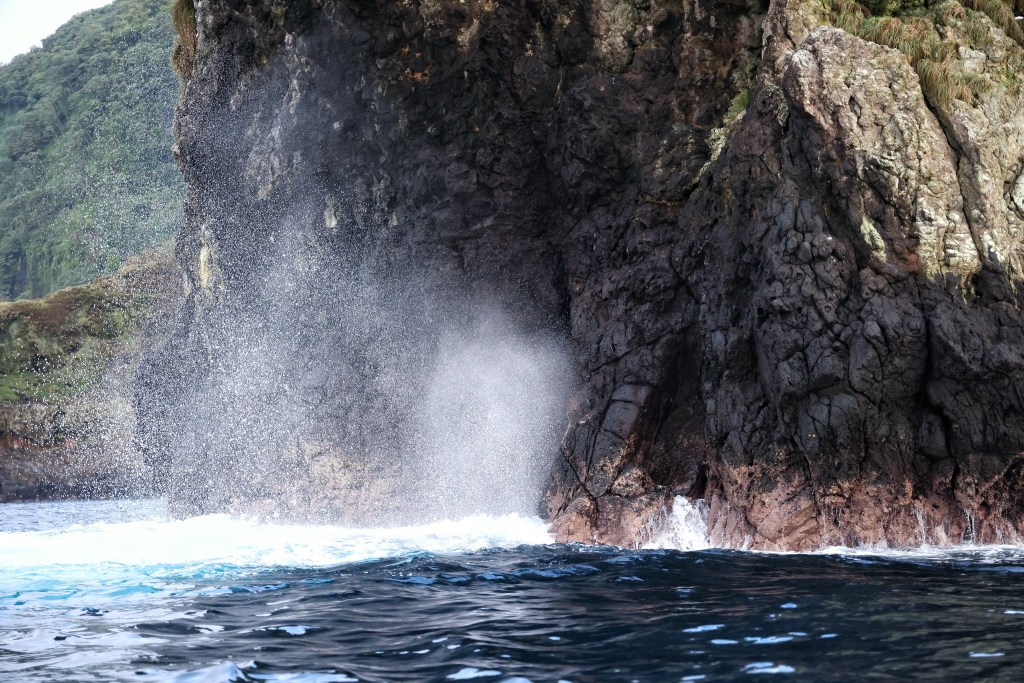
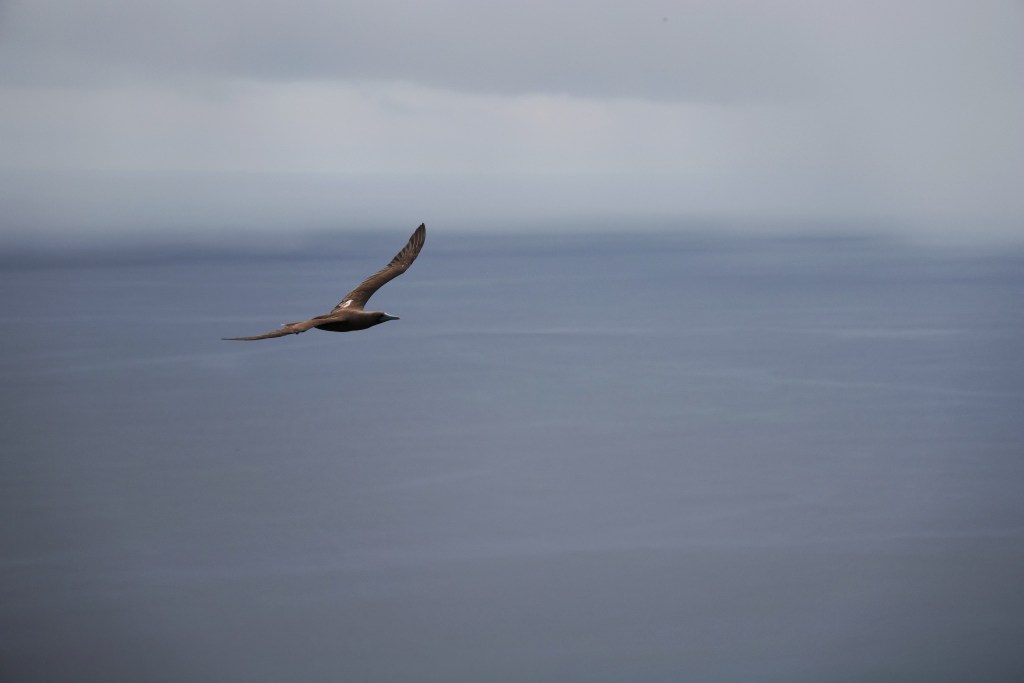
Only two dive companies are licensed to visit Cocos Island – the Okeanos Aggressors, and the Sea Hunter research vessel. This meant that each dive site was pristine and ours alone. The rangers allowed us to come ashore at the two accessible bays – Chatham and Wafer bay. We hiked up to a lookout at one, and swam in a freshwater pool at the other. Each time surrounded by the Brown Boobies (ha) and Frigate birds endemic to Cocos and Galapagos islands. We took another excursion, timing our landing with the crashing waves as we swam ashore to pick our way up to take a dip under a waterfall, cascading through the draping greenery in an inaccessible valley.




As with other liveaboard dive boats we’ve been on, the food was excellent and the service was to match. It was an old boat – a repurposed fishing vessel and luxury it was not, but you find you don’t need much, other than a bed and a lot of calories. Three deep dives a day takes its toll on the body. We spent much of our time with Toby, a lovely musician chap, and Robert, an A.I. Ethics specialist, both from London.
After a spectacularly privileged week, we left the island behind us, sailing away to the backdrop of a stunning Pacific sunset. Over thankfully calmer seas and a following wind, we made our way back to Punterenas.

On arriving, we left the boat and were transferred to the airport. Having most of the day to spare before our flight home, Shona, Robert and I found a local driver and headed out to explore the Poas Stratovolcano – one of a number of active volcanos in Costa Rica. We stopped at waterfalls, shared an excellent lunch and visited the singular nicest Starbucks in the world (their coffee plantation supplying all their beans).


Updating this on our flight home, we had an amazing 2.5 weeks. It feels like much longer, and that, my friends, is the sign of a great holiday. Until next time.
 Travels with Sklaroffs