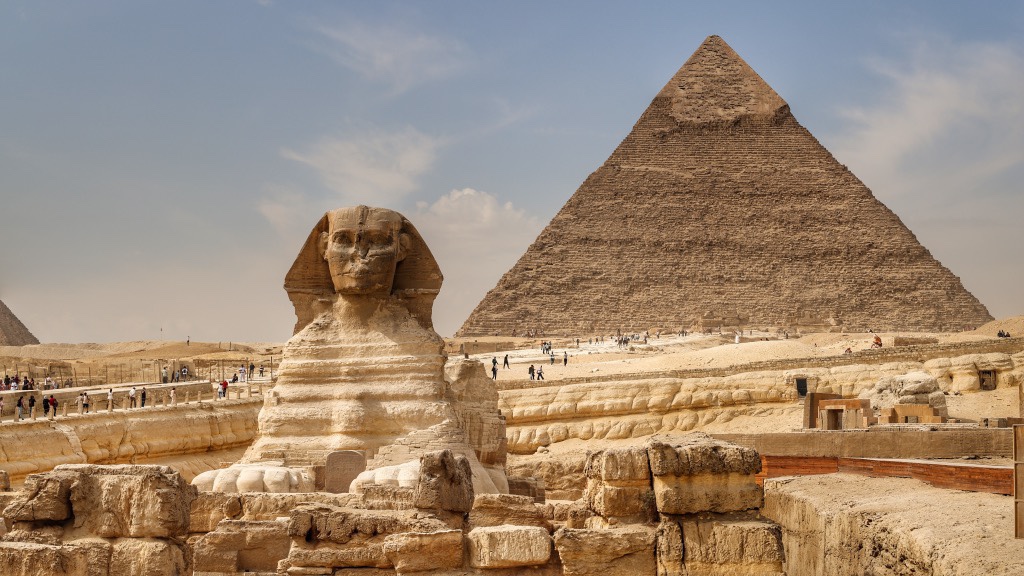

On Friday at terrible o’clock AM, we headed to the airport to start our trip to Africa. We’re off to spend the next two weeks exploring around the ancient world of Egypt.
Nestled between a war-torn Sudan, a live war zone in Gaza, and the unstable and dangerous Libya, Egypt strikes an Oasis of relative calm in turbulent African seas.
That is, until you get off the plane in Cairo when everything goes a bit nuts. Snaking queue followed by snaking queue – passport control, more passport checks; baggage collection with ‘helpers’ everywhere, more checks, and security control to get your bags out, and then into the heat.
We were met by a transfer agent who helped us through the tumult. In all honesty, it was probably better than a good day at Edinburgh airport.
It was early evening, and as our transfer wound its way around Cairo city to our hotel, we spied the smog-shrouded Pyramids in the dusk of a dusty city. The traffic was frenetic; lane markings ignored, lane closures barely marked by catherine-wheel LED lights – spinning weakly in the mottled twilight. There was little street lighting and fewer cars with head or tail lights. Moped riders emerged from the gloom, helmetless and unlit; dark silhouettes on dangerous roads.
Arriving at the Steigenberger Cairo Pyramids hotel, we were met by Ahmed, our guide for the next week. We dropped our bags in our pleasantly spacious room and went out for a local Egyptian dinner with plates of hummus, tabbouleh, garlicky yoghurt, raita, salads and local breads, followed by a main of rice, chicken. All very tasty and far too plentiful.
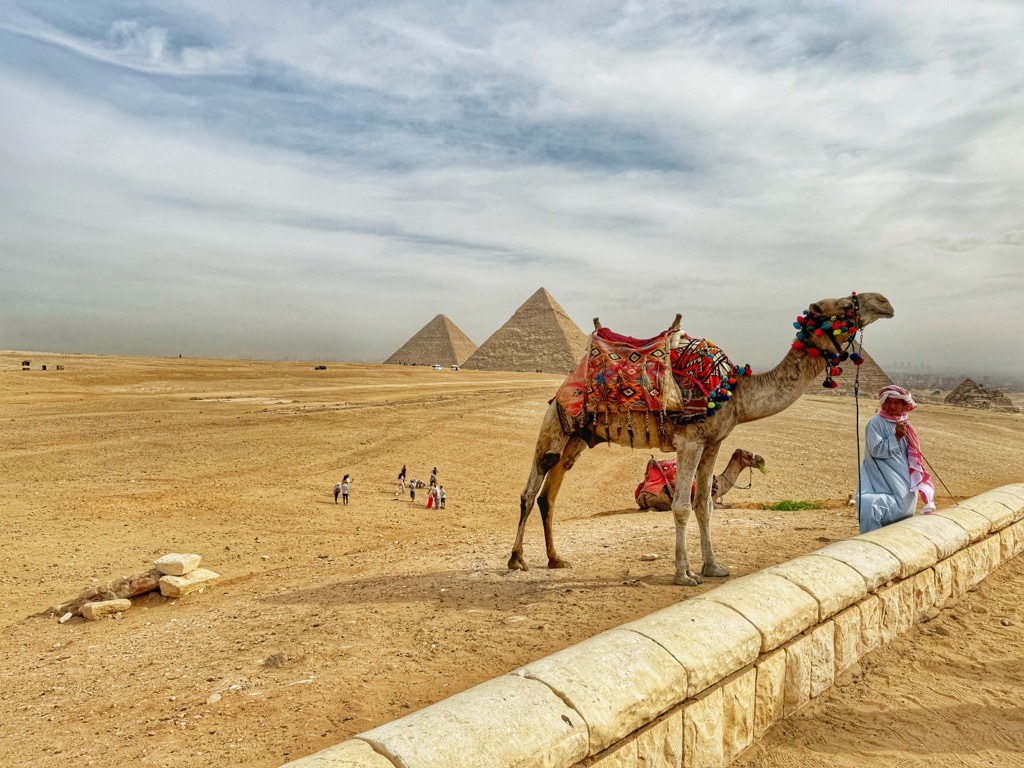
The next morning, we travelled the short distance to the Pyramids of Giza. Driving there, we joined a queue of buses and coaches, inching their way grubbily up to the entrance, where we disembarked and joined another large queue of tourists to enter the grounds.
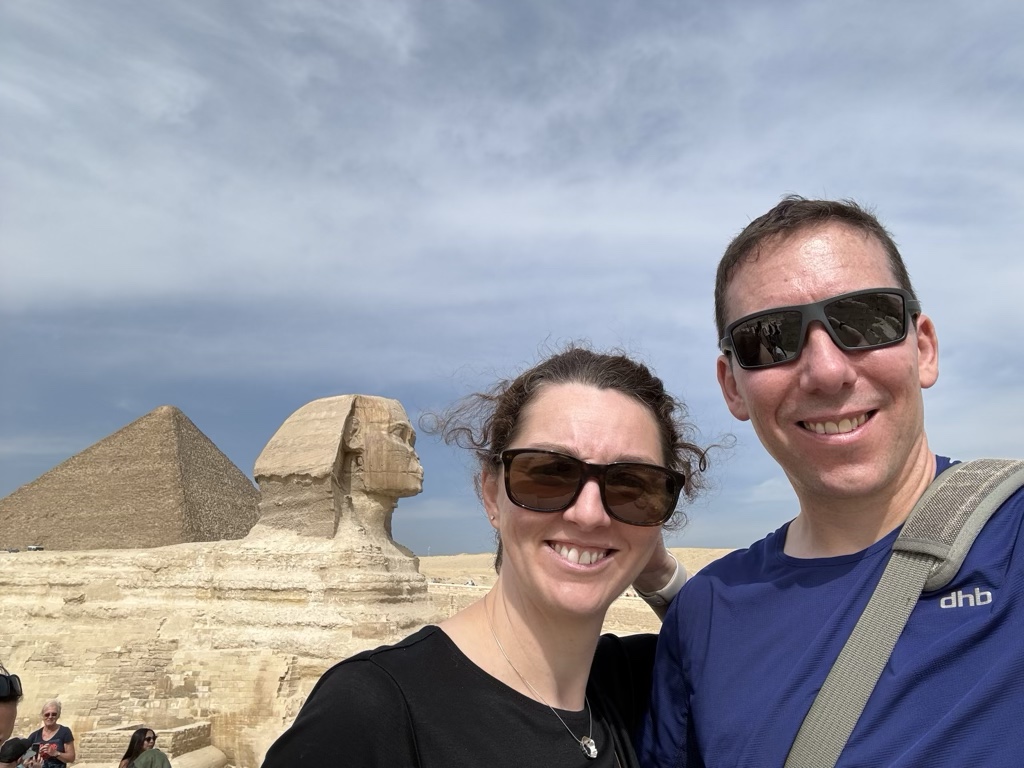
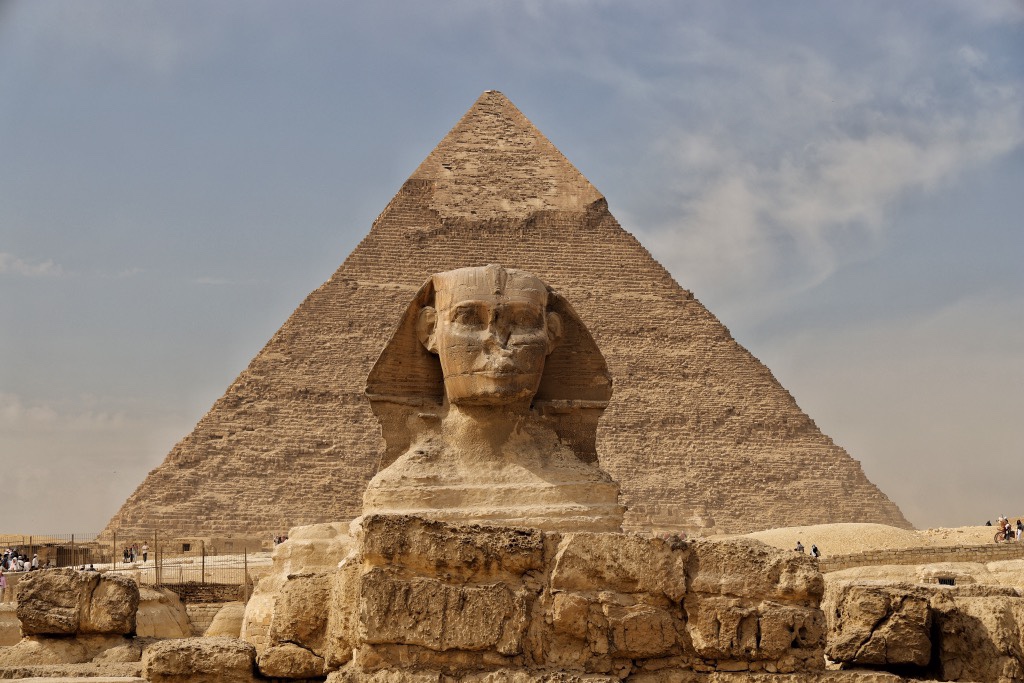
Unlike Petra, there’s no dramatic unveiling of these towering structures, which inescapably loom over the city. After a not-so-brief briefing from Ahmed, we were released to explore the Great Pyramid of Khufu, the final resting place of the eponymous Pharaoh who died in 2566 BC. A giant mausoleum to his reign, very little else exists to preserve Khufu’s memory. The only image of him is on a tiny 3” high statue in the Cairo Museum.
The giant structure consumed our view, too large to really process as a man-made monument. We had paid the extra few pounds to visit the King’s tomb. Not realising this was actually an option before arriving, we were pretty excited to join the more limited numbers who were prepared to claustrophically crouch and squeeze their way hundreds of feet up into the heart of the pyramid. We picked our way up through the chocking hot air, deep into the rock, under 2.3 million meticulously cut sandstone blocks, some estimated at 80 tonnes each. After sweatily edging past a procession of gasping people coming back the other way, we made it through to the Grand Gallery – a vaulted passageway stretching up into the deepest part of the pyramid and into the oxygen deprived King’s Chamber. Made from solid red granite, the treasures from this burial chamber are long lost to history, but what remains is the immovable granite sarcophagus where he once rested, in an airless chamber.
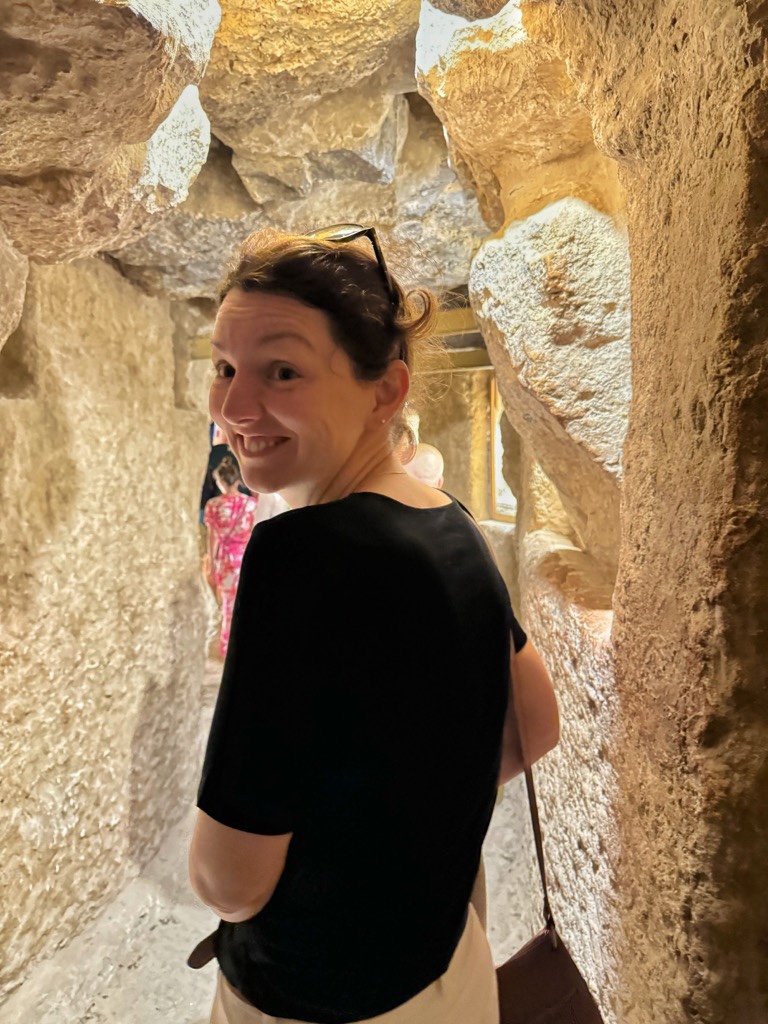
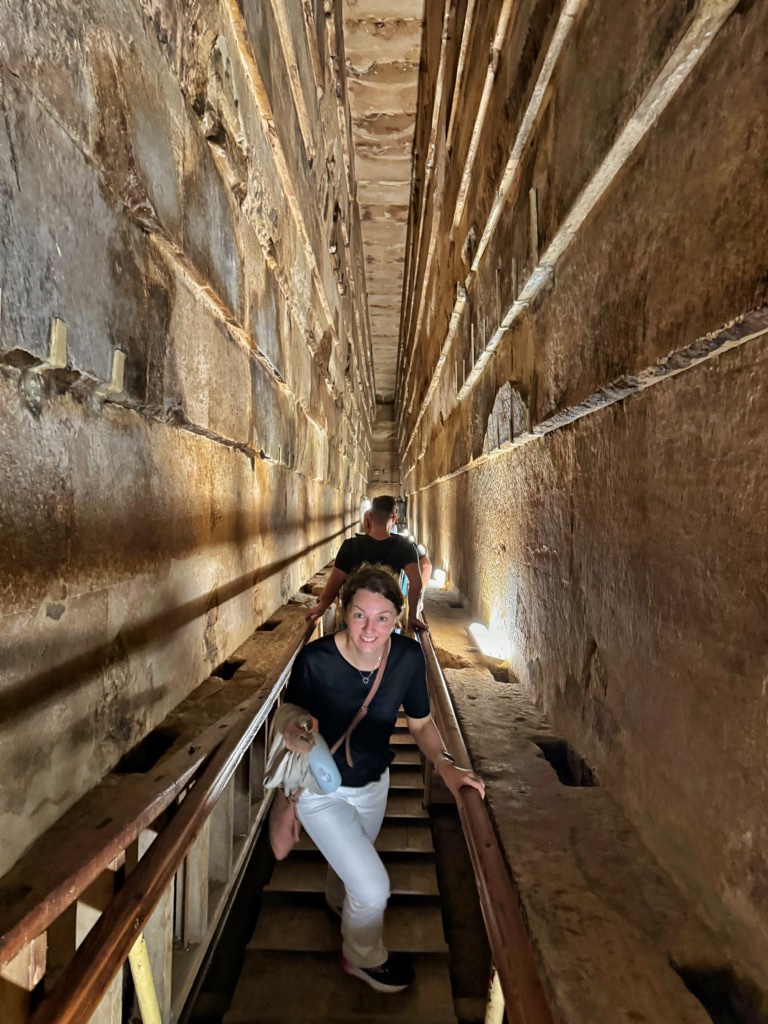
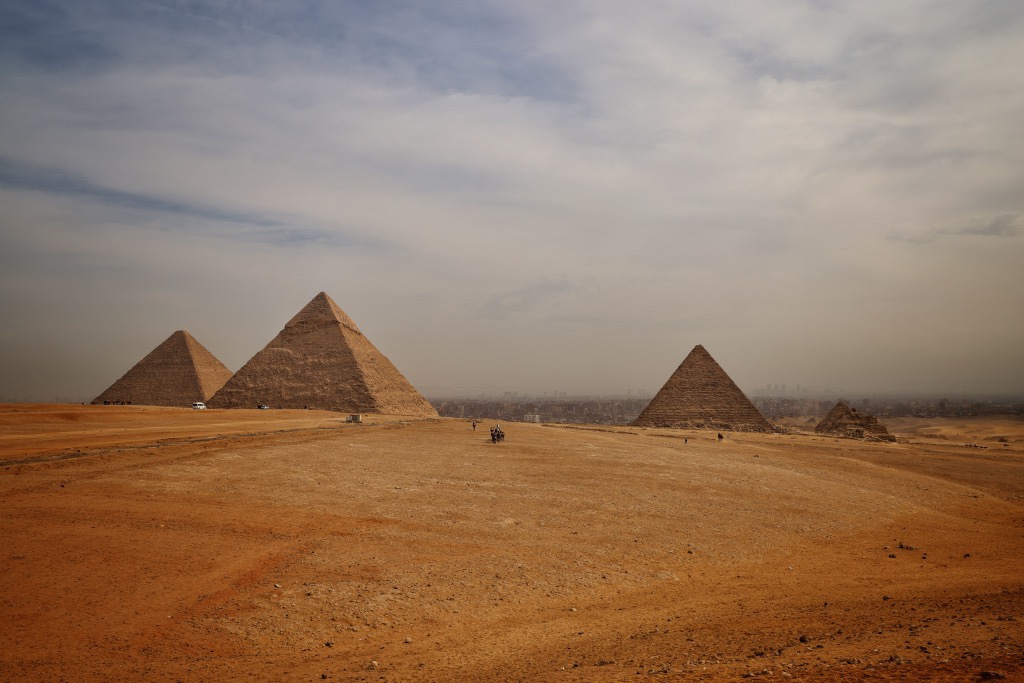
After an interminable time queueing to get out, we emerged from the tomb, dripping in sweat and breathing hard to decamp into the welcome desert heat for a panoramic view of the pyramid complex, framed by the vast backdrop of a chaotic Cairo.
On leaving the Pyramids, we elected for a lunch of Kushari – a traditional Egyptian dish of pasta, rice, lentils and fried onions, mixed and topped with a tomato sauce and a lemon and garlic drizzle. It was delicious and ridiculously filling. Carb overload.
After lunch we made our way to the Egyptian Museum. Built in 1901, the museum replaced many former museums, variously flooded by the River Nile or given away by the Egyptian government. Despite the decades of treating items of Egyptian history like a natural resource, the museum still contains many stunning artefacts, including the spectacular gold headpiece, sarcophagus and burial trappings of Tutenkhamun. To stand within inches of this priceless and iconic set of treasures was pretty special (no images here… “No photo!”).
As we toured around the museum, Ahmed would point to various items, such as a replica of the Rosetta Stone and remark: “the English have the original”, to which Shona would appeal: ‘I’m Scottish!’… and for which I would have to apologise… again.
Only when he noted that one item was in the Berlin Museum did I triumphantly acclaim: ‘typical thieving Germans!’.
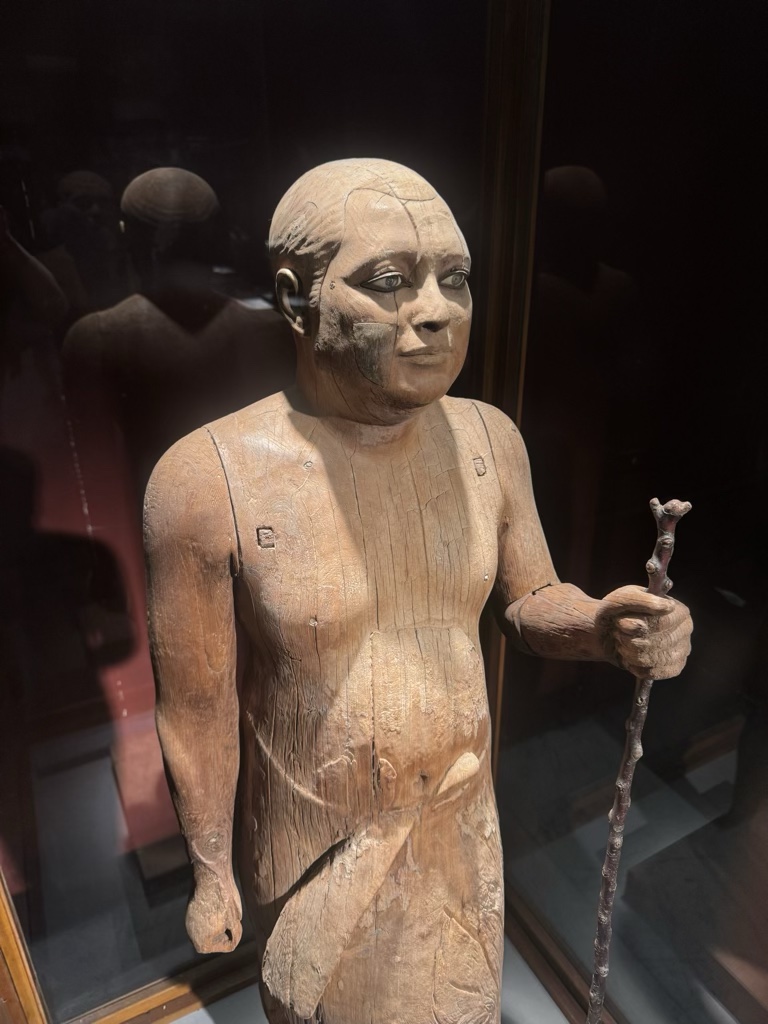
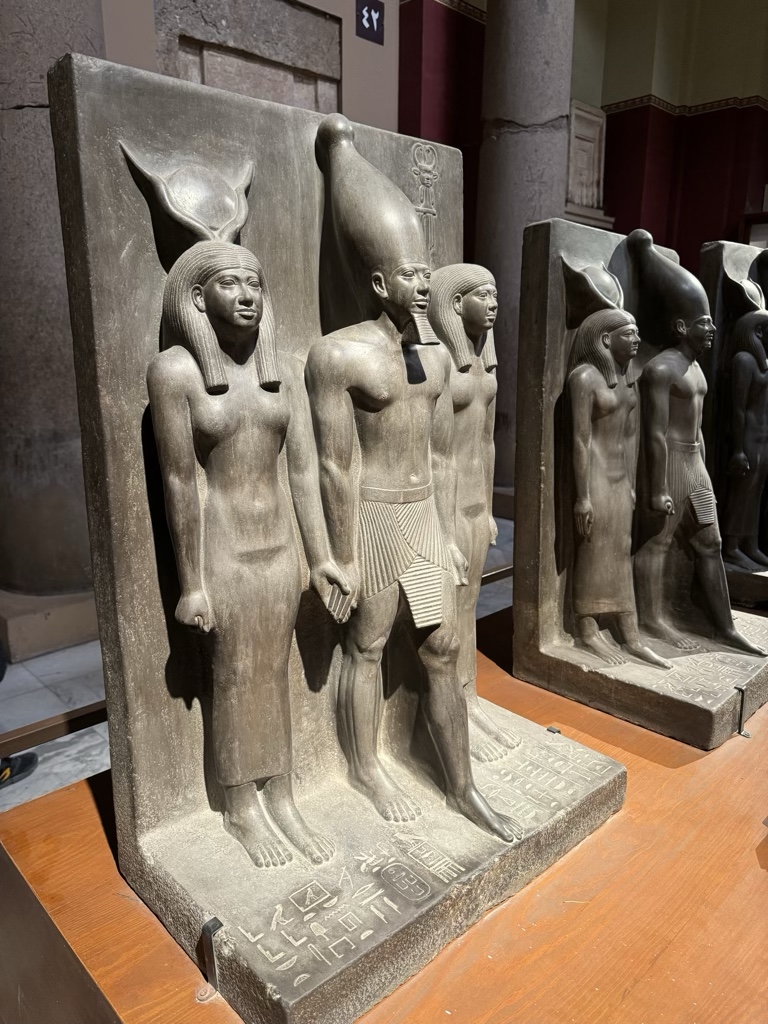
It was amazing to see such a rich collection of timelessly preserved and intricately carved pieces of history. 5000 year old artefacts looked like they were hewn yesterday. One incredibly life-like statue of the priest Ka’aper, was found in a tomb in Saqqara. Not only was it incredibly well preserved, but bafflingly, it was made from Sycamore wood. It had rock crystal and copper eyes, one of which was repleat with a cataract. Phenomenal detail and still preserved after 4500 years.
The new museum, not yet open to the public has been under construction for many years. When open, it looks like it will be a truly world class location for these and the many thousands of artefacts not yet on display.

