
The next morning, it was a particularly evil 3am start to get up for a flight to Aswan. A decent airport cafe coffee didn’t do much to improve the flight experience; an interminable security queue (they have lots of security here), followed by a very busy, very smelly flight.
Fortunately, the other side was much easier. Çollecting our bags, we were off in a bus for a short trip to a harbour to visit Philae Island.
At the harbour, we were confronted with a barrage of local stall owners badgering us to buy their identical souveniers. “T-shirt. You buy. One dollar”.
We had expected more hawkers at the Pyramids but through luck, judgement or experience, we had managed to avoid any aggressive sales patter.
Still, we adopted the polite smile and repeated ‘no thanks, no thanks, no thanks’ (or looked straight ahead and ignored them entirely) and dodged our way through to the harbour. We got on our boat, and to clouds of 2-stroke fumes, picked our way along Lake Nasser, past Cattle Egret birds feeding at waters edge, to another harbour on Philae Island. Absent of any fenders or care, the driver slammed his boat’s hull between the hulls of the myriad other tour boats and got us ashore.

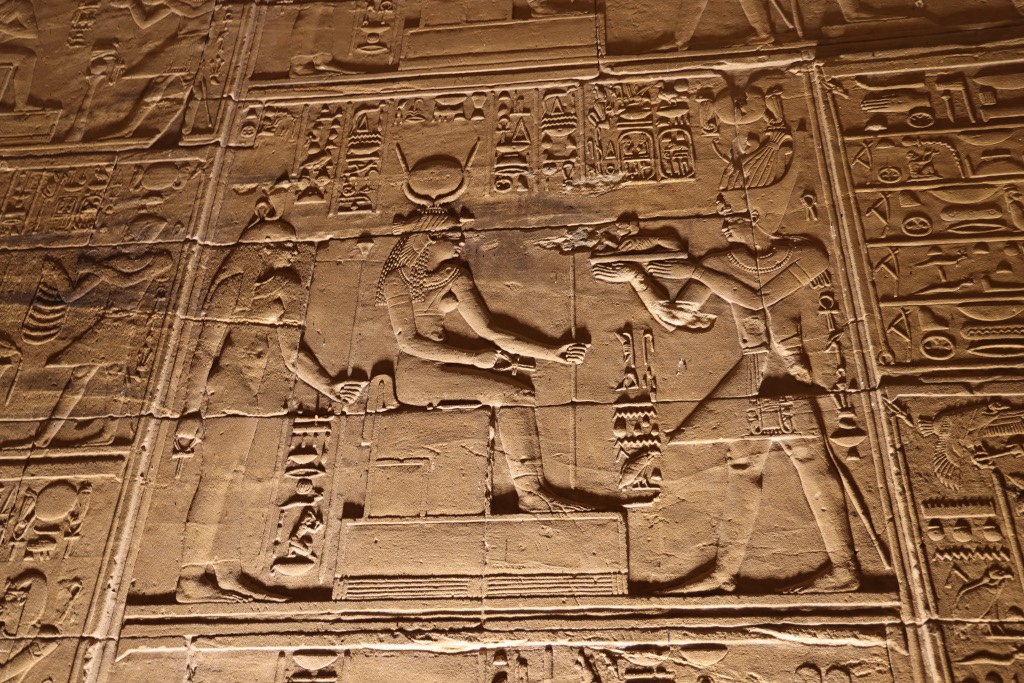
Ahmed walked us up to the island to see an impressive temple complex – the Temple of Isis. One of 30 monuments moved with support of UNESCO, the US and other governments following the building of the Aswan High Dam, and the creation of the vast 550km long Lake Nasser in the 1970’s.
We toured around the temple, Ahmed talking us through the hieroglyphs [in rather a lot of detail] in the baking heat. Constructed during the reign of Nectanebo in around 380 BCE, the age of the temple – and particularly the preservation of the carvings – was as impressive as the heat was oppressive. The inscriptions spoke of Isis, Hathor, and other ancient gods. The God Horus was also depicted along with stories of Osiris. Many of the carvings (with the exception of Horus) were mutilated and defaced, apparently by the Christians and Iconoclasts; insecure in their own gods. Apparently Horus was thought to be quite Jesus-like and so spared defacement.
Moving these huge stone structures must have been a Herculean feat but much damage was caused in the process. The reconstruction was imperfect, and in some ways diminished the experience, where the whole feel of the temple was slightly askew. Speaking with Ahmed, he conceded that in moving the temple, they needed to reorient it to fit the space on Philae. As a result, it no longer faced in the original direction, aligning to the setting sun. Yep, I thought the feng shui was totally off.
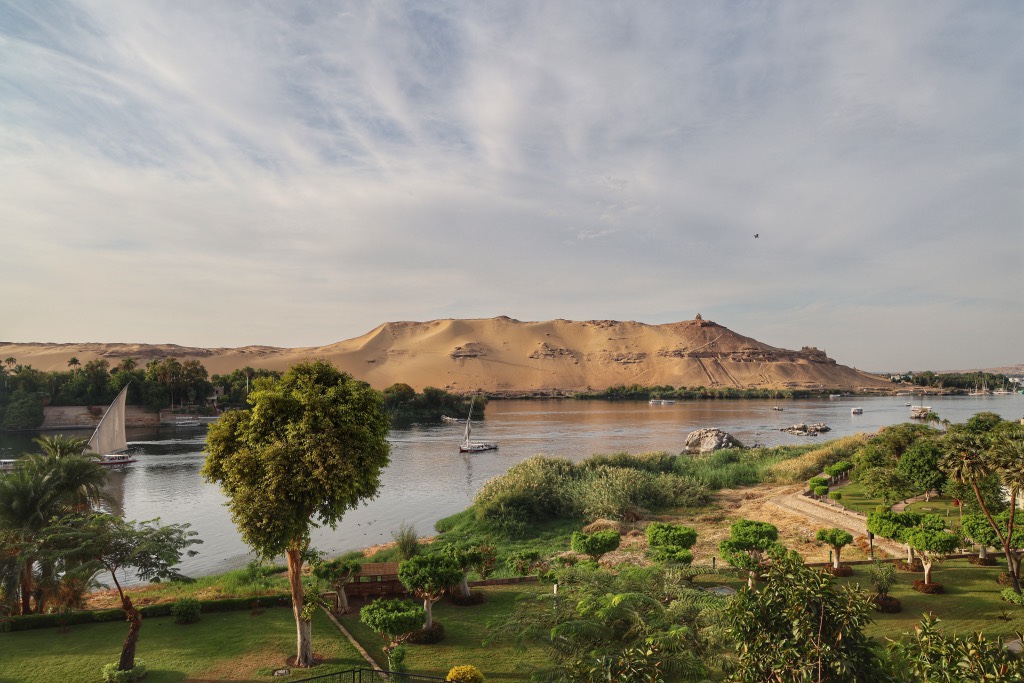
Leaving the temple and back on our boat (joined by a pair of innocent looking guests… who turned out to be hawkers), we decamped to our hotel for the night, the rather nice Movenpick hotel on Elephantine Island on the River Nile.
Despite feeling like evening, it was only midday and to shake off the malaise, Shona and I went for a run around the curated hotel grounds. At about 37ºc, it was maybe a little toasty for a run. Shona thought so.
Finishing the run, we had a swim in the lovely pool, we met with Ahmed and headed out for a boat tour around the island before stopping at another harbour on Elephantine Island to visit a Nubian village. Nubians are an ancient people, from north Sudan and southern Egypt, with settlements dating back to 7000 BCE. They have their own language, and in the village we visited, two distinct languages are spoken – and not understood – within the same community.
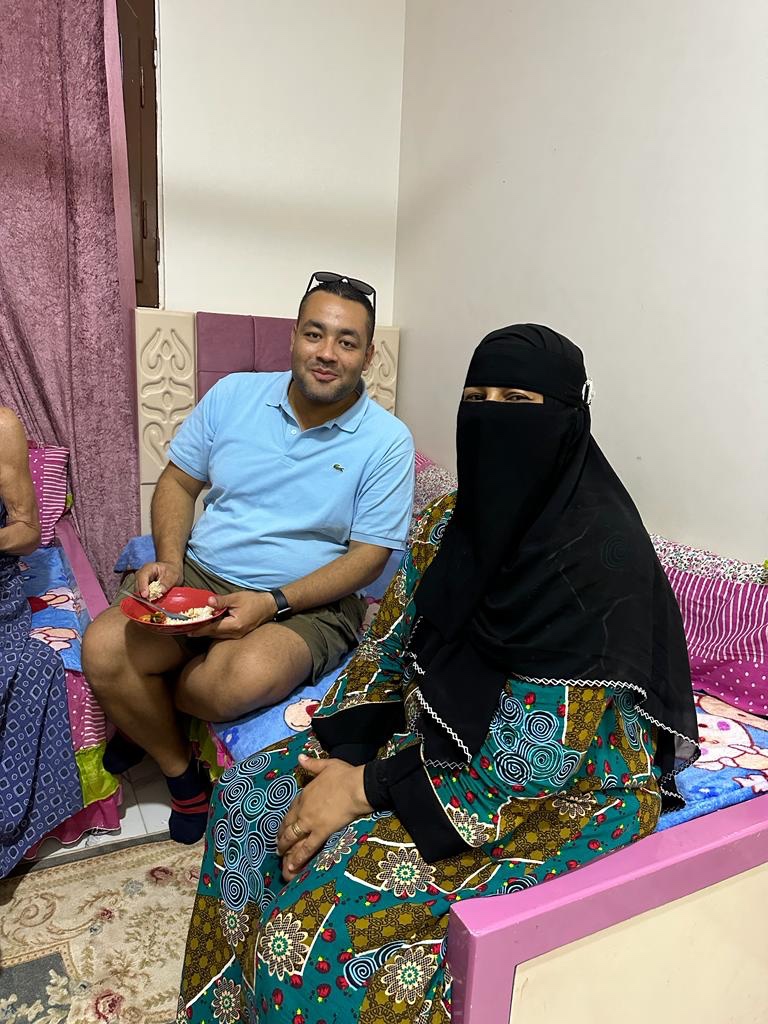
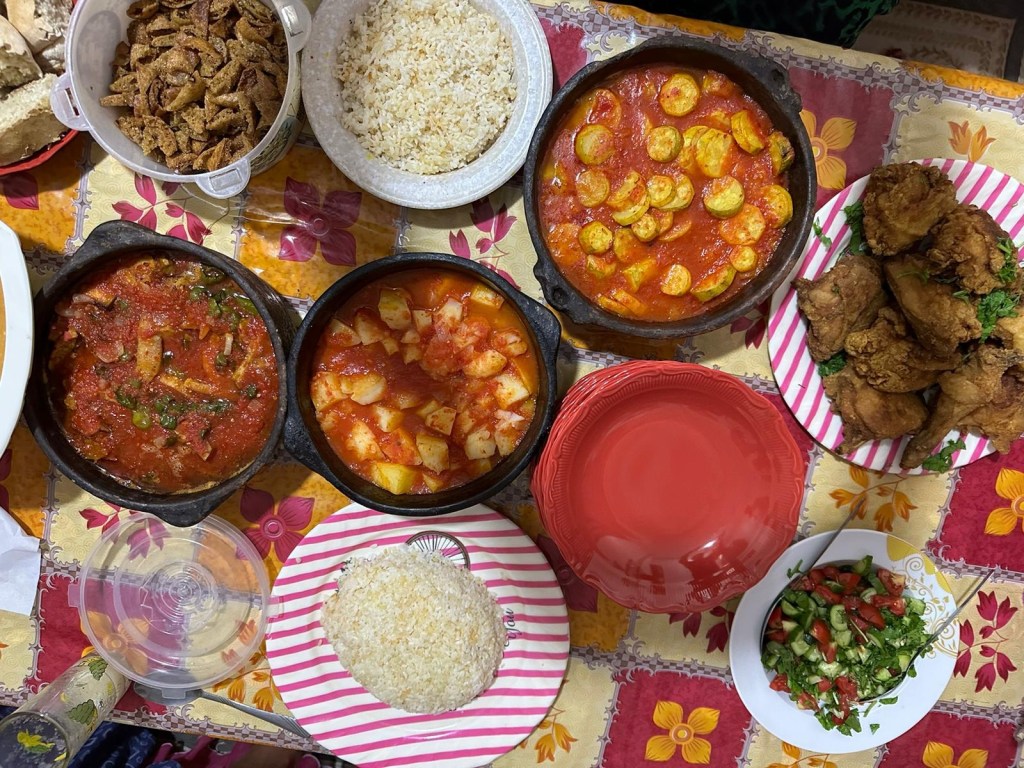
We were met by a Nubian musician, restauranteur and boat owner called ‘the King’ who was clearly loved by all the village. A hugely gregarious chap, he gave us a tour of his village, high-fiving the local children and laughing with the adults as we passed by, before heading to his house for a huge dinner. Despite the dirt roads, irrigation ditches, ragged dogs and mud-brick houses, the place felt like a welcoming and warm community.
During dinner, Ahmed was talking about Egyptian customs, and how men can have up to four wives. We asked if he had more than one. He said “not any more”. Intrigued, we probed to discover that he had divorced his second wife, who was American… but she was unknown to his first wife. We’re not sure if that qualifies as polygamy. What was more remarkable was that Ahmed was entirely unapologetic – he said that he shouldn’t tell his [original] wife as she would be upset. How nice of him, we thought.
He genuinely saw nothing wrong with the position, but felt rather aggrieved by how difficult he found it to manage both lives (wives?) and was relieved he was back to one. Asked if women could have more than one husband, he was resolute that ‘women could not manage more than one man’.
It’s easy to see why in spite of globalisation we have not reached any sort of ‘western’ hegemony. Technologies and commerce converge but cultures and customs remain a universe apart.
 Travels with Sklaroffs