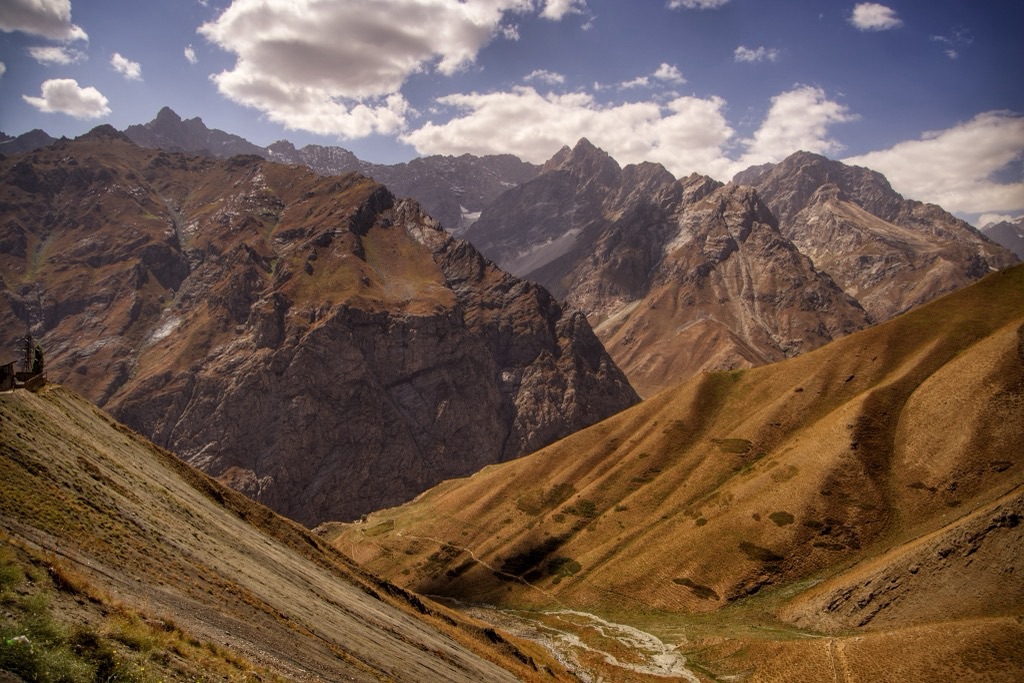

Our next country, Tajikistan is immediately a very different place to Uzbekistan. Over millennia, this region has been subject to repeated invasions, from Persians in 600BC, through Alexander ‘the Great’ (not to this country), Greco-Bactrians, Kushans, Sassanids, Hephthalites, Gokturks, Samanids, Ghengis Khan, then Tamir (who we met in a previous episode), before the Russians deemed Tajikistan an autonomous republic in the 1920’s and latterly full Soviet collectivisation in 1929. Tajikistan gained independence as a sovereign nation on September 9th 1991, exactly 35 years before our visit. The country now identifies with its Indo-Persian roots and is reestablishing its national identity as a more secular society, with Iranian roots, but an absence of historical records from which to grow.
Over these shifting political and religious epochs, Tajikistan’s territory has been shaped by boundaries that have increasingly squeezed the terroritory to what is now a 93% mountainous landscape, with some peaks towering to over 7500m. A country of 10.5m people, their sovereignty was hard-fought, and the country was plunged into civil war after the breakup of the USSR. 3 years later, the current president, Emomali Rahmon emerged as the authoritarian ruler of the nation, which is apparently a decade behind its neighbours in terms of modernising its economy and society.
Tajikistan is highly dependent on remittances from Tajik workers abroad, sending money home. This is considered to be a structural economic trap, as much of the Tajik labour capability is exported, limiting progress at home. That being said, this is a country with economic growth that would be the envy of the west, ranging from 6% – 8.5% depending on source. We saw evidence of this everywhere with massive building projects underway in each city, town and village we stopped at.
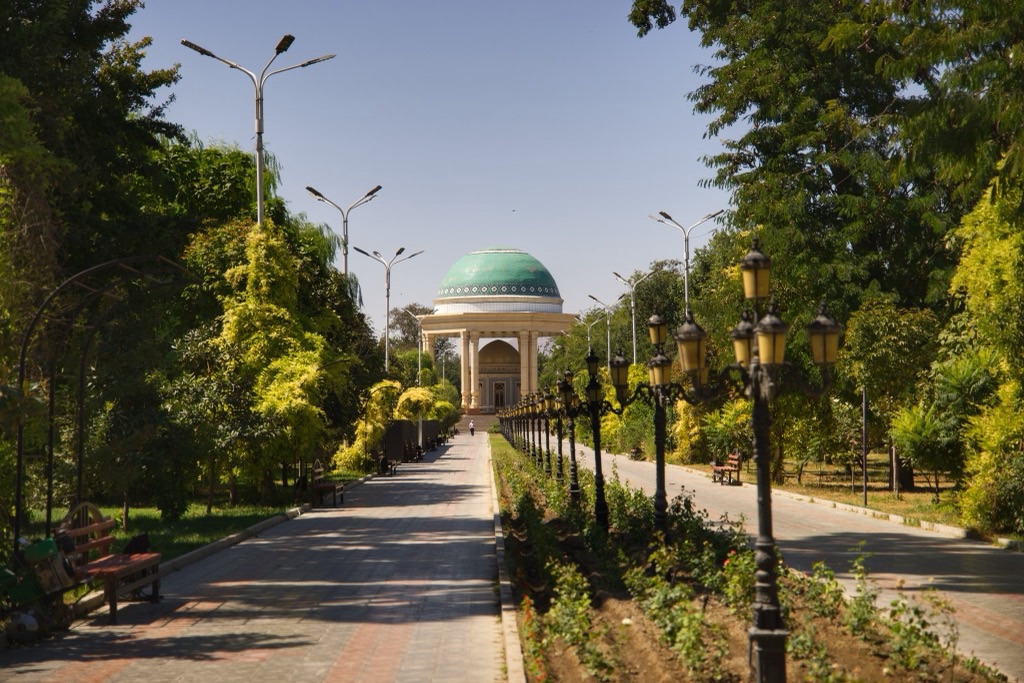
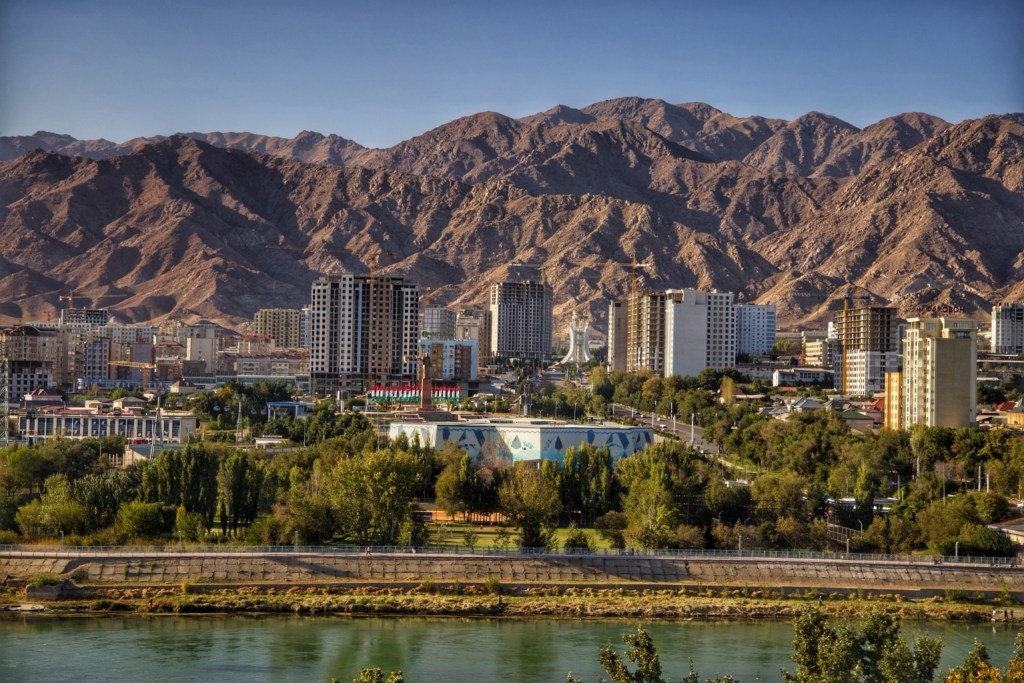
Khujand – Tajikistan
Our first stop was Khujand. Not far over the border from Uzbekistan, this was definitely a stop to break up a long journey. The sketchy drive to the border was punishing, and while the border crossing itself was a pretty seamless affair, it was a long shift by the time we reached a big and rather bizarre hotel that afternoon. We met a local guide, Hussein who tried his best, but didn’t quite have the polish of more touristic locations: “…Which means, for example, that the city is 3000 years of old, which means that the city has existed here for 3000 of years, which dear guests has means for example it is over 3000 years of the old…”.
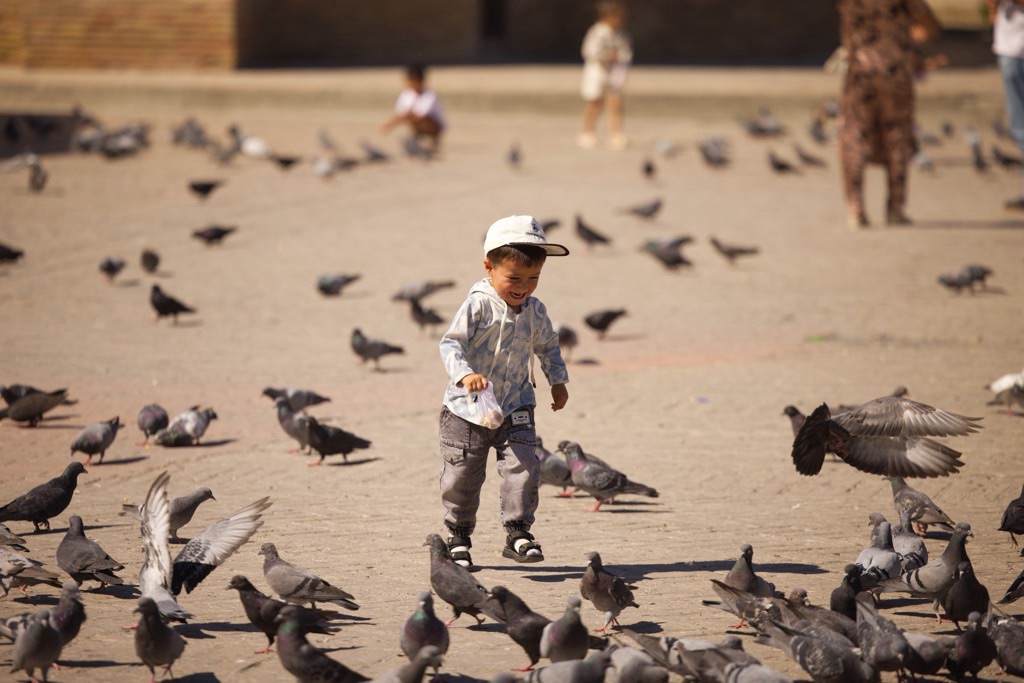
We visited a very authentic bazaar, full of locals who didn’t seem to want us there. We came across a bunch of kids, who greeted us with a cacophony of ‘hellos’ and delighted in getting ‘hellos’ back. One kid came flying up to me and stated: “Hello. American. Money”, grinned, and shot off after his friends. After returning to the hotel, we had a bit of downtime, I went for a run, and then we met some of the group for a few beers on the hotel terrace.
Sary tag villlage – Tajikistan
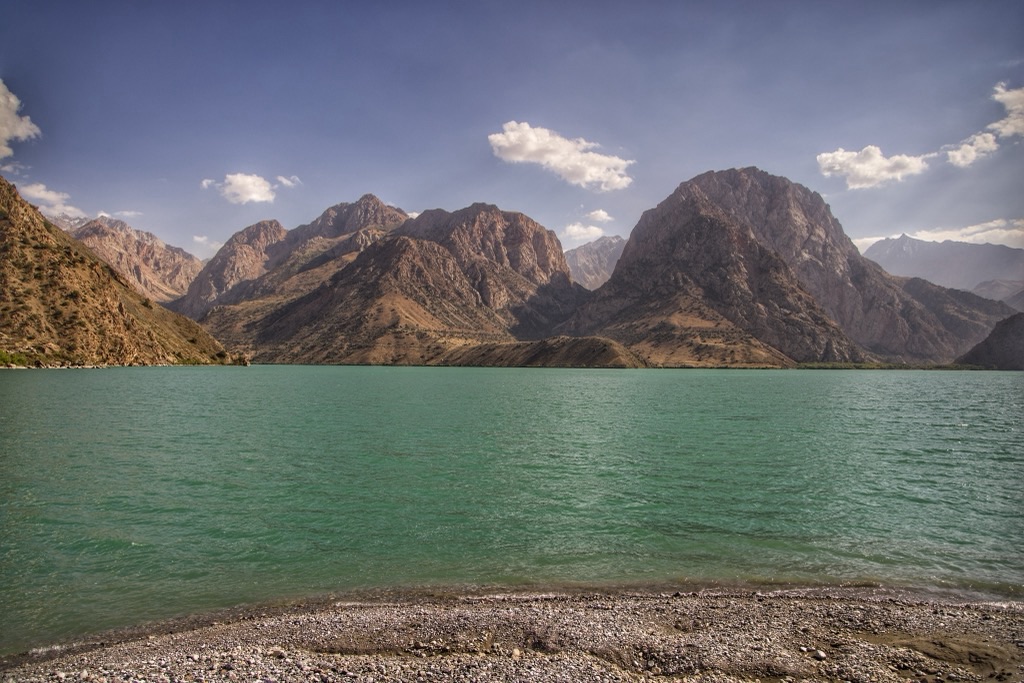
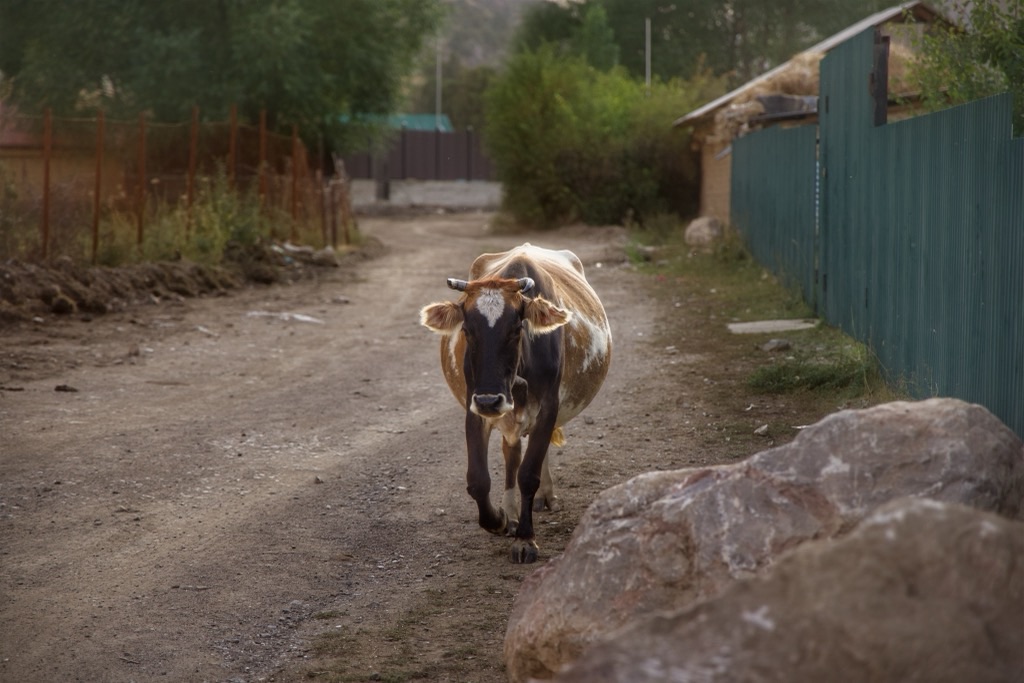
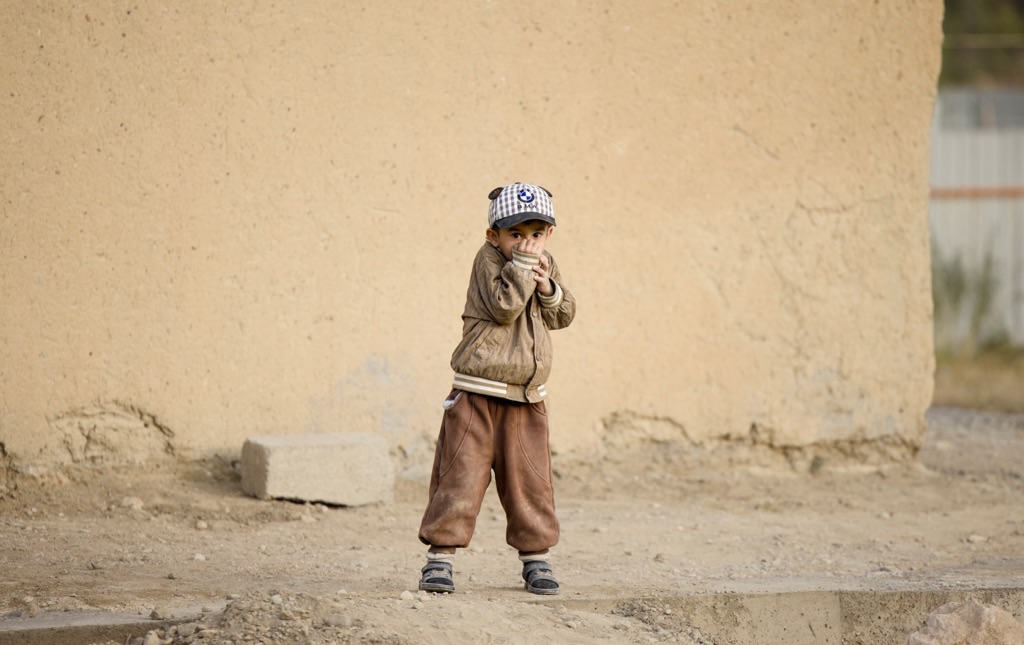
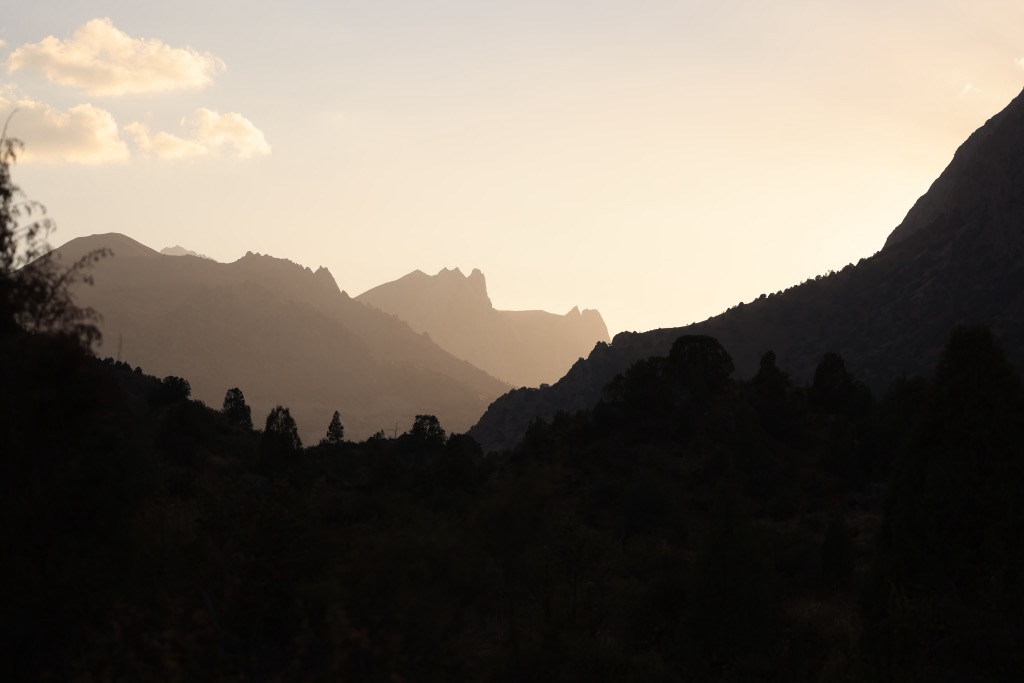
The next morning, we left early to make our way up into the Fann mountains, stopping for coffee at the Iskanderkul lake at 2000m elevation, then driving up to Sarytag village, nestled in a mountain valley up at 2400m. We checked into our homestay lodge (more of a guesthouse/motel) for the night and took a walk to explore the rustic village. Like Khujand, building work was evident all around, and this old village, that only 100 years ago had been home to simple mud brick huts, was being dragged rapidly into the modern age. A local gold mine, owned by a Chinese firm was employing a number of the locals, and despite evidence of subsistence living all around – with cows grazing and roaming freely on the dusty streets – it felt like a way of life that was quickly eroding in favour of the destructive extraction mining and encroaching demands of tourism, of which we are part.
We had a simple dinner, and settled in for an early night in our rooms. It was a peaceful location, disturbed only by the regular passing of mining trucks on the dirt road, and the local mountain dogs holding a competitive barking contest between 2am and 5am.
The following morning, we set out early back down the twisting dirt track and stopped near the lake to hike out to a waterfall. A rusty metal platform was suspended over the falls and some of the group weren’t convinced of its safety. Returning to the van, we headed up along the M34, a treacherous mountain road crossing the Fann mountains leading to Dushanbe, the capital of Tajikistan.
The drive over the mountain pass was not for the faint of heart. A constant stream of freight and mining trucks pass along this perilous road, kicking up storms of dust as other cars and vans hare past them in snatched gaps before the next blind bend appears, lining the enormous drops. Our driver joined the reckless masses, picking moments to overtake before meeting another giant truck coming the opposite direction. We witnessed the recent aftermath of one incident where a lorry had tipped over attempting one of the hairpin bends. Amazingly, it had stopped before toppling over the edge. Someone had said their prayers that morning.
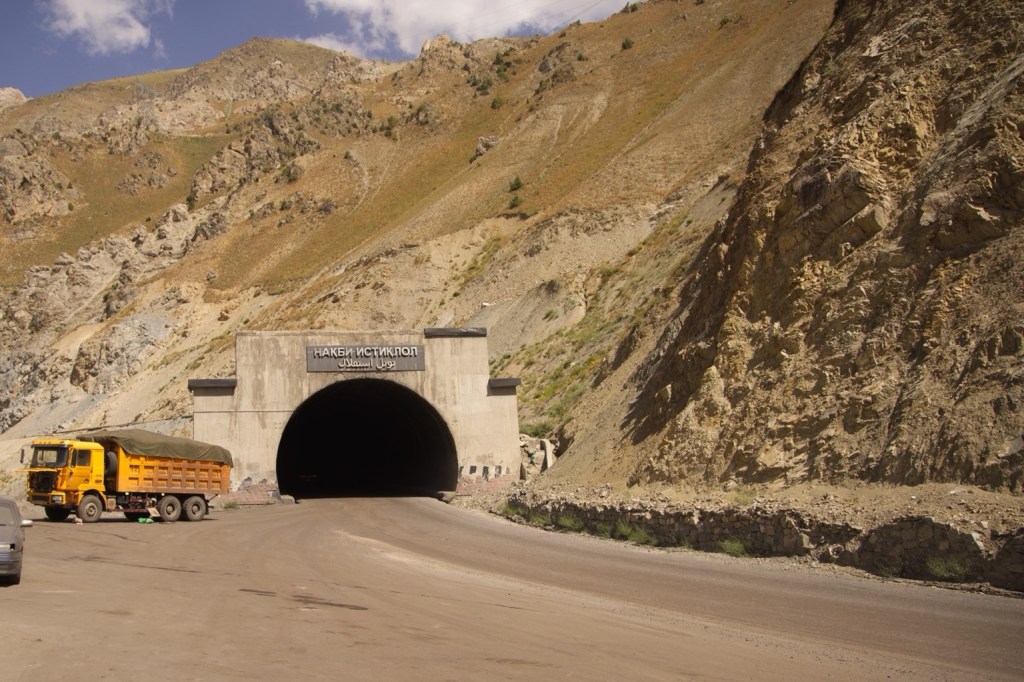
The day before, we’d driven through a Chinese-built tunnel that would not pass western safety standards; dim lighting, limited ventilation, etc. Today however, we passed through an Iranian-built tunnel that was far, far worse. The Istiqlol Tunnel, or ‘Tunnel of death’ is 5km long at 2700m elevation, built to avoid a dangerous 3300m mountain pass. It was opened before being fully completed in 2007. Driving though this tunnel was a horrifying experience. Immediately, you are plunged into an almost completely black void, where headlights and the sporadic tunnel lighting cannot penetrate the thick fumes from the 100’s of diesel trucks chugging through the gloom. Visibility was often less than 3m due to the impenetrable clogging haze. Still the overtaking would continue, passing fuming dumper trucks in the murky blackness, gambling that you don’t come across a car or truck with failing headlights coming the opposite direction. No road markings, no ventilation, often no lighting, flooded sections where tunnel seals have failed… It was one of the worst driving moments we’ve had.
Dushanbe – Tajikistan
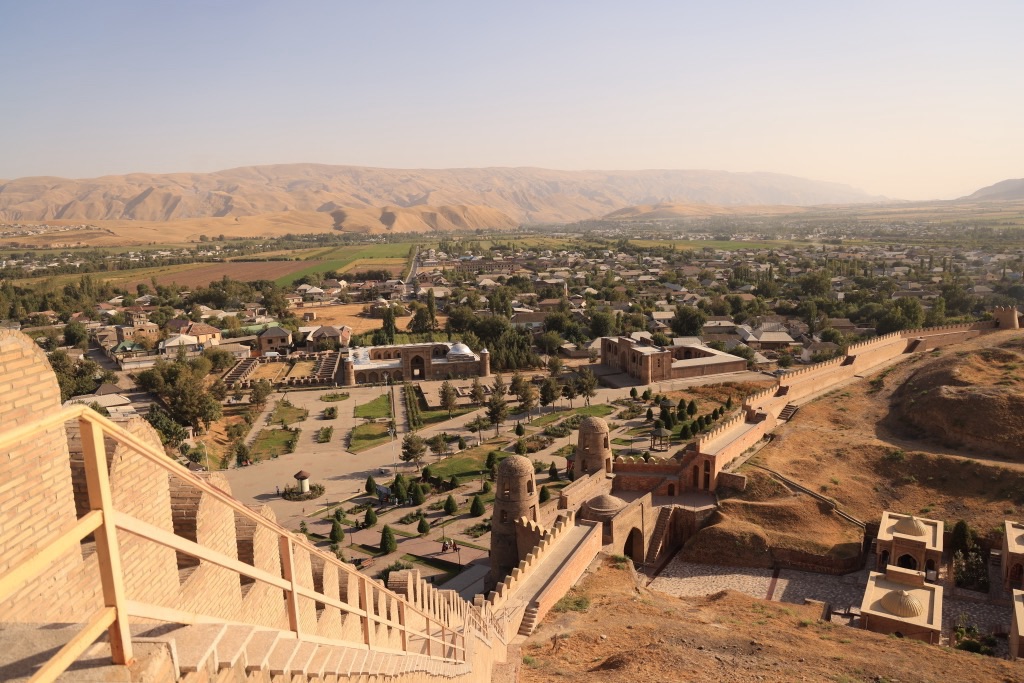
We arrived in Dushanbe, Tajikistan’s capital, and headed straight out of town to the Hissor Fort – the former capital of Eastern Bukhara province. We met an enjoyable local guide who, looking and sounding suspiciously like Javier Bardem, told us of Tajikistan’s history and present. This included the nugget that beards are pretty much banned here to suppress Islamic religious extremism. Unless you’ve got an explicit government exemption, people are forcibly shaved. Glad I didn’t grow my customary ‘travel beard’ this trip. We also heard that recently, Tajiks have started learning ‘Persian’ (Farsi) in schools, seeking links to their Iranian heritage. The country has a difficult relationship with Russia , and they are seeking to drop the Cyrillic in favour of Latin text… although haven’t told Russia yet.
We swiftly explored the ancient fortress, located high on a hill, affording very impressive views across the town of Hisor towards Afghanistan. After the tour, we were all pretty tired after the harrowing drive and headed to the anticipated disheveled hotel. We were pleasantly surprised when we got to our room at the Atlas Hotel, which was large, clean and had a half decent shower. We ate that evening at a Lebanese restaurant which was great and everyone reported a proper night’s sleep.
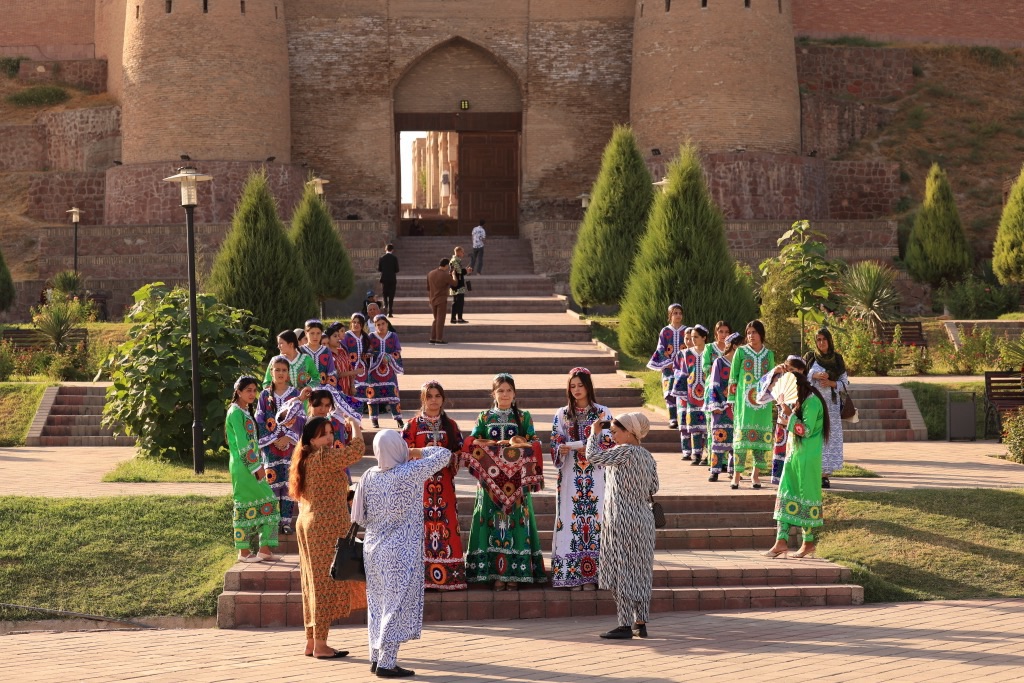
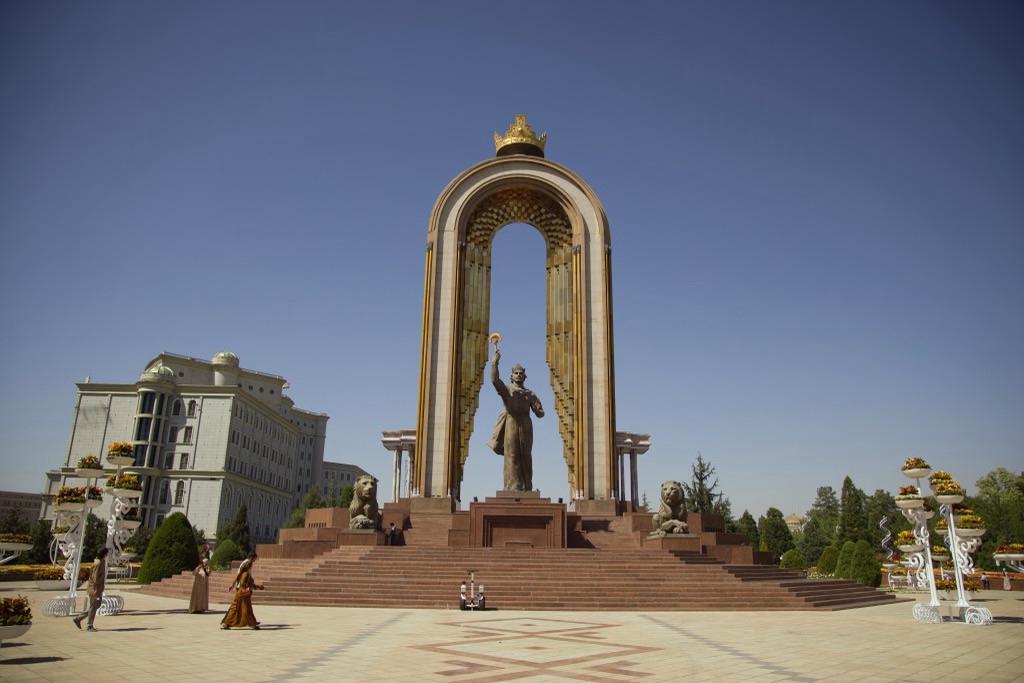
The following day, we explored Dushanbe on foot. Originally intending to visit key iconic sights, we were stumped by today being the 9th – Tajikistan’s 35th year celebration of independence. Resultantly, most areas were closed to us, with high security and mass coordinated celebrations, reminiscent of an Olympic ceremony, or a CCP rally. The our route took us around areas awash with grand buildings. Much like neighbouring countries, there has been huge investment in icons, pomp and grandeur here.
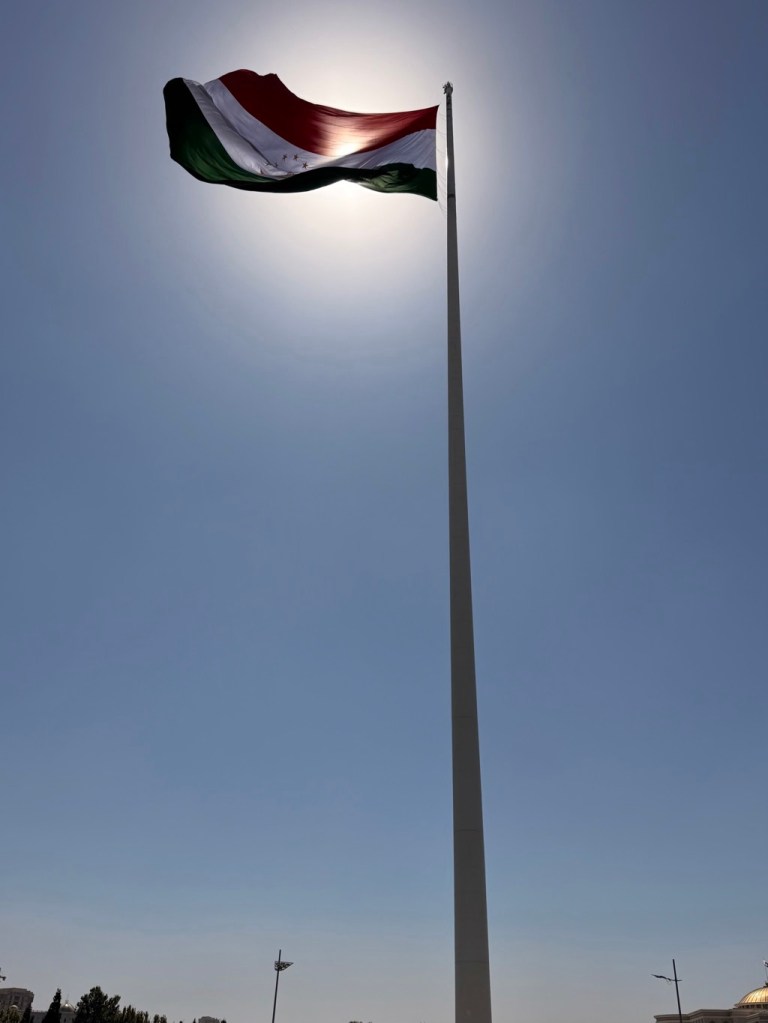
Later that evening, Sviet took us to a restaurant which looked great from the outside, but much like many eateries we’ve found, where tourism is in its infancy, the menu is an ambition, not a guide. Virtually everything we tried to order wasn’t available.
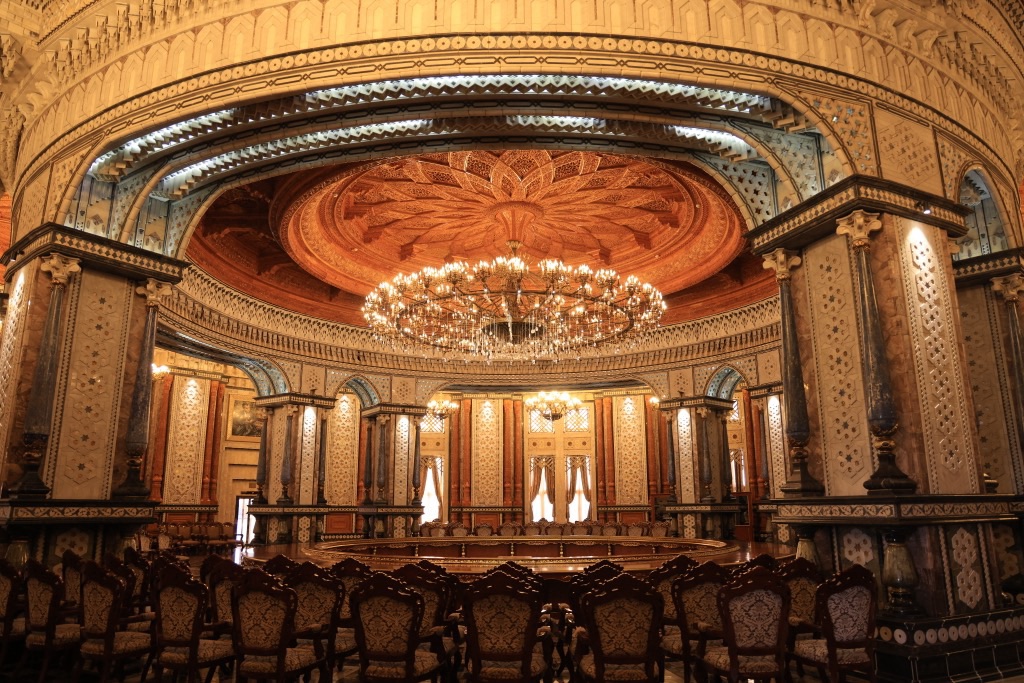
Our last day in Tajikistan was spent trying to explore the city on a guided tour, but we were a little stymied by the recent celebrations, and gaining access to sites. We first visited the museum and met a knowledgeable guide who showed us some impressive artefacts discovered in the south of the country, along with a huge partially reconstructed reclining Buddha statue. From there, we visited the Navruz Palace, an enormous, gaudy commercially funded venue, built to host both private and state events. The levels of opulence and labour evident in the construction was worthy of a Trump ballroom. The taste was similar.
We were told that Tajikistan was one of the less developed countries on our tour, and found this to be true. Development has been hampered since independence. The subsequent civil war set the country back years. The territory suffers from geographical challenges absent in the relatively lush and fertile Uzbekistan and the oil-rich Turkmenistan. The government also uses heavy-handed tactics to suppress extremist religious factions, such as limiting mosques, segregated areas, prayer rooms and beards – Islamic totems that reinforce more extremist states and allies, such as Iran and Afghanistan.
We found this country to be more challenging to travel through. It’s far behind the curve of its neighbours in economic progress, with more limited digitisation (cash only), very little English spoken and a less mature tourism sector than other countries. While lacking the strictures of Turkmenistan, it did bear hallmarks, with the ever-present image of Rahmon emblazoned on many buildings, and grand landmarks being constructed across the capital, while behind hoardings, the people struggle to get by.
As we’ve moved through these countries, a common thread has emerged – the constant hunt for identity. Whether it’s heroic figures like Timur or Ismail Samini, archaeological digs seeking evidence of past glory, restoration of monuments such as mosques, minarets and madrassah’s, each country has been looking to reestablish roots and national history. Bolshevism, Lenin and latterly Stalin’s brutal oppression saw mass destruction of religious sites and icons. Fear of uprising led to arrests and imprisonment of each nation’s intellectual ‘elite’. Combined with the religious, cultural and societal suppression for nearly a century, these regions have been left bereft, purged of national memory, and hungry for their own history.

