
Bucking the land-border crossings trend, today we caught a plane. We spent the daytime doing some final sightseeing around Duschanbe then headed to the small airport and without any fuss or friction, flew to Almaty.
Almaty, Kazakhstan
Kazakhstan is massive. I mean bloody huge, and we’re only here for three nights. We skirted our way past Kyrgyzstan and landed in Almaty, in the southeast of the country, this is Kazakhstan’s largest city, and was the country’s capital until 1997 when their president decided to relocate the capital to Astana, a more central, futuristic, but perilously cold city. 2m people live in Almaty, and it had the big-city feel immediately, along with a noticeable pollution problem.
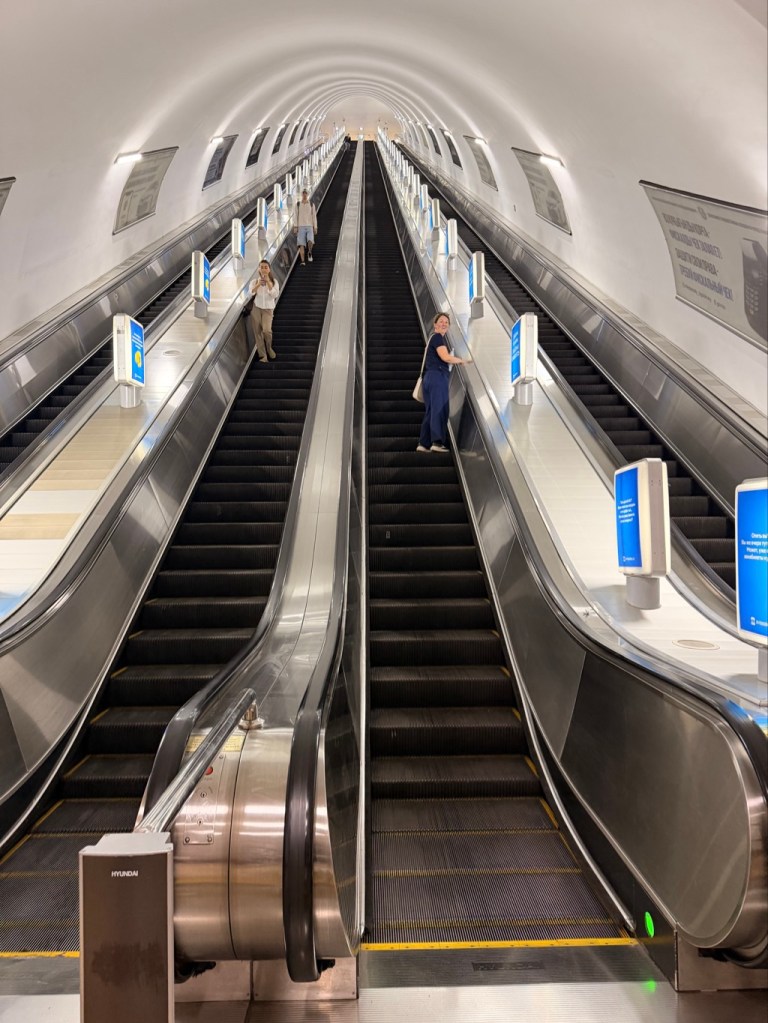
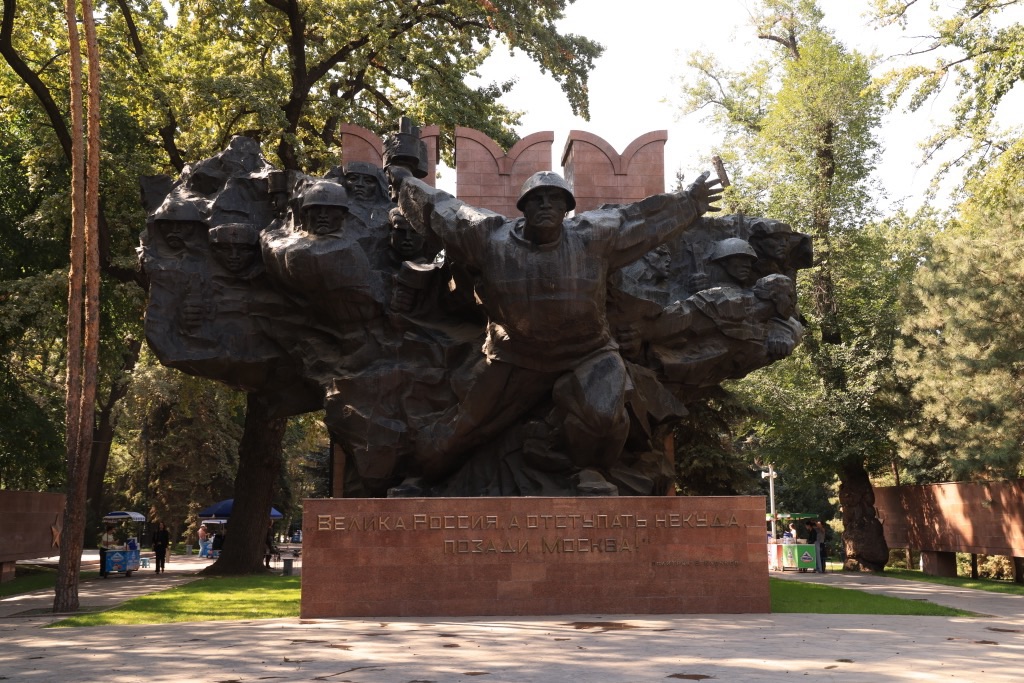
Again, we were met by a local tour guide who was lovely but a little uncertain on her facts. We took a metro on the relatively recently completed metro line (which took 30 years to complete), and visited a striking WW2 memorial, with dates we wouldn’t recognise (1941-45), representing the years the Soviets were involved. It was interesting to reflect on how each country represents their role in WW2. The Kazakhs ‘won’ the war as part of the Soviet Union, as they marched on Berlin in 1945. Their losses were severe; 10% of the 6m population died during the conflict, half as direct casualties in the red army, half through wartime deprivation.
We learned that Kazakhstan is still very closely aligned with Russia and were one of the last to leave the union. Many ties still remain. The launch base for the Russian space programme resides in the north of the country, and is now rented from Kazakhstan by Russia. Our guide explained proudly how they won the Cold War space race, launching the first satellite, dog, and person into space, and completely downplaying the US moon landing as a weak second place.
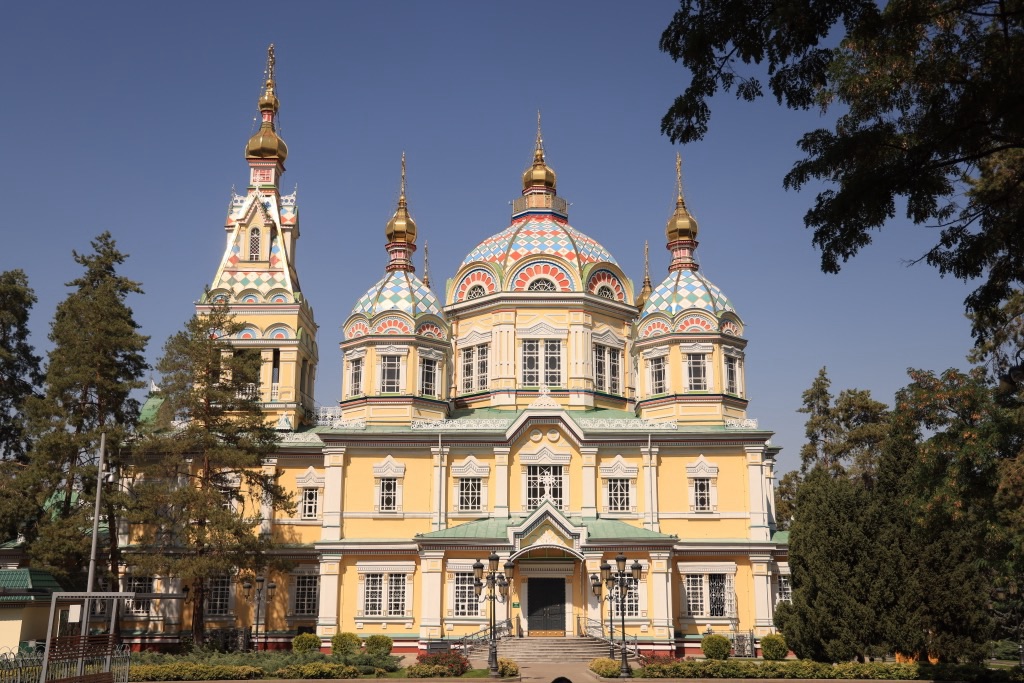
The tour itself was underwhelming; an wooden Orthodox Church, and perhaps the most boring museum ever – a history of musical instruments. The whole group was in a state of utter stupor, which Sviet picked up on and hurried the guide along, but she was adamantly following her programme, and insisted on sucking the life out of all of us.
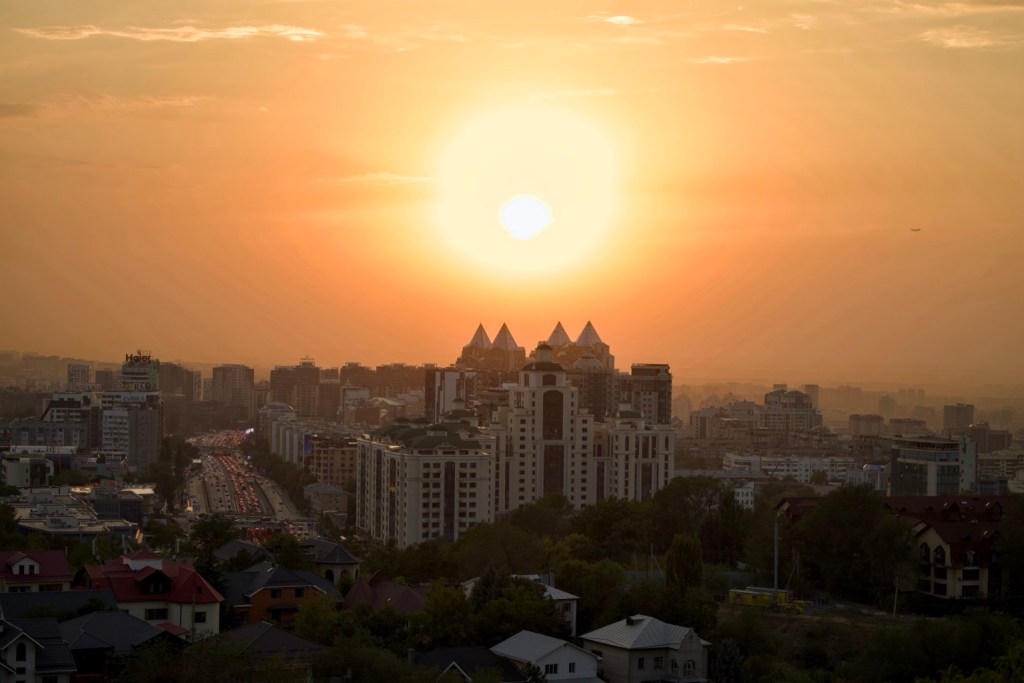
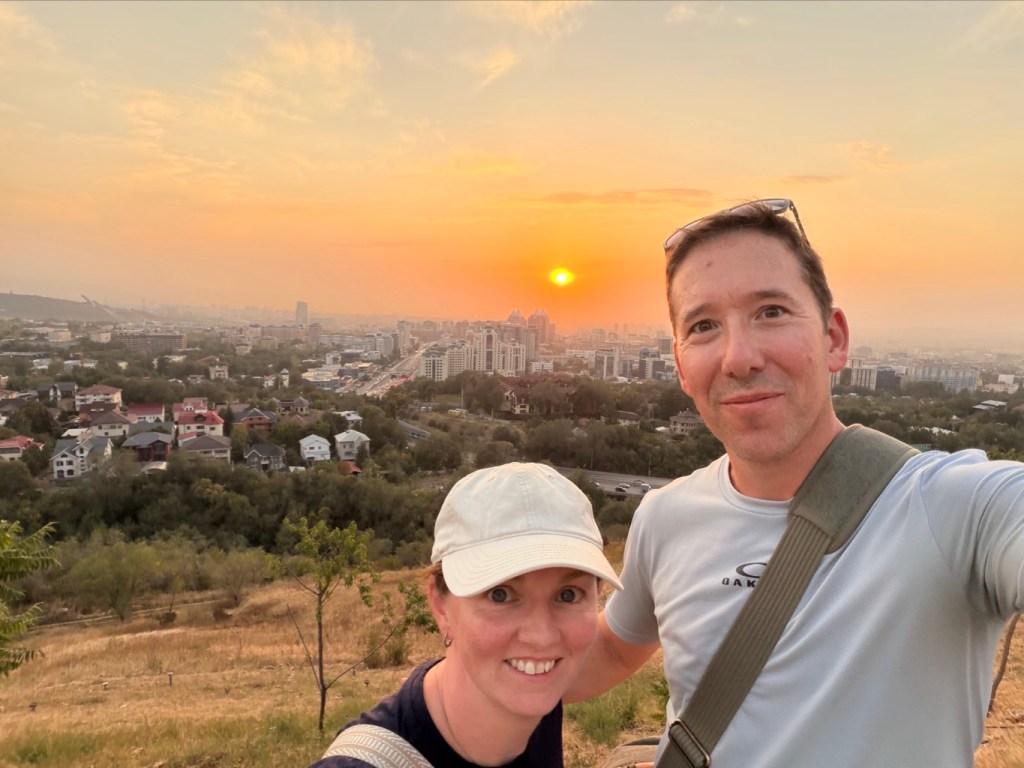
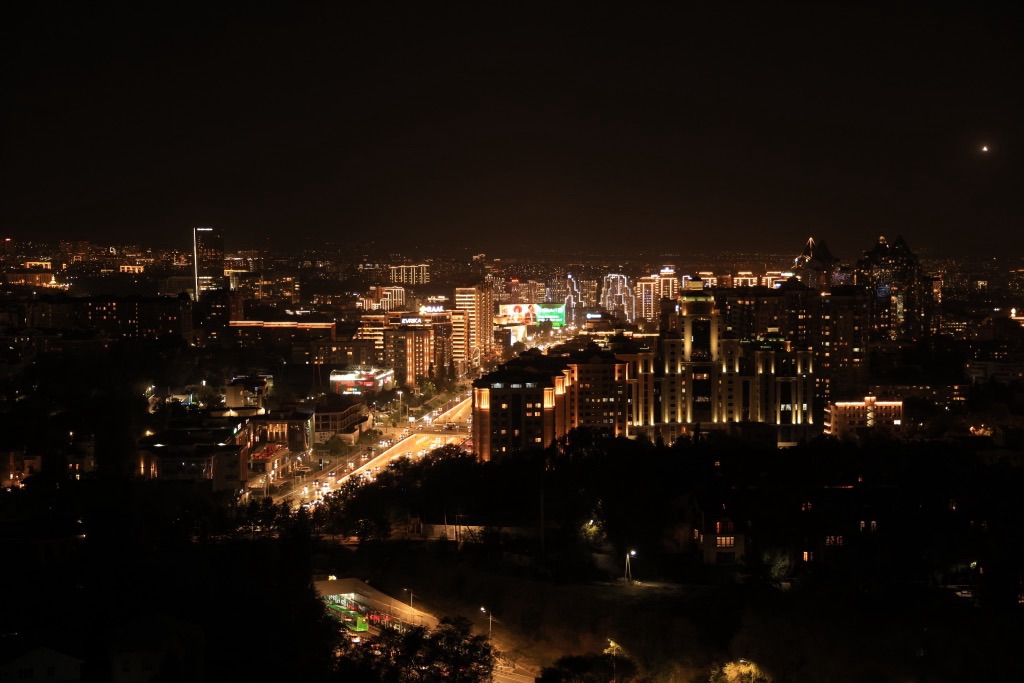
That evening, Shona and I took a taxi to the bottom of the Kok-tobe hill which overlooks the city, and hiked up a path to the top. We met several of our group up there and enjoyed drinks and a meal as the sun set through the thick layer of smog hanging over the city.
Kolsay Lakes, Kazakhstan
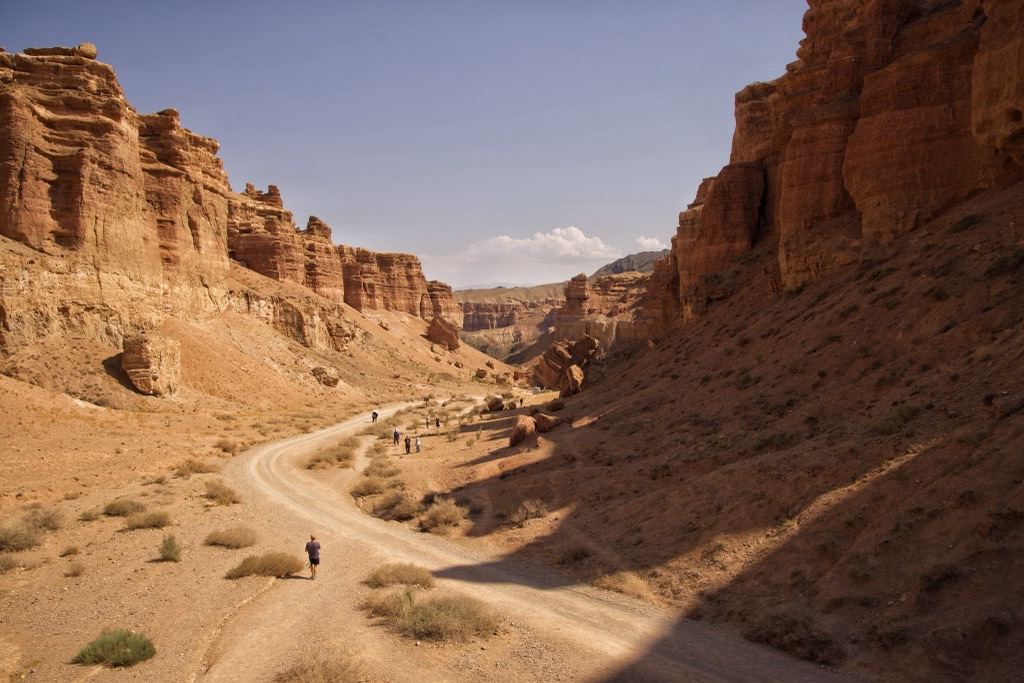
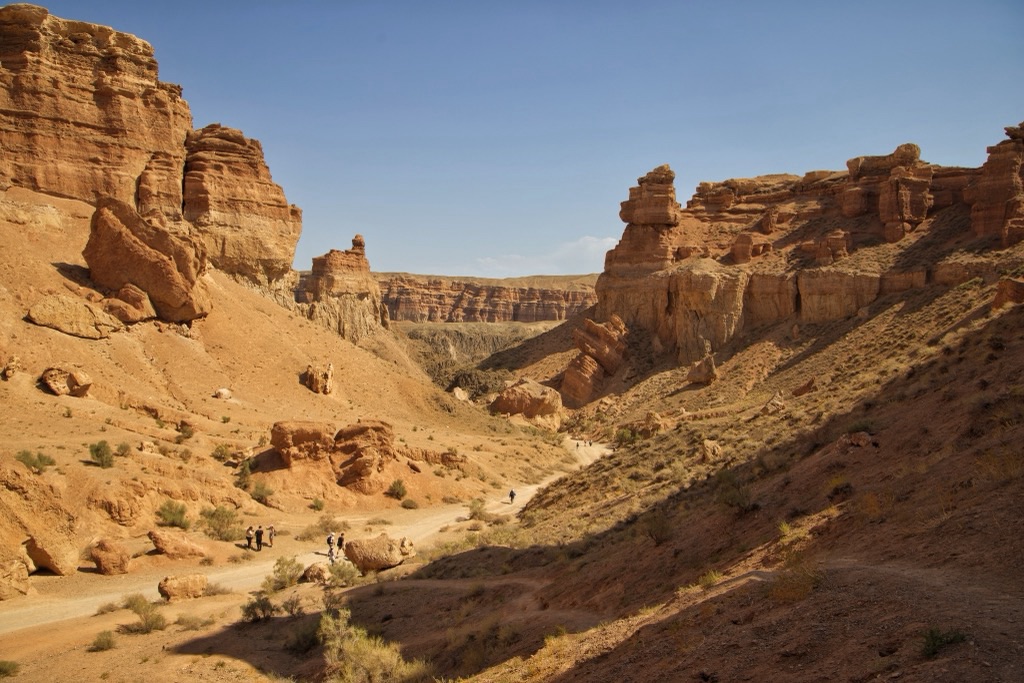
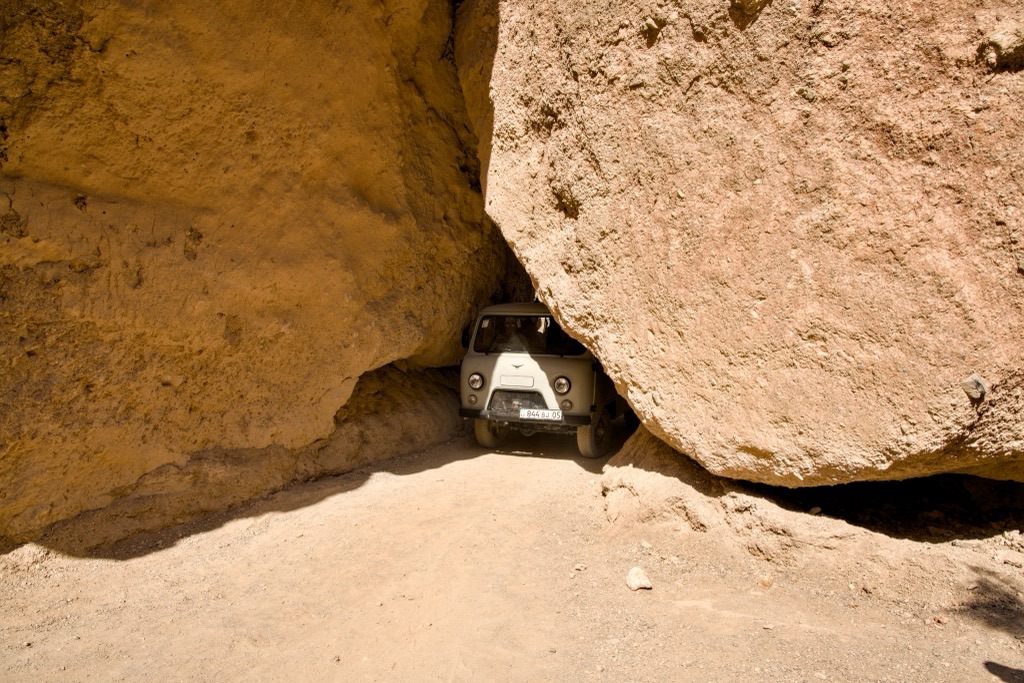
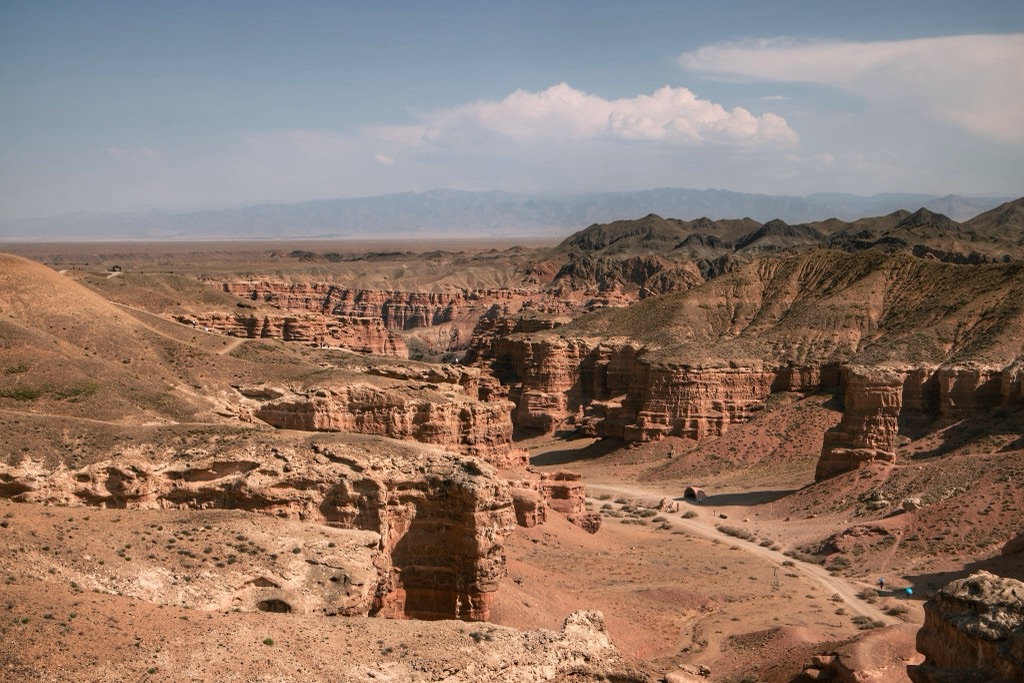
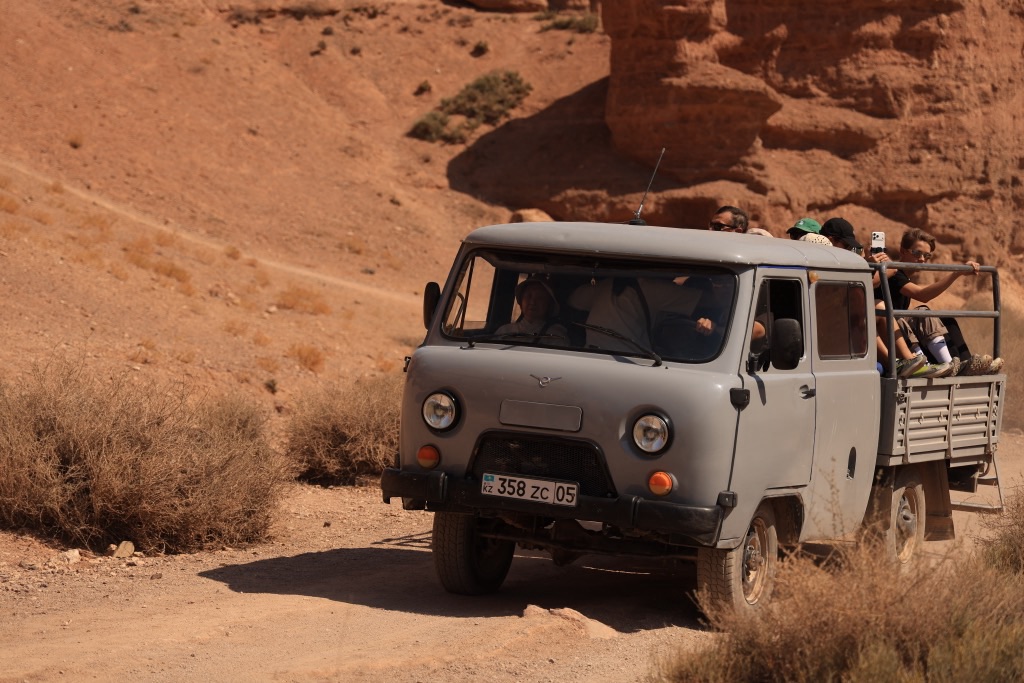
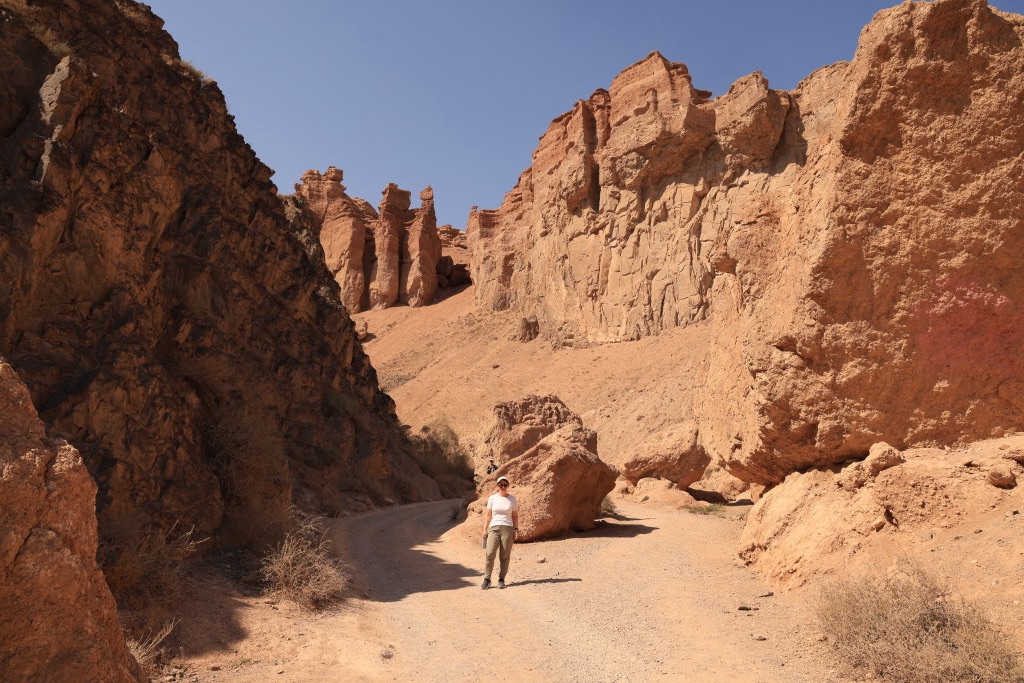
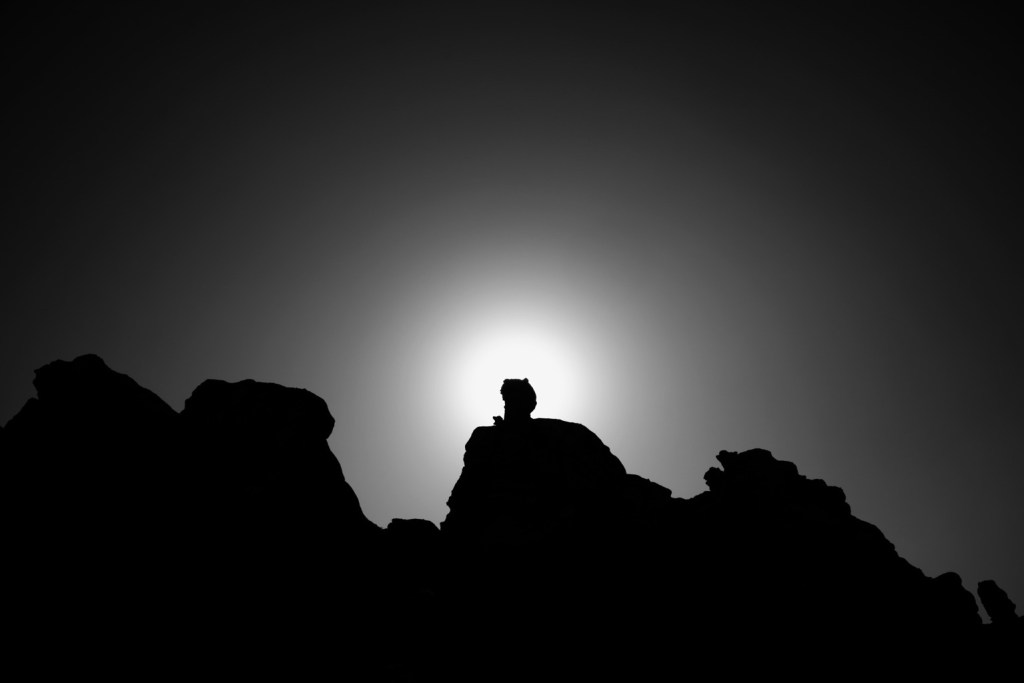
The following morning we left the city for Kolsay Lakes National Park with our somewhat stinky driver. En route, we stopped at the Charyn canyon, a large tectonic rupture in the landscape. We hiked down through the rocky valley, filled with stunning features of wind and rain erosion, interupted intermittently by the ‘Bukhanka’ Soviet utility vans, transporting the lazy back up the canyon. It was a great hike with a nice lunch stop at the end.
Arriving at the lakes, we took a hike to Kolsai lake; along with thousands of other tourists and locals. Despite being a scenic setting, it was definitely despoiled by the queues, and honestly, views across many Scottish lochs are far better. After a long day, we made our way down from the high lake to Saty village for our accomodation at another homestay. Shona and I were fortunate to be given a modern lodge for the night, and enjoyed a locally cooked meal that evening.
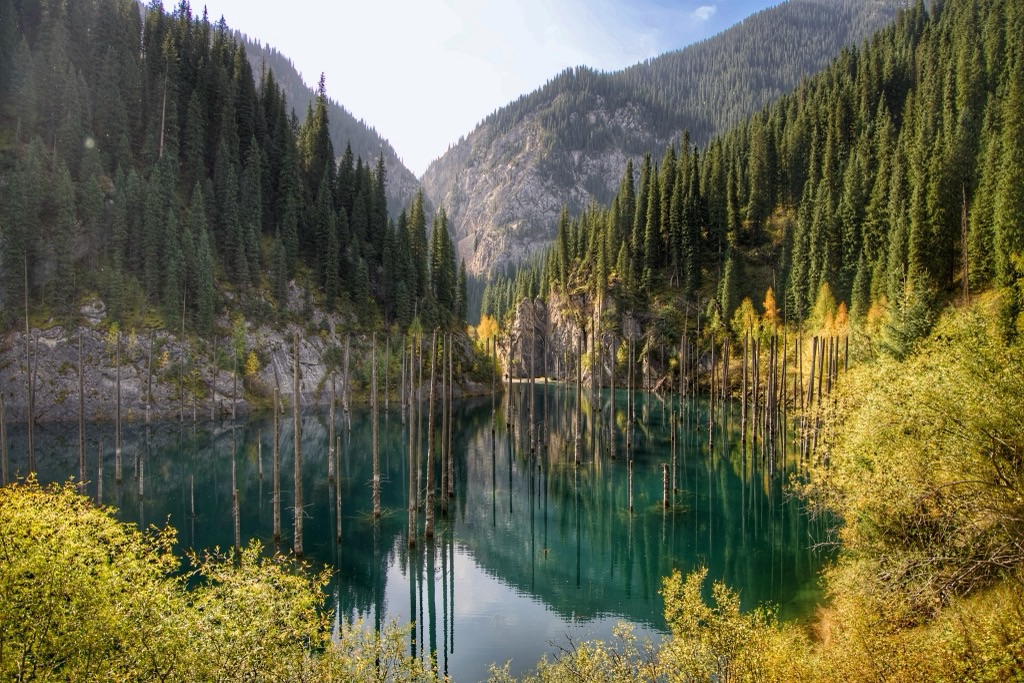
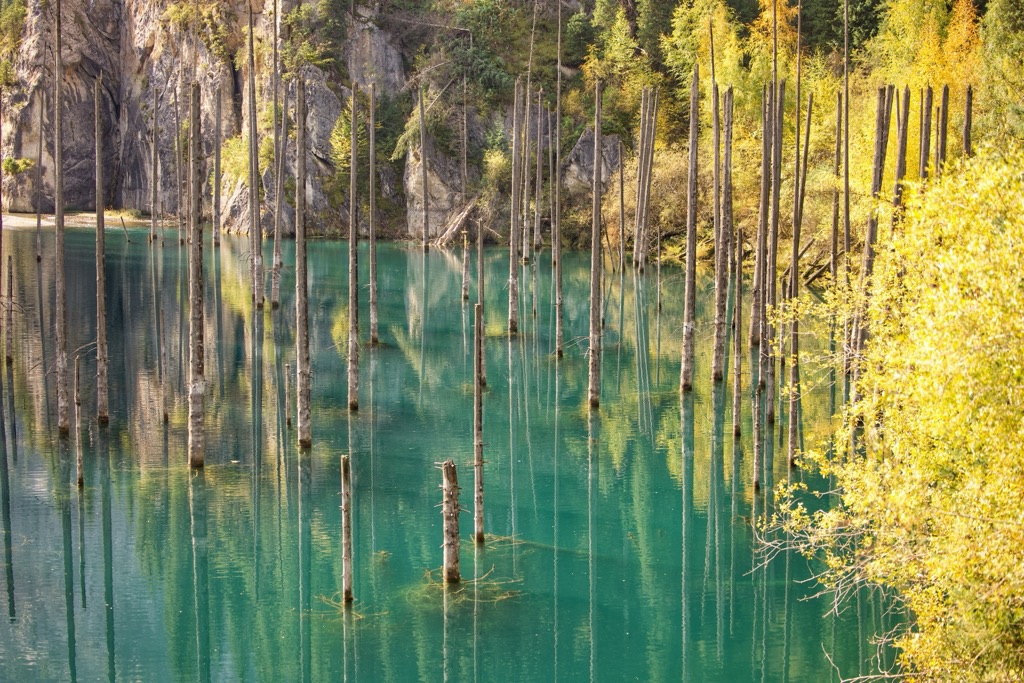
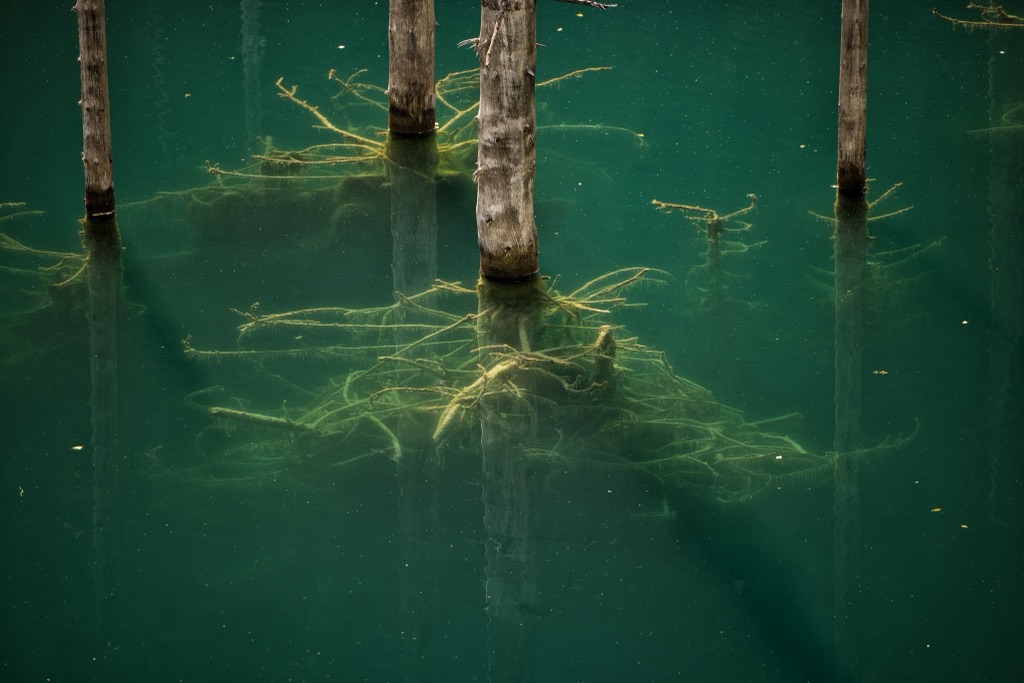
The next morning it was an early start to head up to Kaindy Lake. Formed in the 1911 Kebin earthquake that destroyed Almaty. This was a beautiful lake, with few visitors at this time of day. Spruce trunks still rise out from the lake’s surface, creating a slightly eerie picture in the morning light.
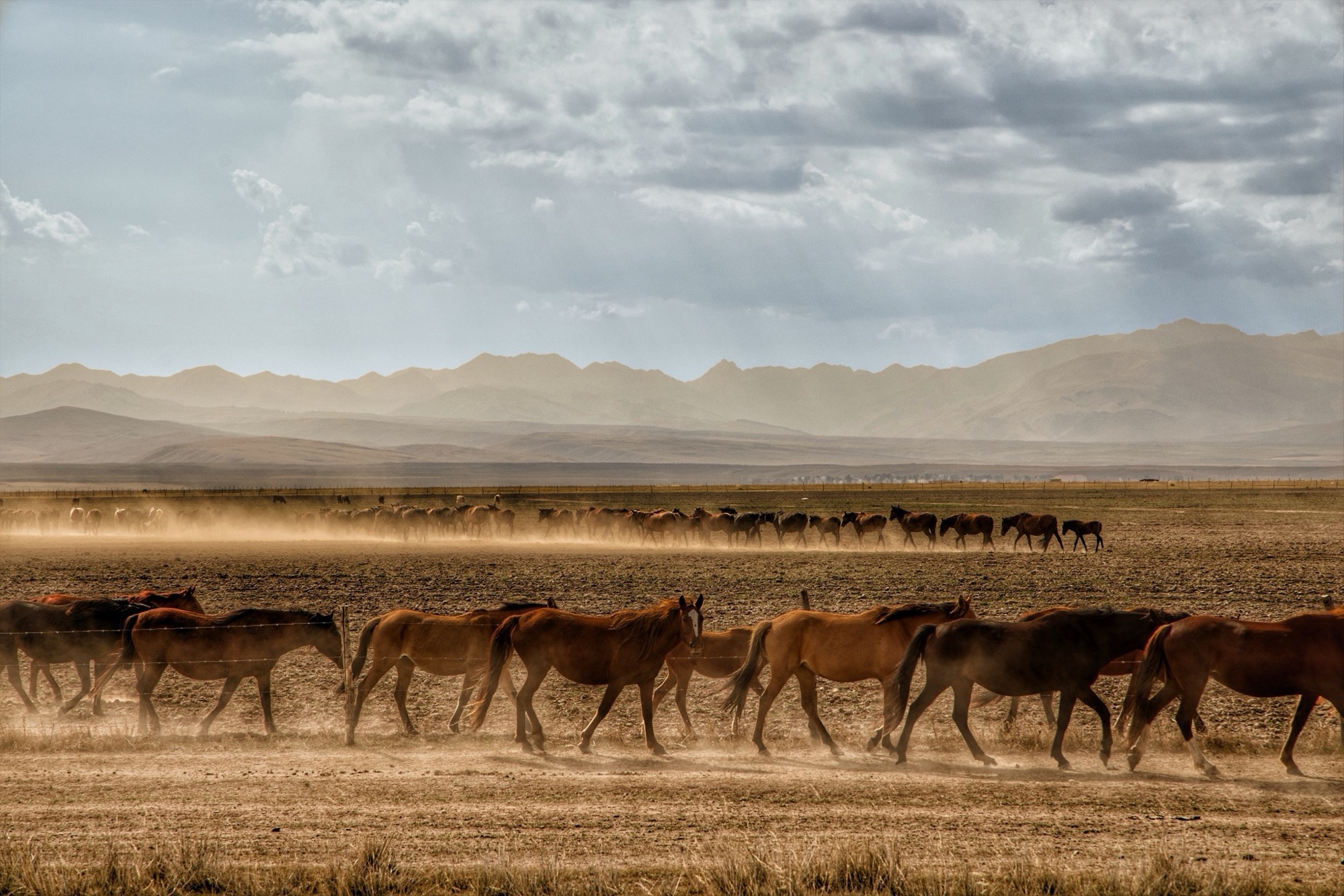
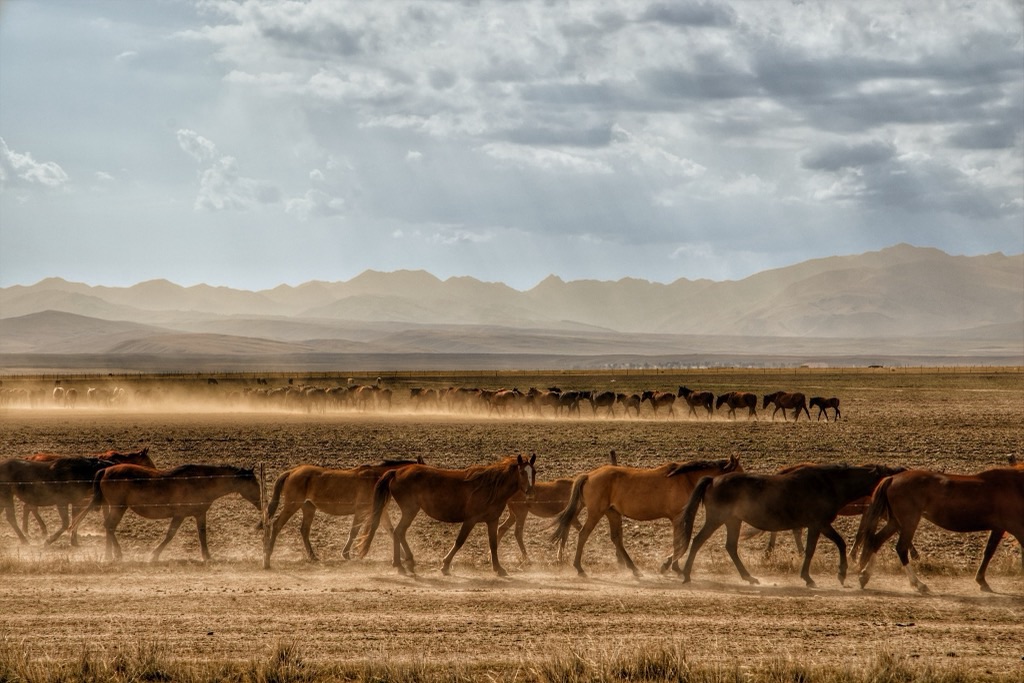
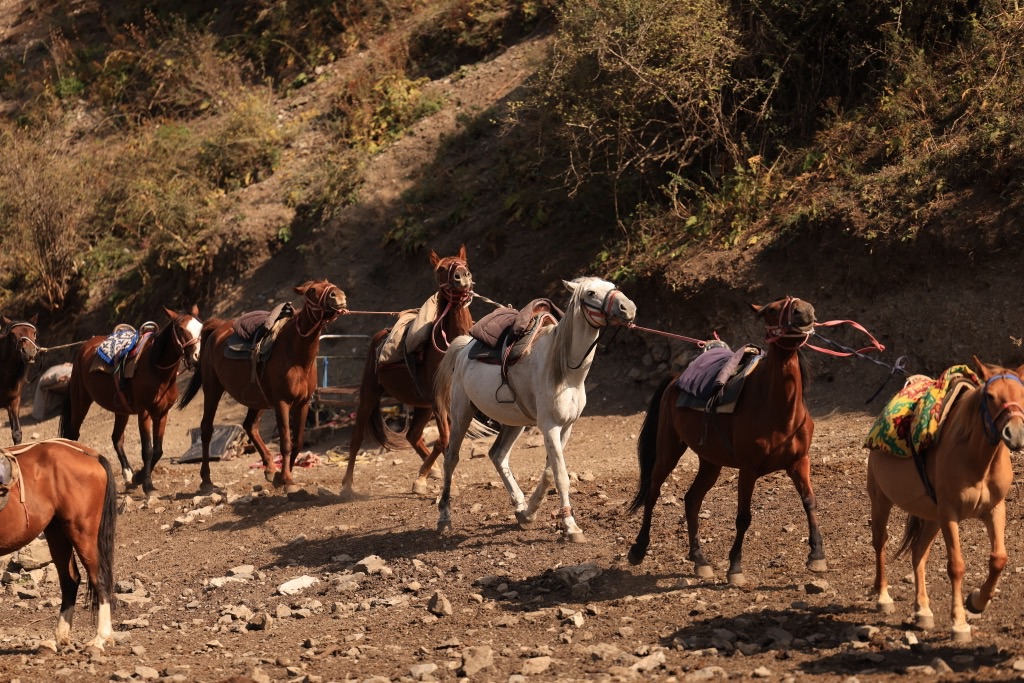
We travelled on, driving out into the Steppe. Much of the southeast of the country is at elevation and as we drove towards Kyrgyzstan, we rose up to vast plains sitting at 2000m. This high mountainous region covers much of the country. Kazakhstan is home to the world’s largest grassland ‘Steppe’; a dry area known for hot summers and very cold winters. It’s a difficult place to live. We passed vast herds of horses, living a far more natural life than we’re used to seeing. Like their bovine cousins, horses are herd animals and observing the flow behaviour of the herds was wonderful; plumes of dust billowing from their thundering hooves.
We barely scratched the surface of Kazakhstan. It’s the wealthiest of the 5 countries we’ve visited on this leg, with huge oil and gas reserves, but its scale makes travel slow. The average age here is 31, fuelling the economic progress of the country with a vibrant youth population. In Almaty alone there were 49 universities. What we saw of the country was interesting but I have a feeling that the real jewels here are in the wilderness. As we’ve travelled through these places, we’ve all found ourselves pining to be away from the crowded cities and into the rich natural landscapes that these lands possess.
Kyrgyzstan
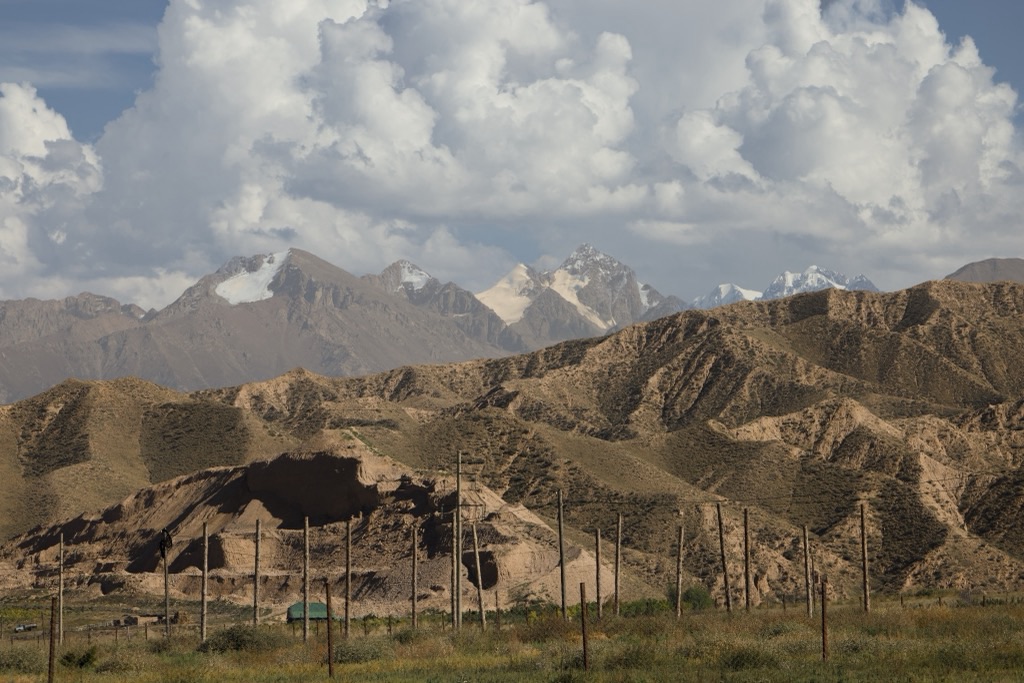
As we approached the Kyrgyzstan border, the Steppe started transitioning, the route ahead of us becoming more mountainous and layered. Reaching the border crossing, we found it the simplest and nicest land border we’ve been through. Smiles and welcomes from border guards, and we were through in no time. Sviet was beaming: ‘Welcome to the best country in the world’. As we boarded our new Kyrgyz bus, we cooed over the better roads, better seats, better aircon, and he delighted in responding: ‘of course!’. We also marvelled at the stunning views as the snow-capped peaks rose dramatically behind the laminated mountains lining our route.
Karakol, Kyrgyzstan
Our stop for the night was at Karakol, a small city in the foothills of the Tian Shan mountain range that is shared with China and home to Kyrgyzstan’s highest peak, Jengish Chokusu (7439m). Our accommodation was nowhere near so lofty. In fact it was downright dingy, but a nearby restaurant served Lagman, so all was okay. The following morning we had a quick tour of the ‘city’ (really just a town, and quite a small one), seeing – you guessed it – a mosque and a church, before setting off for lake Issyk-Kul. This lake is vast, at 178km long, 60km wide and over 600m deep at certain points. At 1607m in elevation, it is the second largest alpine lake, after Titicaca, and is central to Kyrgyzstan.
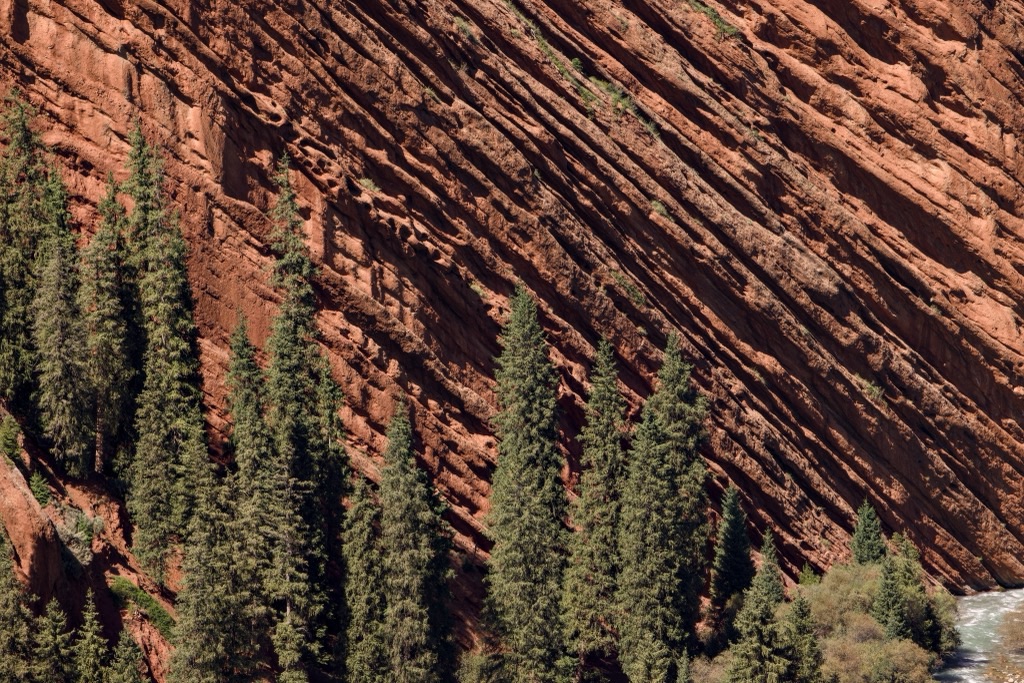
En route to the lake, we stopped at Jety Oguz, an outcropping of red rocks forming a deep gorge, with diagonal rock strata jutting the bedrock as cliffs above the valley floor, a result of the Indian and Eurasian plata colliding. We hiked up to a view point and stopped for an excellent coffee, enjoying the vistas for a while.
We next stopped at the Skazka canyon (known as Fairy Tale Canyon), an arid area of strange rock formations. With stunning orange colours and outcroppings, it was an alien landscape; hoodoos eroding in the iron-rich rock. Very otherworldly and reminiscent of Bryce Canyon or Death Valley.
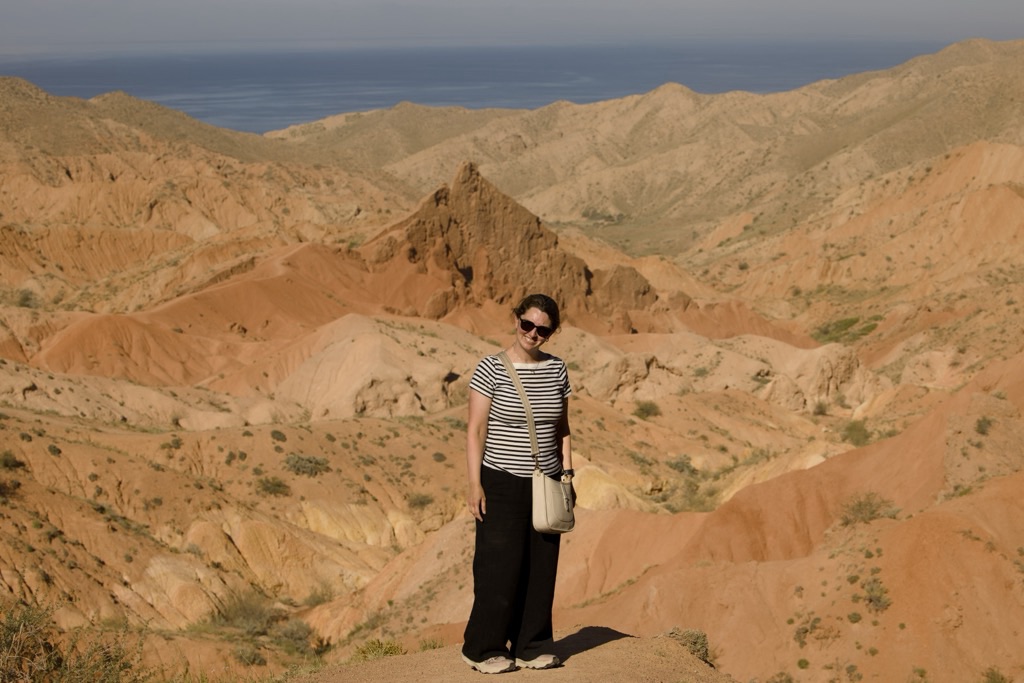
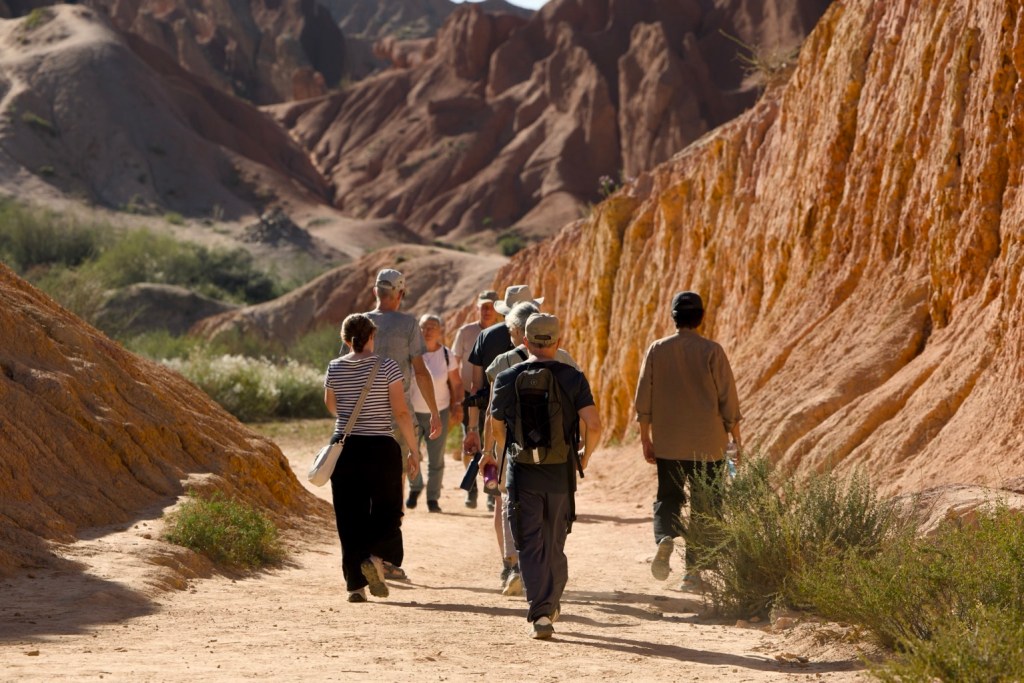
By this point, the whole group was giddy with the scenery. Having spent so much time on the road, in cities, or travelling through vast, empty plains. We were now in this three-dimensional landscape, full of texture, colour and surrounded on all sides by glorious peaks – it was a nectar and it soothed us all.
Issyk-Kul Lake, Kyrgyzstan
That evening, we arrived at our camp for the next two nights, near lake Issyk-Kul. We were staying in a Yurt camp and after checking into our lovely 5m diameter traditional Kyrgyz Yurt, we trekked down to the lake front where some of us went for a very beautiful, very refreshing swim as the sun set over the lake. Those of us who swam have reflected on what a very special, bucolic moment it was, swimming in clear water, with such an idyllic vista.
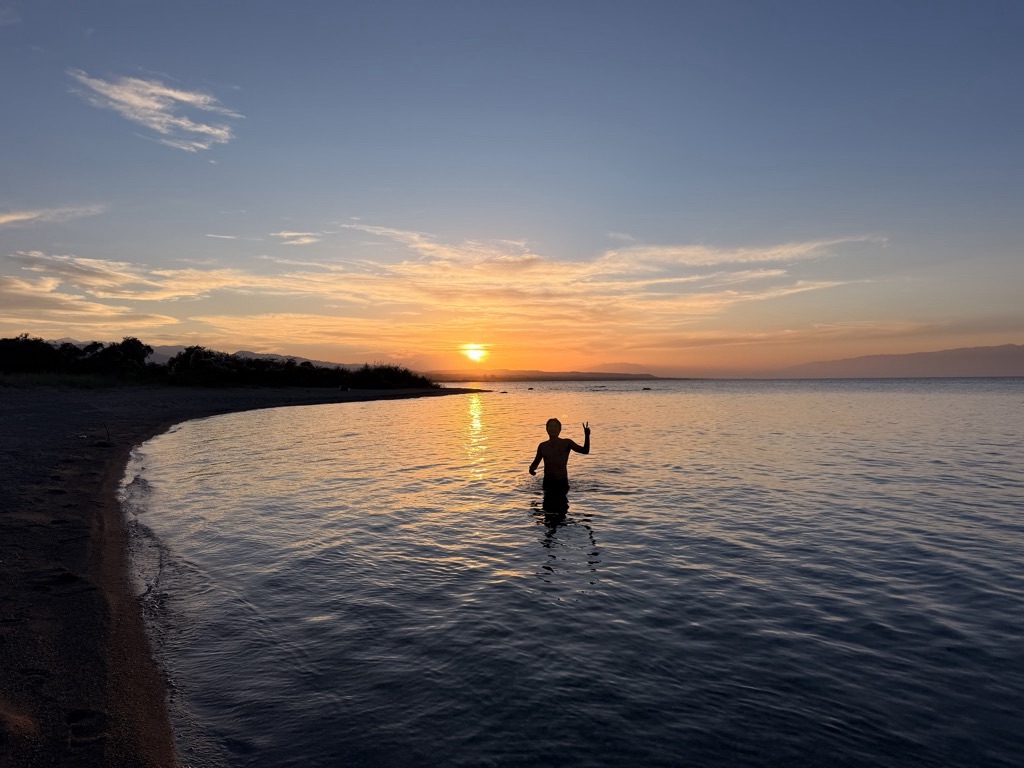
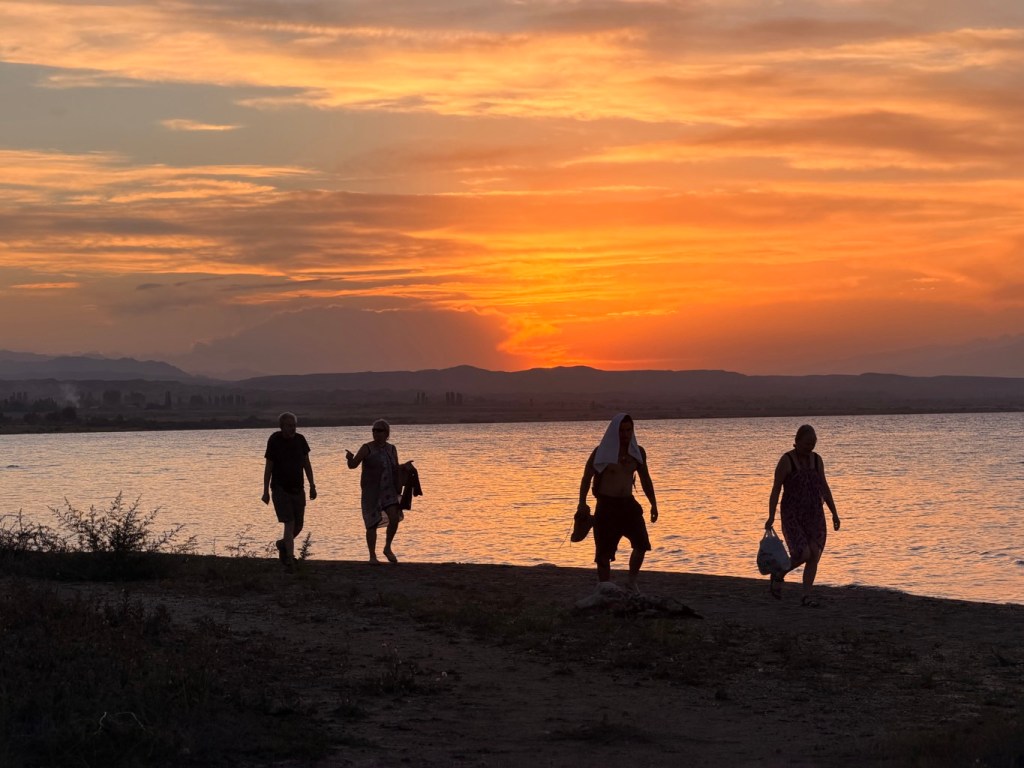
Dashing back from the lake, the temperature dropped and my wet feet were pretty frozen by the time we returned to camp. We had a lovely dinner (they really like to eat here) and a few of us retired to the cosy onsite bar for a couple of drinks before an extremely comfortable night in our soft beds, with heavy blankets keeping us toasty against the night’s cold air. It’s the first time in several months we’ve slept in a cold room and it was lovely… You can take the Scots out of Scotland, but you can’t take Scotland out of the Scots.
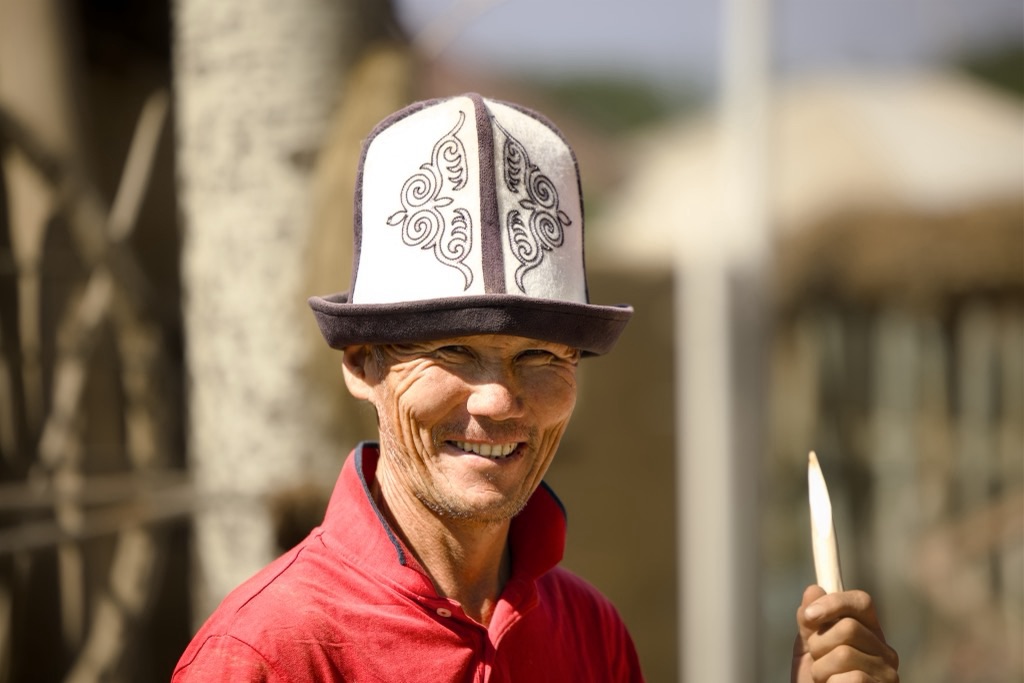
I’ll confess, the next day’s itinerary didn’t fill me with joy. It would start with a carpet-making demonstration, and be followed by a ‘yurt workshop’. With so much glorious scenery around us, I was pining to be up in the hills, but we dutifully joined Sviet and a local rug-woman the next morning, where she demonstrated how the Kyrgyz traditionally make rugs and carpets. Actually, it was actually quite interesting – she took raw wool and in a series of highly manual and slightly absurd processes (including whacking it with sticks, stamping on it and rolling it along a path with her forearms), produced a passable felt rug. I say passable. After we had decorated it, it was utterly shit.
We then drove to a nearby town, where 80% of the residents are in the business of making Yurts. These traditional nomadic structures are unique in design to Kyrgyzstan, built to withstand hard snowy winters. We were shown how each component of the yurt was made – from hand-planed willow framework to cow-skin knots. We then got involved in erecting a small yurt. It was good fun, and we managed to put it up pretty quickly. The World Nomad Games was hosted in Krygyzstan this year, and had just finished the previous week. One of the competitions was erecting yurts. Kyrgyzstan won it in around 6 minutes. Impressive, but I think we could beat it.
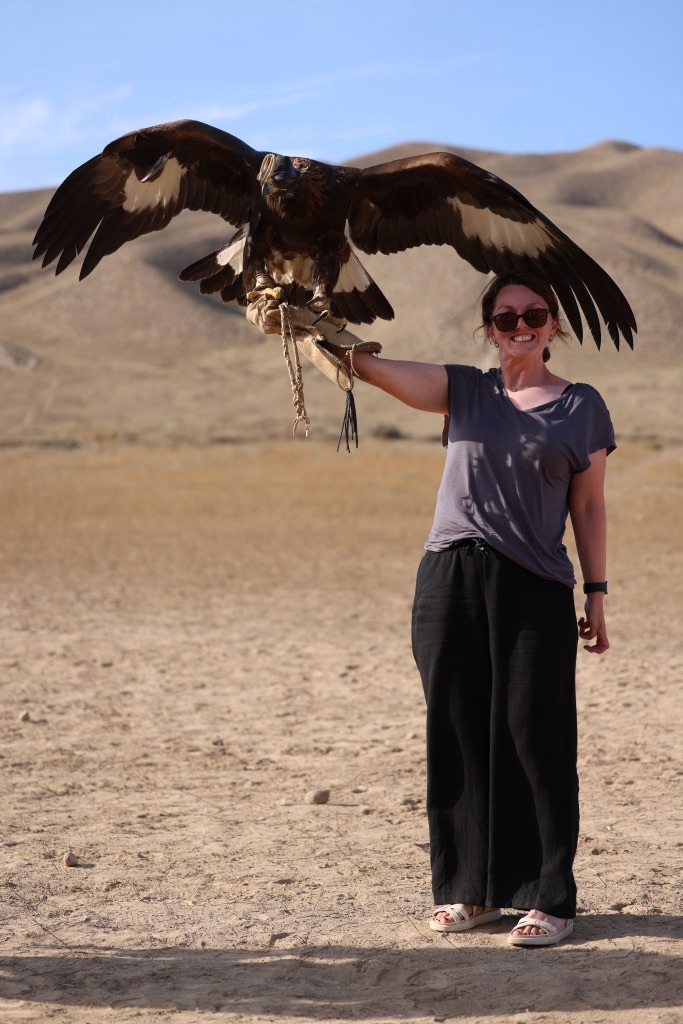
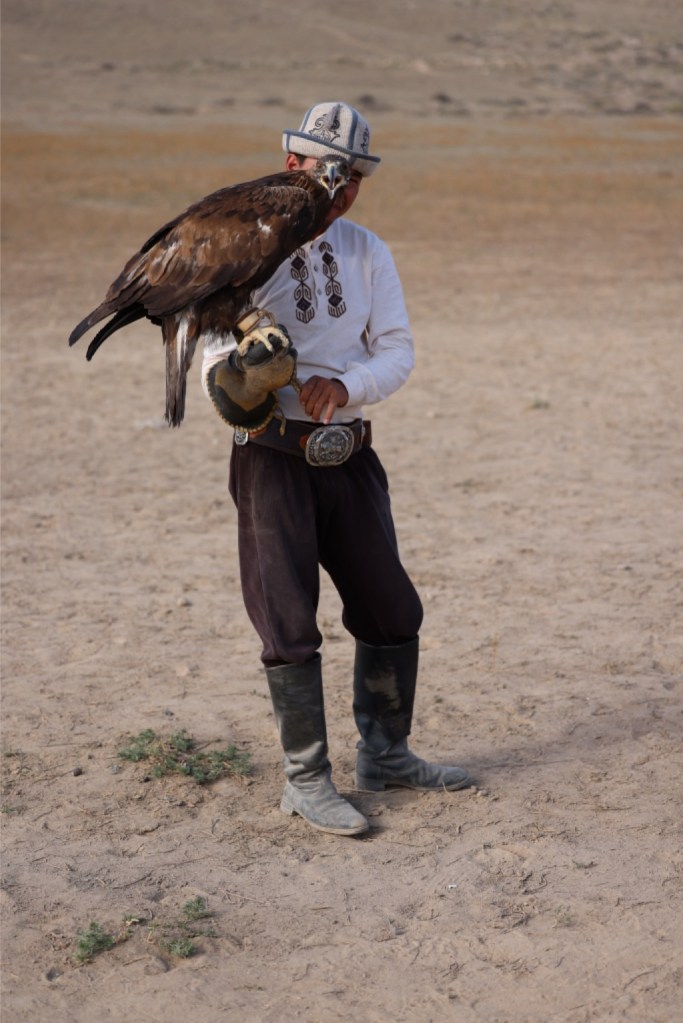
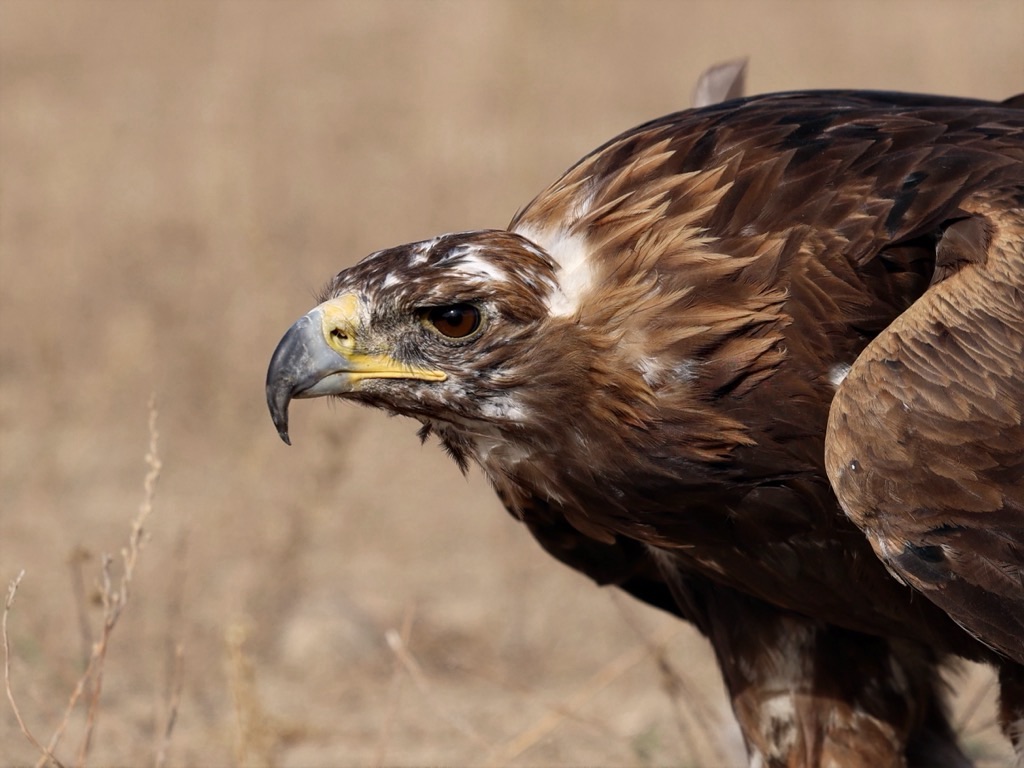
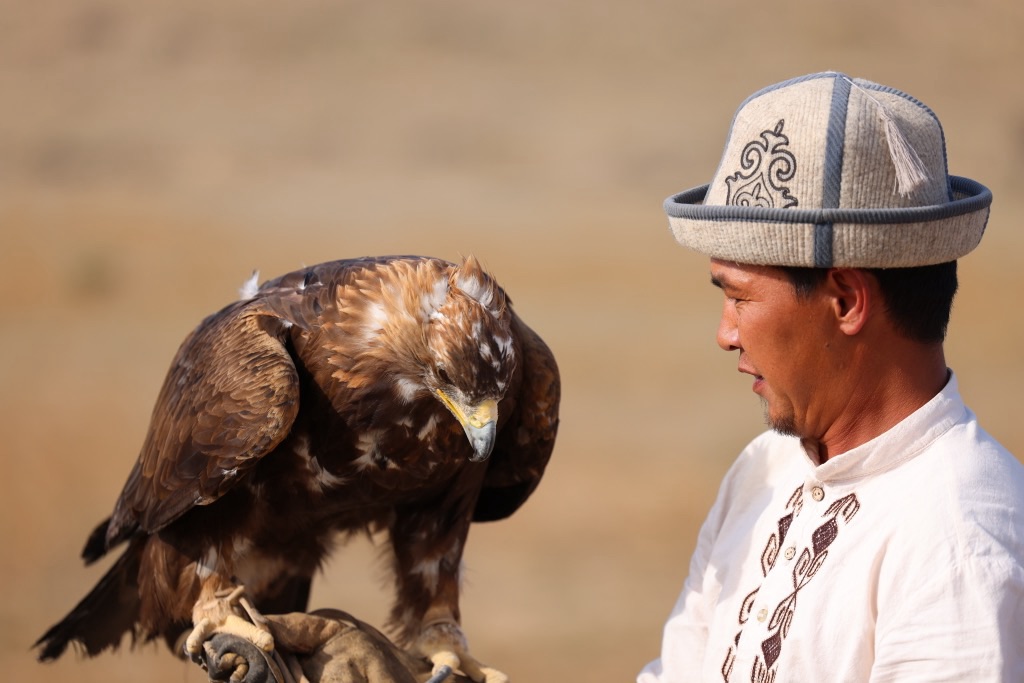
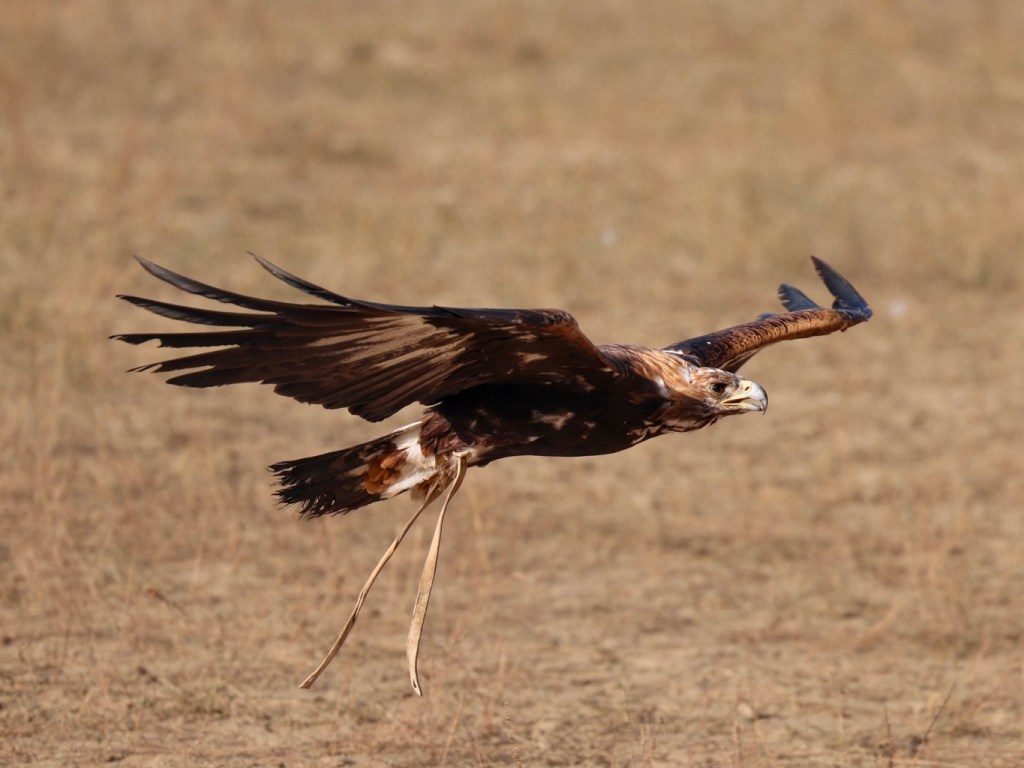
After lunch, eight of us had decided that we wanted to see something particularly iconic to Krygyzstan. It was not something recommended or provided by our tour company, so we went off-piste. We arranged a driver to take us along the southern shore of Issyk-Kul to an open area near the village of Bokonbayevo. Here we met a local hunter, who, with his life-long companion of a golden eagle, demonstrated the centuries old tradition of eagle-hunting. The hunter raises the eagle from a chick, and it lives with him as part of his household. They grow a strong bond and hunt together for many years before he releases the eagle back to the wild to find a mate and reproduce. We saw the deep affection that the hunter felt for the eagle and while we had some misgivings around taming such an iconic symbol of freedom, we were witnessing a deeply held and loved Kyrgyz tradition, where the birds were genuinely cared for. It was a fascinating display and a real privilege to have the chance to hold a golden eagle, and have it wrap its giant talons around my gloved hand.
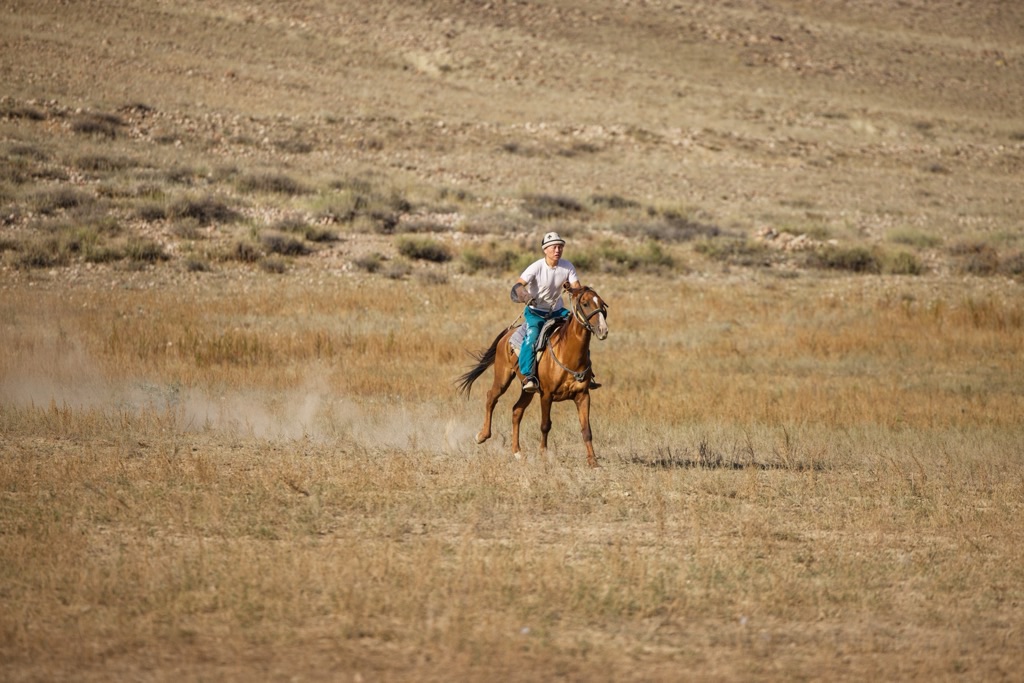
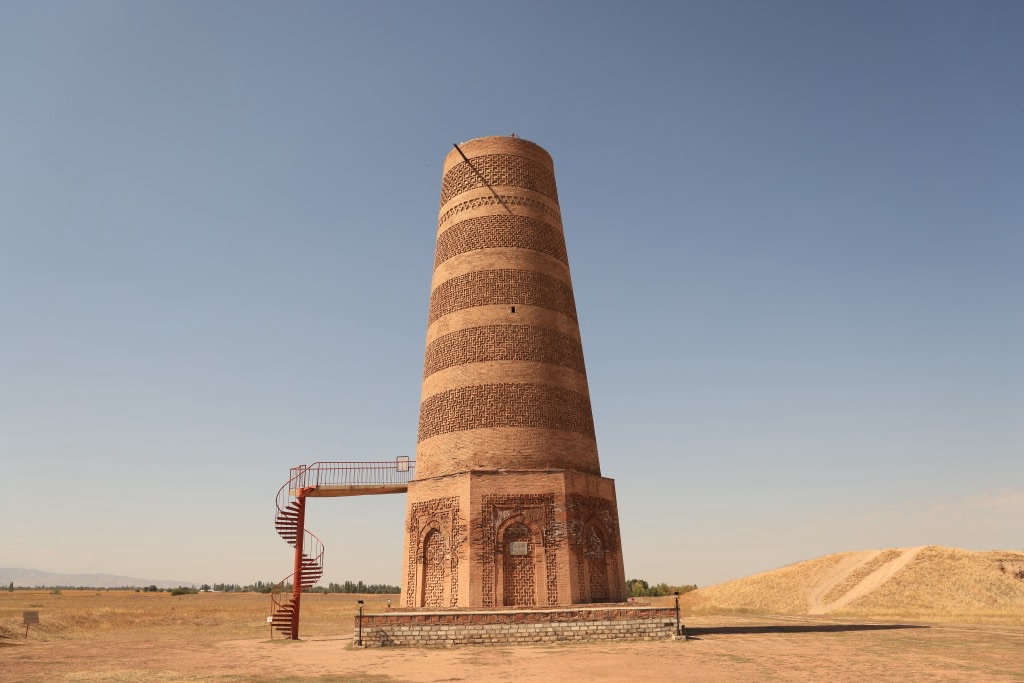
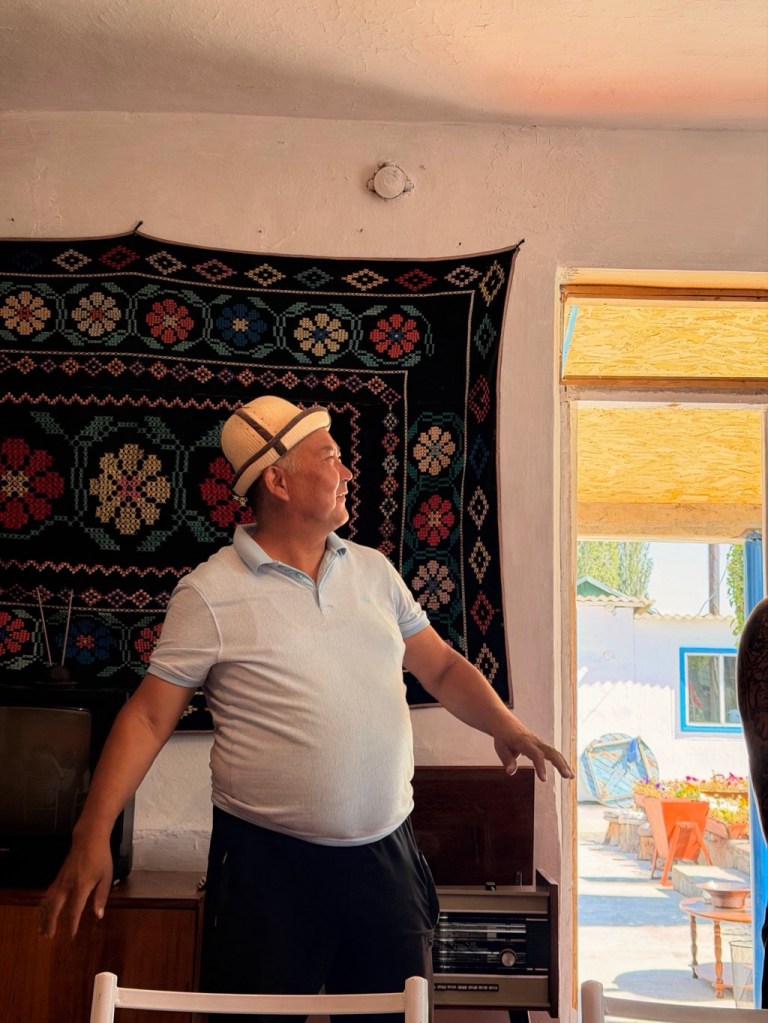
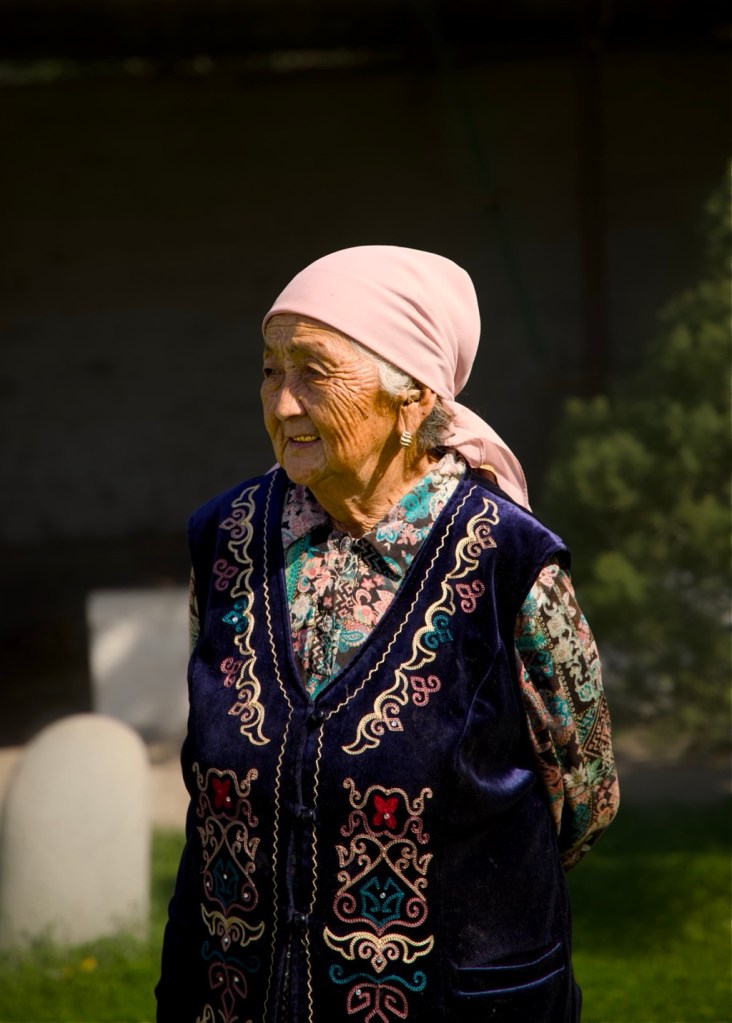
After another night at the yurts (with another lovely sleep), we drove a few hours the next morning further along the lake towards Bishkek. We stopped briefly to visit the Burana Tower in Shamsy Valley, a >1000yr old minaret which you can climb for a view across an ancient fortress. Leaving here, we stopped at Don Aryk, to have lunch with a local Kyrgyz family who provide a home-cooked meal to groups of travellers along this route. It was an outstanding lunch, made all the better by the hugely entertaining father of the family who proudly showed us photos of his family and clearly loved his trade.
Bishkek, Kyrgyzstan
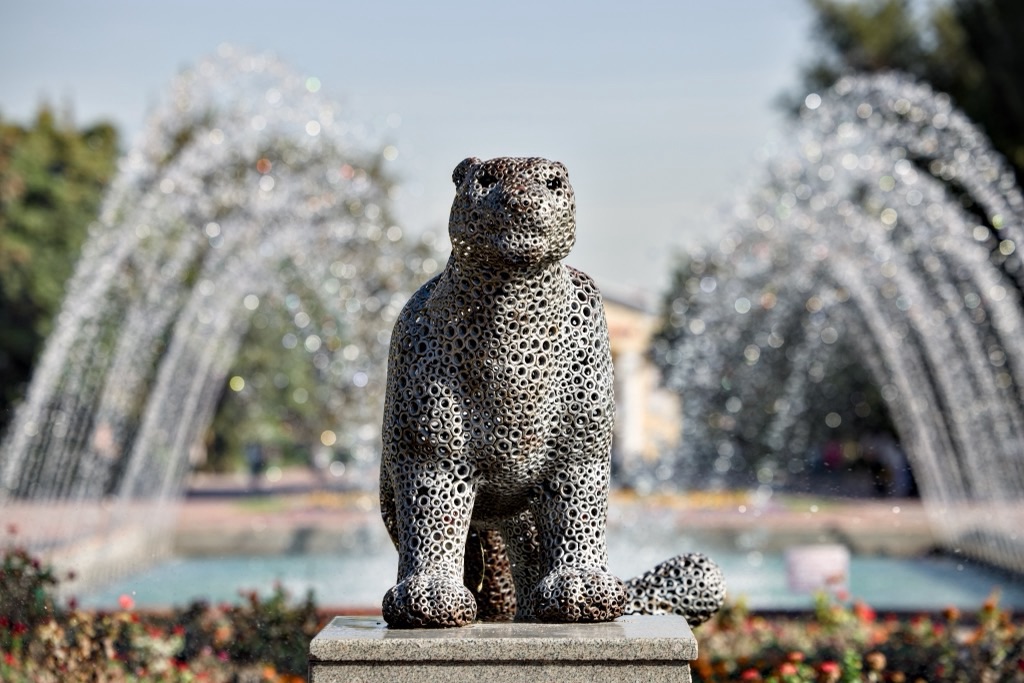
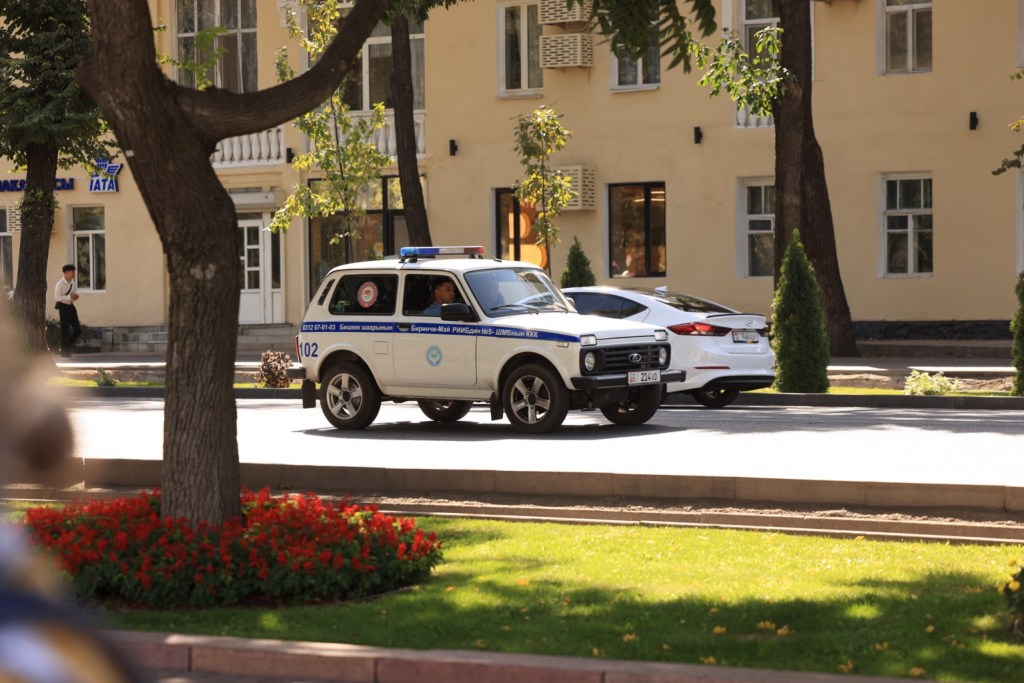
Arriving in Bishkek, we are at our final destination on our trip through the ‘stans. A disappointing hotel awaited us, but we were only sleeping here for one night due to a 2:30am flight the following night en route to our next adventure. During our one day in Bishkek, the Kyrgyz capital, we took a walking tour of the city with Sviet, about which, it being his home town, he was a mine of information. It was very interesting, particularly the wealth of statues and monuments to women. Despite being a 70% Muslim country, this city and the wider Kyrgyzstan clearly has a much more liberal interpretation of the Islamic tradition. The cities are cosmopolitan, and modern; we were staying in a studenty area and saw hijabs and miniskirts side by side.
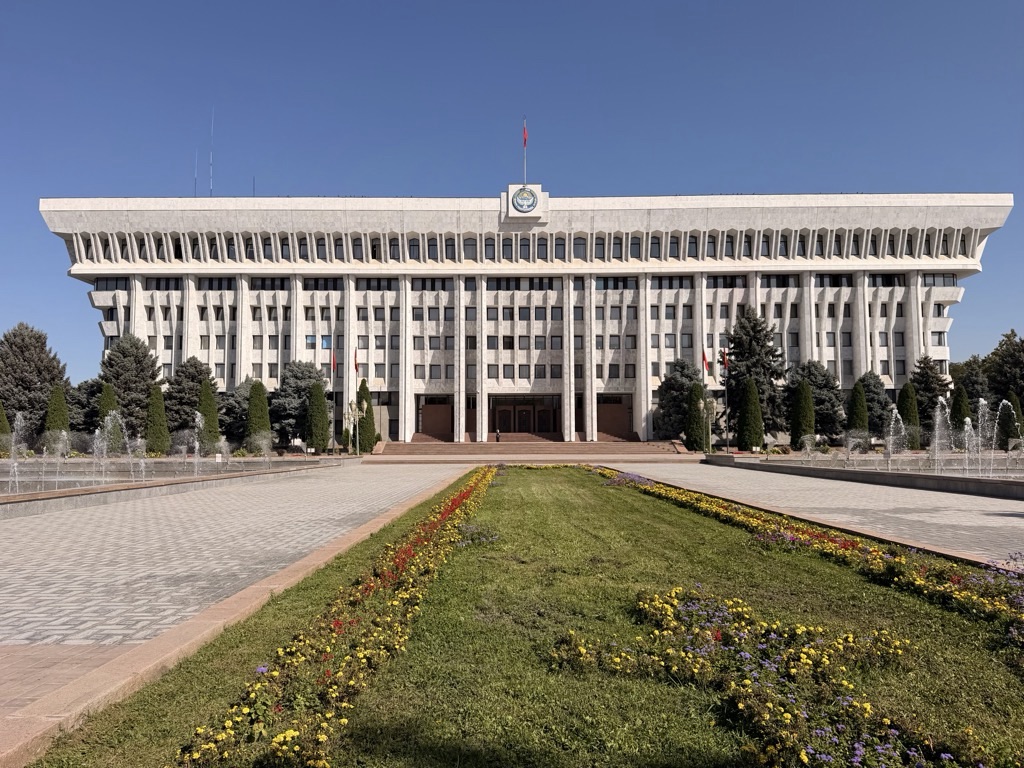
Kyrgyzstan (the best country in the world), is not without its challenges. Its first president post soviet rule, Akayev, ruled the country from 1991 until 2005 when he was overthrown for corruption. He fled to Russia. The next president, Bakiyev ruled until 2010 when he was overthrown in a bloody riot and was exiled to Belarus. There was an interim female president for one year until 2011 when a progressive leader, Atambayev was appointed and improved Kyrgyzstan’s international reputation and democratic standing. He served his term, handing power to his prime minister, Jeenbekov in 2017, who, while improving economic conditions, is seen as a retrograde step in progressive politics, with rampant nepotism in office, and a rapidly declining democracy ranking.
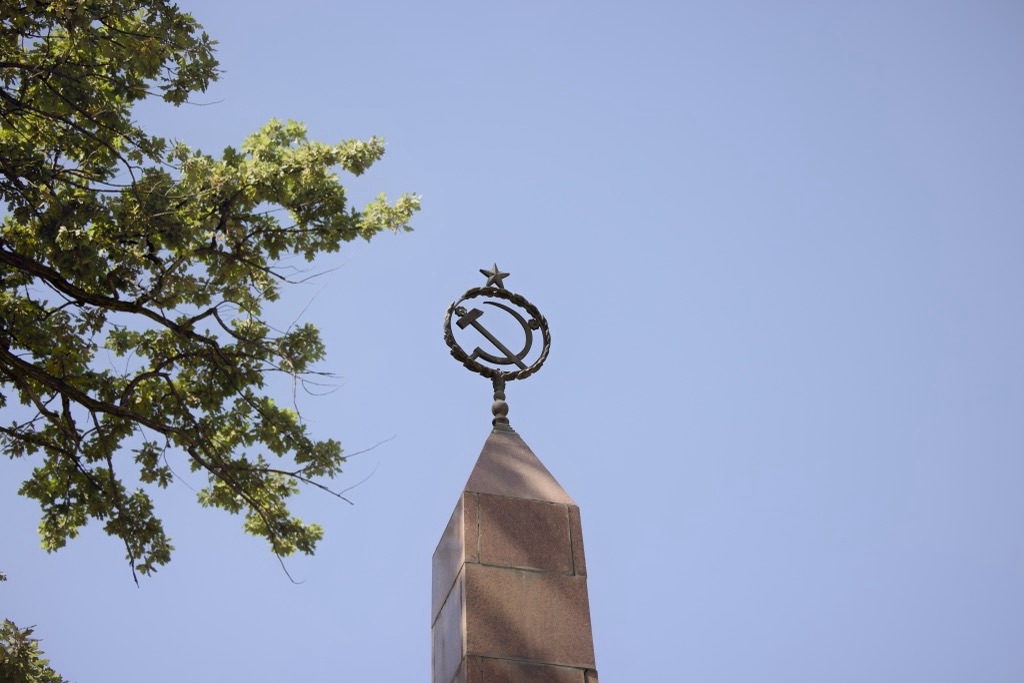
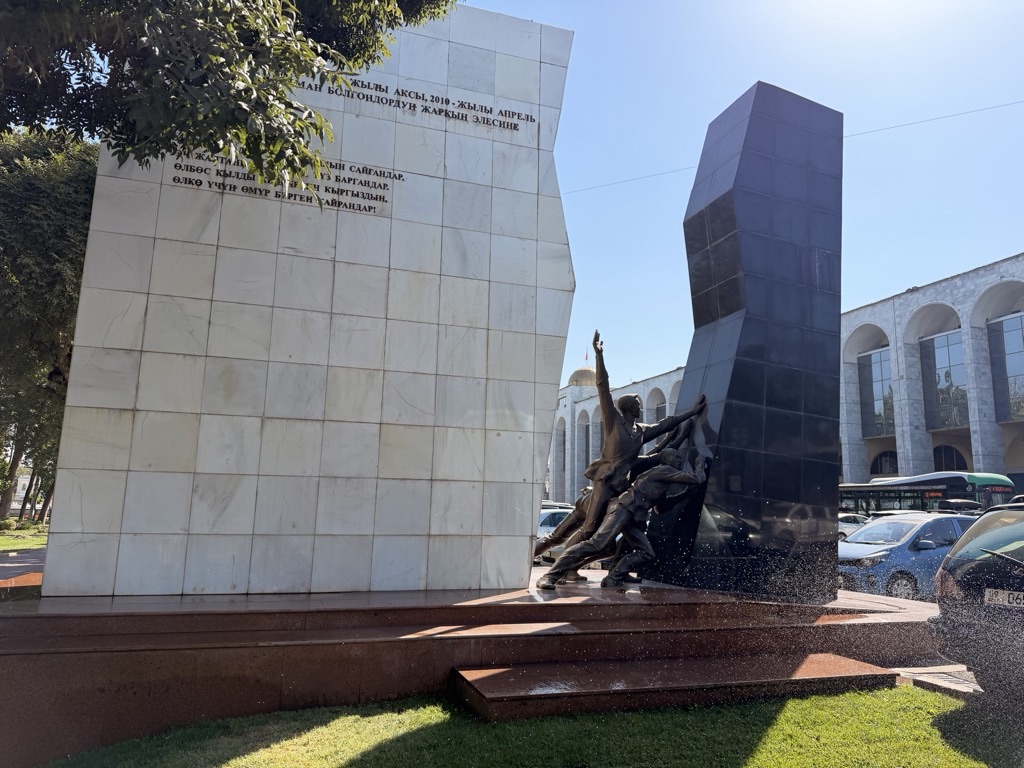
Krygyzstan, unlike its neighbours has not sought to wipe parts of Soviet history from its cities. We saw many Soviet emblems and icons capping imposing buildings, erected over the past century. There was a grand war memorial, with Kyrgyz suffering similar losses to neighbouring Kazakhs in WW2, with 1/3 of the population going to war, and only 1/3 of them returning. These losses are still felt – every family suffered, and Sviet reported that it’s still very alive in the psyche of the population and the revulsion of war. I fear the same isn’t true in the west with the erosion of the rules based order and degradation of pivotal defensive institutions.
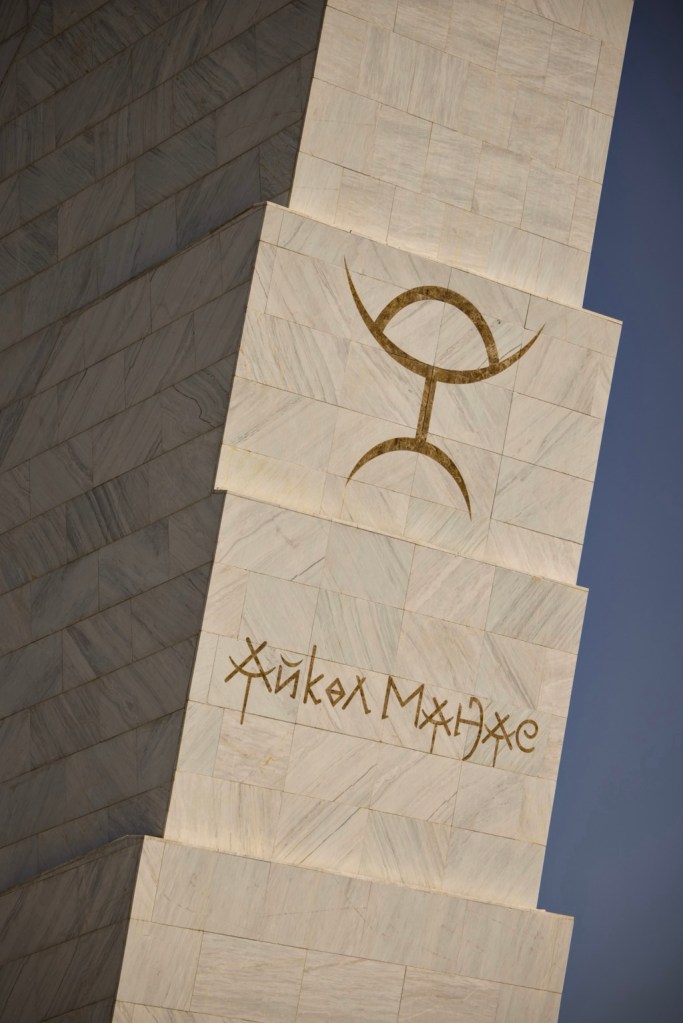
This is our final ‘stan and we really loved our time here. Kyrgyzstan is a very special place and somewhere I’d love to return to. I’ll write a little more, reflecting on our full Silk Road journey, but for now, we’re sat on a plane, waiting to take off after our first 12 hours of travel… preparing for another 13. We should probably get some sleep.

