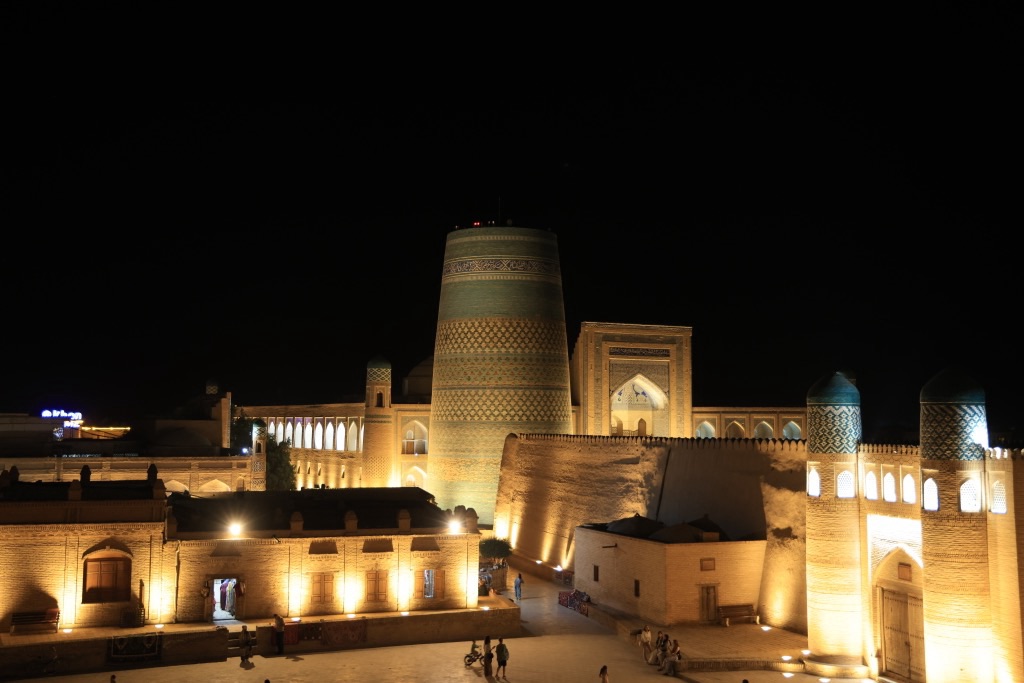

Khiva, Uzbekistan
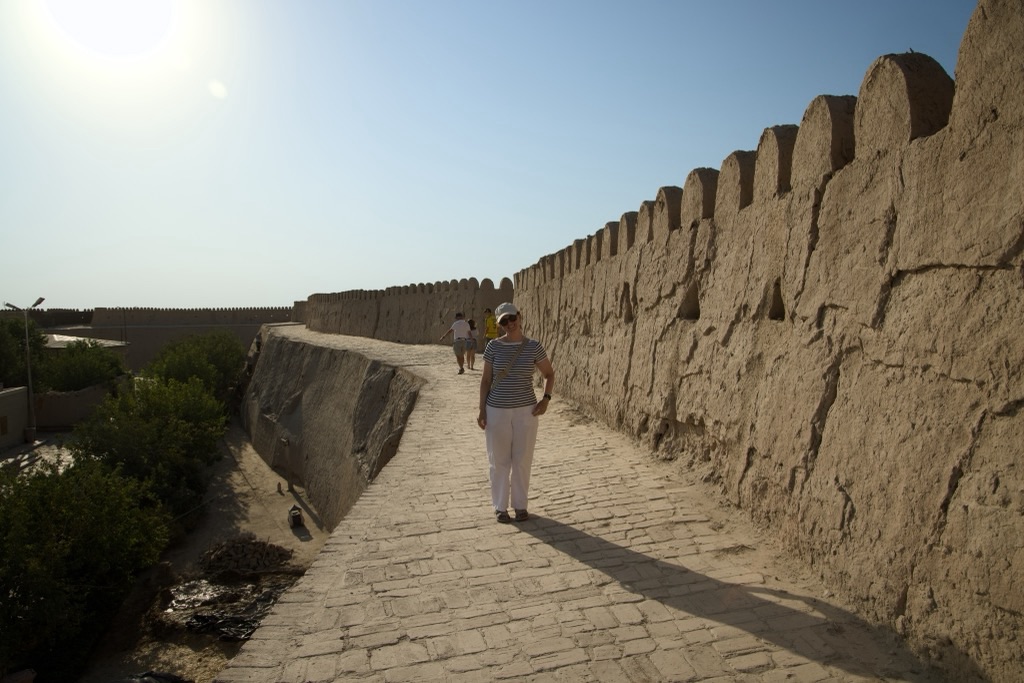
Our first stop in Uzbekistan was Khiva. Khiva is an ancient city (UNESCO WH), located in an oasis in the desert. Benefiting from the life-blood of the Amu Darya river system, these waters have sustained Khiva as a major trading hub on the Silk Road for over 2000 years.
With our arrival delayed, we dropped our bags and went straight to dinner at a rooftop terrace restaurant, overlooking the old city. The walls were beautifully lit with colourful minarets shining along the skyline. We were all pretty exhausted that evening, and after a much-needed beer and food, retired to our beds in the local B&B guesthouse, our home for the next two nights.
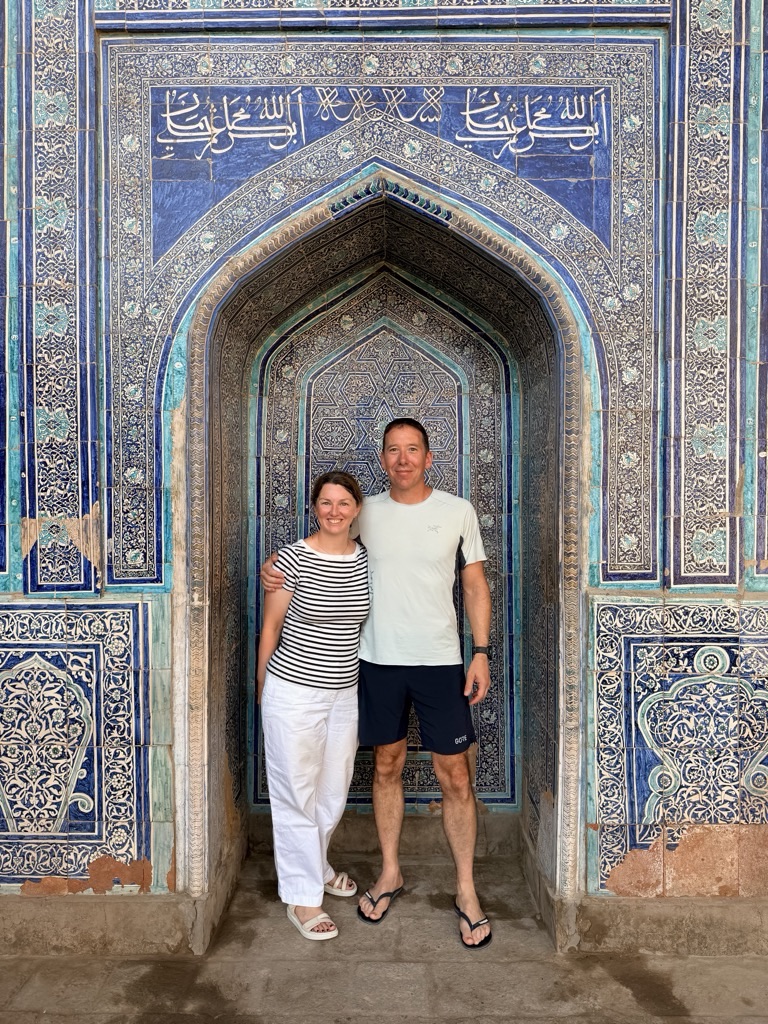
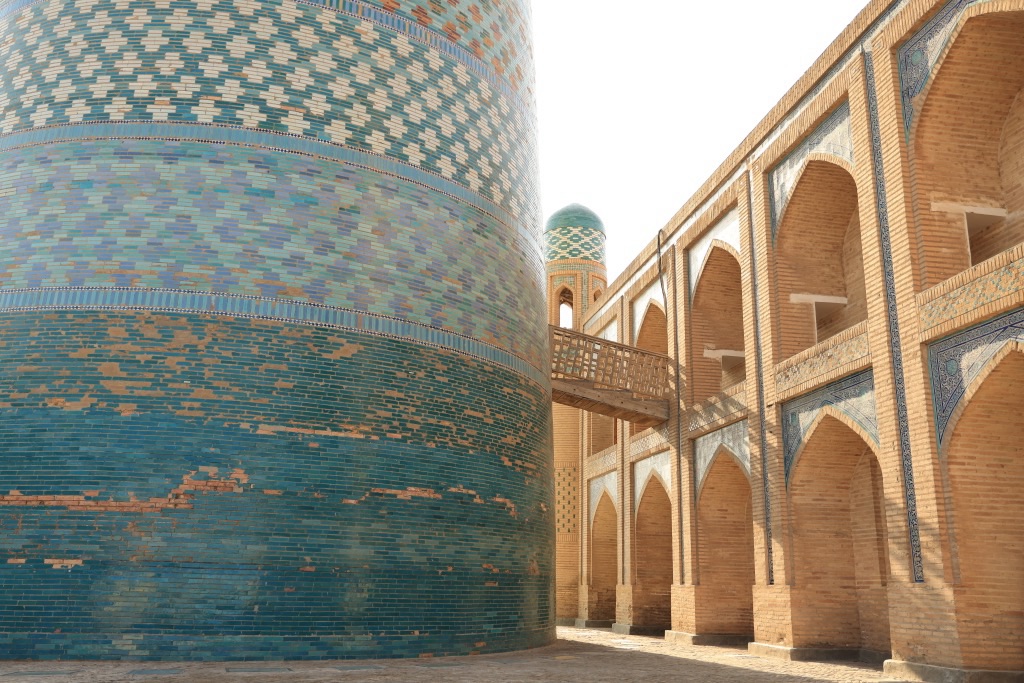
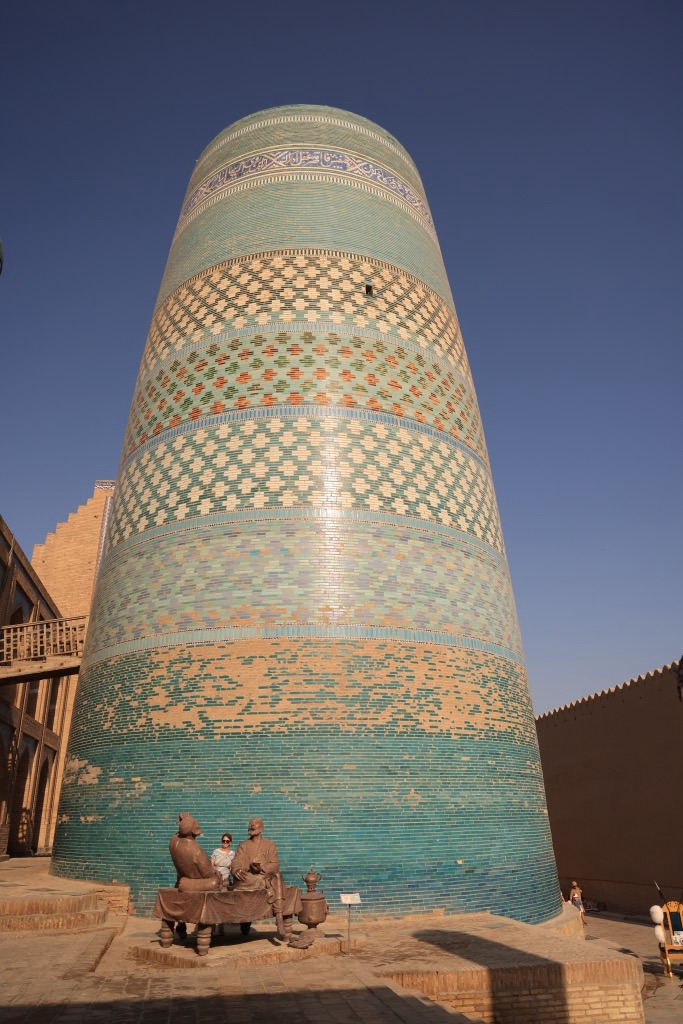
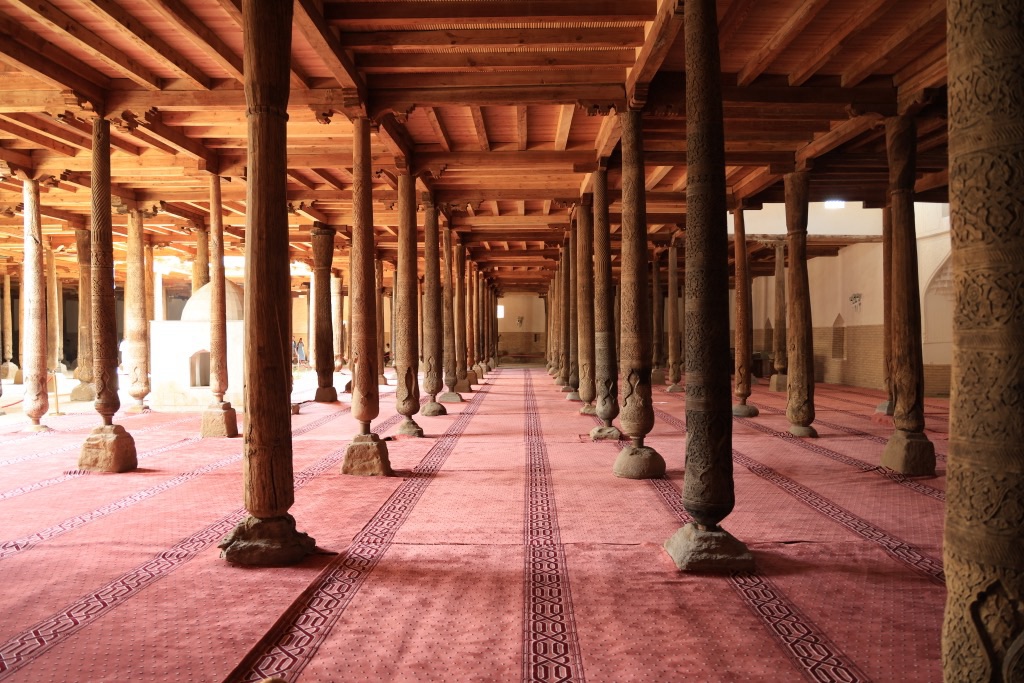
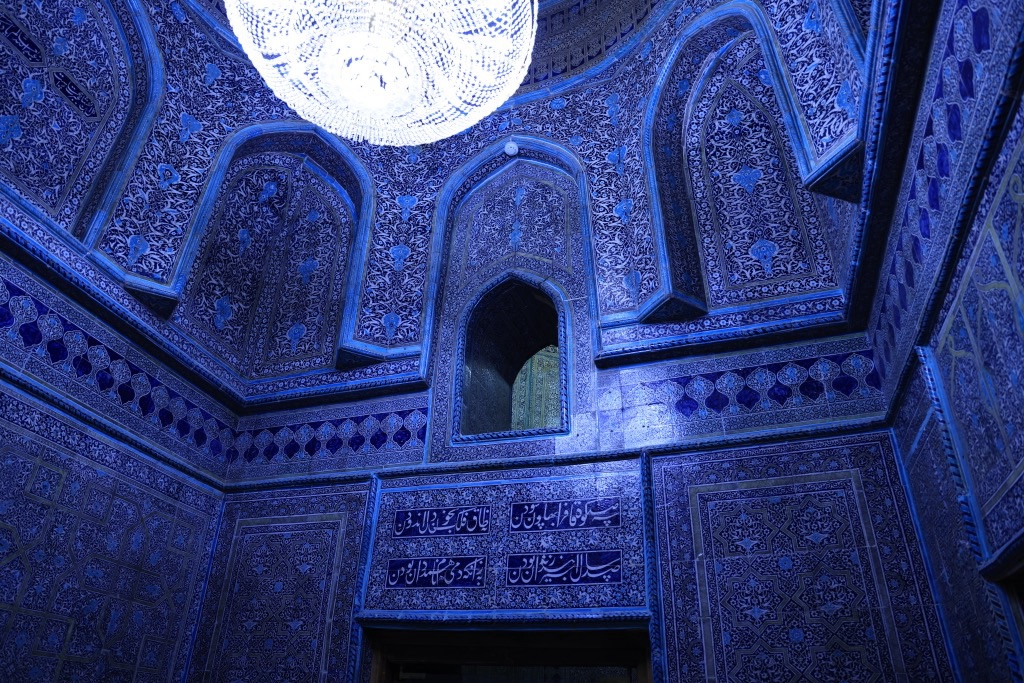
The following day, we took a walking tour of the old city. Sviat, our half Kurgis, half Russian 24 year old guide for the next 21 days introduced us to local guide, Anna who with an iron fist, showed us key sites across the city. Anna cracked the whip, not letting anyone take photos until she’d introduced each place: the Kalta Minor Minaret, a 12th century half-finished minaret with stunning blue tiles; the Mohammed Amin Khan Madressa, where local traders sell their wares. Next we visited the Pahvalon Mahmud Mausoleum built for the c13th poet, whose prose we enjoyed and agreed with:“It is easier to paint the sky with the blood of the heart, than to spend a moment with a fool”. Then the Juma Mosque, whose roof is supported by 212 ancient wooden columns. Finally we saw the Tosh-Hovli Palace, the home of the 5th Khan of the Uzbek dynasty, Allah Kuli Bahadur Khan. Only a couple of hundred years old but repleat with his original bed, and multiple rooms for his 4 wives and 40+ woman harem. #progressive
Uzbekistan is the most economically dynamic of the ‘Stans, with a young population and rapidly developing digital economy. It is growing fast and efficiently and with large gold deposits, supplies of uranium, and enough natural gas to fully cover the country’s energy needs, it is well served to become the largest economy in the region (currently Kazakhstan). Uzbekistan operates under a ‘presidential constitutional republic’, with the president both the head of state and head of government. Executive power is exercised by the government, with judicial powers held by two courts. In other words, this is an authoritarian state. There is no opposition, and term limits have been effectively bypassed (changing the constitution to extend the presidential term, the current president declared that it had ‘reset the clock’ allowing him to serve another two, protracted terms!).
Interestingly, the system appears to be working, at least economically. Uzbekistan is admired by its neighbours. The government is apparently well supported by its people, although meeting several locals, the vox-pops are mixed. Justification for the absence of democracy is the necessary stabilisation of the country and a gradual approach to change post Soviet rule. Uzbekistan purportedly seeks to avoid the kind of turbulence seen in e.g. Tajikistan, which fell into civil war after the breakup of the Soviet Union where competing parties fought for power. This being said, this is no secular country; the 12,000 Imams are appointed by the government, and we were told that the content of the Friday Jum’ah call to prayer is prescribed.
Bukhara, Uzbekistan
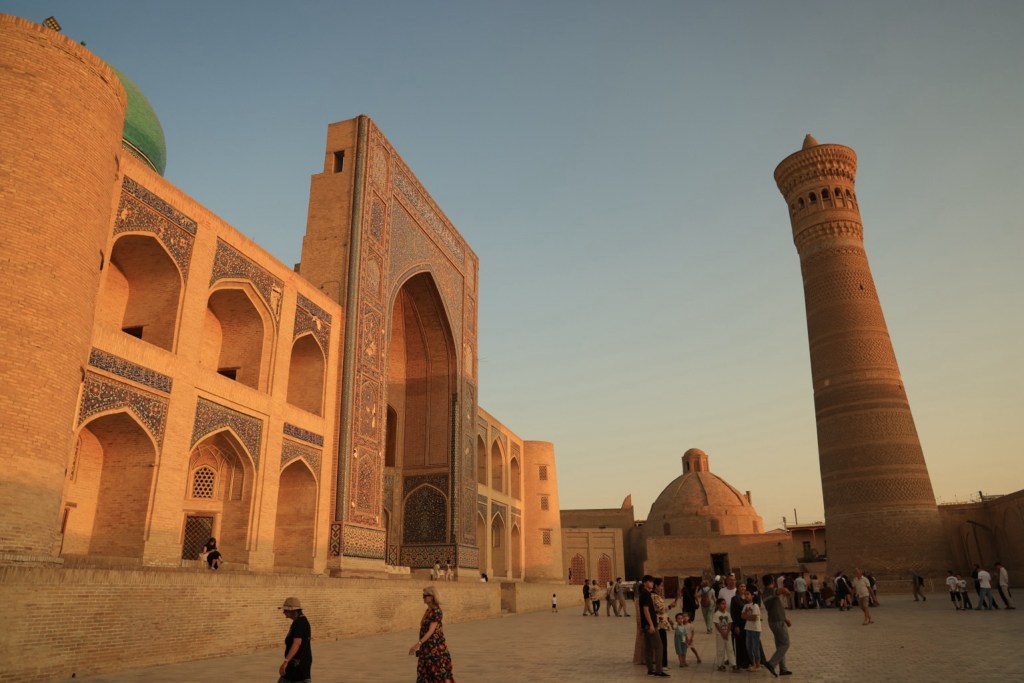
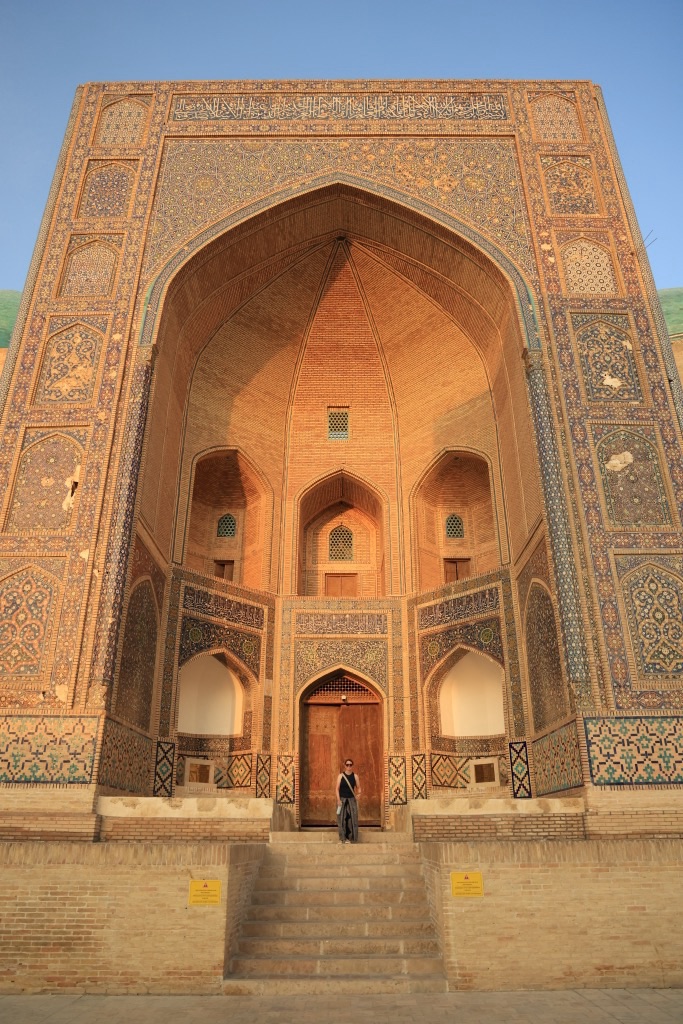
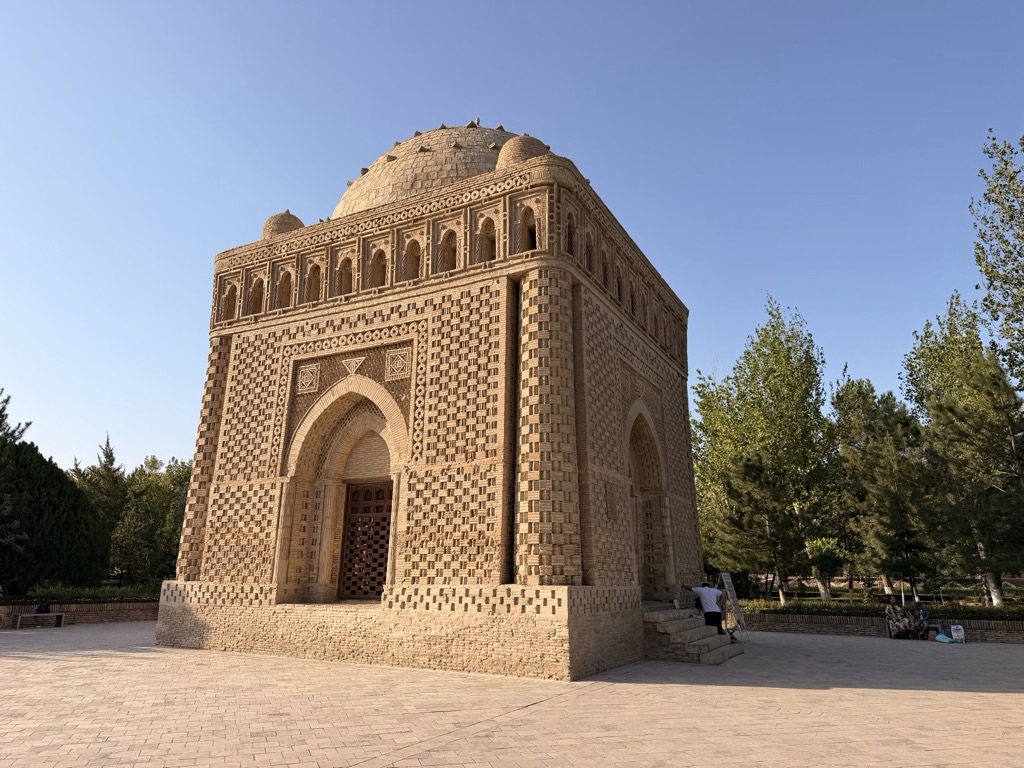
We travelled on to Bukhara, another ancient city and home of the stunning 10th century mausoleum of Ismail Samani. We spent time with a local guide exploring the mausoleum, the 5th Century Ark Fortress, and the Sitorai Moho Hosa Palace. Each building has been meticulously restored, both during and after Soviet rule, and the scale of each was pretty astounding. We were staying in the old town, set around a number of large squares, and pedestrianised, it was a beautiful place, with vaulted Madrassahs (ancient schools) and Mosques lining the old paved streets.
Sometimes it’s the little things that have oversized impacts when travelling. Aside from the beauty of the buildings, one of my favourite things about Bukhara was the green men on crossings. They were animated LED displays, which showed a little green man walking. Enjoyably, the wee man sped up as the crossing time ran out, to the point that the chap was full-pelt sprinting by the end. Loved this.
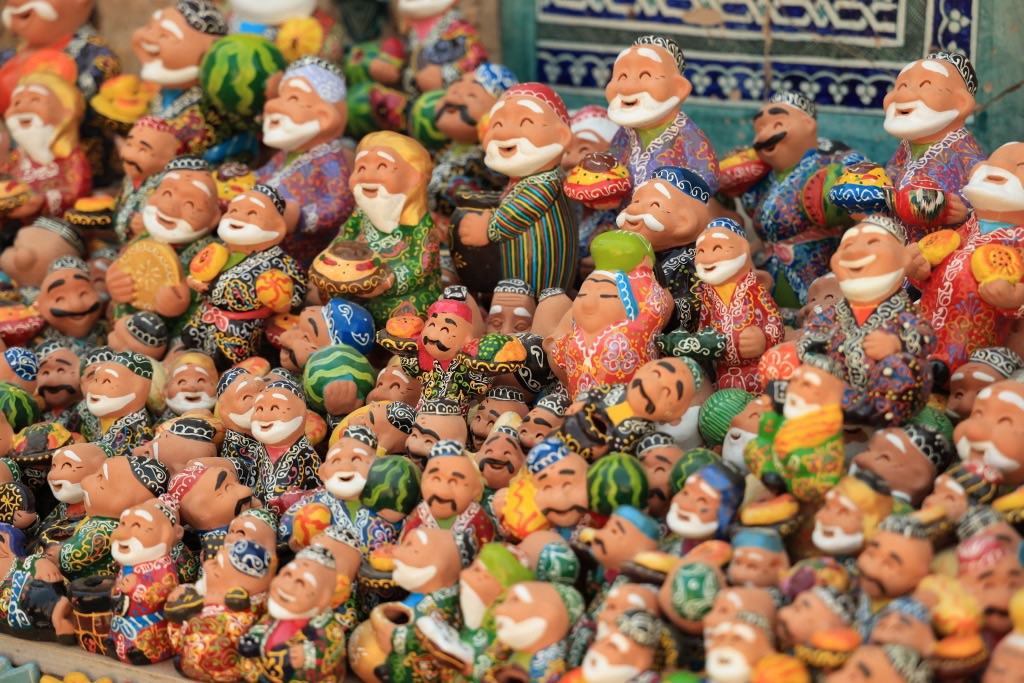
The centre of Bukhara was a lovely pedestrianised area, with many beautiful old Madrassahs, now markets for the many tourists visiting the area. Small shops line the Madrassahs, selling local wares: intricate paintings, hand-drawn on silk paper; shimmering hand-made silk rugs; local instruments and silk clothing. Given our lack of luggage space (and lack of a home), we were very restrained and didn’t pick up any souvenirs… but were sorely tempted.
Samarkand, Uzbekistan
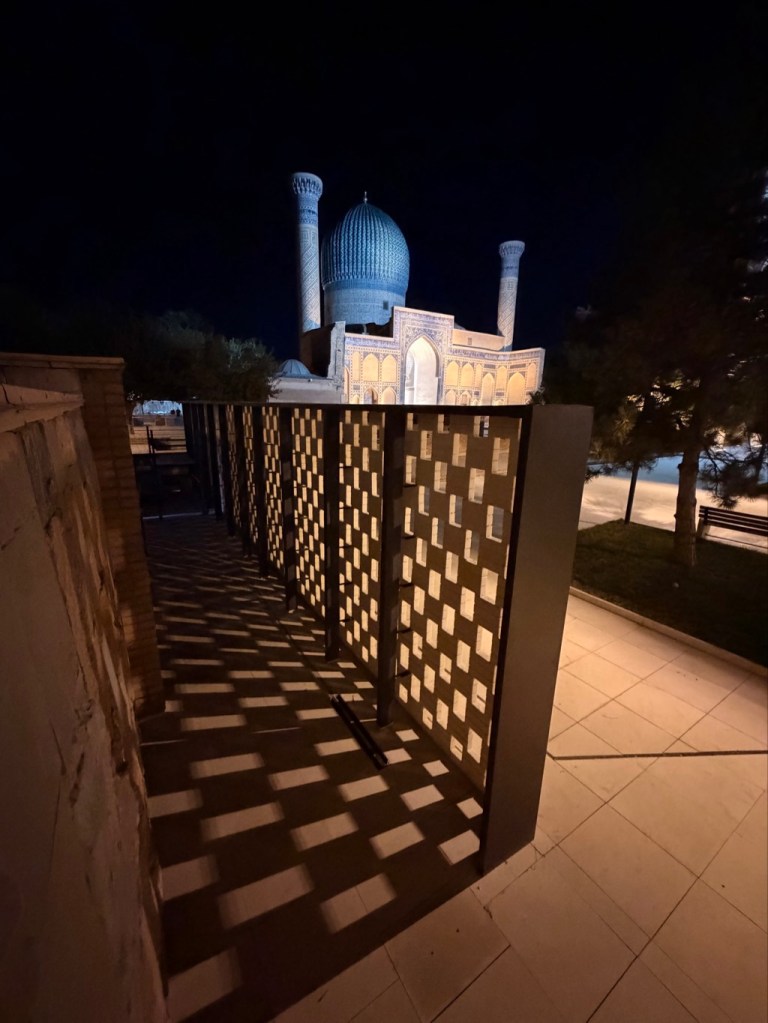
We spent two nights in Bukhara, and after a free morning (filled with a run and photo-editing), we hopped on a fast and very comfortable train to Samarkand, a 3000 year old city and the centre of the Silk Road. We were staying at a guesthouse with extremely firm mattresses but good breakfasts, just round the corner from the Gur-Amir mausoleum, the burial place of the Uzbek hero, Timur/Tamerlane. A beautifully renovated site that still contains the tombs of the 14th century conquerer. Timur has been readopted as the focal hero of Uzbekistan since the end of Soviet rule. Rediscovering the country’s history after nearly 100 years of iconoclastic and religious suppression, the Uzbeks have latched onto Timur’s domination of the central Asian lands as a patriotic icon to galvanise national spirit.
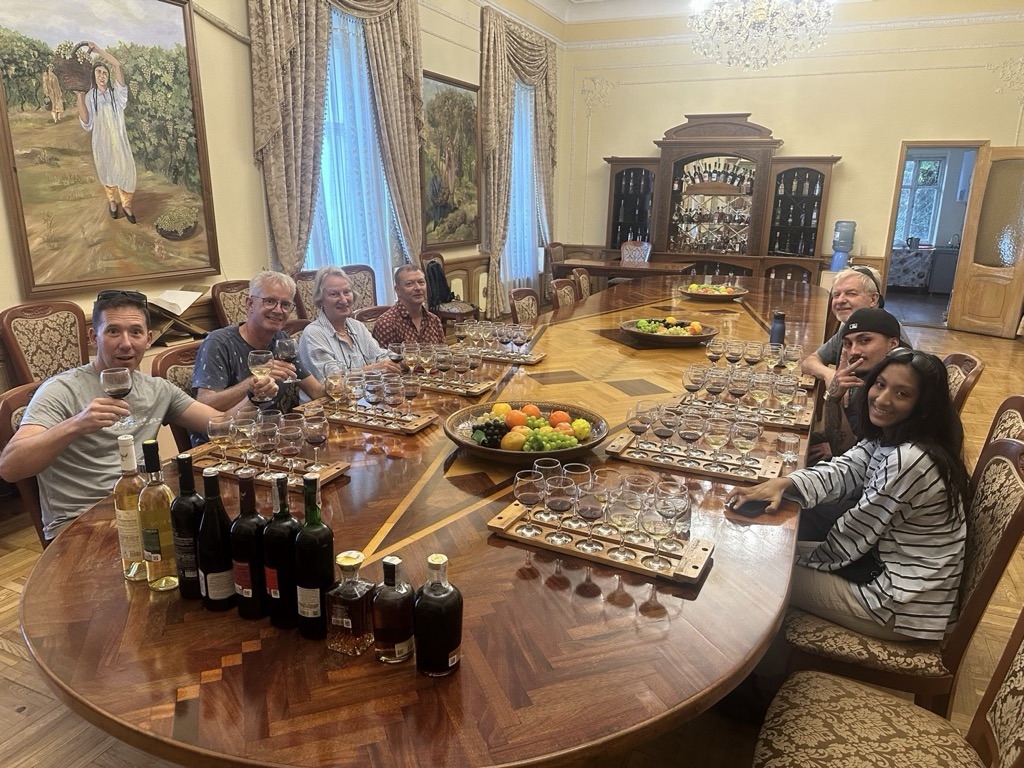
That evening, several of us joined Andy (a wine buff) for a wine tasting, with Samarkand being the wine region of Uzbekistan. We tasted 10 different glasses, 6 wines and 4 cognacs. Perhaps two of them were drinkable. The rest were pretty awful.
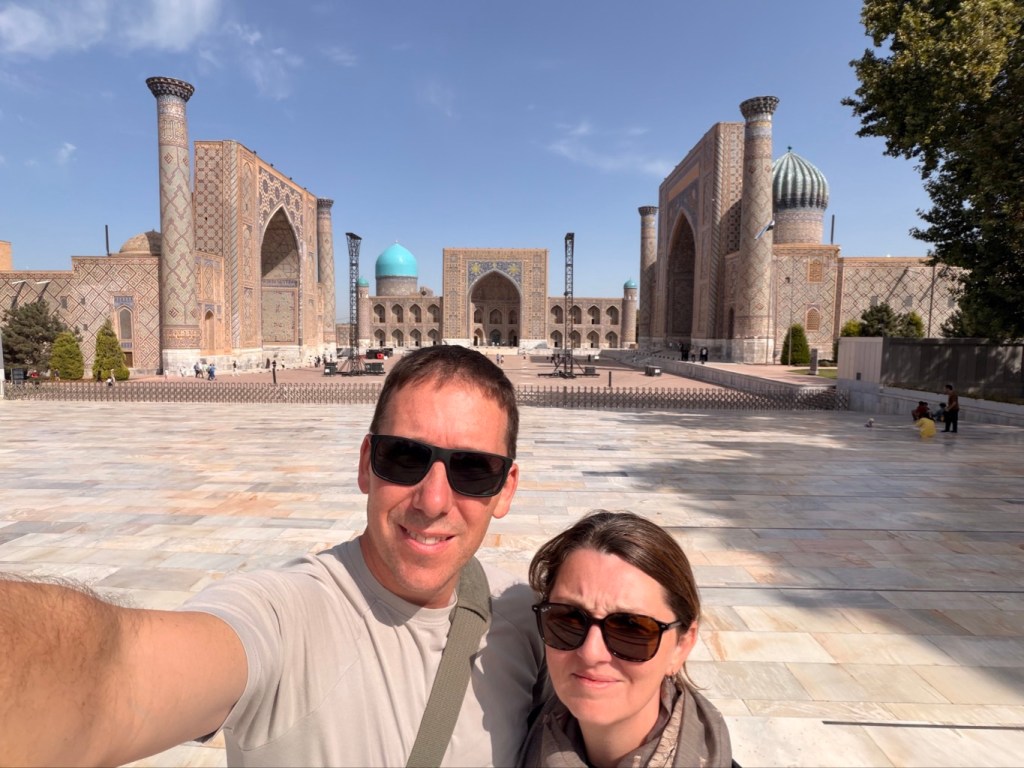
We were joined the next morning by Iziza, a funny local guide who took us on a walking tour of the city. She showed us the iconic Registan square, lined on three sides by towering madrassahs, decorated with beautiful green and blue mosaics. Uzebekistan, both under Soviet rule and more recently has invested significantly in preserving and restoring their ancient monuments, and these were no exception, with a mosque set behind one of the Madrassahs lined with 7kg of pure gold leaf, delivering an entrancing light show on entry.
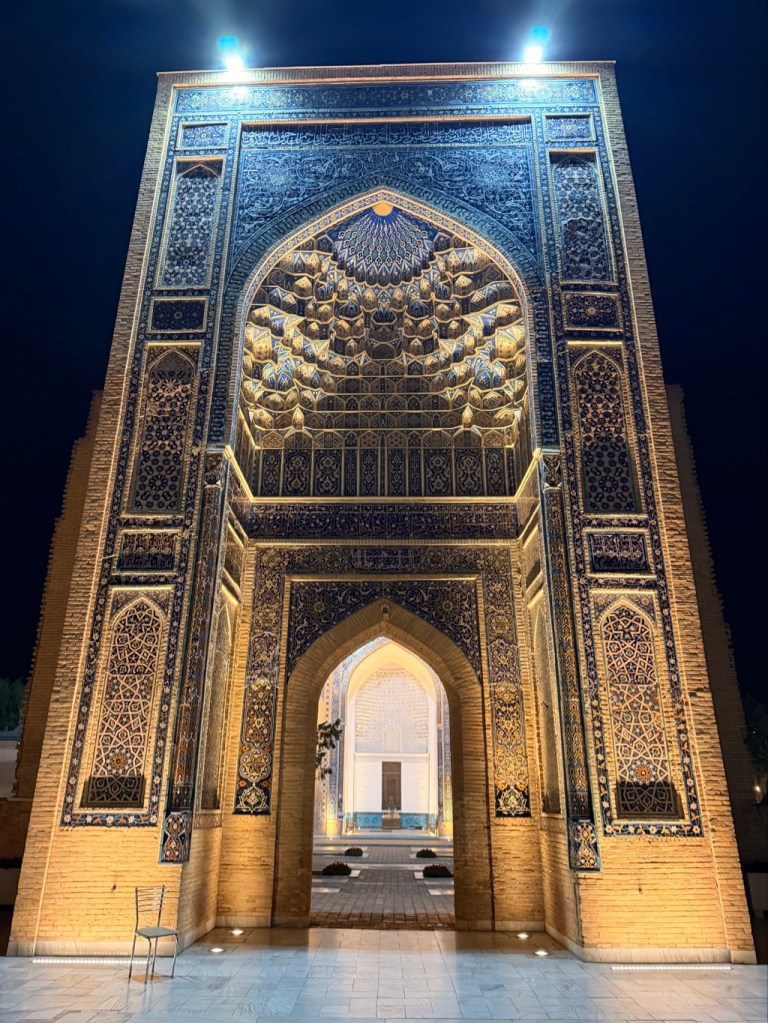
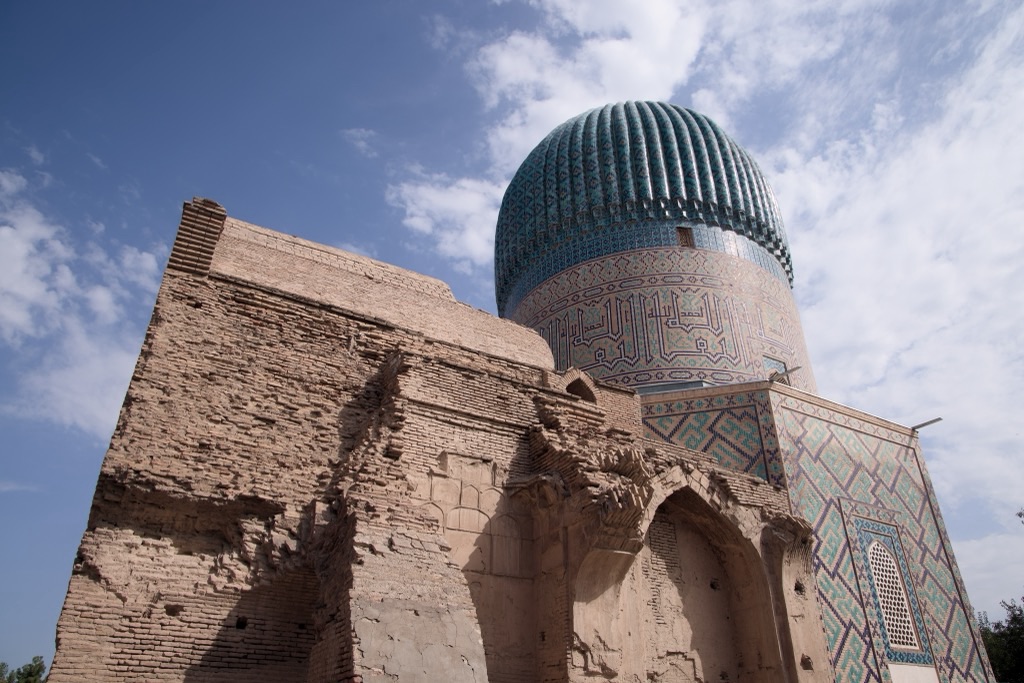
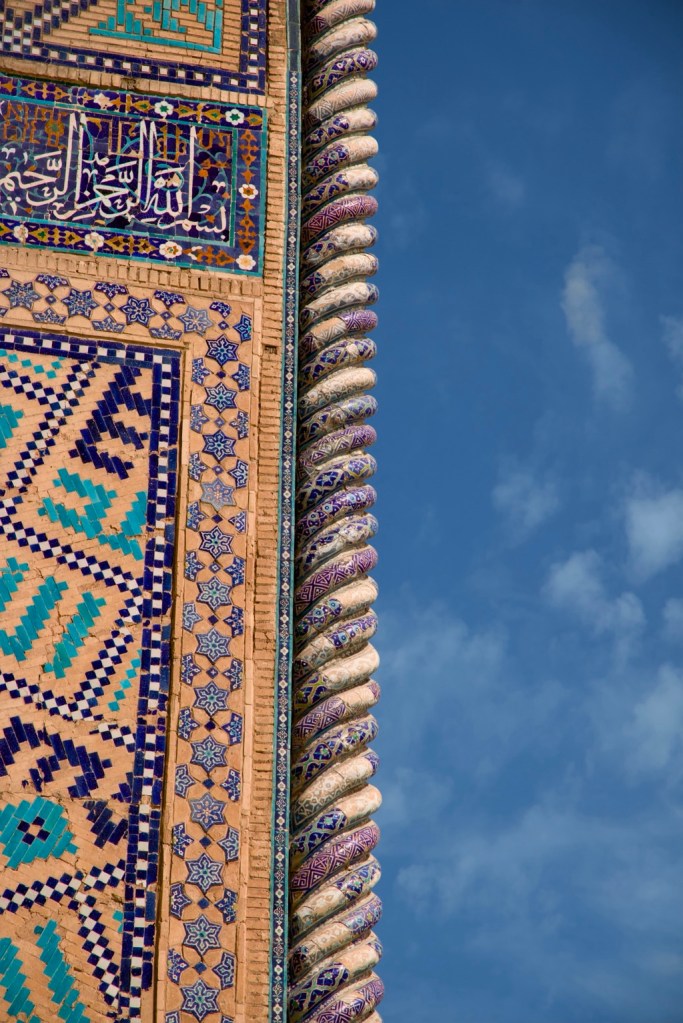
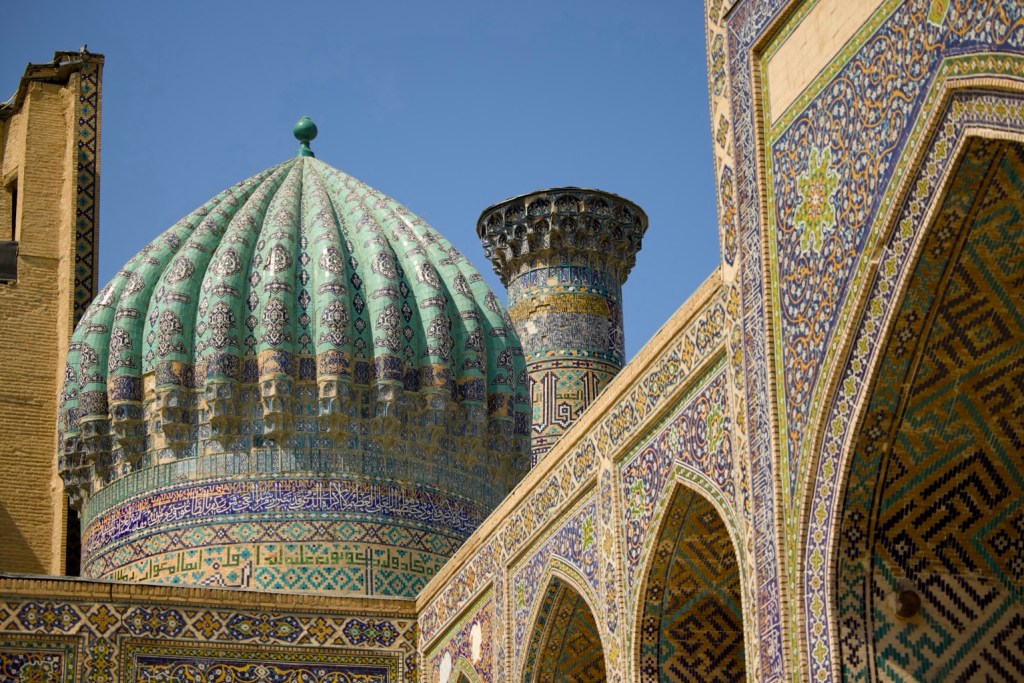
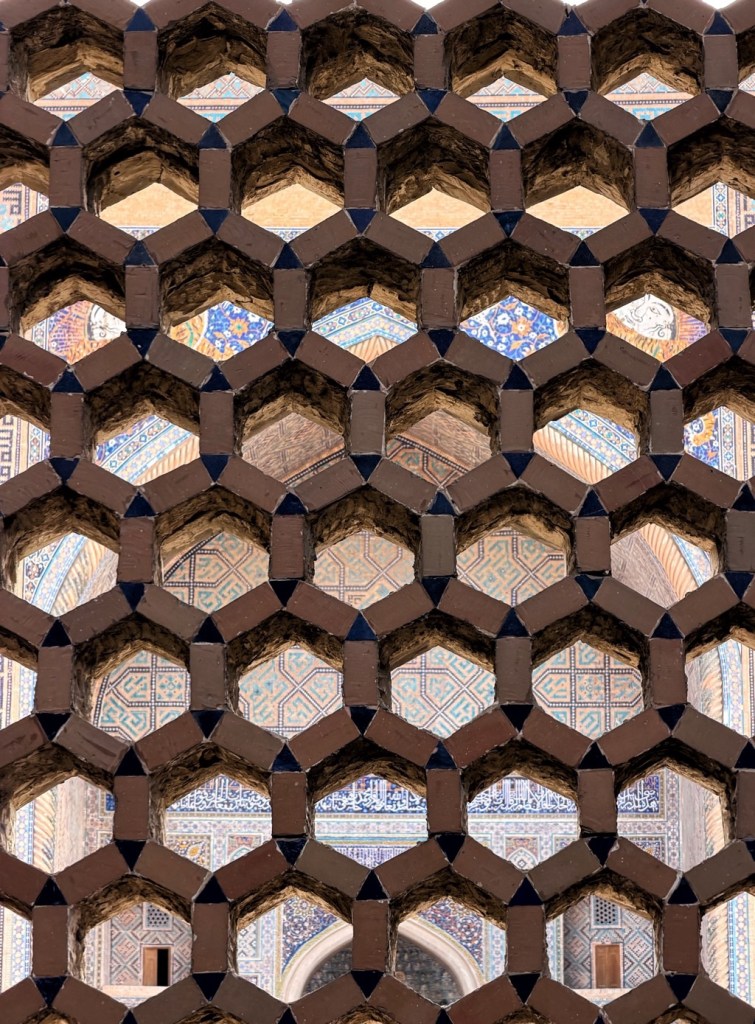
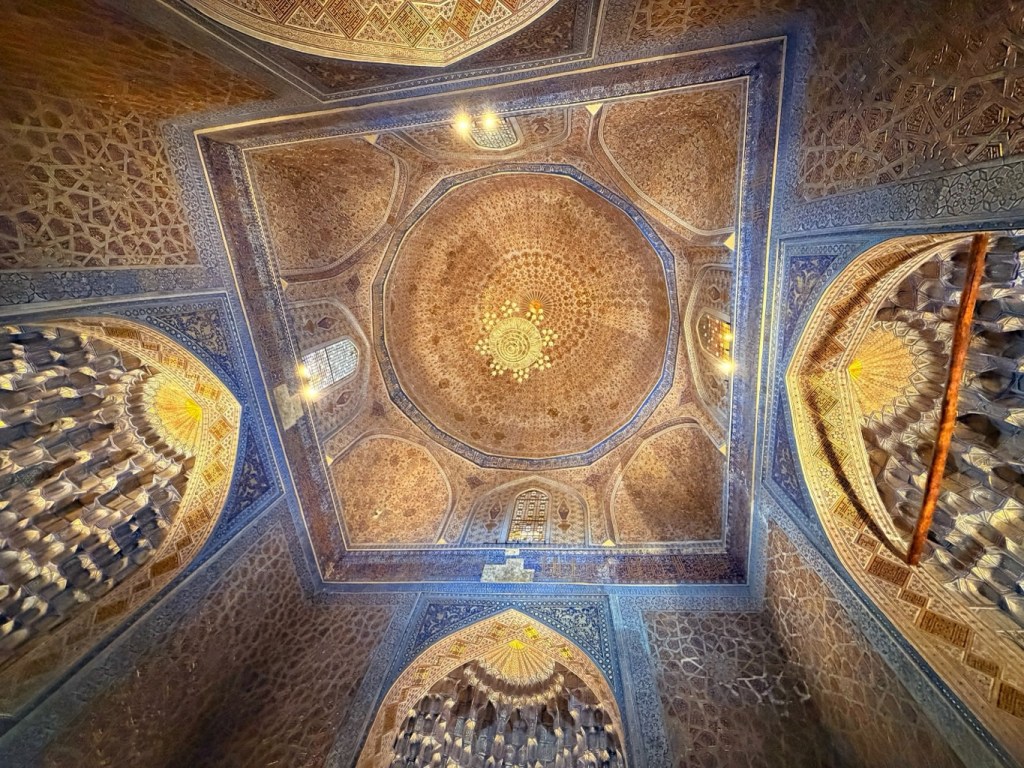
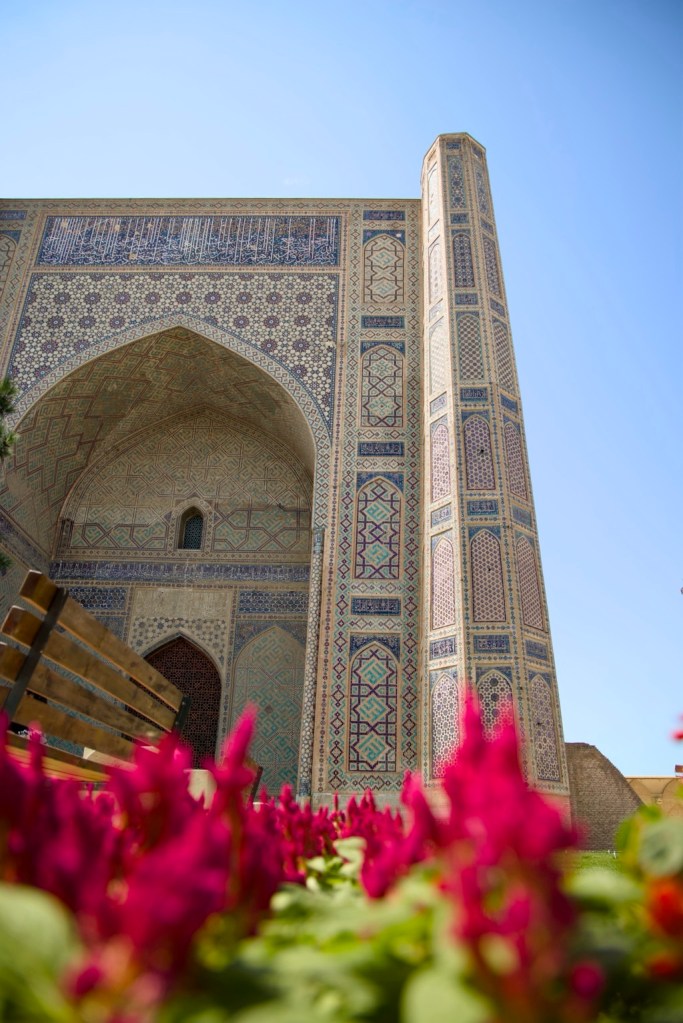
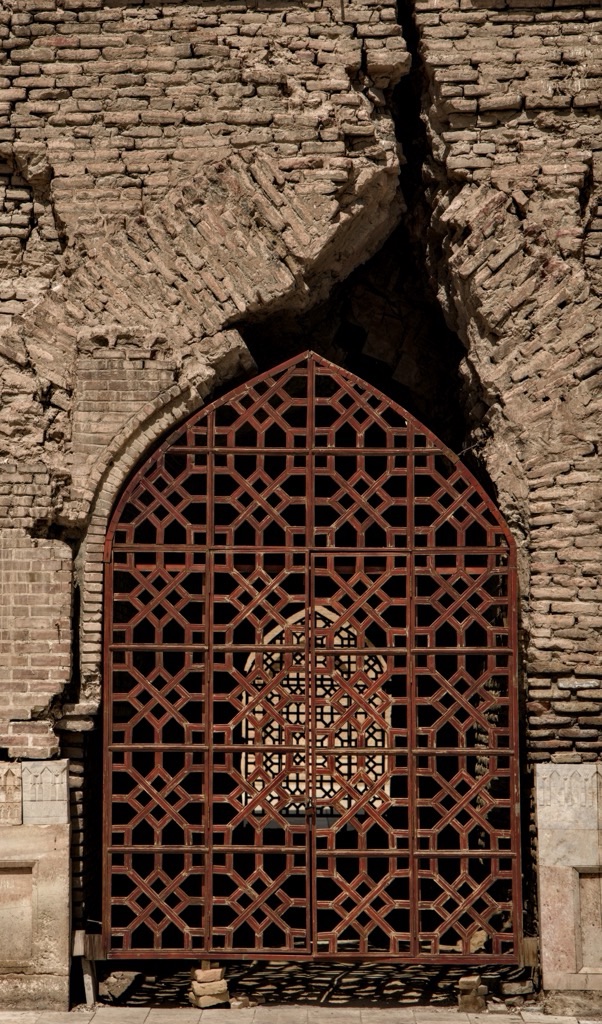
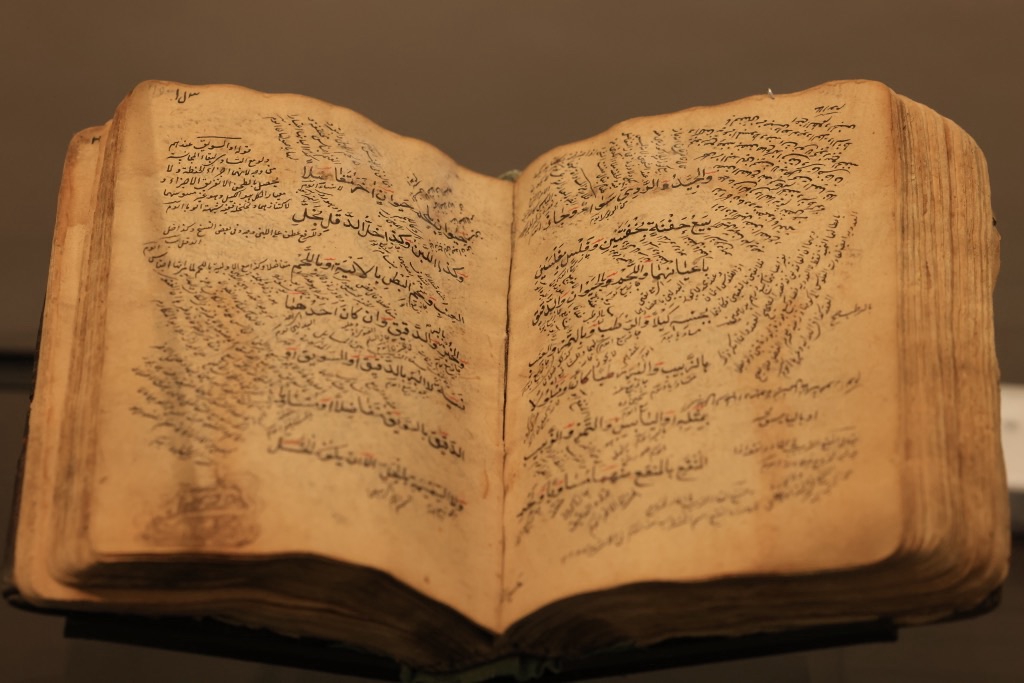
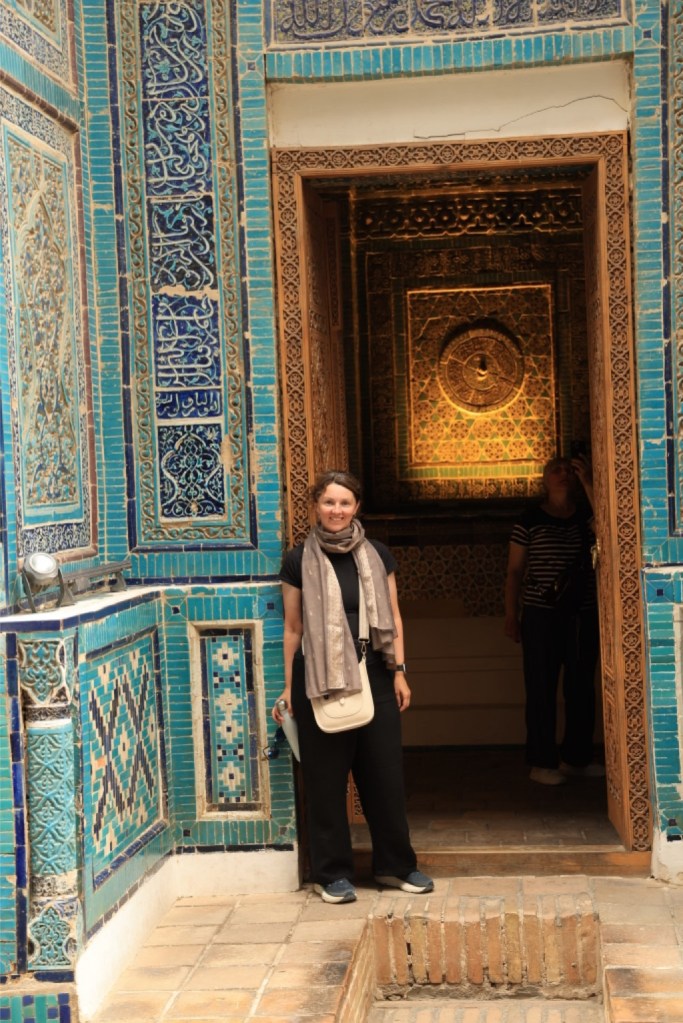
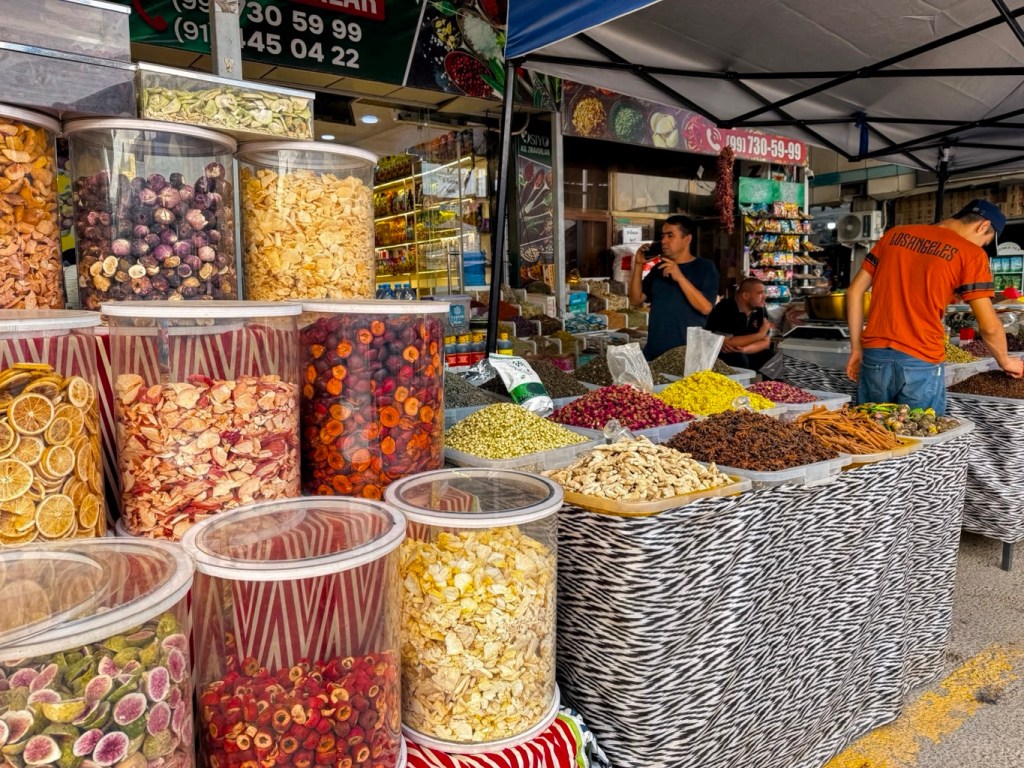
We wandered around a local market, stocking up on fresh fruits and nuts, before visiting the imposing Bibi-Khanym mosque, and the sacred site of Shakh-I-Zinda, a necropolis of mausoleums built between the 14th and 19th century, the burial sites of multiple rulers and nobles from Timurs reign forward. Finally, we took a trip to the main silk carpet-making workshop in Uzbekistan, given a tour around by the original owner’s daughter. We again declined to buy.
Food
We ate on our final evening at the home of a local family – a mother, father and three daughters. We were treated to an evening of Plov, a favourite dish along the Silk Road. This is a delicious stew made from beef, carrots, onions, garlic and two types of oil, simmered for hours before being served on rice that has been cooked on muslin laid over the bubbling sauce of the Plov. Everyone agreed that it was the singular best meal we’ve had so far, and the company was delightful. Initially entertained by the youngest daughter, who is learning English and acted as our translator, then joined later by the oldest daughter, who is defiantly refusing to be ‘matched’ for marriage, enjoying her developing career as a local tour guide.
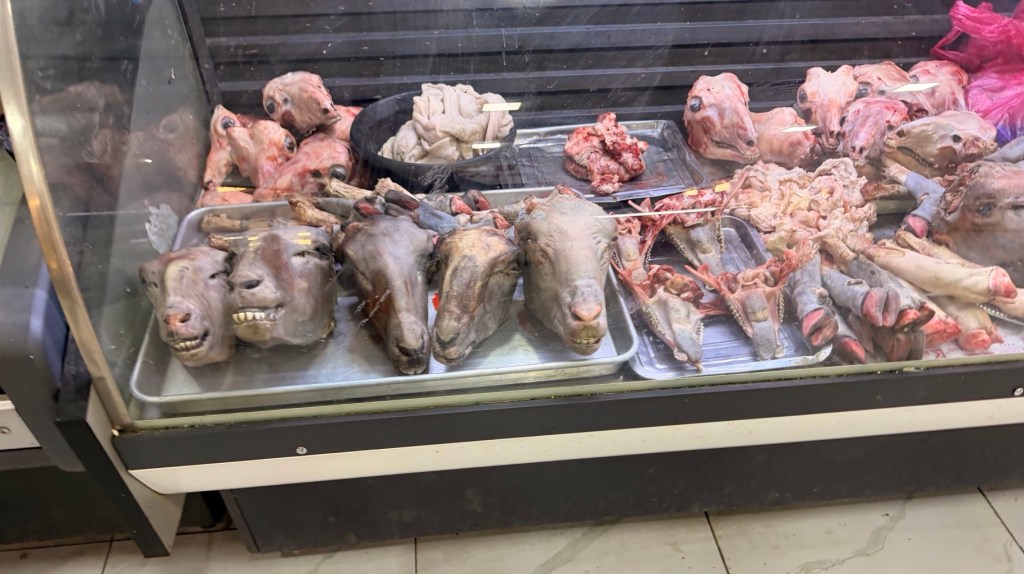
Beyond Plov, the food in Uzbekistan has been a very pleasant surprise. We came with fairly low expectations, but whether it’s because of the mature tourism industry, the excellent restaurant selection by Sviet (our guide), or the abundance of locally grown ingredients, we’ve been spoiled here.
Common dishes include Laghman, a delicious meat, pepper and noodle broth; Shashlik kebabs; and Somsa’s – baked pastries stuffed with meat, onions or pumpkin. My personal favouritely named dish is Jiz Biz Beef. Andy, one of our group tried it and said it was very tasty. Salads are also popular and while we’ve exercised a bit of caution, nobody’s been particularly ill, suggesting that they’re well prepared and washed in filtered water.
Tashkent, Uzbekistan
Our final stop in Uzbekistan is Tashkent, the capital city and once the capital of the whole Turkestan Autonomous Soviet Socialist Republic (covering Turkmenistan, Uzbekistan, Tajikistan and Kyrgyzstan). We could feel the mood dip slightly as we caught the fast train here from Samarkand, as the whole group had hugely enjoyed the smaller, old towns of Khiva, Bukhara and Samarkand, and the bright lights of the big city didn’t inspire the same wonder.
We checked into a fairly unappealing Central Palace Hotel, whose name belies its run-down nature. We had a free-evening and a few of us took a walk to a restaurant, enjoying an excellent meal, with less-than-excellent wine. Sadly, Central Asia isn’t keeping its best wine secret… So far, they just don’t have any good wine.
Again, we were met by a local guide who led us on a walking and metro tour of the city. We passed iconic Soviet-era buildings, including the Hotel Uzbekistan, a towering monstrosity, which still operates today as a three-star establishment.
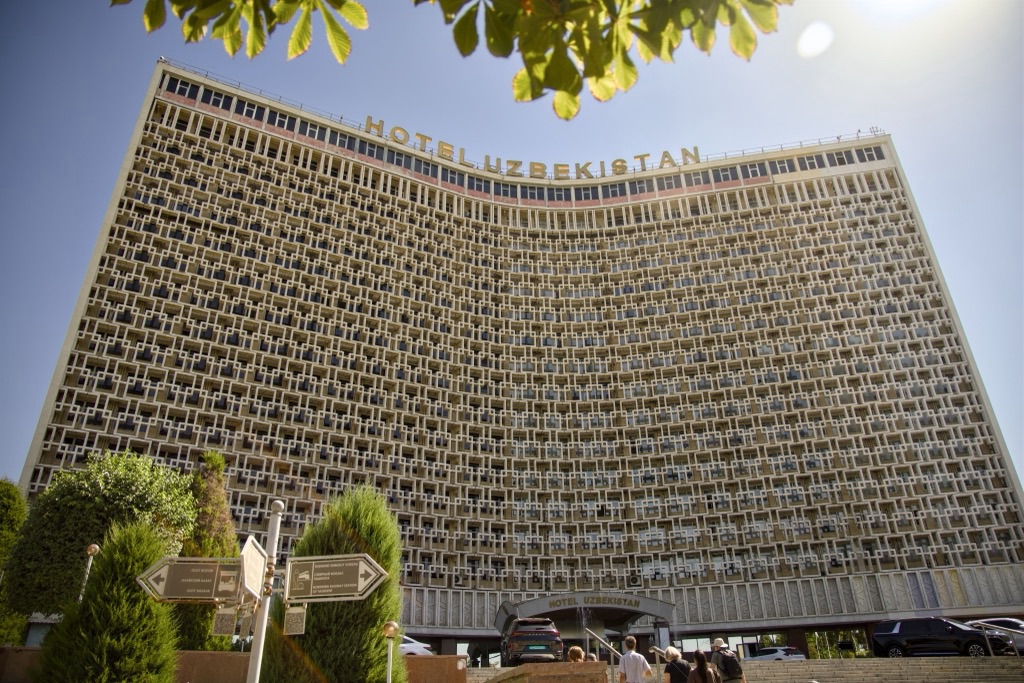
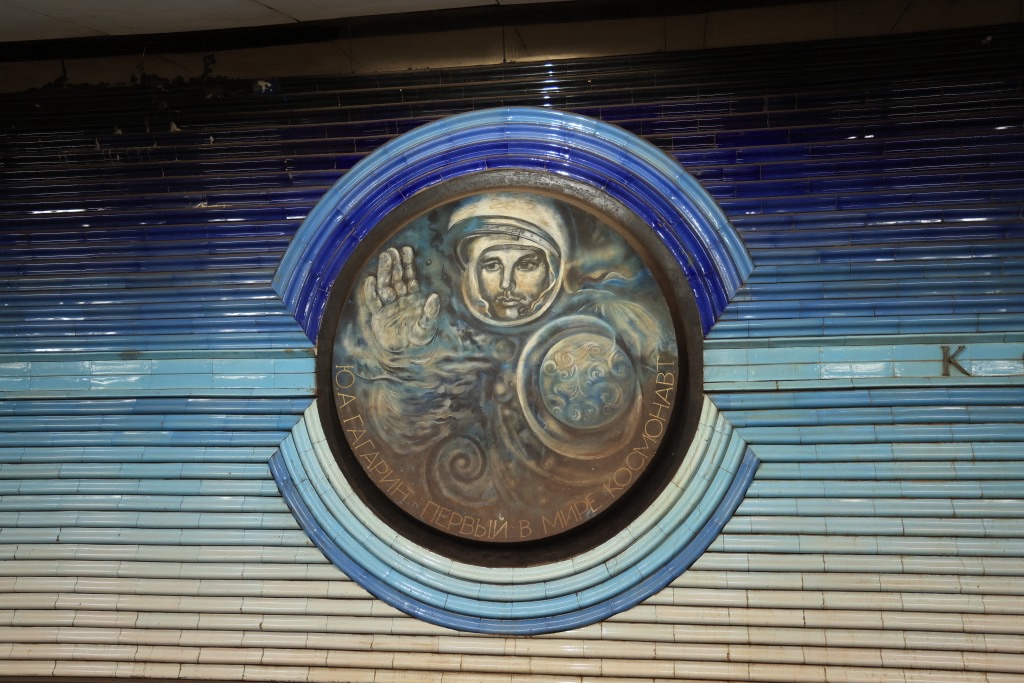
One of the iconic sights in Tashkent is the Soviet Metro stations, built in the 1970’s and 1980’s, they’ve largely been preserved in their original state. Thankfully, lacking images of Lenin to topple. The stations, with names like Toshkent, Mustakillik Maydoni, Alisher Navoiy and the space-themed Kosmonavtlar were all beautiful in their own way. Leaning heavily on art deco designs, they still shine with a faded grandeur. Of the Alisher Navoi station, our guide showed us a ceramic panel on the wall depicting a couple from one of Navoi’s classing poems: “Typical love story”, he said. “She loves him. He loves her. Both die”.
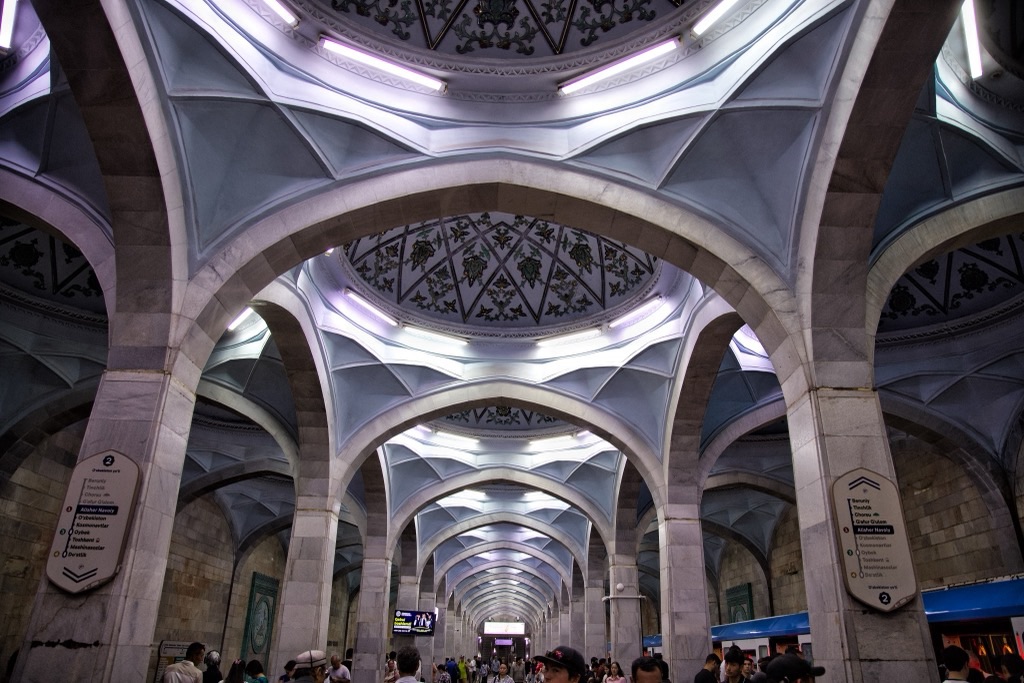
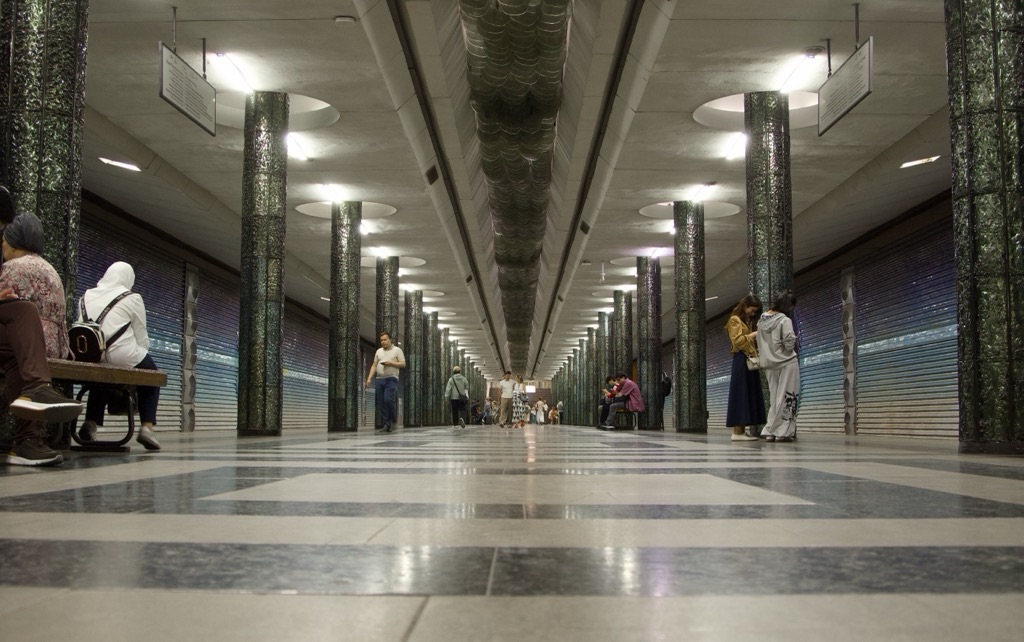
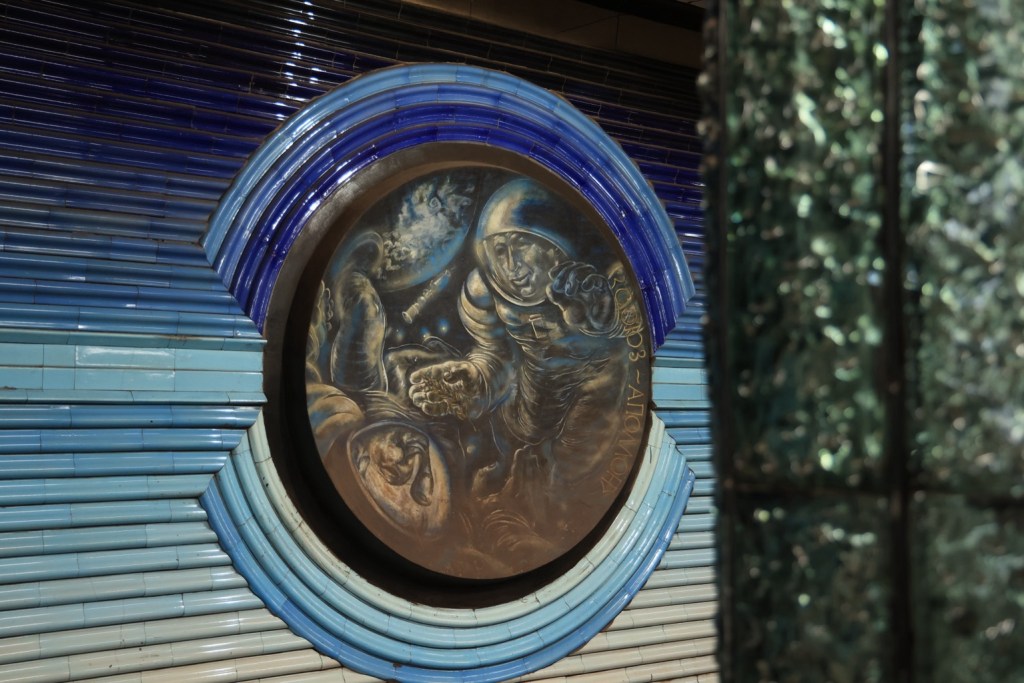
We took in the Chorsu Market, a grand domed bazaar, built in 1980 in the Soviet Modernist style, it’s an impressive building from the outside, and full of life and spices and smells inside. That evening, we took the metro a few stops to the centre of the business and commercial district, which looked every bit a wealthy city centre. We had a meal by the landscaped gardens and fountains and enjoyed a light, fountain and firework show.
As we’ve travelled through Uzbekistan, we’ve felt the shackles of Turkmenistan release entirely. It’s been a beautiful country, with great food, rich history, and most especially, lovely and generous people.

