
Bogota
On 3rd October, we flew from Curacao to Bogota. Our first impression was the immediate temperature drop from 32° to 18°c, with Bogota perching up at 2600m above sea level. We transferred to the decent enough B3 Hotel and a few hours later, met with our small group who we’re touring around Colombia with over the next week: Anton (Germany), Emily (USA) and Jenifer (USA). Paola, our guide took us out for tasty local dinner where I got my first taste of the absurdly fresh and sweet avocados that they can get here.
Salento
We didn’t hang around for long in Bogota. The next day, after a quick visit to a fruit market where we tried several of the 400+ edible fruits grown in Colombia, we made our way back to the airport to catch a short internal flight to Periera. On landing we taxied to our gate, only for the captain to announce that the plane was surrounded by a swarm of wasps and we have to move gates. Once safely at a wasp-free gate, we transferred to small bus and headed to the village of Salento, up at 2000m.
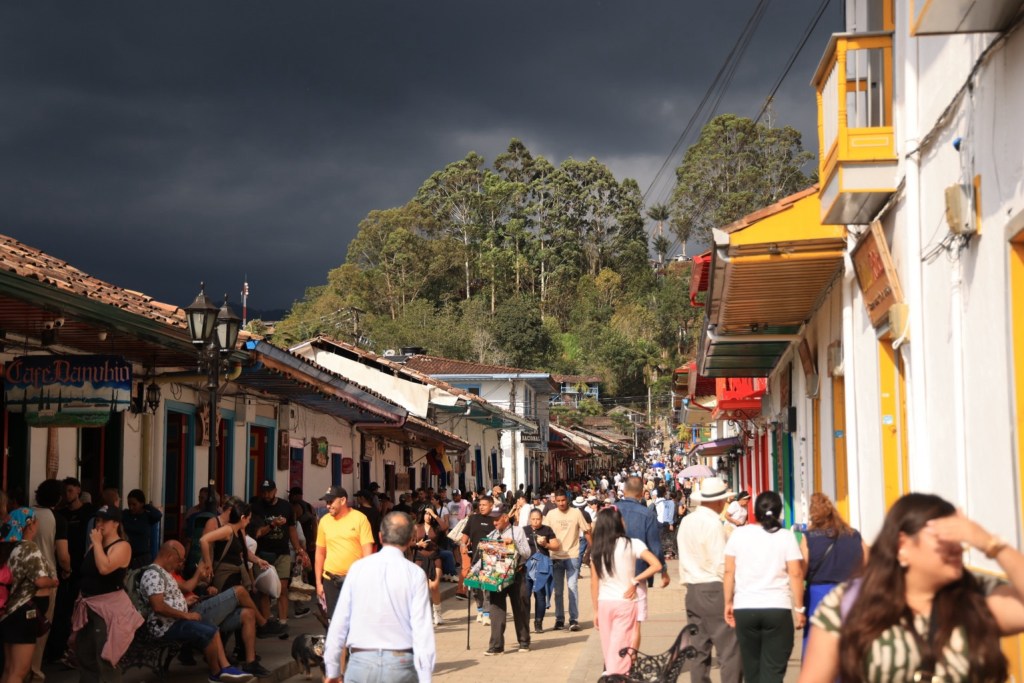
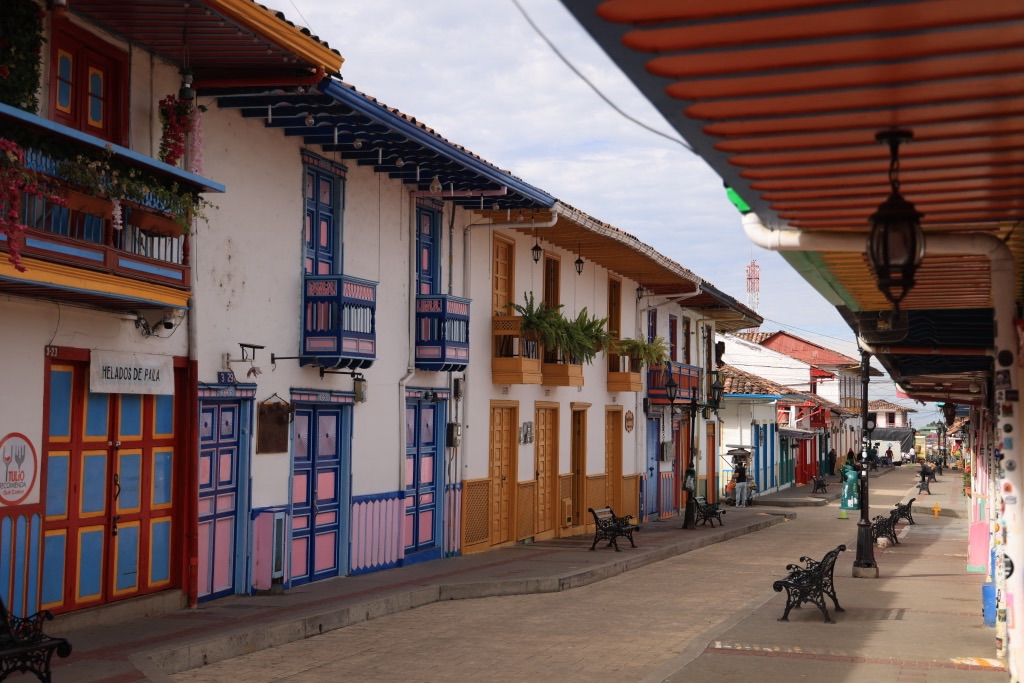
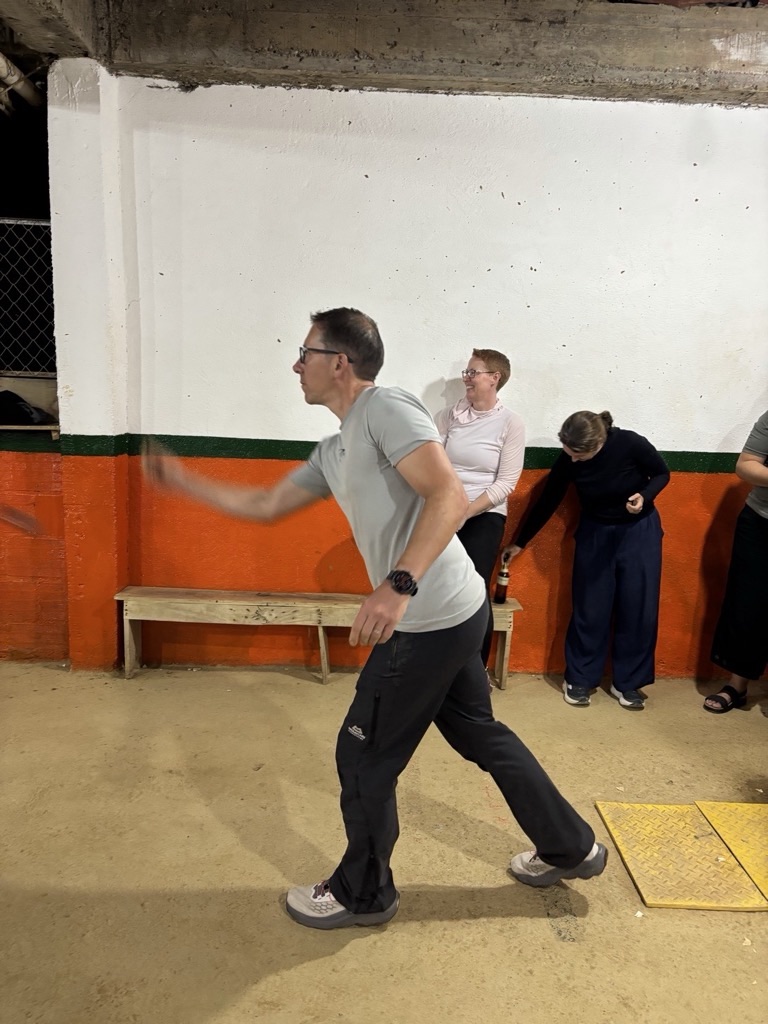
Salento is very pretty little village. It was busy with locals on Sunday, thronging the pretty streets which are packed with small shops and restaurants. We wandered around the colourful town, then met the group in the early evening for a game of Tejo. This involved throwing heavy metal pucks at a target metal ring embedded in a soft clay stand. Small triangular pieces of paper filled with gunpowder are placed around the ring which explode if hit – increasing your score. It was very good messy fun. We all managed to hit the target, with Shona achieving the highest score of the day, hitting both the bullseye and setting off an explosion. My dad would have loved this game.
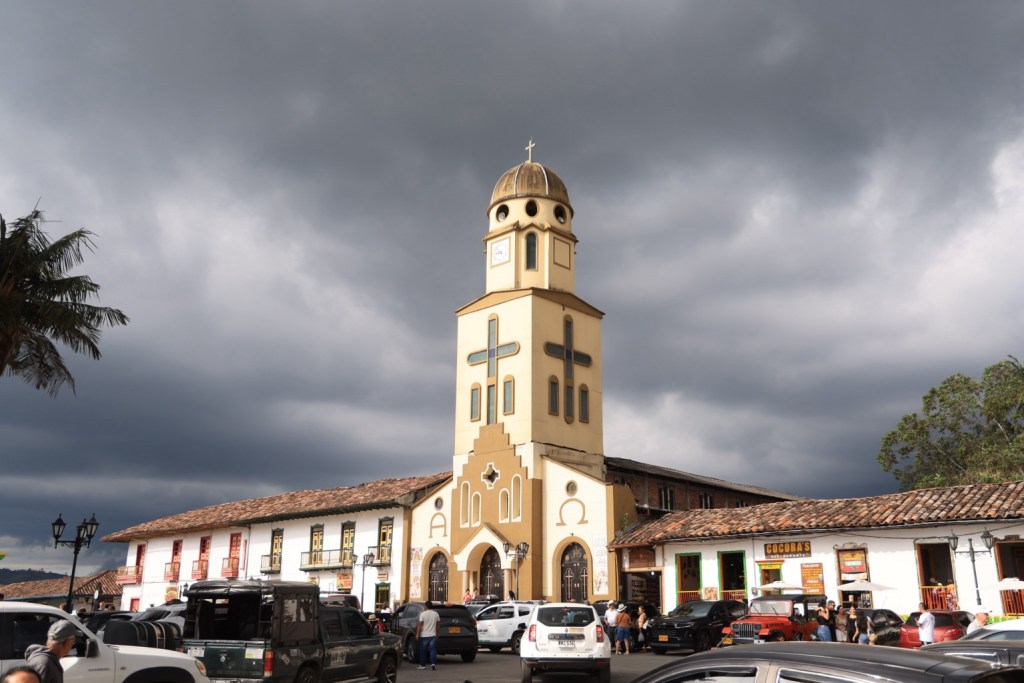
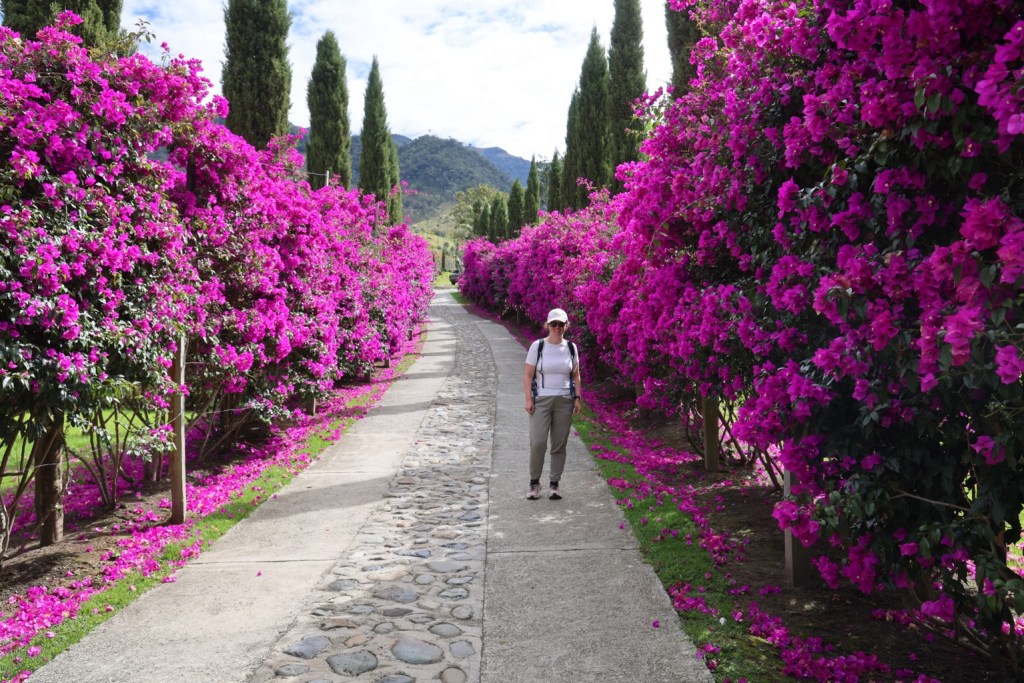
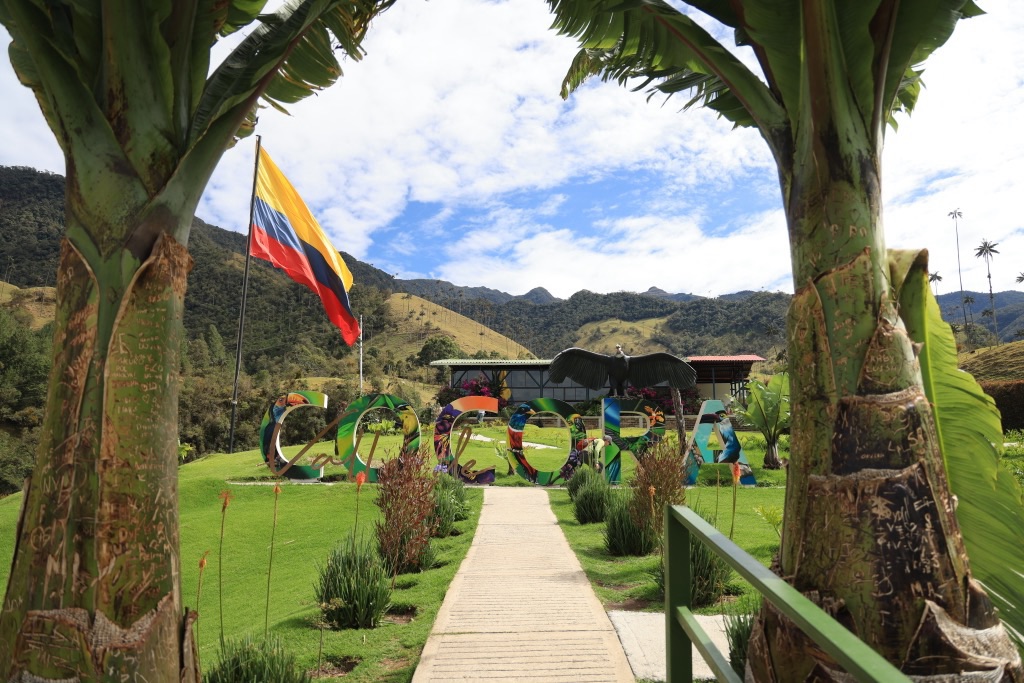
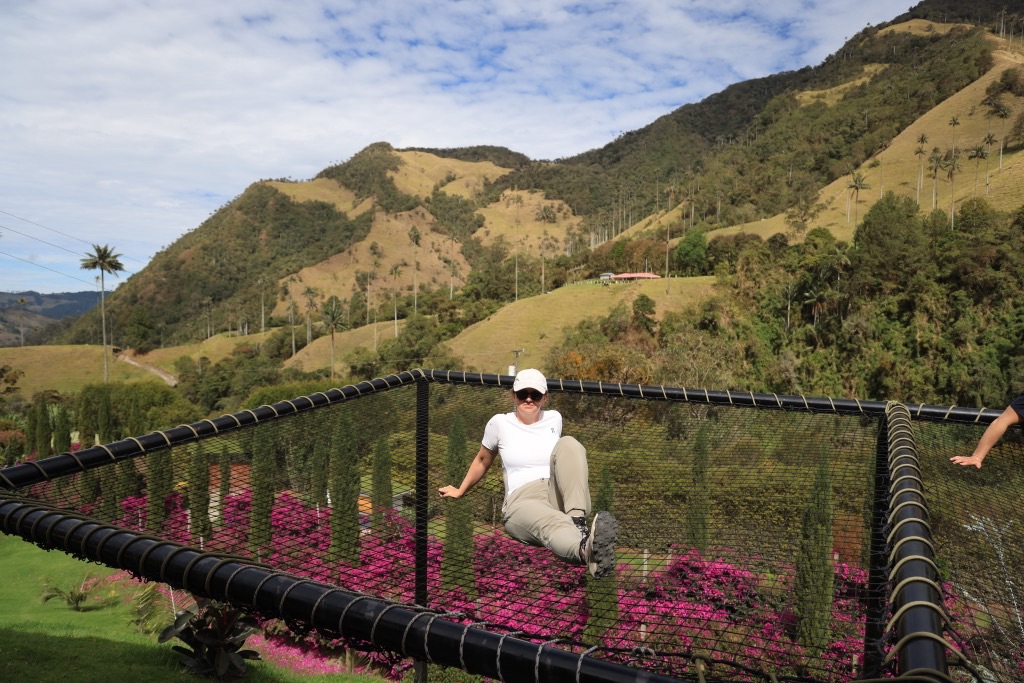
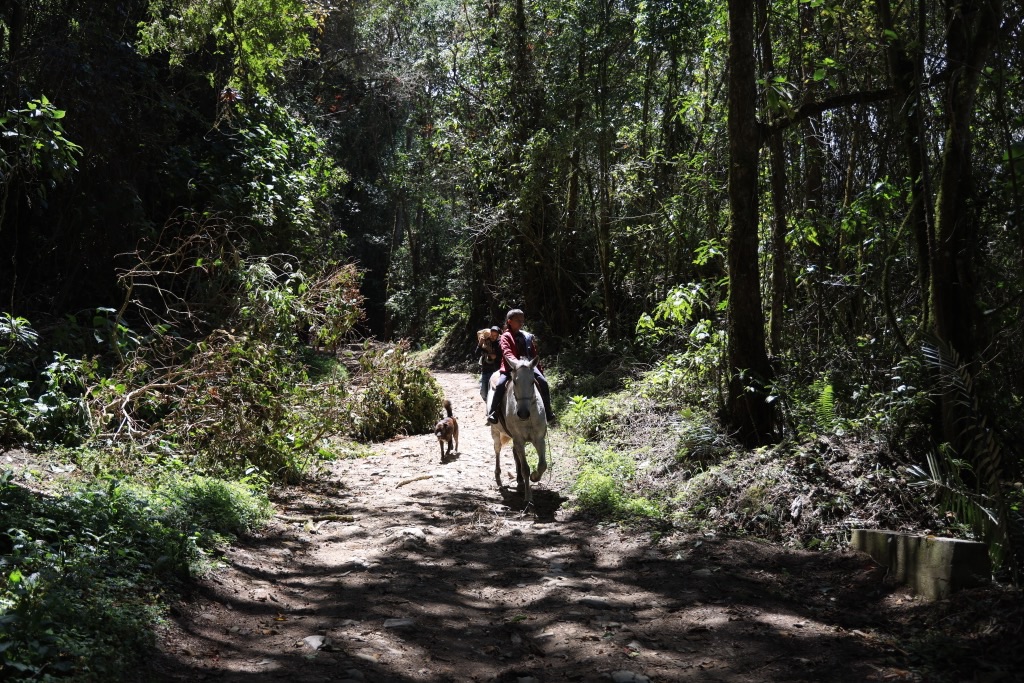
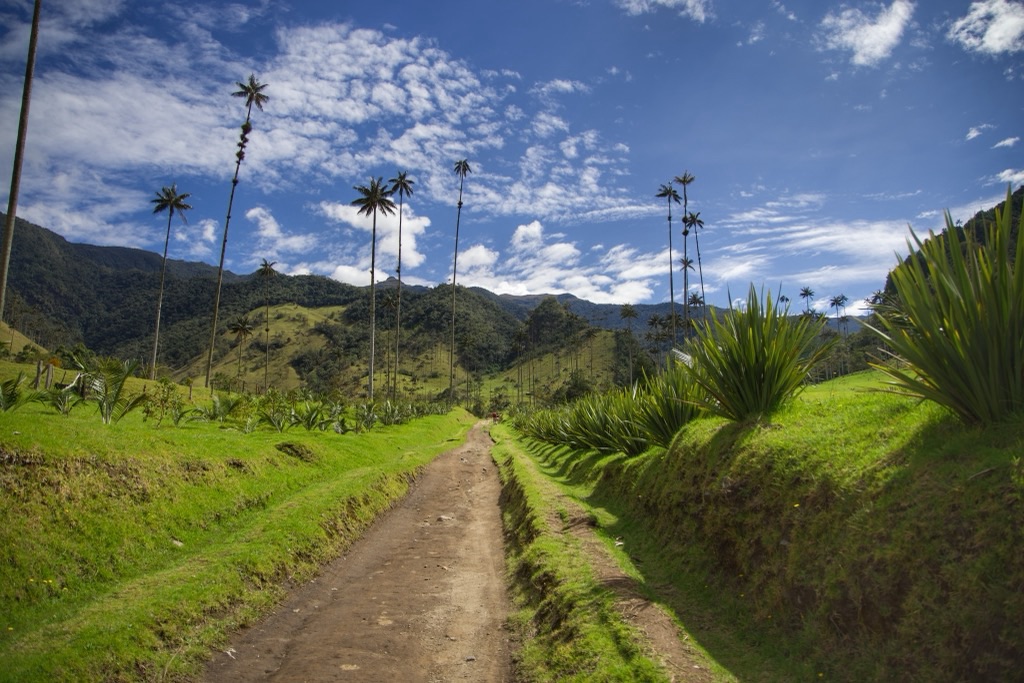
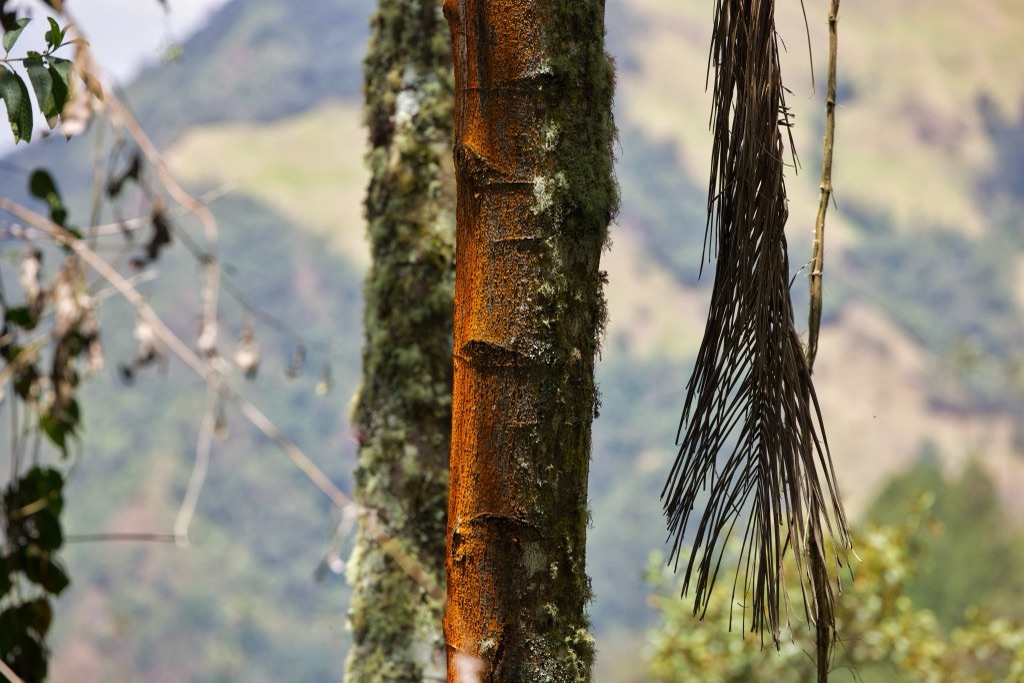
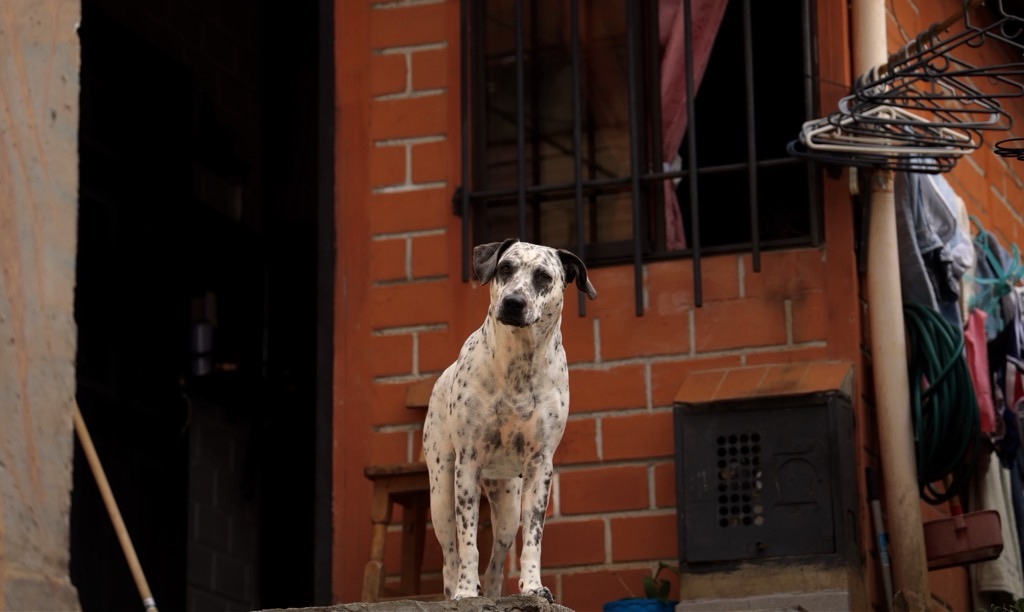
The next morning, we took a pimped-up pink jeep to Cocora Valley with Juan, a local guide and experienced botanist (and Snoop Dog lookalike). Juan was very knowledgeable and enthusiastic on flora, and took us on steep a hike up through the valley, showing us the tallest single palm in the world; at nearly 70m this and surrounding wax palms are protected and thriving in this area. He identified medicinal plants, including one from which Dexamethasone is derived and which he personally used to treat Covid symptoms. He spotted a Green Jay, telling us that a previous guest was one of the sound engineers from the film Predator, and had based The Predator signature clicking sound on this very bird. He also pointed out a chap riding a horse, German Liberato Gonzalez, a local high altitude farmer who herds his cattle by foot, running through the mountains up at 4000m. He and a few other such farmers were entered into a series of famous trail running contests, beating established champions with ease.
Coffee Estancia, near Manizales
The next day, we left Salento, travelling through Periera – a town impacted badly by the recent earthquake. Collapsed buildings and damage was still visible as we made our way through the city. We arrived at a Coffee Estancia, a farm in the highlands near Manizales. It was a beautiful location up at 1400m and our home for the next two nights. We had a great dinner and settled in as a huge thunderstorm rolled in. Everyone was pleased for the rain after a terrible dry spell but entirely non-plussed by the storm. They’re the norm here.
The next day, we were up at 6:30am for a bird watching tour, spotting tropical, colourful birds as we wandered through the coffee farms’ many forested pathways, lined with giant endemic bamboo. We joined a local guide on a coffee tour, where we (well, I – Shona’s not a coffee drinker) tasted various extractions of Colombia’s famous bean.
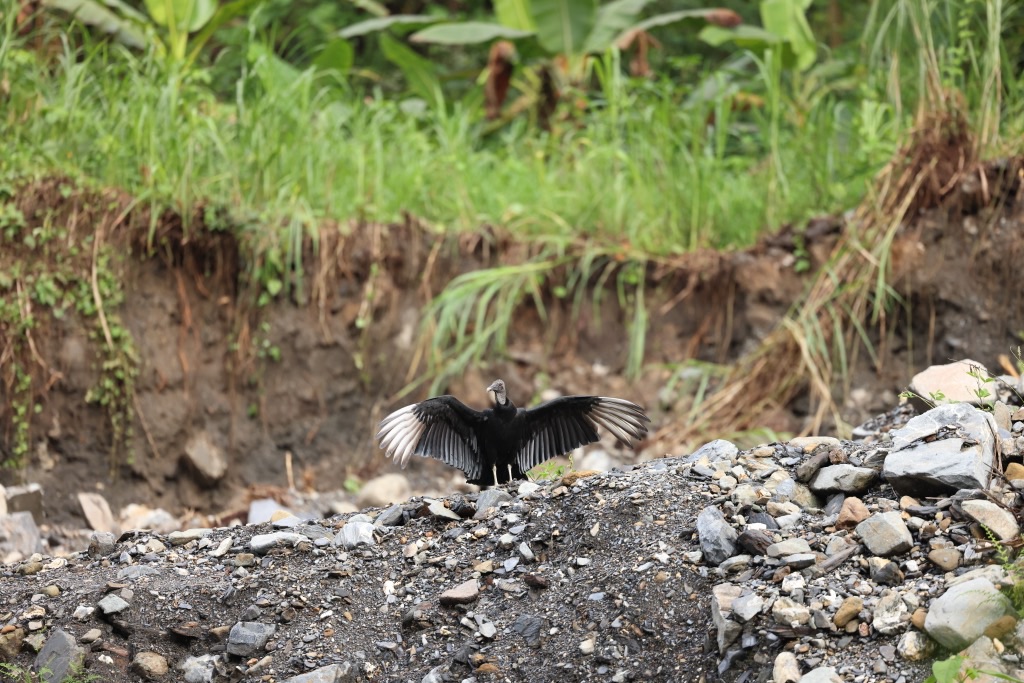

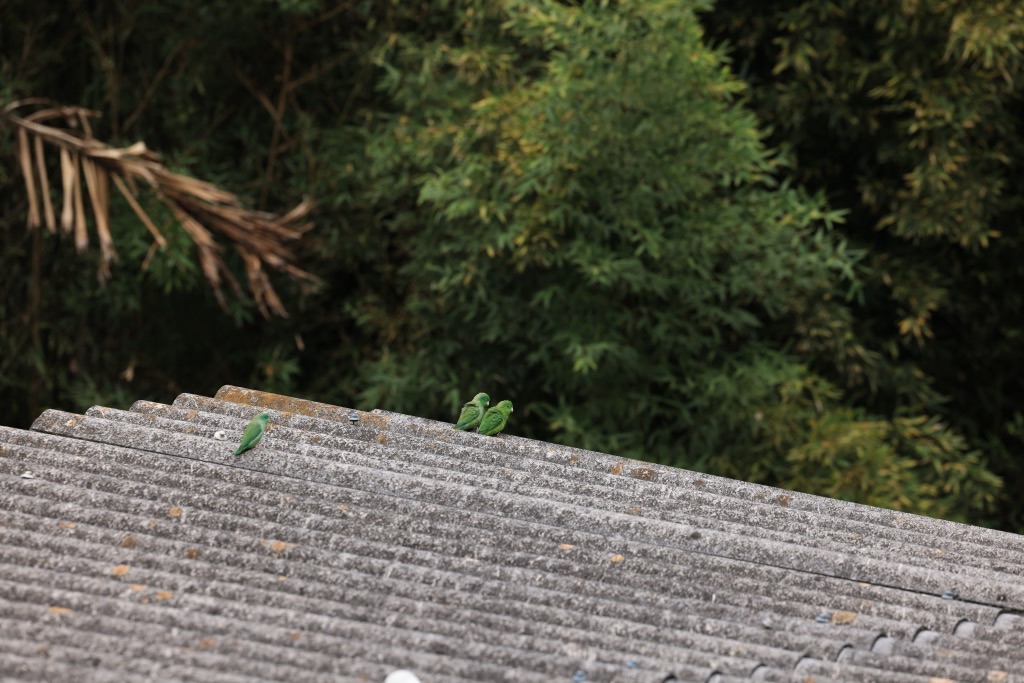
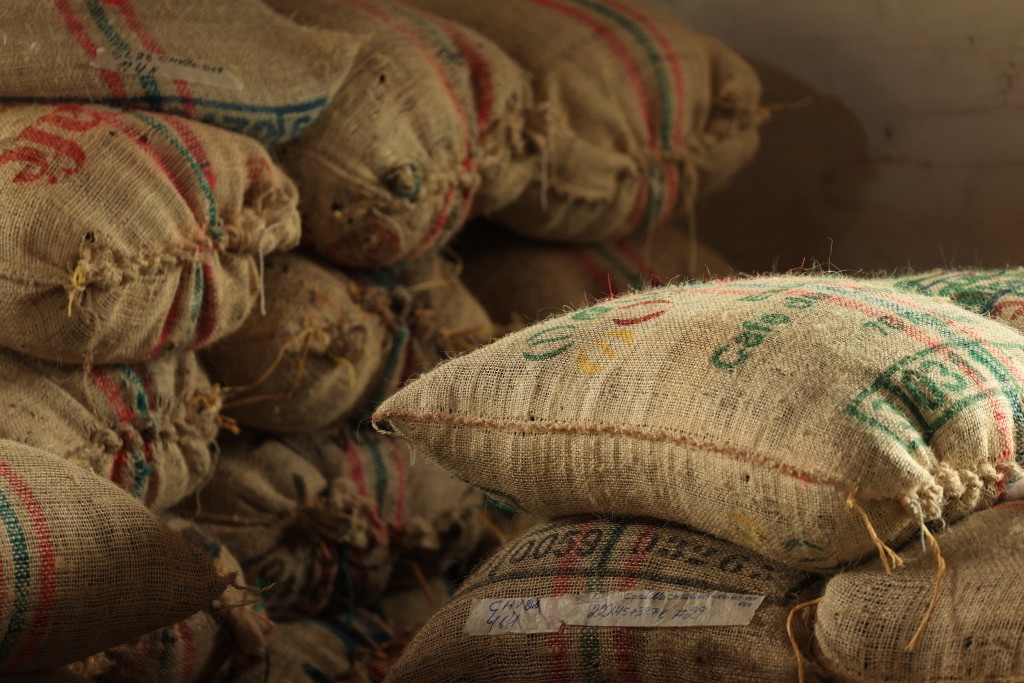
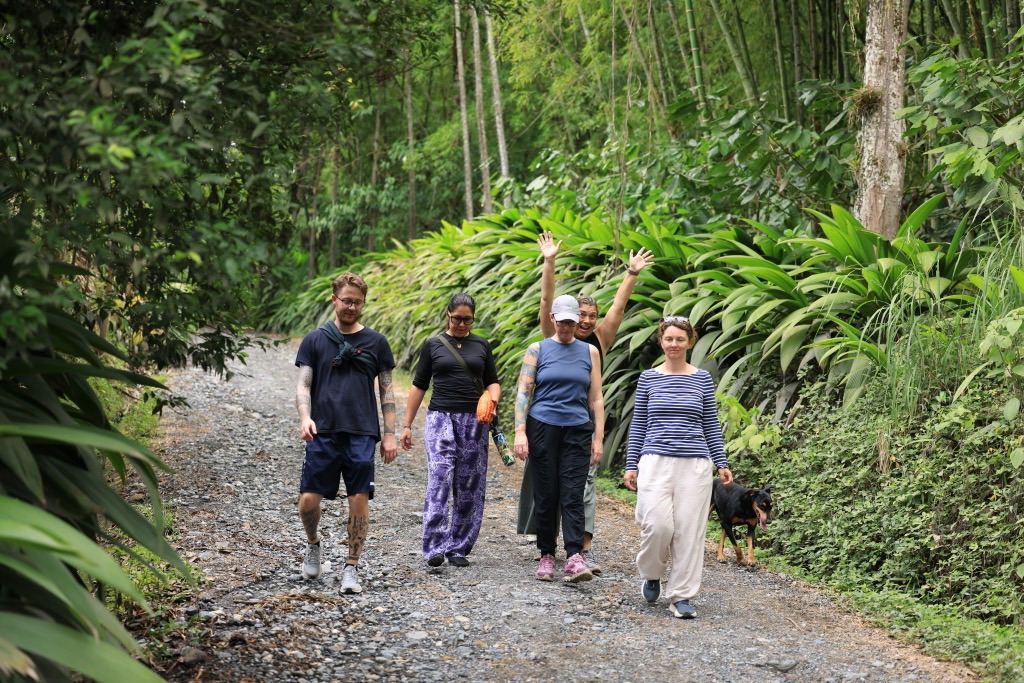
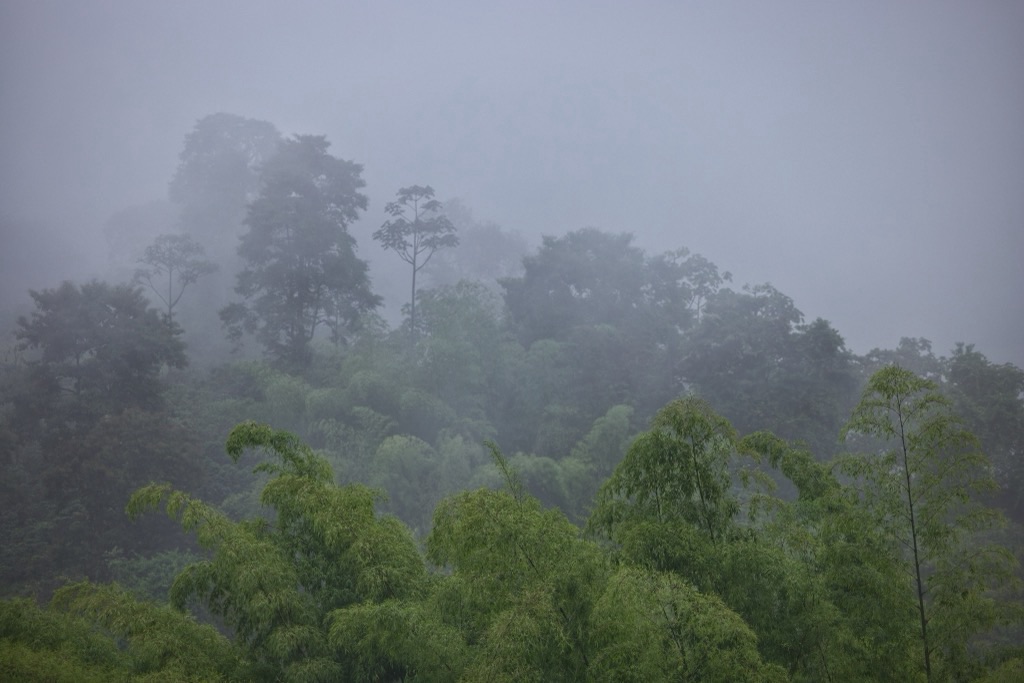
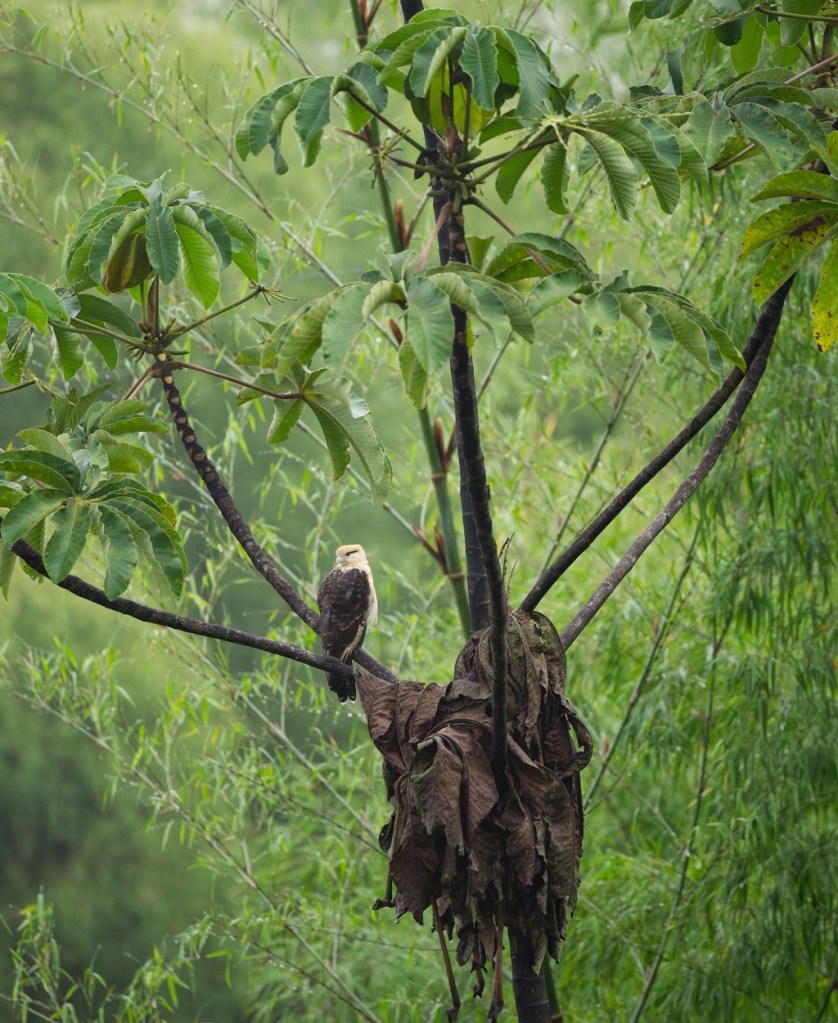
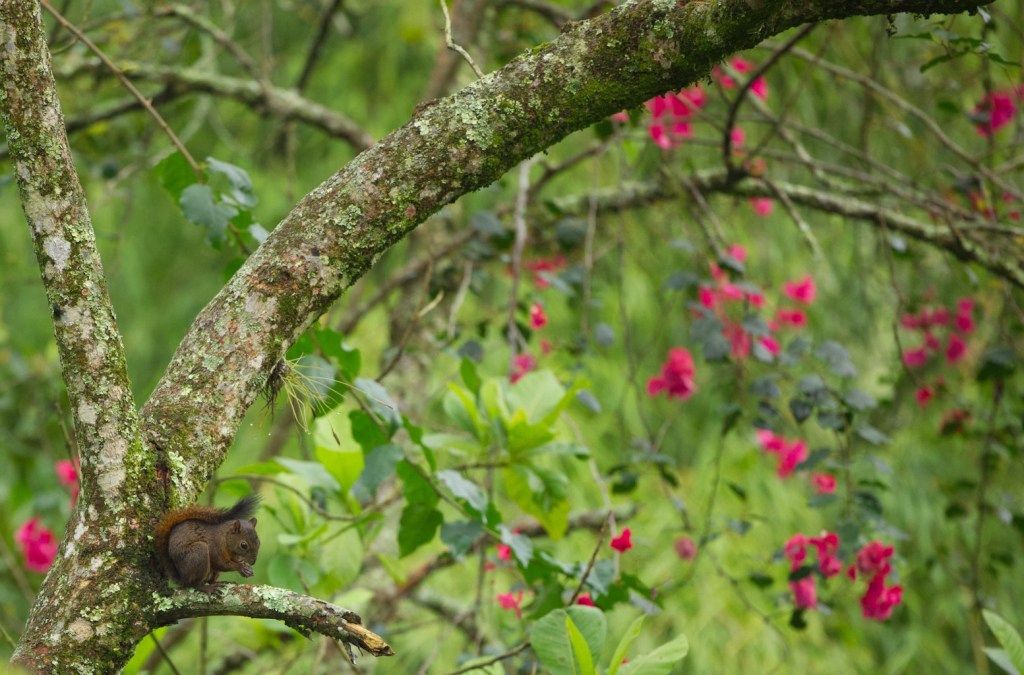
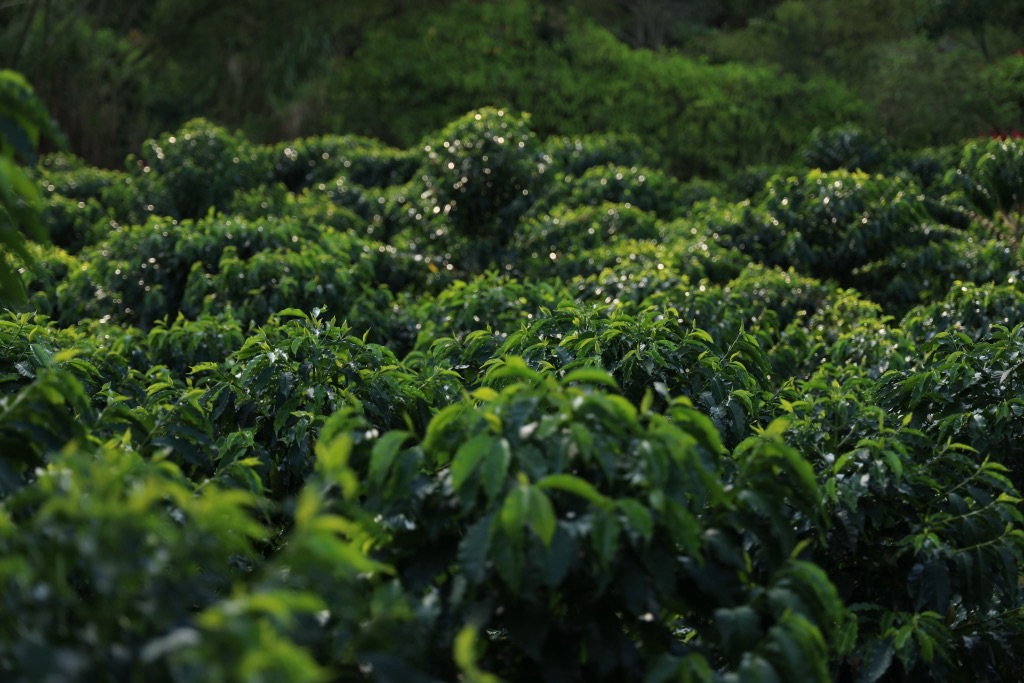

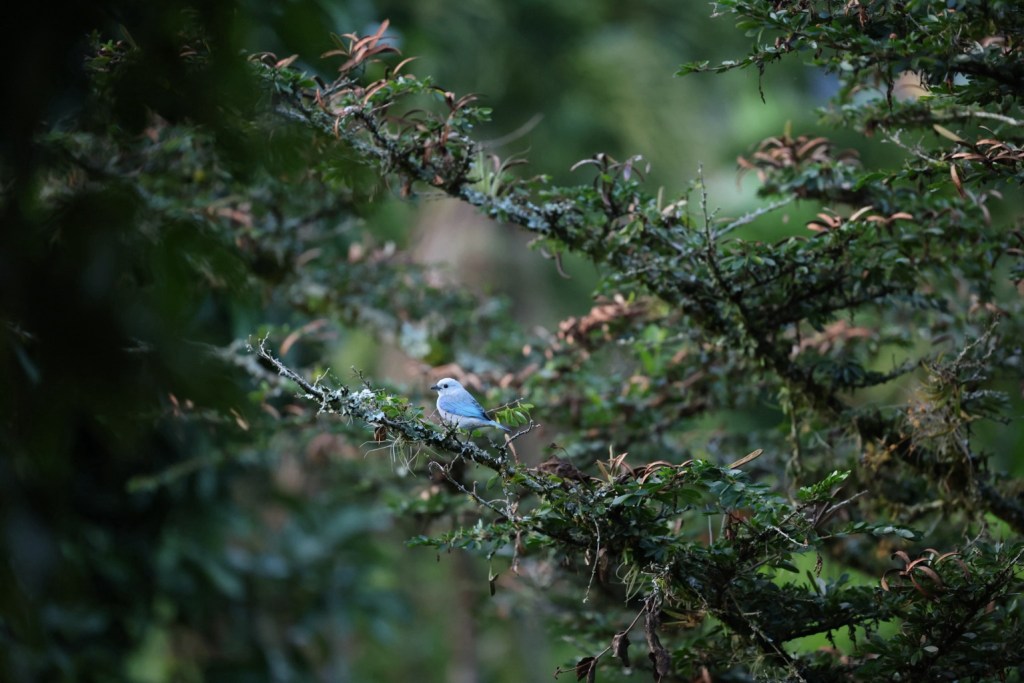
We spent the rest of the time here relaxing, wandering around the farm, soaking in the birds song and rich diversity of life here. At dinner that evening, Paola, our guide talked to us about Colombia’s past, focusing on the governments, paramilitary groups and guerrillas. As ever, we were left feeling guilty of our ignorance and amazed by the resilience of the country. The history is so recent that some of the places we’re travelling were absolute no-go zones just a decade ago.
Medellin (Meda-jiiiin)
Medellin was one such place. Back in the 1990’s the murder rate here was the highest in the world. A lawless place at the very centre of the drug trade. Our travel here was via public bus over windy mountainous roads. Colombia is a land of mountains. Three huge Andean mountain ranges ripple their way from the middle up to the north of the country. It was extremely slow travel, trapped behind freight inching their way up the mountains. Like so many other places we seem to go, it was a perilous journey where double yellow lines were crossed regularly to overtake on blind corners. A horn the only defence against a catastrophic accident.
On frayed nerves, we arrived at our hotel – the Hotel Dix, and took a quick orientation walk around the neighbourhood. Apparently one of the wealthier suburbs of this 2.5 million person city, it was awash with bars, restaurants, and, we were told, prostitution.
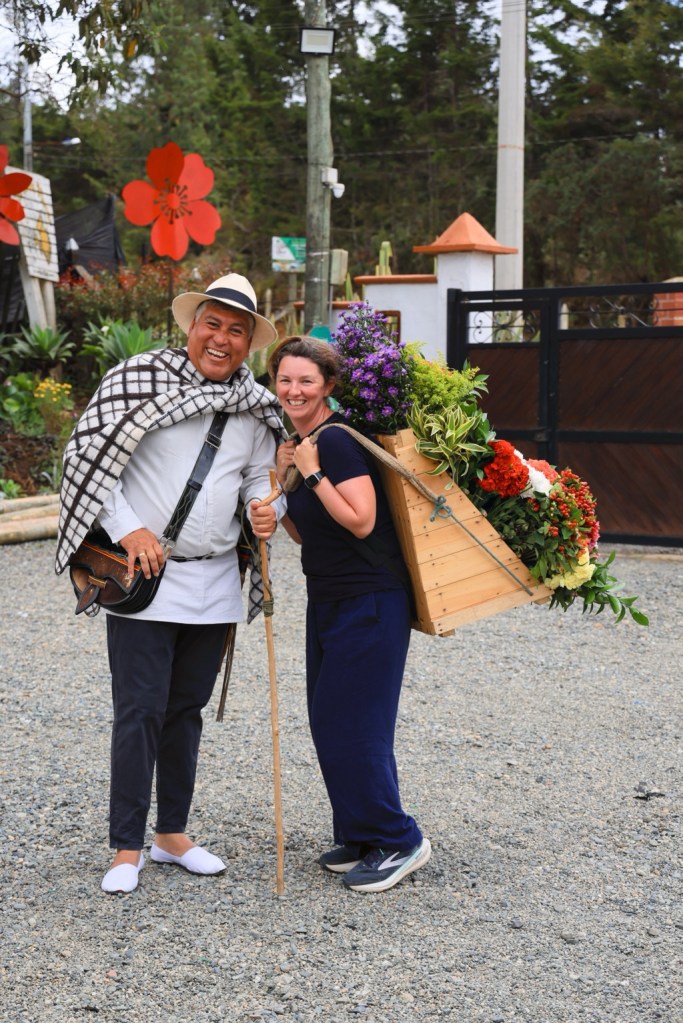
The next morning, we drove back out of the city to visit to a local flower seller’s house. He was a larger than life character telling us about the ancient tradition of the Desfile de Silleteros. Once a year, local growers parade their flowers through the city using a broken down version of a pre-conquistador chair. This chair was historically used to carry passengers over dangerous mountain passes. It was basically a chair strapped on a person’s back. The displays were beautiful and it was a fun morning – much to my surprise. From here, we took cable car down from the nearby Arvi Nature Park to Comuna 3, one of the 16 Comuna’s (urban districts) that surround Medallin.
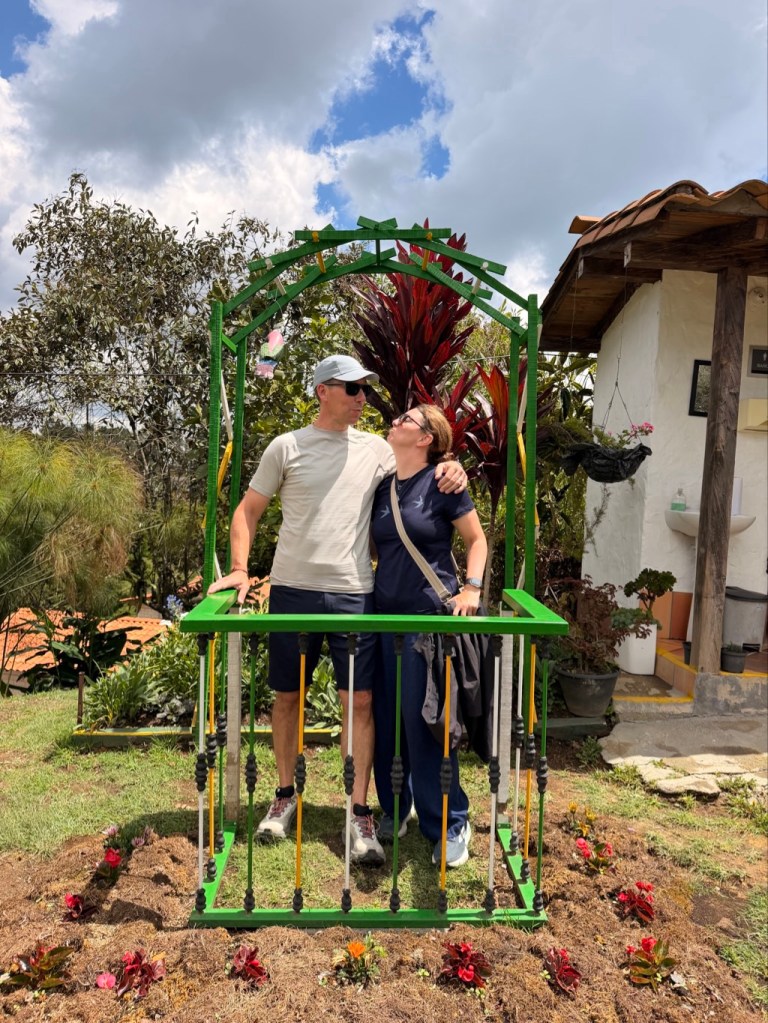
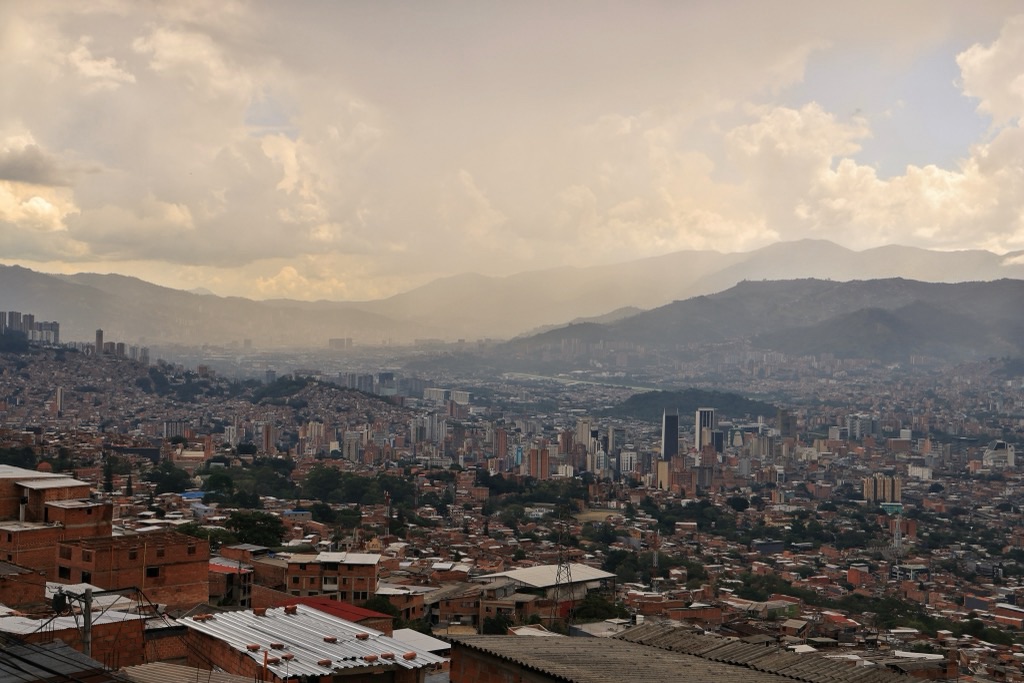
The cable cars have become lifelines to the Comuna’s that line the steep sides of the mountains around Medellin. Medellín itself sits in a huge bowl, surrounded by mountains. As more and more immigrants and displaced Colombians & Venuezualans arrived, the city grew outwards, up the slopes of the hills. When Guerilla groups ran these territories, you couldn’t walk between areas, as ‘invisible walls’ meant that you would likely be shot for encroaching on a rival gang’s territory, and payments needed to be made to pass. As the cable cars were built, they shattered these invisible walls, and helped erase the boundaries.
Comuna 3 is one such mountain settlement, built illegally on hillsides, new arrivals would initially erect temporary wooden-framed buildings, then, if they hadn’t been ejected, incrementally replace these with permanent brick structures. There is a scale of diminishing permanence you can see as you look up the mountainside. Proper roads, services and years of brick dwellings lower down give way to less connected dirt paths, wooden huts and corrugated zinc roofs as you travel further up. It’s a mass of chaotic dwellings, impenetrable and imposing to an outsider like us.
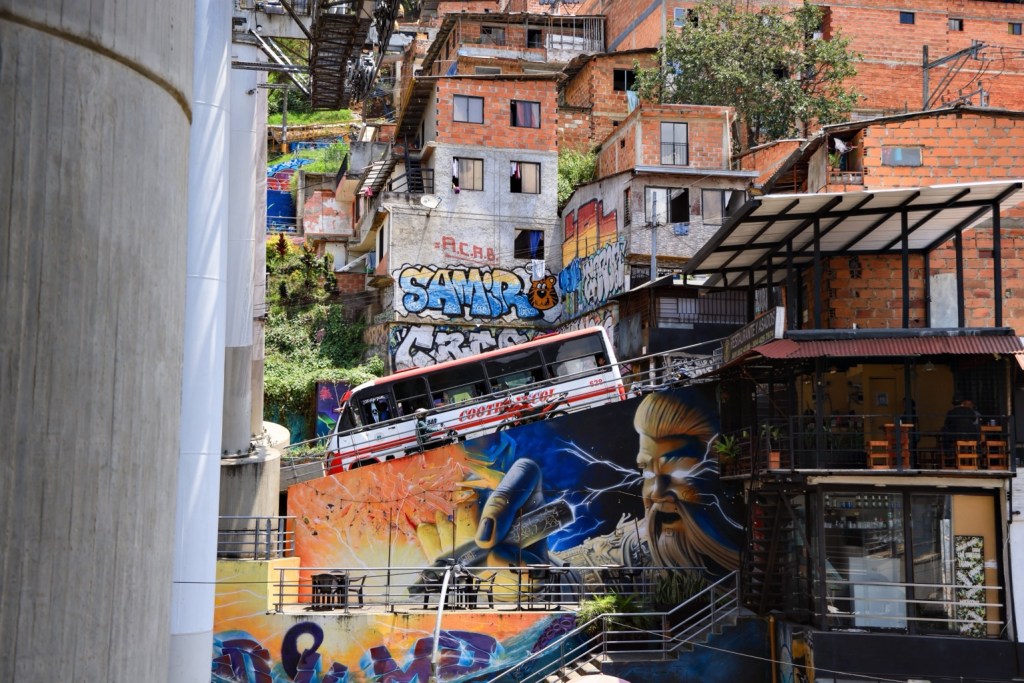
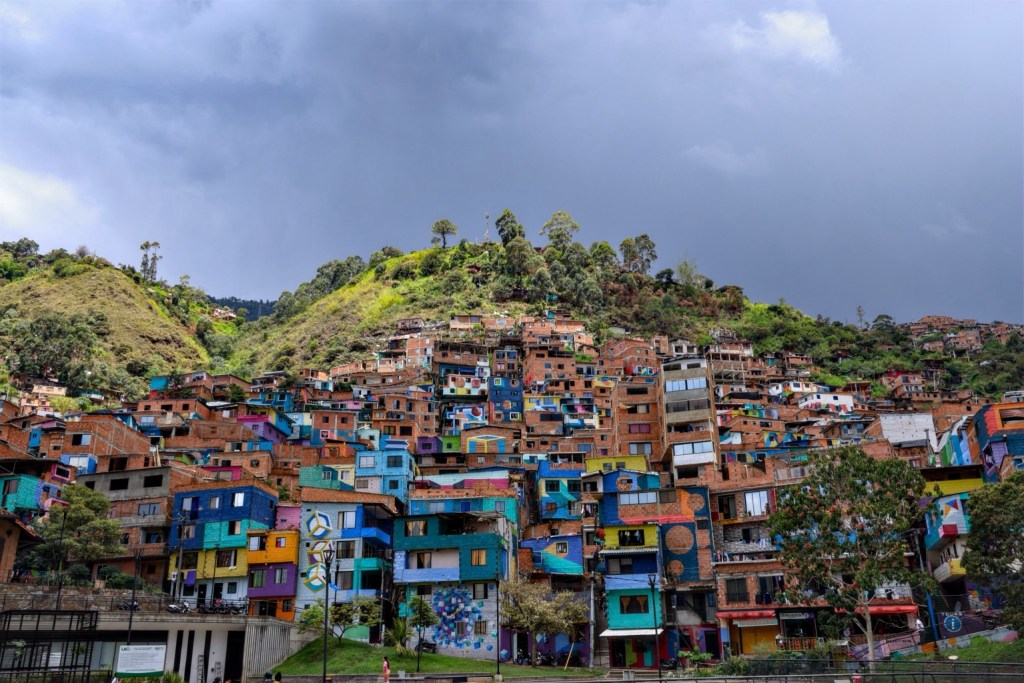
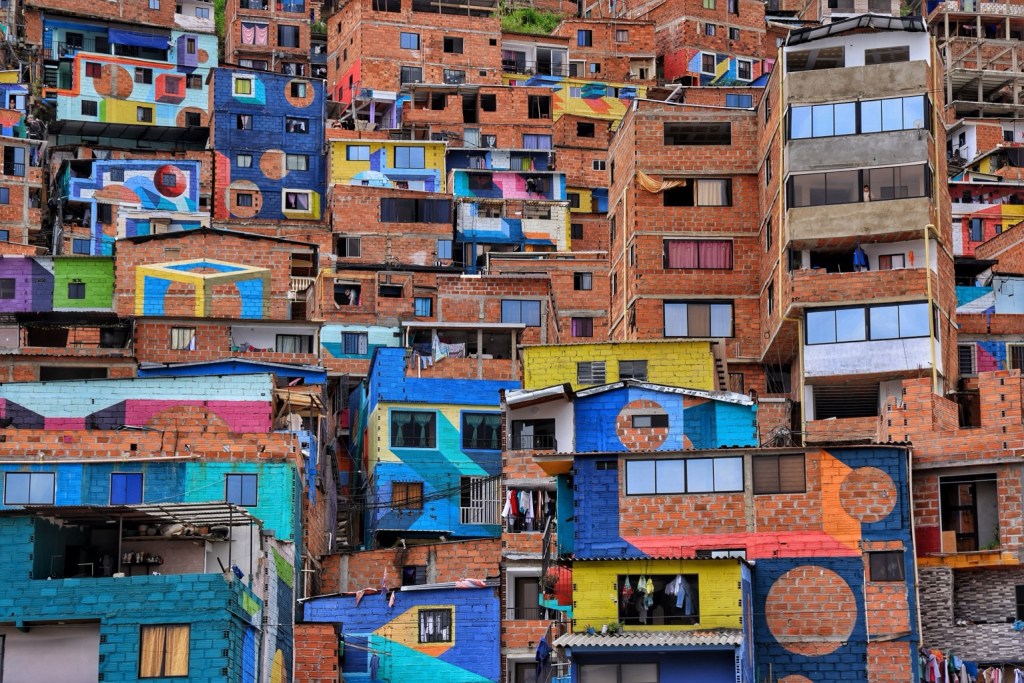
We were met by a local resident whose family has established a community tourism business, showing game westerners like us around these historically dangerous areas. What immediately struck me was the enormous sense of community, and welcome. Everyone smiled, ‘Buenos Tardes’ exchanged, as we wandered comfortably (if a bit sweatily) up through the narrow alleys and steep stairways. Medallin has a consistent year-round climate. Warm and sunny mornings followed by thunderous downpours in the afternoon. As we climbed through the Comuna, flashes of lightning were followed by tremendous, deep thunder that echoed and reverberated around the surrounding bowl.
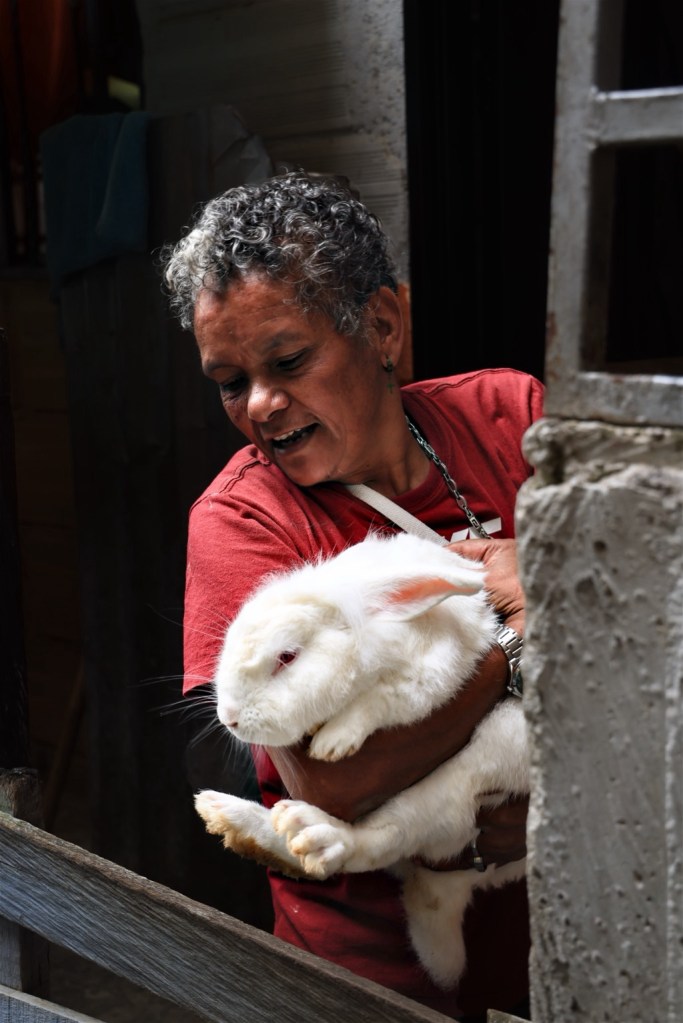
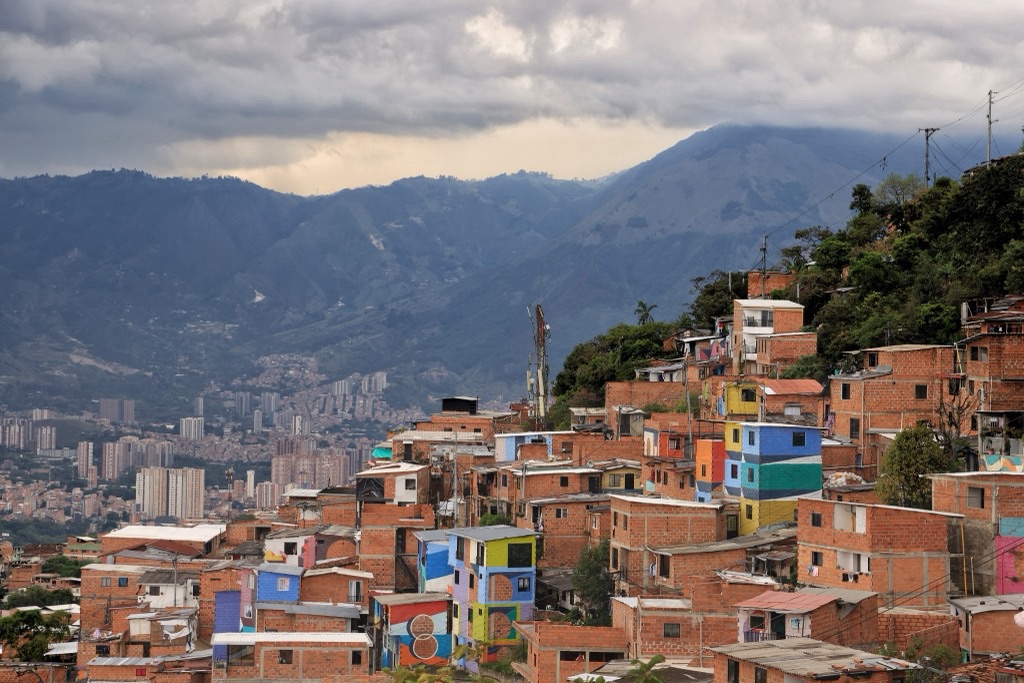
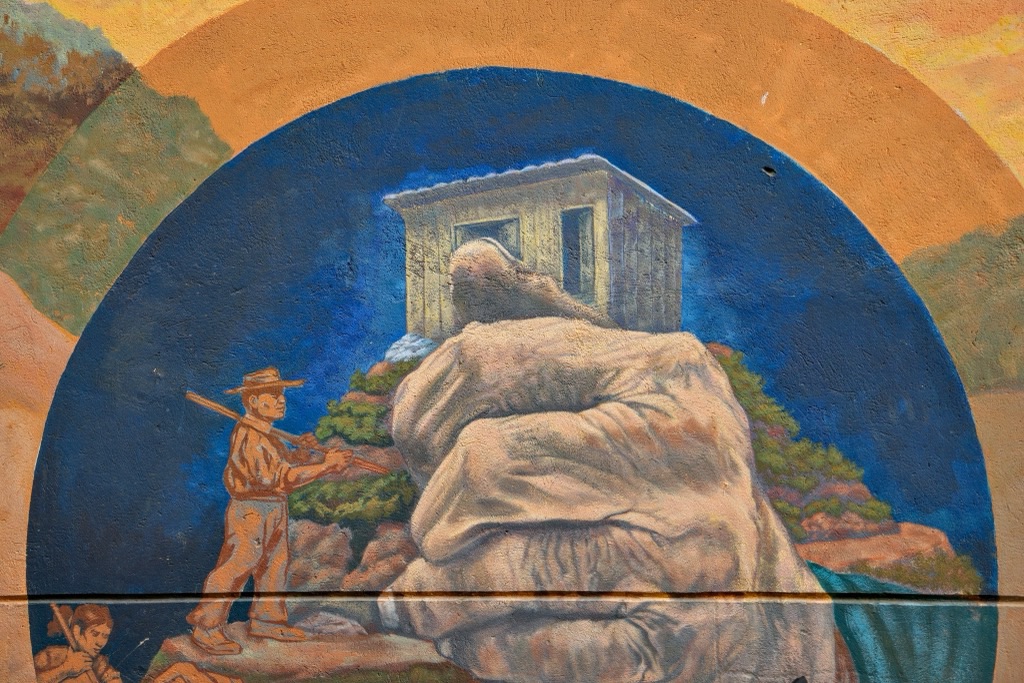
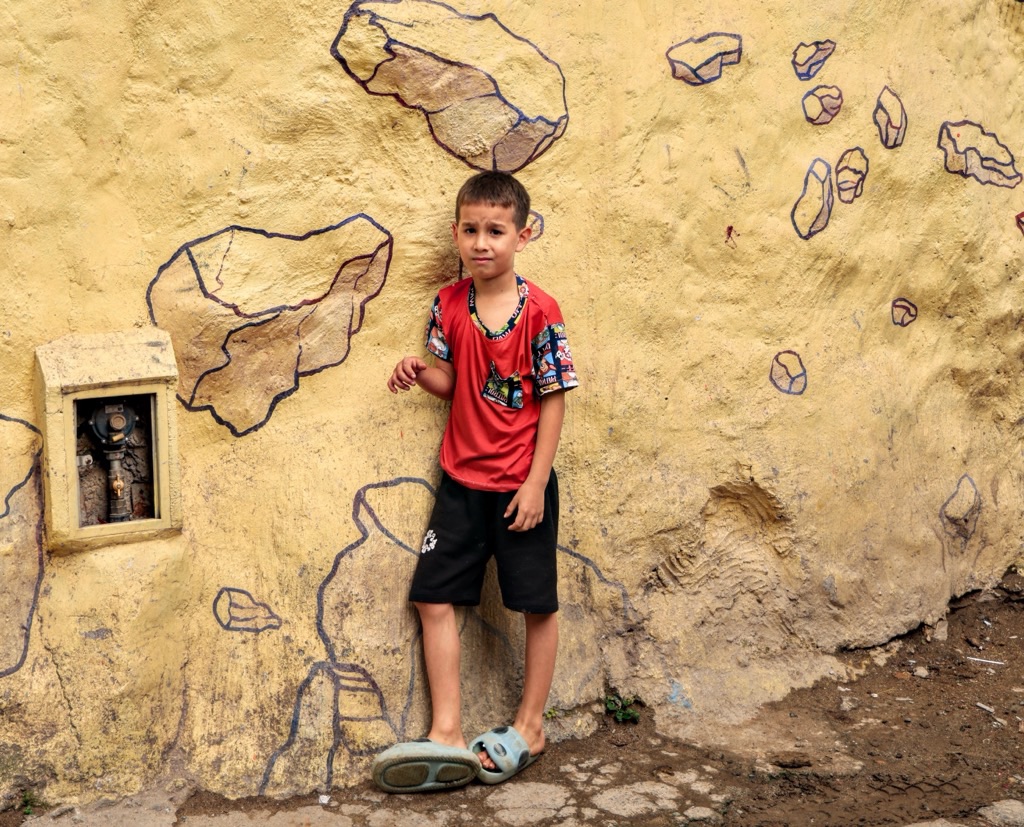
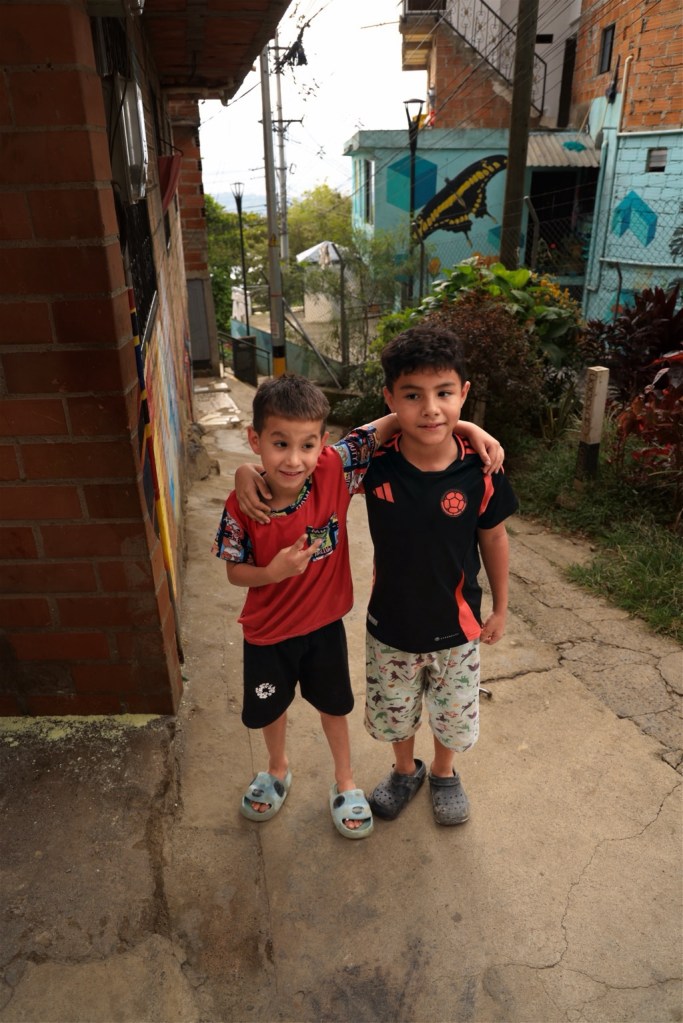
We stopped for an excellent lunch, before being shown various murals decorating the walls of people’s houses. We were joined by a couple of local kids, who wanted their picture taken. Emily from the group gave them a small sachet to make a drink with – they ran off with it, then came back with powder puffing out of their mouths, wearing slightly pained expressions. After much laughter, Paola explained to them that they’re supposed to put it in water first.
We ended the tour looking around a local artist’s studio who works with the family to promote tourism and sell local’s art. On leaving the studio, the two boys returned holding a cup of water for Emily. It turns out, they didn’t like the drink and preferred the powder, so brought it for her to drink. Very sweet.
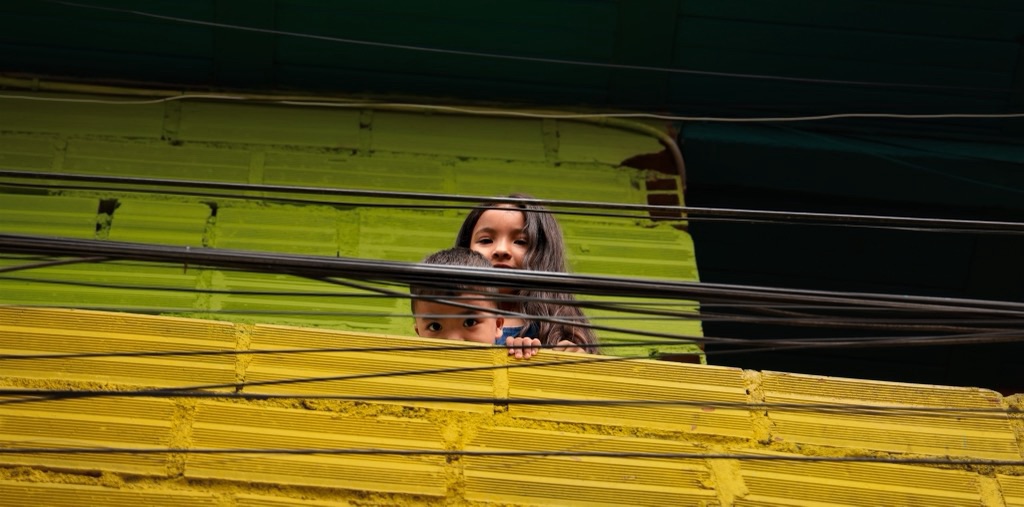
The following day, we joined a couple of local tours. The first was of the notorious Comuna 13. Guided by a 28yr old with excellent English and a strong East London accent. We were shown the historic no-go areas, where even kids would be armed with ‘shovels’ (guns). He proudly described how their local government has been instrumental in enhancing the city; building community centres to support single mothers and kids. He showed us one of the 5 Houses of Justice which have been built to support communities in managing disputes and conflict resolution without seeking access to formal courts. These were also designed to replace reliance on local gangs who have historically been relied upon to deliver ‘street justice’ – such as issues of petty theft, noise complaints or infidelity through threat or violence. Despite the positive veneer being painted, we heard that these gangs still wield a lot of power over these communities.
We finished the tour by climbing through the chaotic jumble of shops, bars, restaurants and marajuana stalls that line the tourist street of Comuna 13. Winding its way up the hillside, this loud, mural-strewn alley is filled with a crash of smells and booming music; vendors push tat on you as others try and usher you into their bars. Tourists and locals squeeze past one another as motorbikes edge through, making their way up through the throngs to access the upper sections of the Comuna. Outdoor escalators were fitted here in 2012, which provide much-needed relief for burning calves. It was a dizzying experience. Strangely, we felt safe here, and speaking with our guide, he explained that this is because of the community – they look after one another, and their visitors. This felt true. But behind this facade, there is a darker shadow. Crime and violence is only a whisper away. We separately read that gangs control much of the trade on the street, backed by the sex trade, trafficking and drugs. Our guide described it as ‘safe, but not secure’. It was well put.
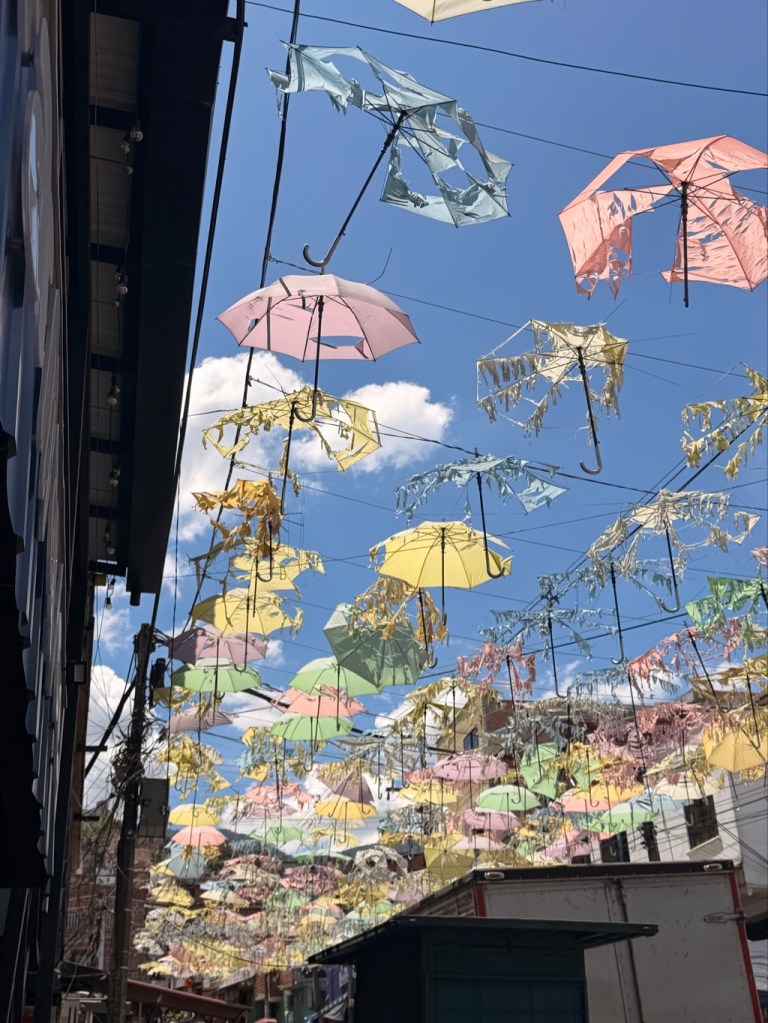
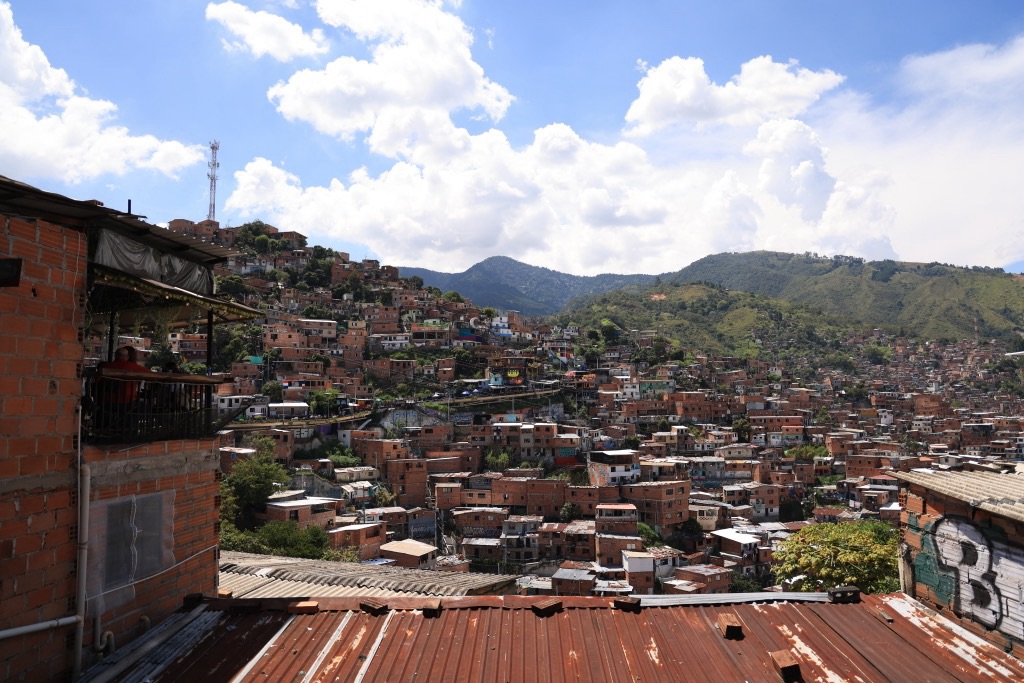
In the afternoon, we joined the ‘Beyond Pablo Escobar tour’. Led by another Pablo who was supremely well informed and richly educated. We were walked and talked through the country’s tragic history at the heart of the cocaine trade. It was an empassioned and powerful narrative, delving deeply into the production, history, politics and economics of the industry. His central thesis was that interventions, primarily from the USA, have been wholly counterproductive in stemming the drug trade. Based on the flawed premise that criminalisation and restriction of supply through destruction of coca plantations has an impact on demand. It doesn’t. Demand is proven to be almost entirely inelastic and so supply restrictions simply push up prices and profits – the criminals always win. He railed heavily against the glamorisation of Pablo Escobar who was personally responsible for over 46,000 deaths. He described the immorality and flawed ideologies of Guerilla and Paramilitary organisations who are estimated to have killed 192,000 people in the past 40 years, and displaced a further 7.7 million into penury.
In the 33 years since Escobar’s death, the farmed production of coca leaves in Colombia has apparently increased 100x, and innovation in yield and refinement has tripled productivity. On these measures, vastly more cocaine is produced and shipped today than at the height of Escobar’s reign. Pablo (the guide) was visibly angry and upset at the destruction of his beautiful country and the hold that this drug still has over the lives of its people. But when the trade brings in more revenue than their primary legal export of oil, he conceded that it’s almost impossible to see how to stop the addiction to the trade and the violence that still grips this land.
Cartegena
The next morning, we were up early for a short internal flight to Cartegena. Flights are the only practical method of getting around this country, which is so mountainous that road journeys are both long and still somewhat dangerous.
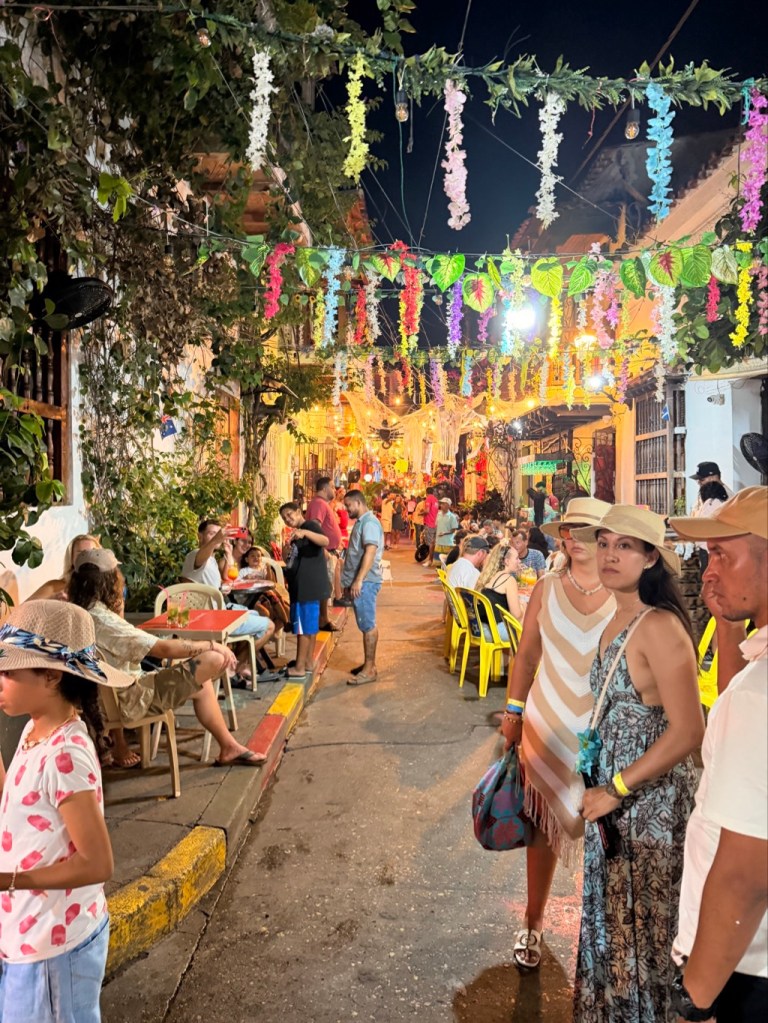
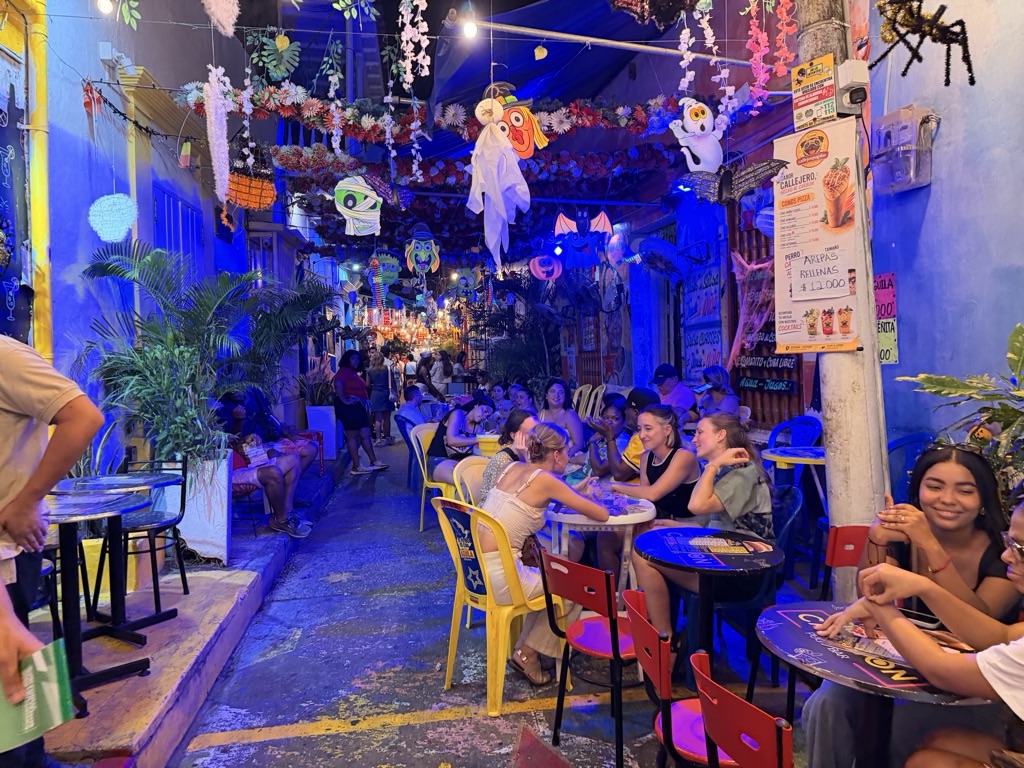
We were warned that Cartegena was hot and humid. We thought that after a couple of weeks in the Caribbean – and several months in the European summer, we’d be well acclimatised. We were not. The humidity was stiffling and even a short walk would leave you drenched in sweat. We had a great lunch at the local Crepe and Waffle chain, staffed entirely by single mothers. Later in the afternoon, we joined a city walking tour, which was fairly terrible but we did at least explore parts of the old city within the famous walls, and beyond to grittier areas, adorned with murals and ramshackle businesses.
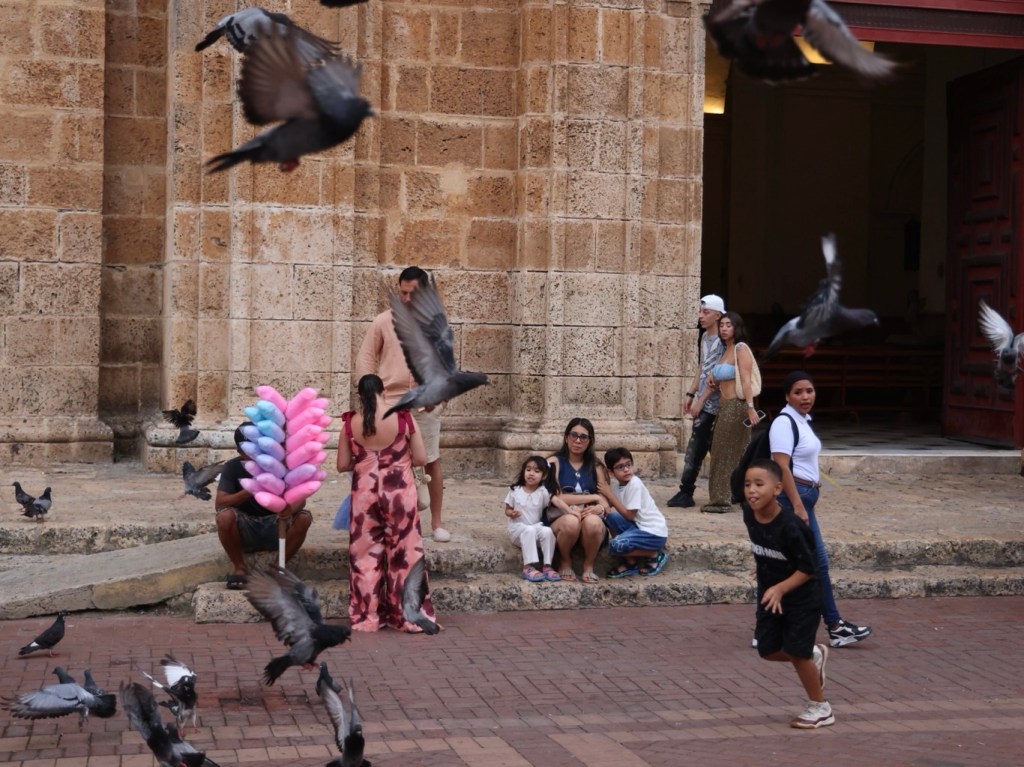
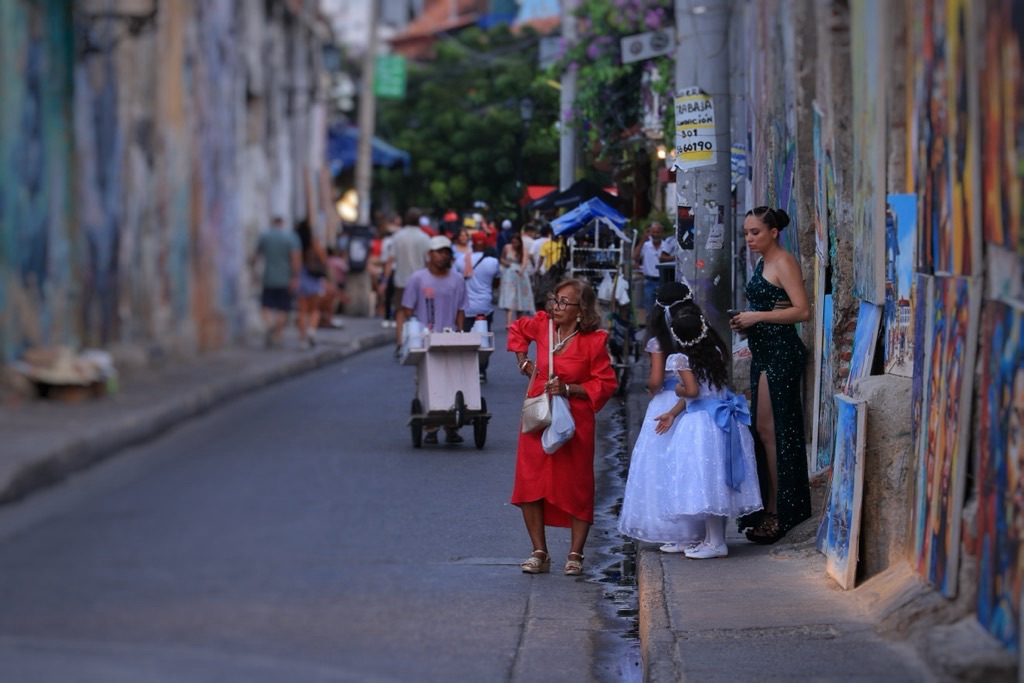
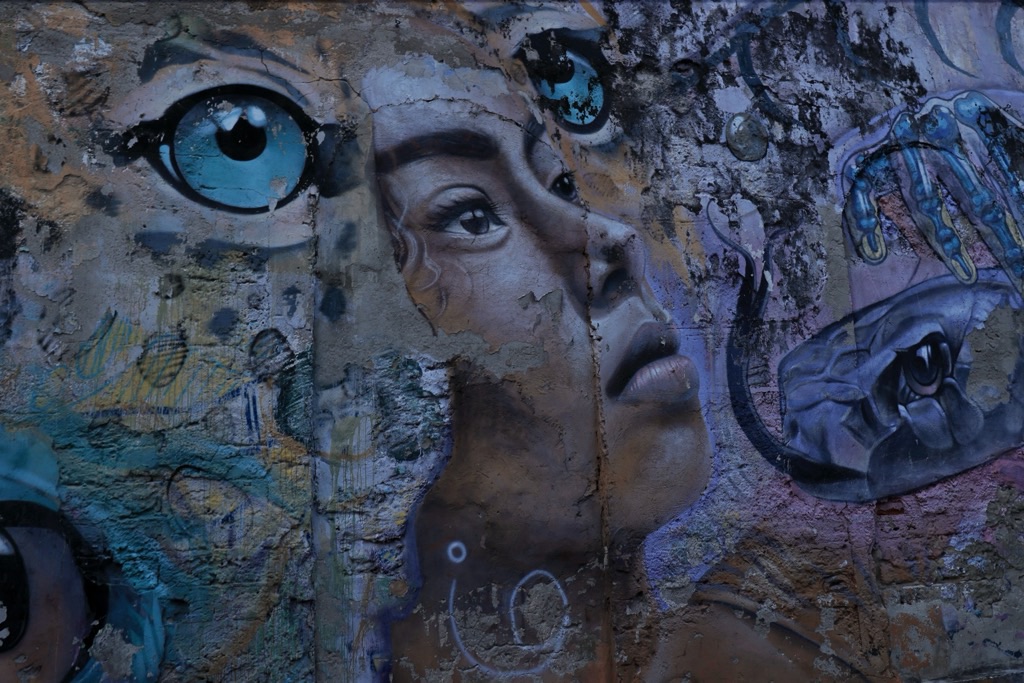
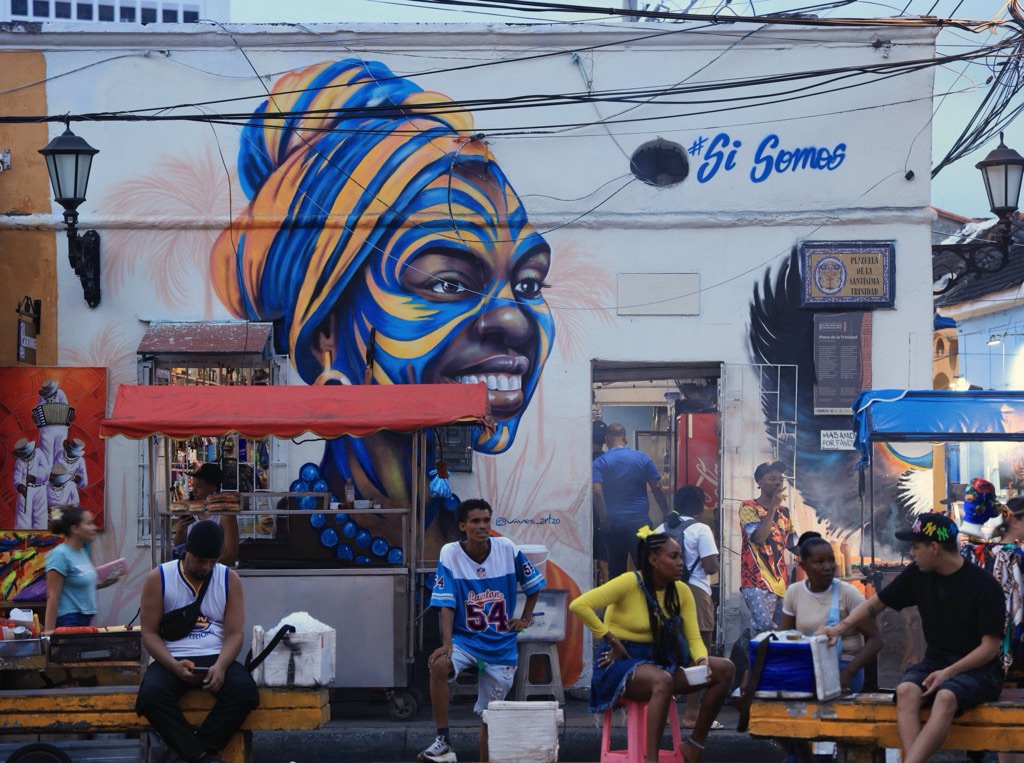
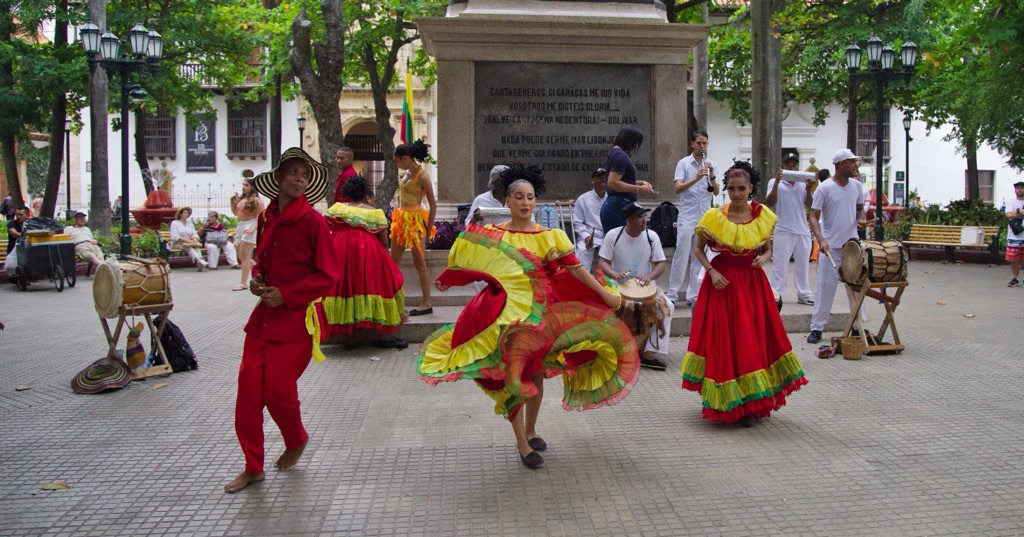
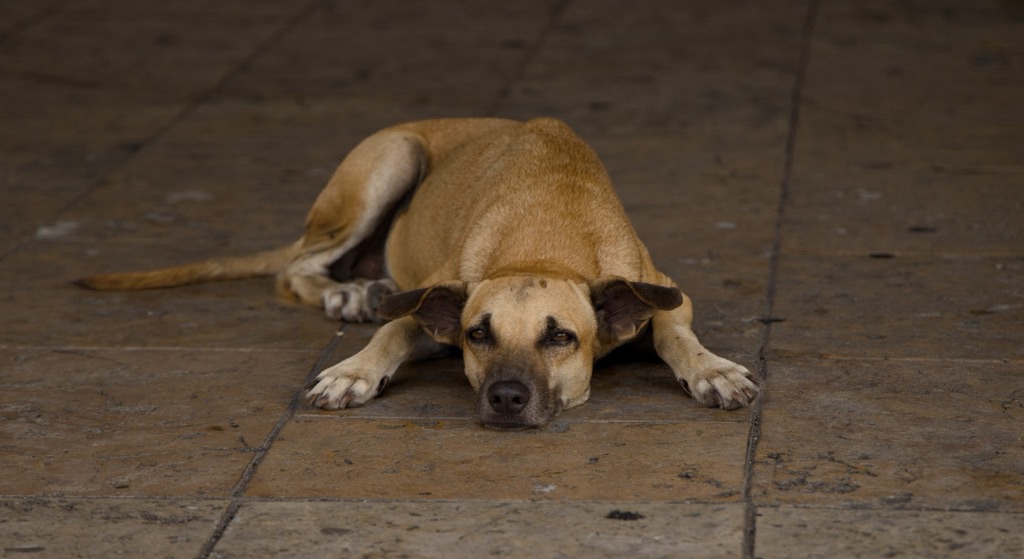
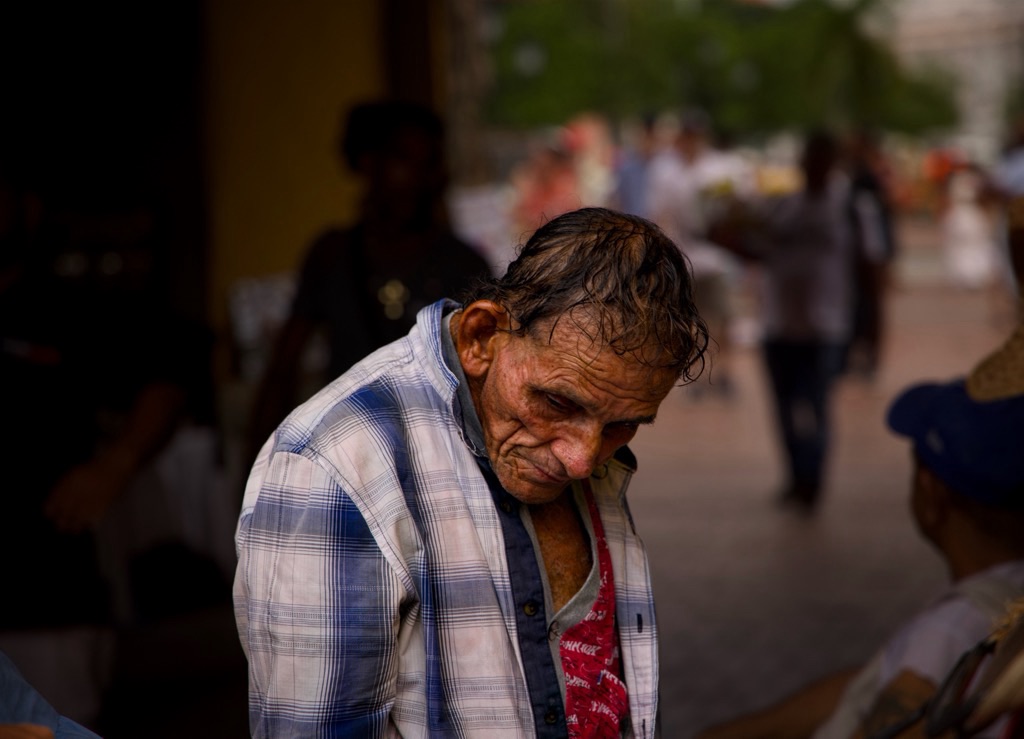
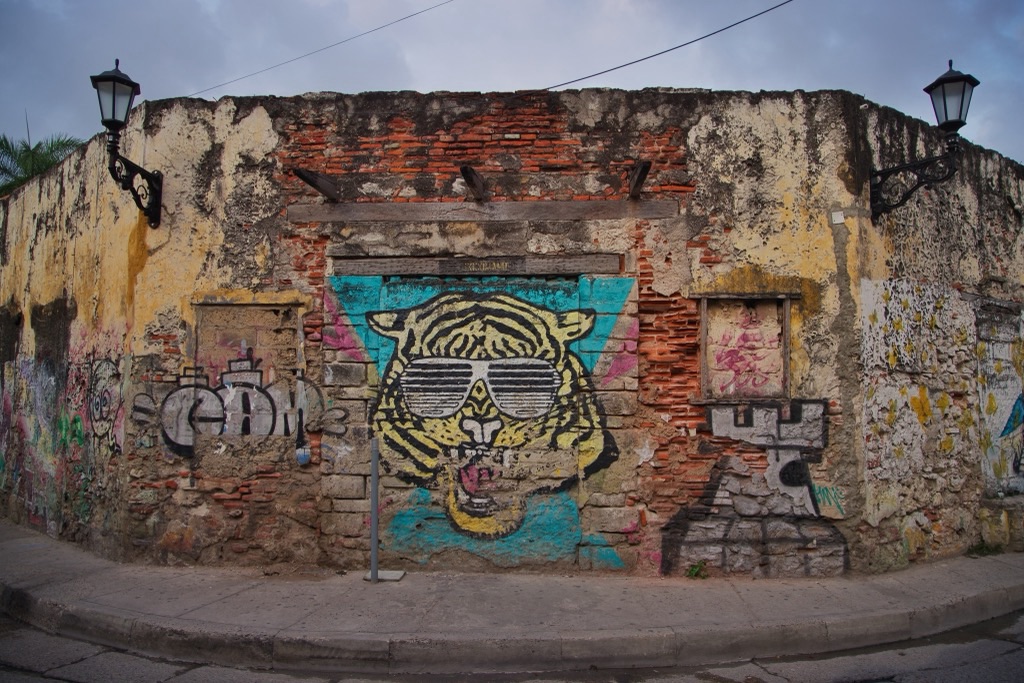
The most interesting part of the tour was the others that joined us – most were young, hostel-dwelling gap-year types (described by a local as having ‘tiny batteries’ – she was quite scathing of Gen Z and their sleepy, zoned-out ways!). A couple from Canada stood out a mile. Wearing strange ill-fitting attire, they were entirely unsuited for travel. They had cameras swinging around their necks, backpacks on their backs and everything about them screamed ‘victim’. While we’ve felt perfectly safe here, it’s mainly because we’re pretty damned careful with our stuff. I do hope they’re okay.
That evening we went for our last dinner with our group – our structured tour finishes here, and we were saying goodbye to the lovely Paola and our three fellow travellers. It’s been a whirlwind of a tour with the group and we both took a huge amount from it. Our next stretch is solo, as we head along the coast to the troubled Santa Marta and the wild Tayrona National Park. More in part 2…