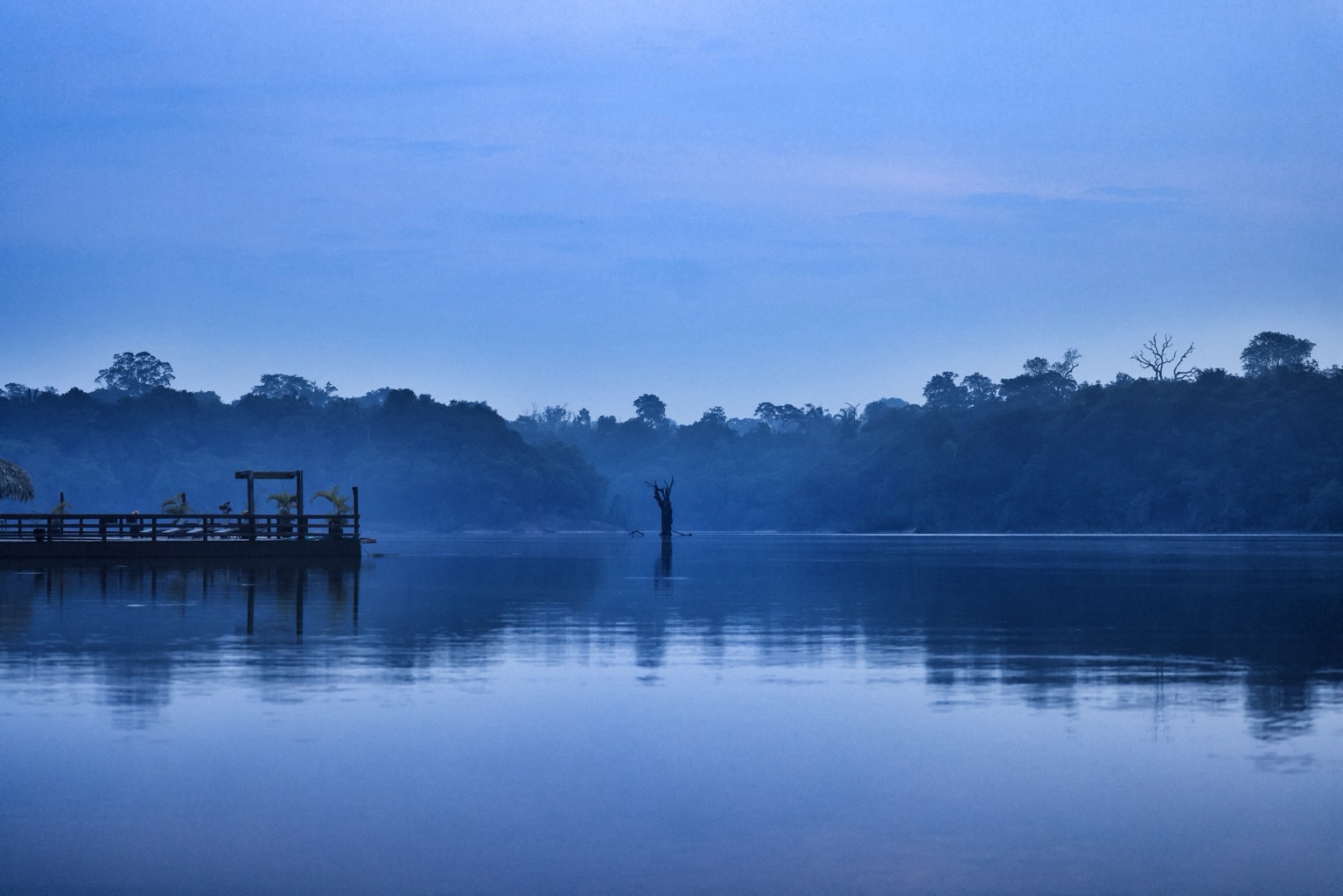

The Amazon
We arrived in Manaus, Brazil at around 3am and after mercifully swift passport control and bag collection, and an even swifter (hairy) taxi ride, we got into our airport hotel and managed to get a few hours sleep before being collected the next day for our journey into the Amazon.
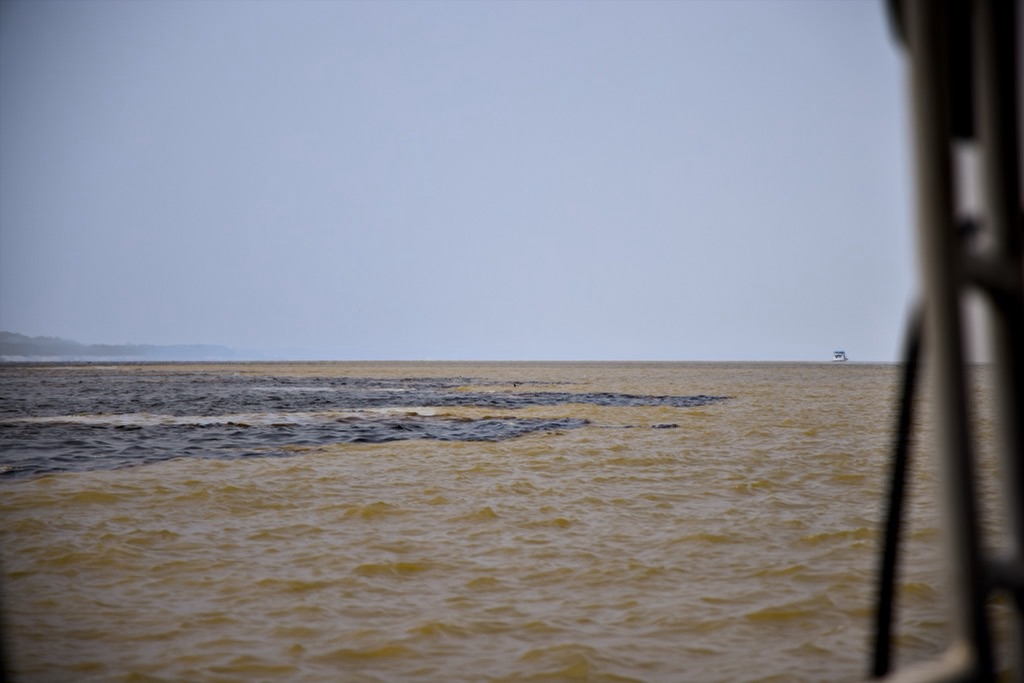
They say it’s ‘all about the journey’. Ordinarily, I call bullshit on this – the journey is usually the awful bit, but in this case, the journey was excellent. We were collected initially by bus to get through Manaus, picking up some others joining us at the lodge, then transferred to a boat at the port. We headed out along the Rio Negro, to the bizarre Meeting of the Waters – where the Rio Negro meets with the Rio Solimões. As the name suggests, the Rio Negro waters are dark. They’re acidic and slow moving, with warm temperatures (as a dip of hand attested). When they meet the silt-laden and markedly cooler Solimões, the two refuse to mix, and for around 6km, a clear boundary delineates the two rivers.
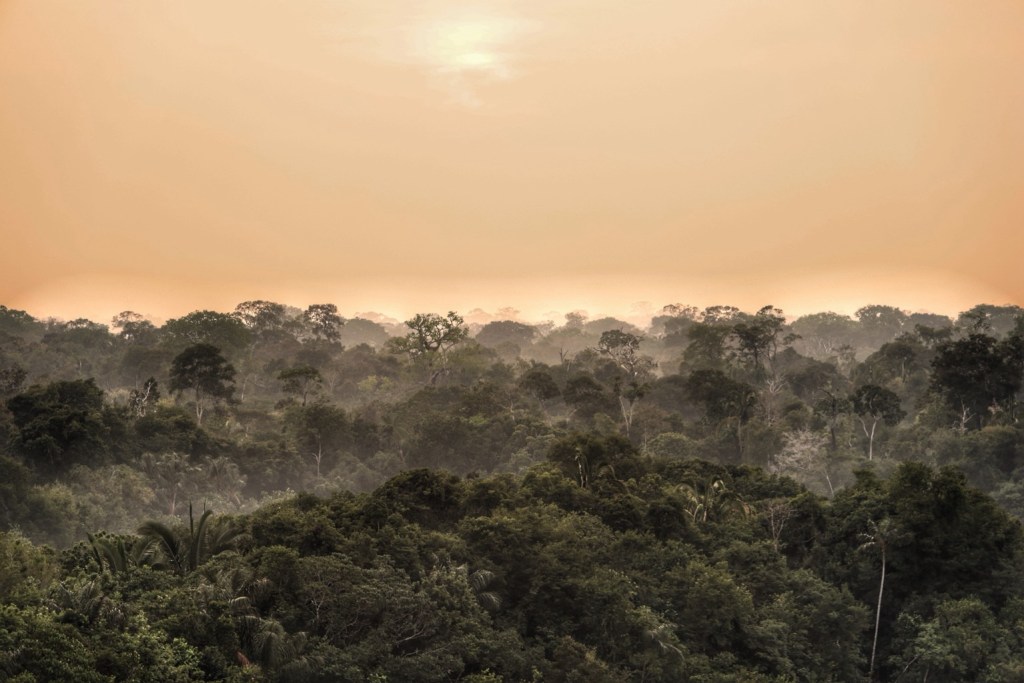
We docked again 20 minutes later and transferred to another bus, taking a bumpy ride into the jungle before being met by a second fast boat which hared us through narrow tributaries, banking at each turn, before levelling on calm waters opening up to a wide jungle-lined river. After another 45 minutes we arrived at the Juma Lodge – an encampment of 20 rustic lodges perching high into the canopy – situated to avoid the massive 12m annual rise of the river (but still risking the incalculable 30m rise with flooding that happened in 2021).
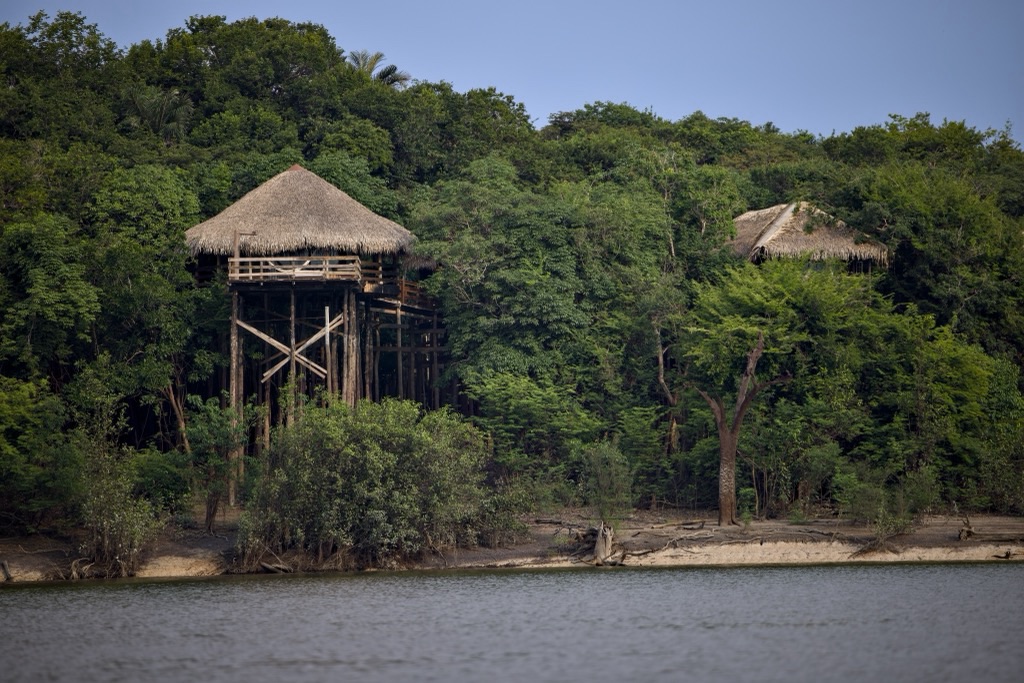
Our room overlooked the river, with a large deck area and hammock, allowing us to spend the early evening relaxing into the jungle sounds, and spotting our first Cayman in the murky waters below us. The lodge was built in this region as the water is more acidic here, naturally suppressing mosquito breeding – something that Shona was very grateful for.
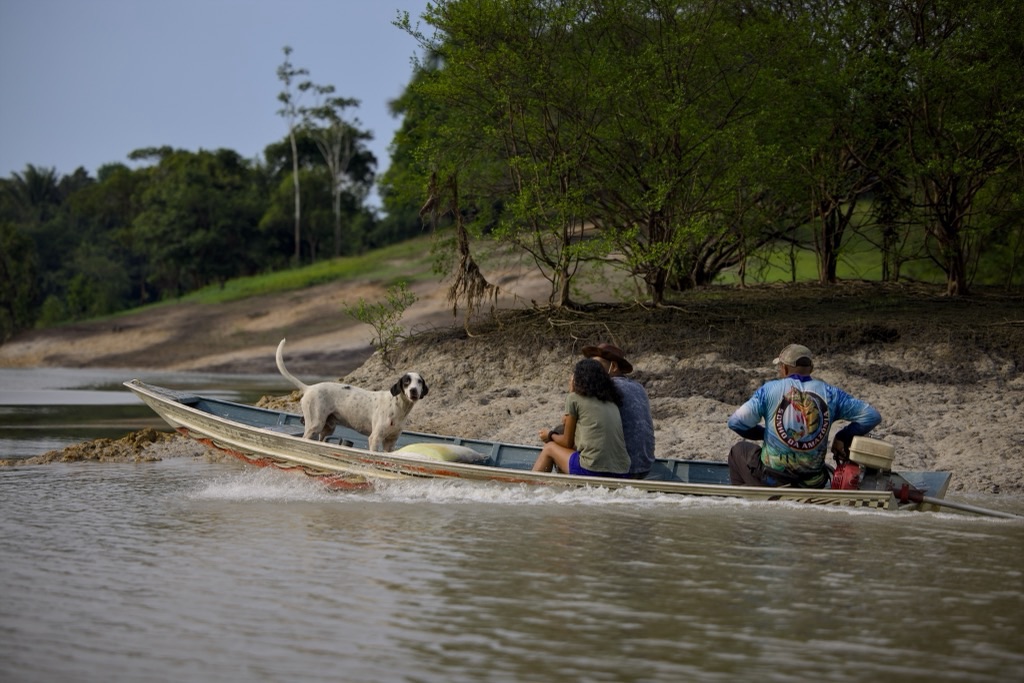
The next few days were packed with activities and excursions by boat, led by our native Amazonian guide with the classically Brazilian name of ‘Ralph’. Our boat was driven by young Ivan, who, like all other boat drivers at the lodge, aspires to be a guide one day. It’s a sure fire ticket to a decent income in this poor, and largely subsistence farming region. We stayed in the same group throughout the few days here, joined by a nice young couple from Austria, another nice, very well travelled couple, one Dutch, the other German, and a group of four who live in the States.
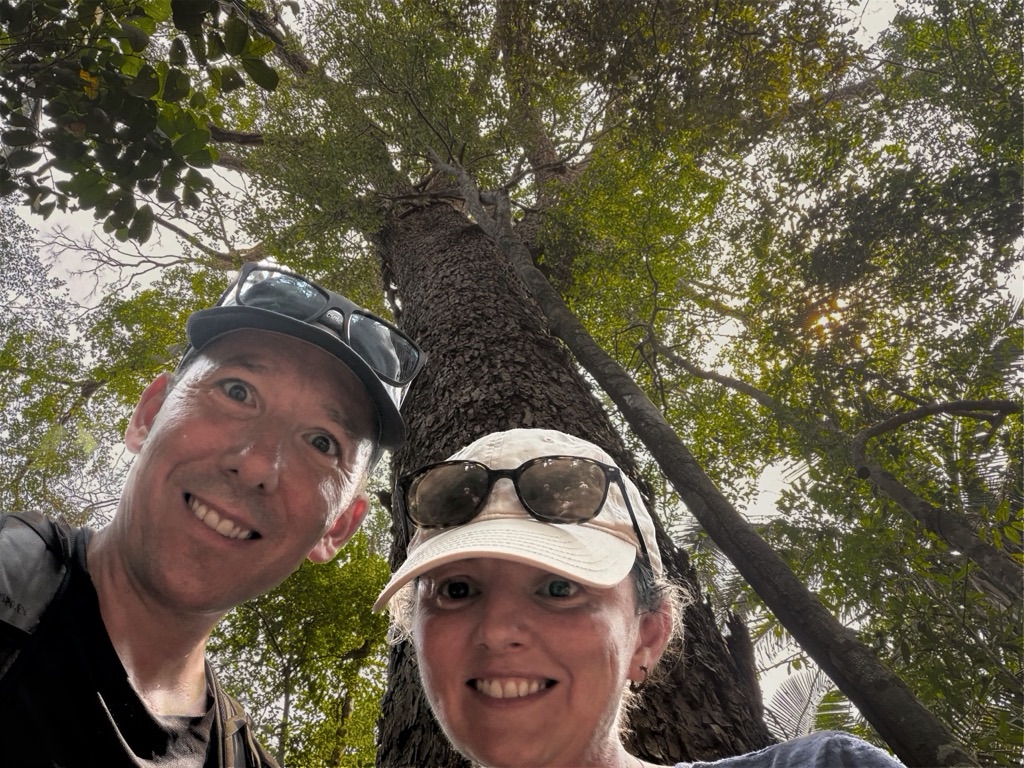
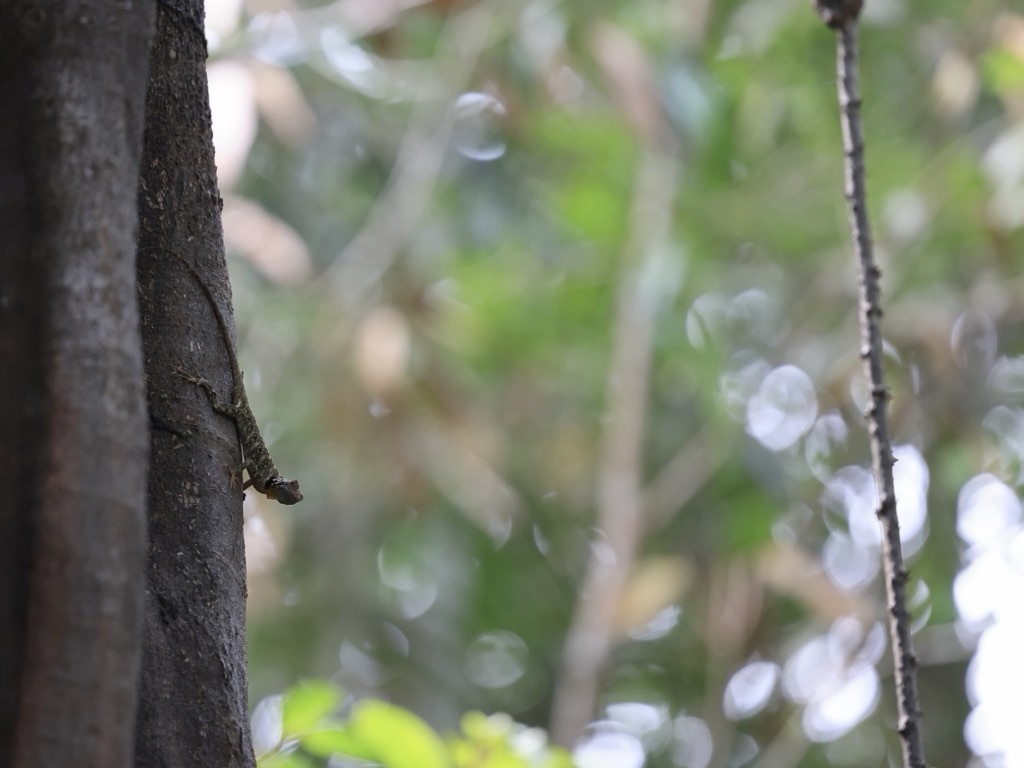
We went on two jungle walks during our stay, which despite the heat, required long trousers to protect against the multitude of bitey stingy poisony things. They used to organise nighttime walks but halted these due to the extreme risk of snake bites. As we trekked through the jungle, I had a bash at climbing an Açai tree using the traditional technique of tying your feet together with vines. We heard that locals avoid harvesting Açai fruit during flood season, as electric eels wrap themselves around Açai trees, deploying shocks to force fruit to drop.
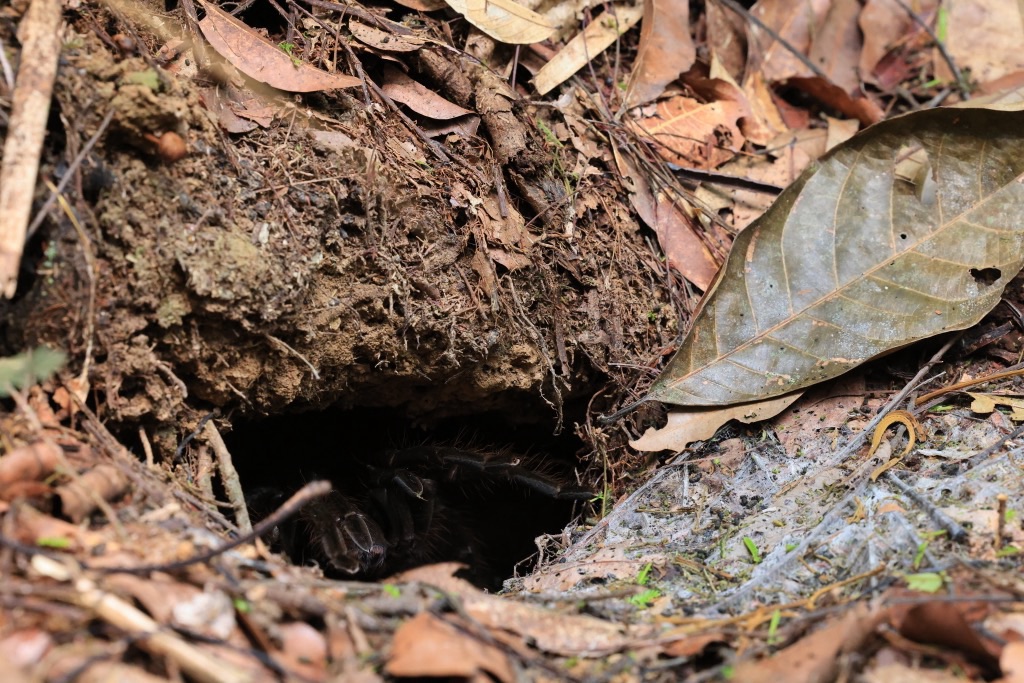
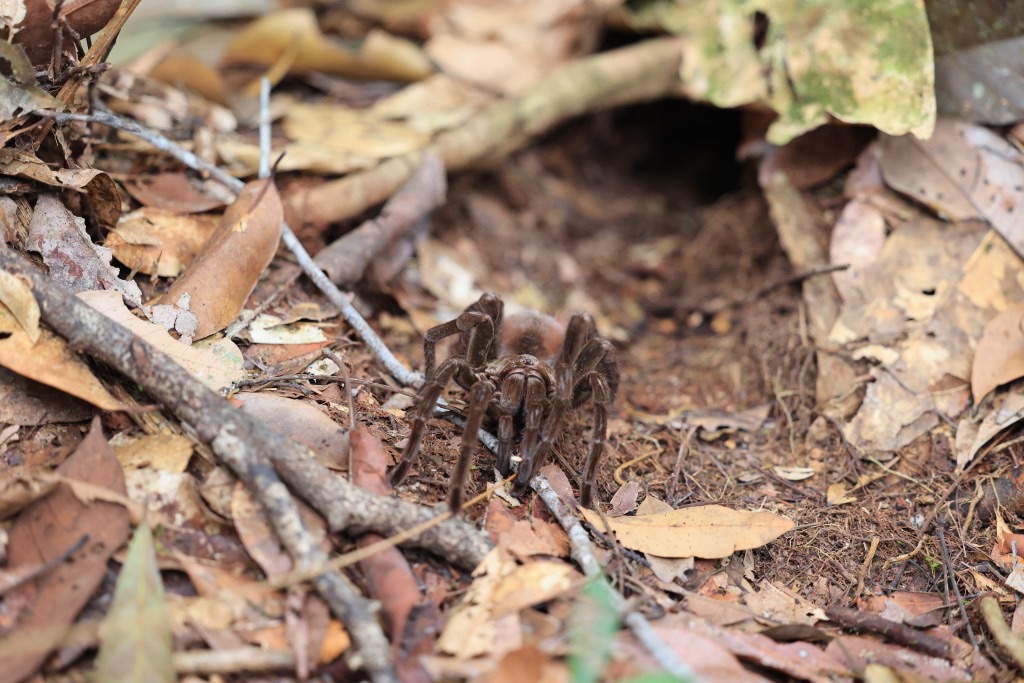
We saw two tarantulas, lured out of their lairs by Ralph and a threatening twig. We were told of the many medicines and foods all around us, if we knew where to look (which we didn’t). We heard the jungle-penetrating echo of the giant Paracutaca or ‘WiFi tree’, whose locations are known by locals and used as a beacon to help find those lost in the jungle. Ralph also showed us how to collect spines for blow darts, tree sap which can be used to make gunpowder (and demonstrated it), and watched as one Brazilian in our group stood on an ants nest and spent the next 10 minutes whacking various parts of her body as bites were delivered. Thankfully, these were not the Bullet Ants that also live here, whose bites are one of the most painful stings humans can endure.
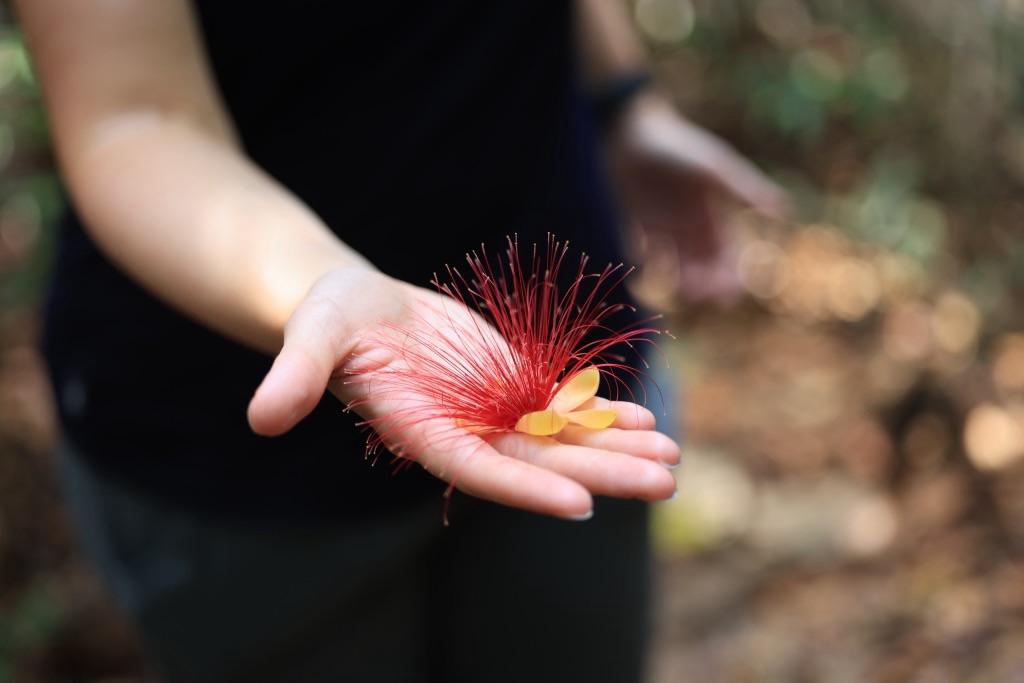
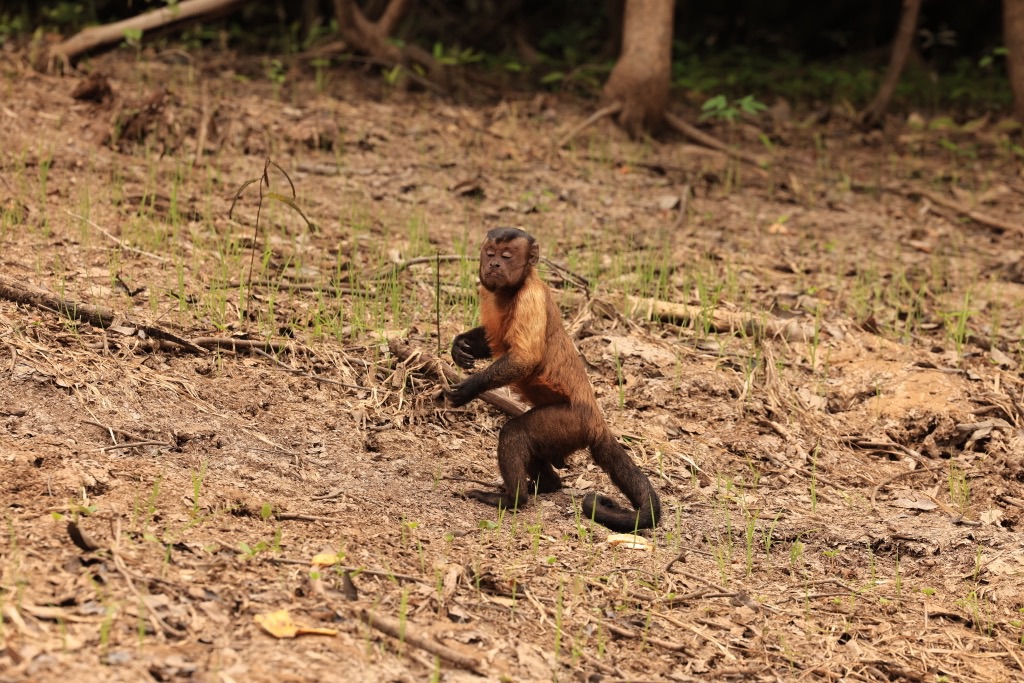
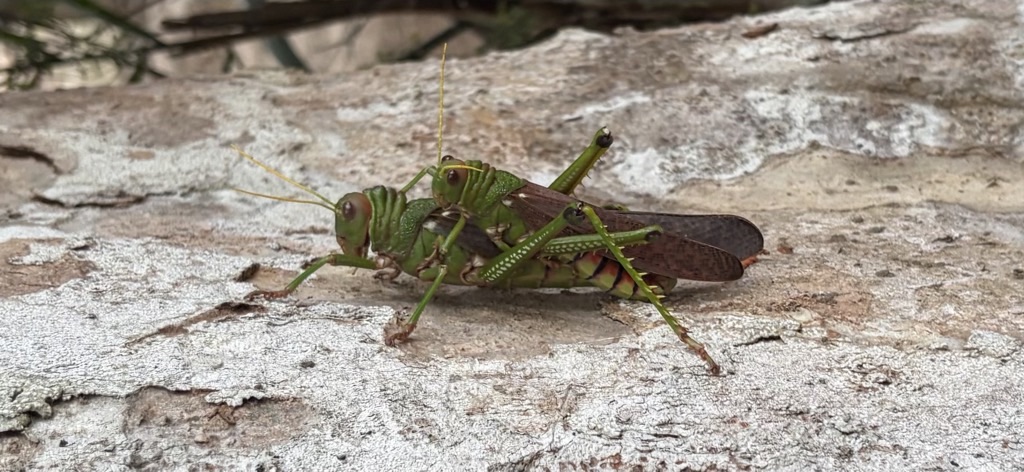
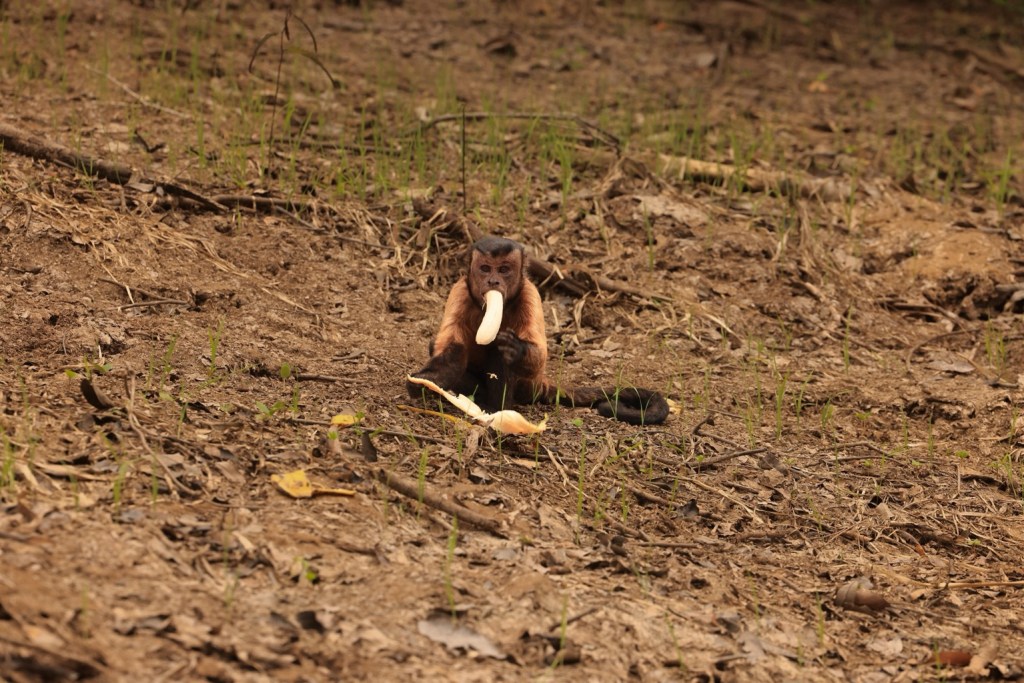
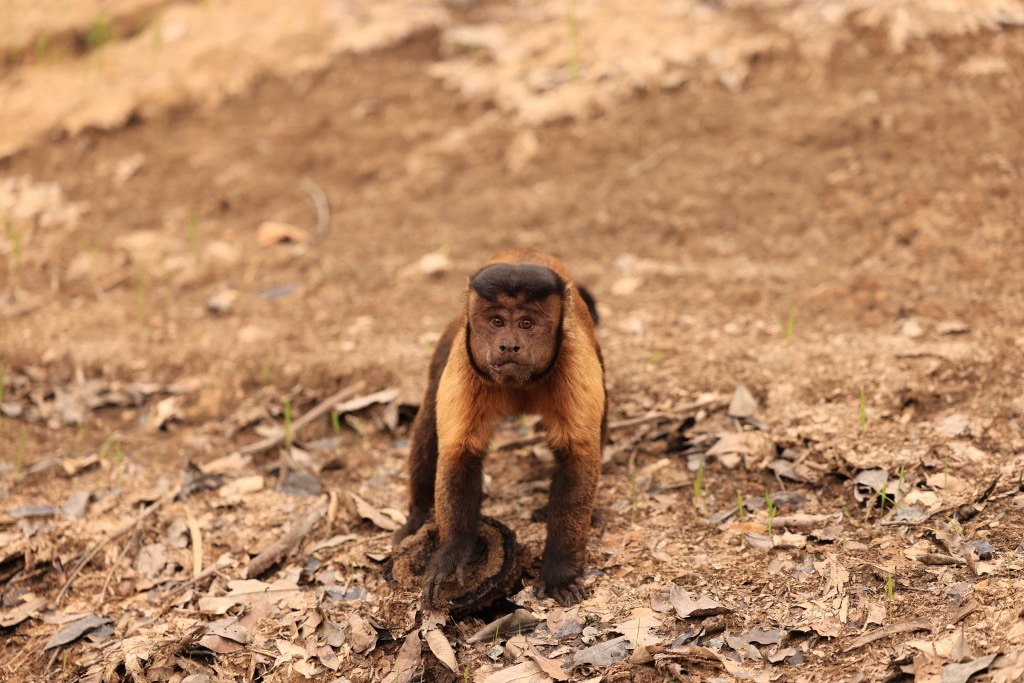
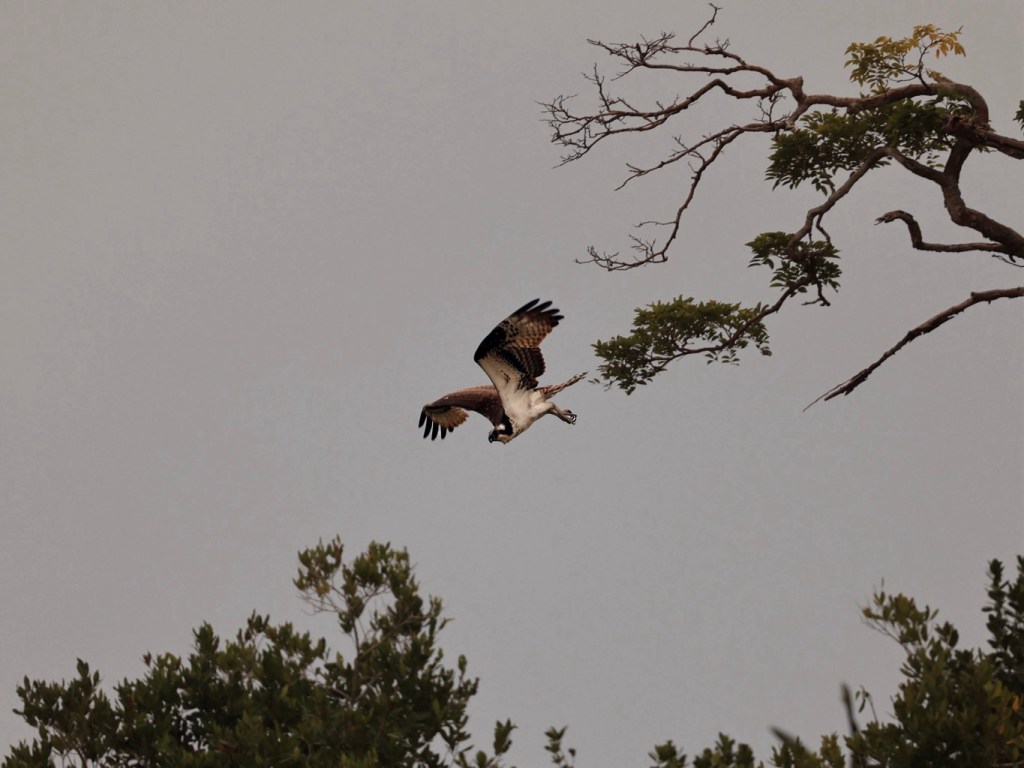
We went canoeing, quieting our movement through the jungle, spotting many colourful birds, the jumping monkey-fish and a cayman in the muddy banks. Later one evening, we went on a night tour, back on the boat, with Ralph using a torch to scan the river banks. Only Ralph was allowed a torch, as ‘night wasps’ are attracted to the light, and are apparently very aggressive. Ralph told us of how one previous guest had not only been stung, but had died within minutes of anaphylaxis.
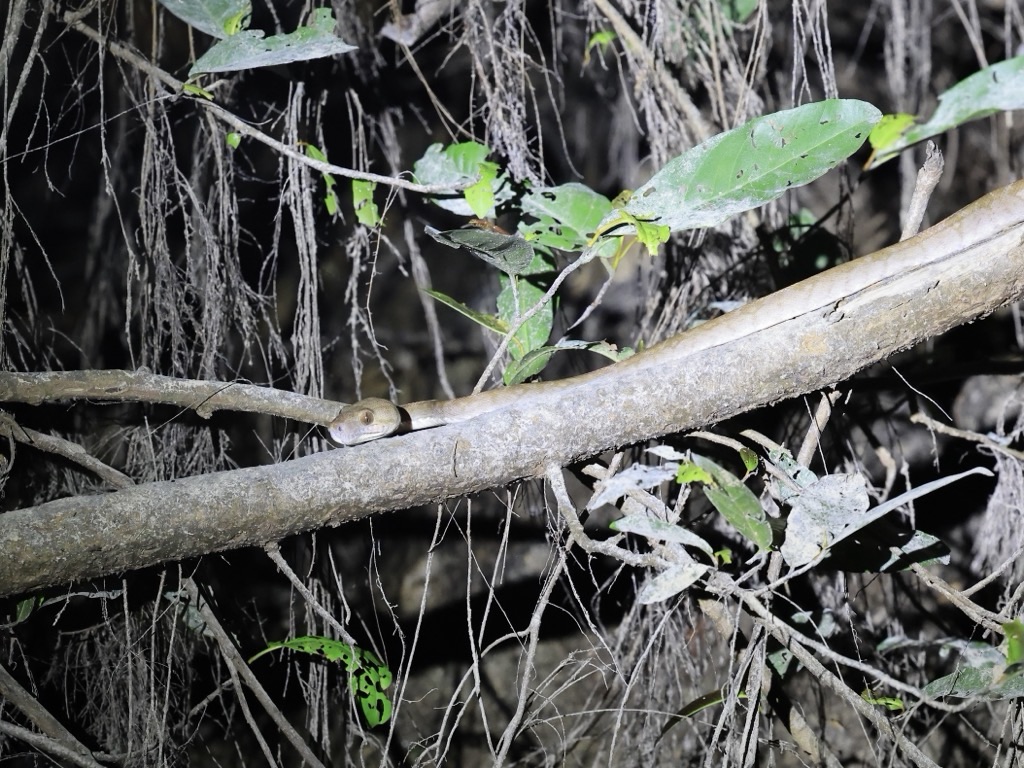
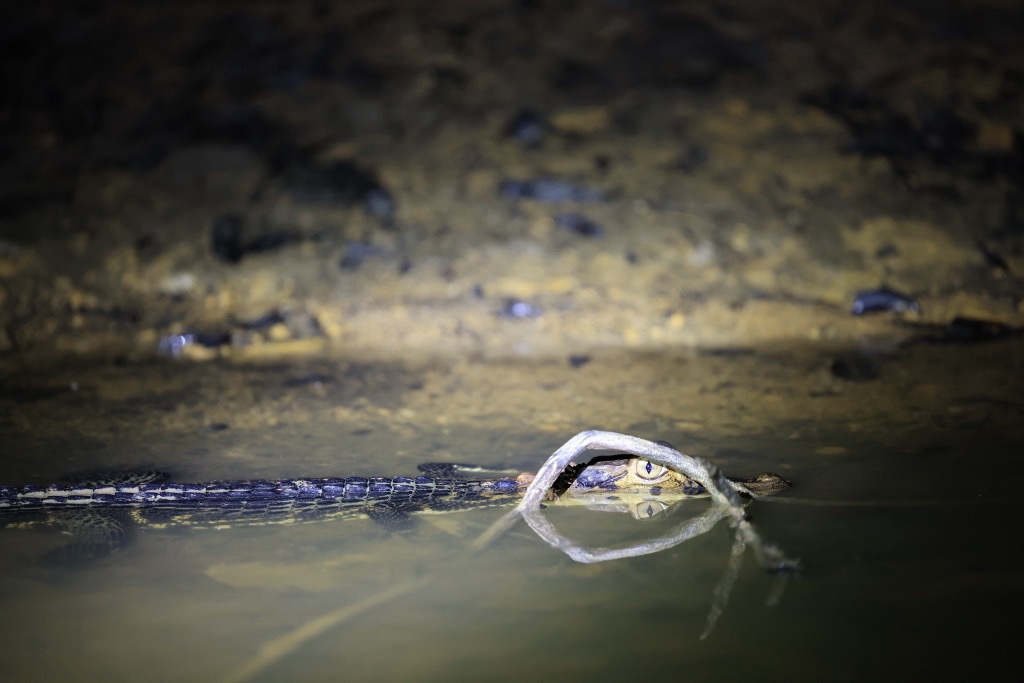
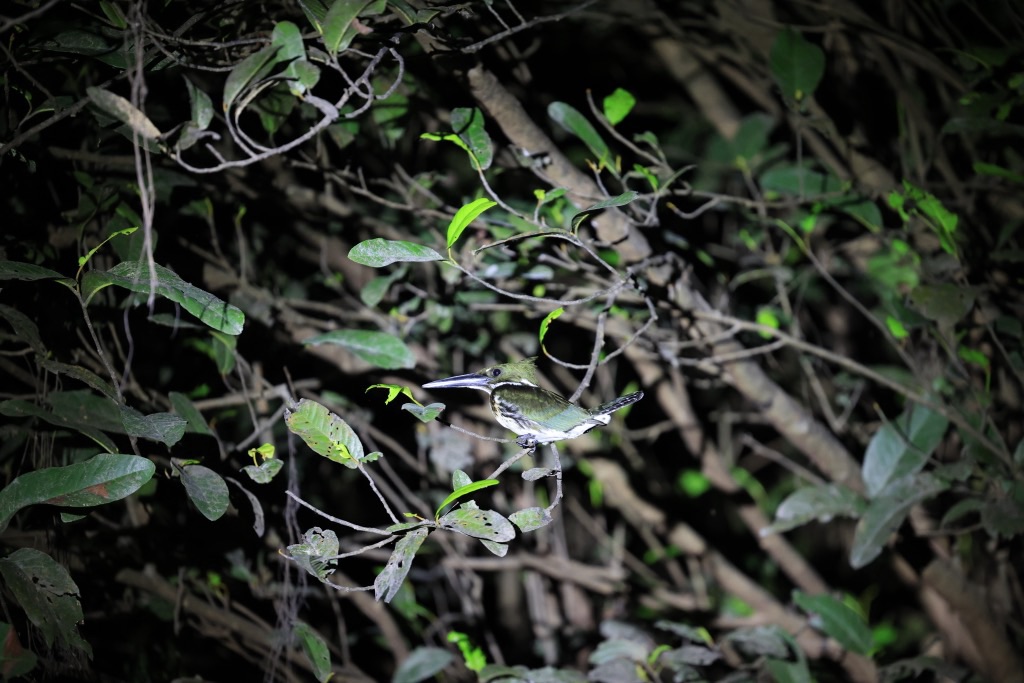
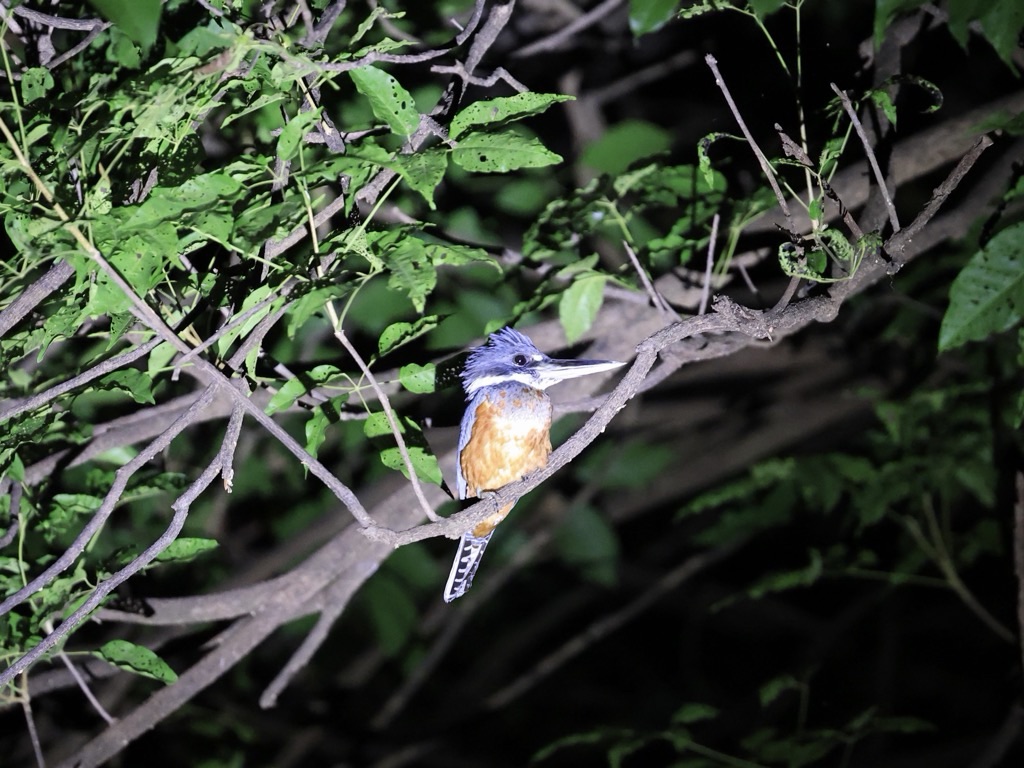
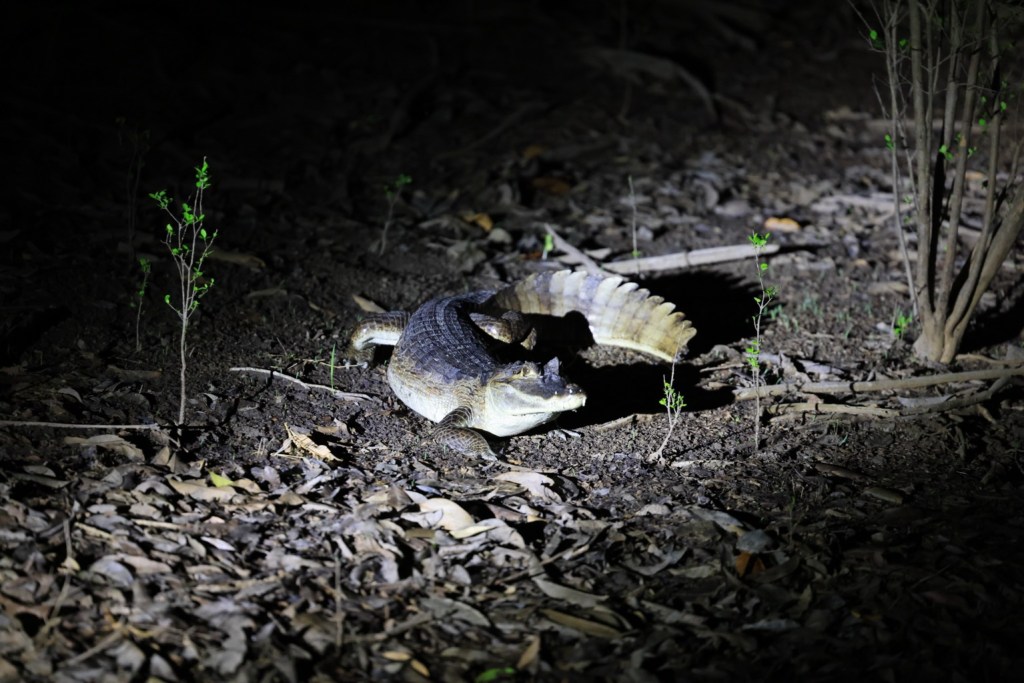
At night, the jungle comes alive; we saw a boa constrictor, hunting in a tree; spotted many sleeping jungle birds in their perches and saw several smaller caymen on the river banks. These things can grow up to 6m long and are every bit as dangerous as crocodiles or alligators. People do swim here – they have to, they live on the river, but Caymen are the reason everyone is afraid of the water. It is murky – impossible to see into, and locals do get killed. If you fall in, don’t splash. They like splashing, the Caymen.
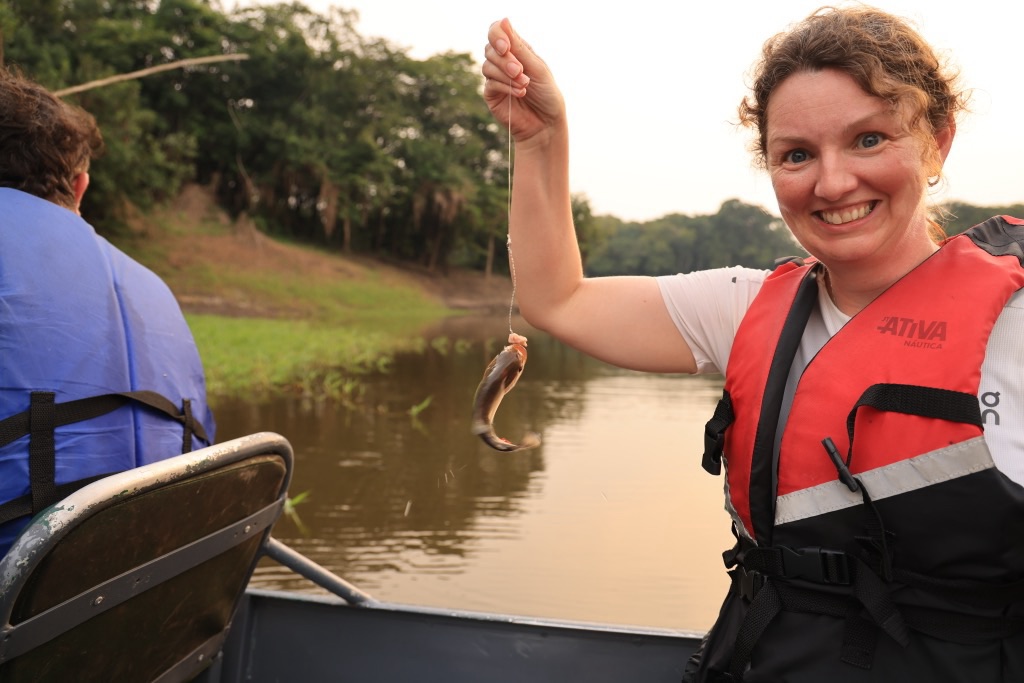
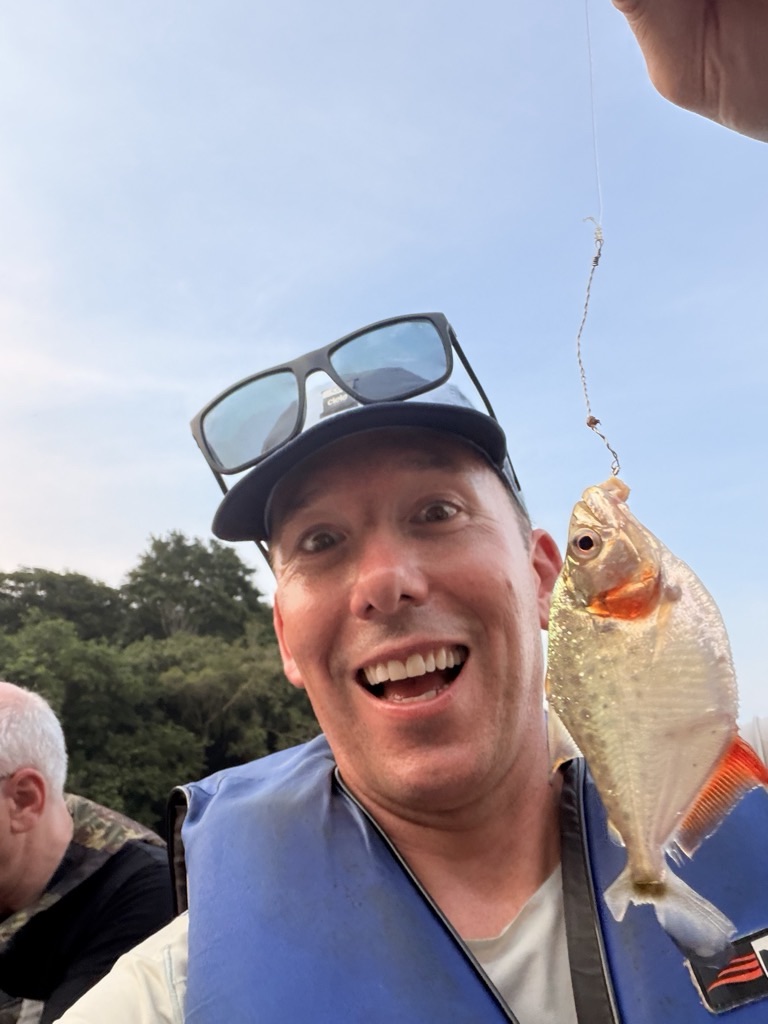
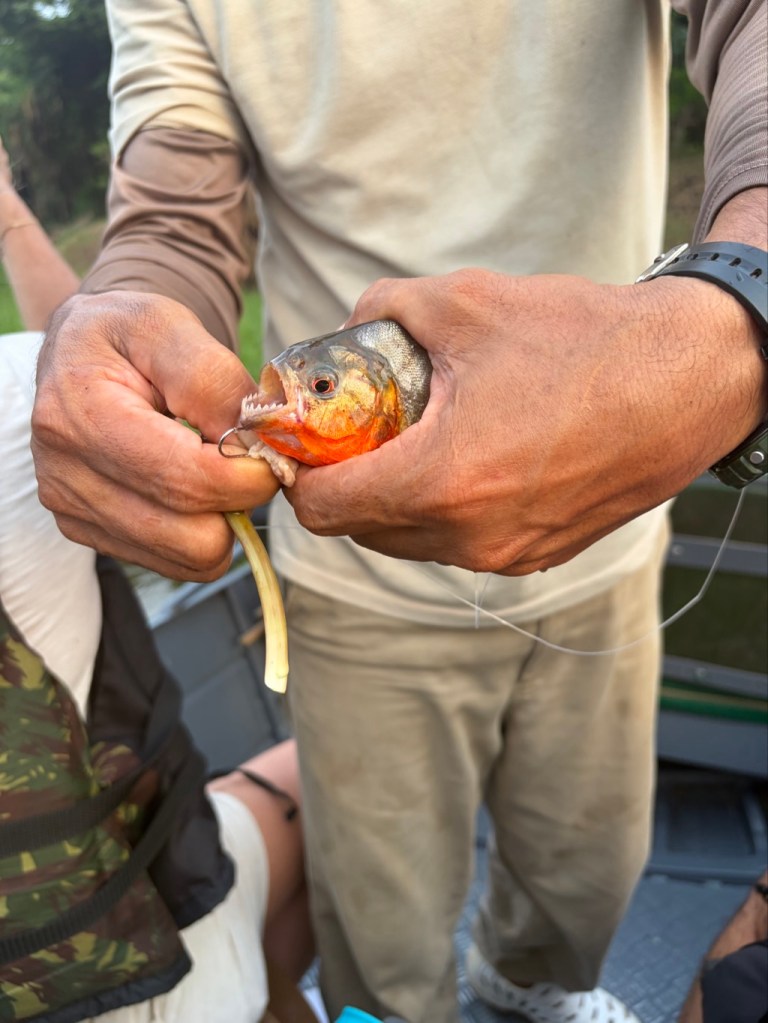
One of the best excursions we had was following a visit to a local family who were growing Manioc, the local Cassava root they rely on so heavily in this region. We headed to a remote and quiet spot down a tributary of the river. Each of us took a rod and a small tub of raw beef, Ralph splashed the water (with a stick), we loaded our hooks and dunked. Instantly we had bites. A quick tug of the rod and we found ourselves face to face with yellow and red belly Piranha! We spent the next hour hooking these feisty little feckers – they were voracious and everywhere, although again, entirely invisible in the water.
One evening, we spent an hour watching a slideshow showing the local community, the various fish you can catch here, and the bigger, more dangerous fauna. Ralph showed us an image of a 400kg Anaconda found when one family was digging foundations for their home. This giant lives in mud, but Ralph is scared of them – he said the famous Kaa hypnosis scene from the Jungle Book is born of the local belief belief that Anaconda can – and do – hypnotise you. He went on to describe how if you are in the jungle alone, and get lost, finding yourself back at the same place, you’ve likely been hypnotised. The only way to break this is to put your T-shirt on inside out, otherwise, the third time you return to the same spot… you’re Anaconda fodder. These are Shamanic superstitions running alongside the Catholic and Protestant faiths. In this remote part of the world, Christian Missionaries didn’t quite eradicate older belief systems.
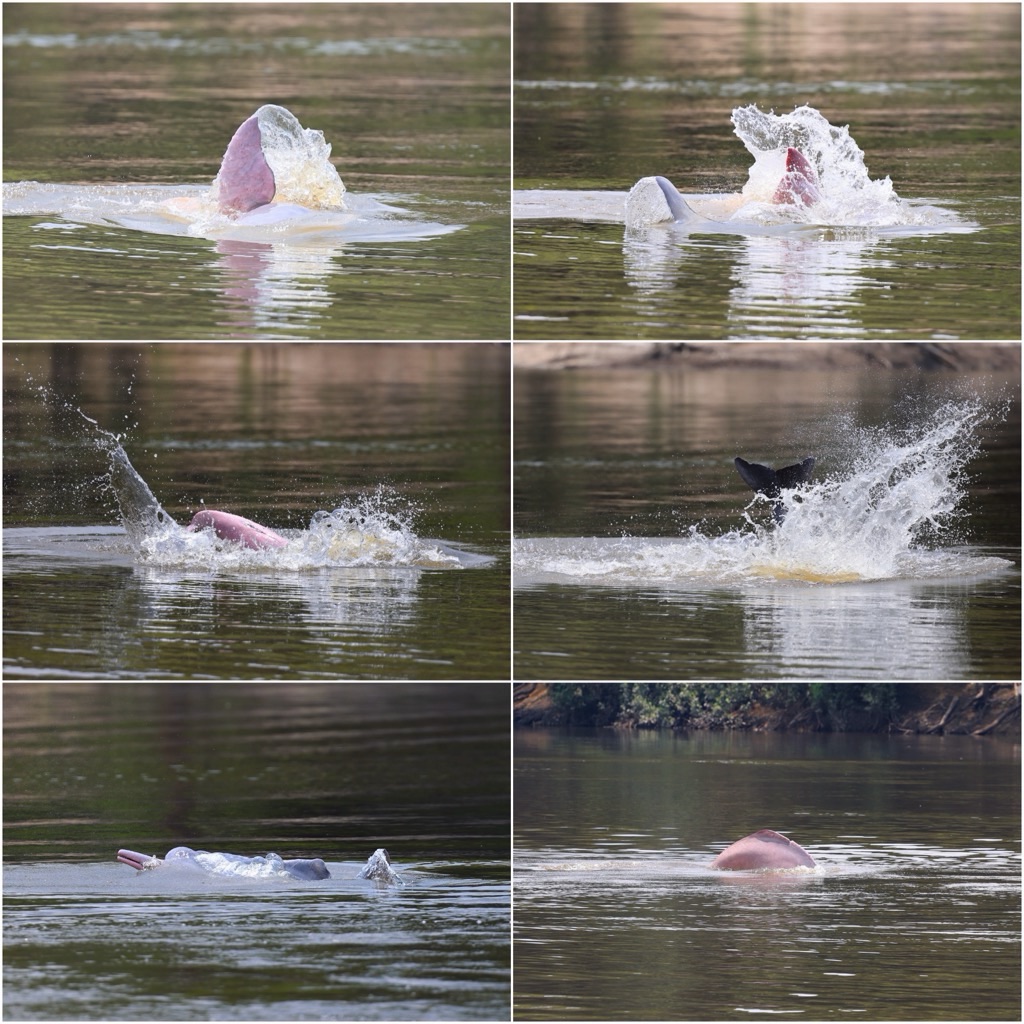
The big thing we were really hoping to see here was Inia geoffrensis, the Amazon River Dolphin. We’ve been lucky enough to see lots of dolphins over the years, and it’s always a real treat, but these ones are particularly special – they are pink! We were very fortunate and at various spots we saw small pods of these amazing looking creatures – they tend to locate with other grey dolphins. In flashes when they breached the surface, we would see bright pink backs, fins and beaks emerging from the water. Travelling on a boat, trying to spot the moment a dolphin breaches a muddy river is no easy task, and so photos ops are sadly limited.
Ralph was a great guide. He’s the only native guide they employ at Juma Lodge. Ralph initially became a boat driver – given a chance to leave the family farm, growing Manioc. He desperately wanted to become a guide – he saw the guides earning 6 times his salary. He is self-taught in English, but without a tutor, or access to any education as an adult, he struggled to make progress. He eventually sold his boat engine – a lifeline to locals – to buy a laptop. He had to charge it at a friends house because he had no electricity. But with the laptop and translation software, his English became good enough to guide. He explained how every local’s desire is for a house with a metal roof, a metal hulled-boat, a nice noisy engine.
It’s humbling travelling to places where entire populations eek out such a challenging living. 4.5 million people live in the Amazon, most in conditions we in the west would think primitive. Ralph said that the best thing for the Amazon is tourism. He thanked us for coming and asked that we send more people. Tourism helps prevent people stripping the land and destroying the forest. It helps employ locals. It protects nature (although we’re not sure the piranha would agree).
But in travelling to poorer countries, you cut a fine line between ‘supporting the community’ and voyeurism. I’m not sure it’s something I’ll ever be entirely comfortable with; being so privileged as to be able to afford – for pleasure – to go somewhere that local people could never afford to leave.
The Pantanal
Our three days in the Amazon were immediately followed by another three in the Pantanal – the Brazilian wetlands. We headed back to Manaus airport, and flew from there to Sao Paolo, sleeping for a few hours in a tiny airport hotel room, right in the departure lounge. From there we flew to Cuiaba airport, and were met by a driver organised by our lodge, the Pousada Sia Mariana. The drive to the lodge was a couple of hours, air conditioned, and very straight forward. Watching the air temperature gauge in the car was less comfortable, as it crept up from 34ºC in Cuiaba to 45ºC as we reached the lodge.
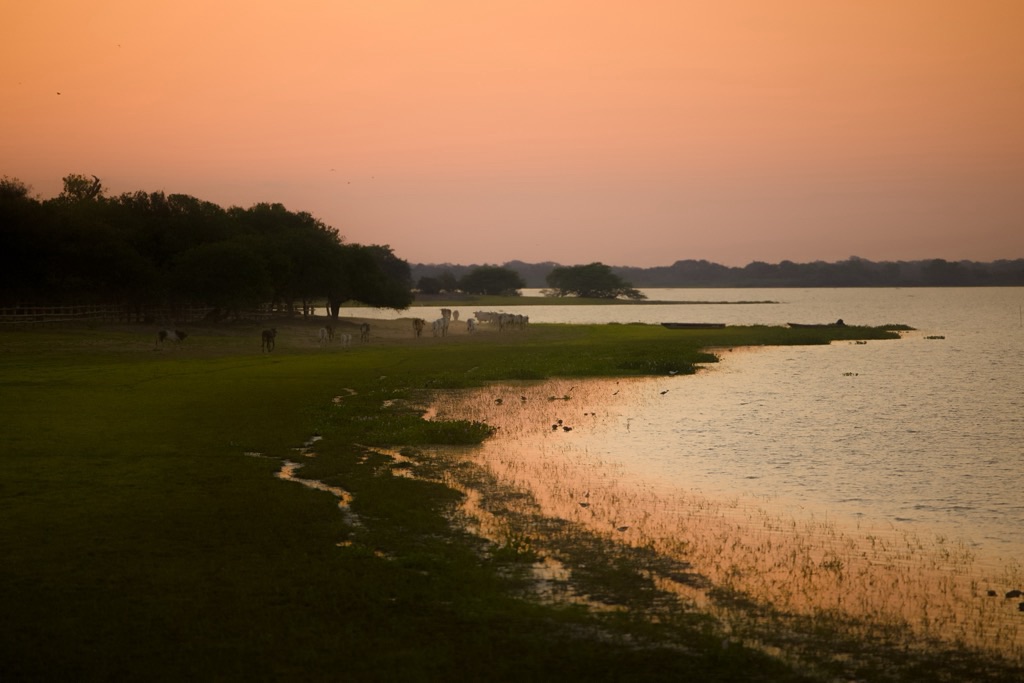
Fortunately, despite being a wetland, conditions had none of the humidity of the jungle and it was a dry heat. We checked in, finding a large, well air-conditioned suite in the eclectic lodge, perched on the edge of the Mutum River. Recent rains have swollen the river, after the dry summer. This reduces wildlife sightings, but massively increases mosquito presence – Shona is now on Defcon 5.
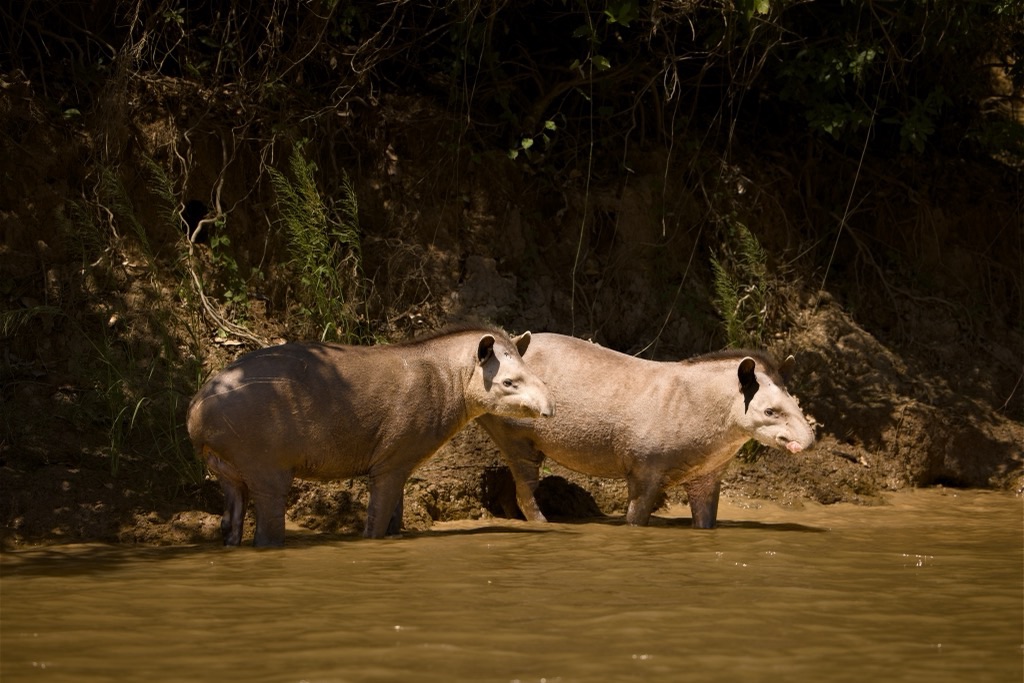
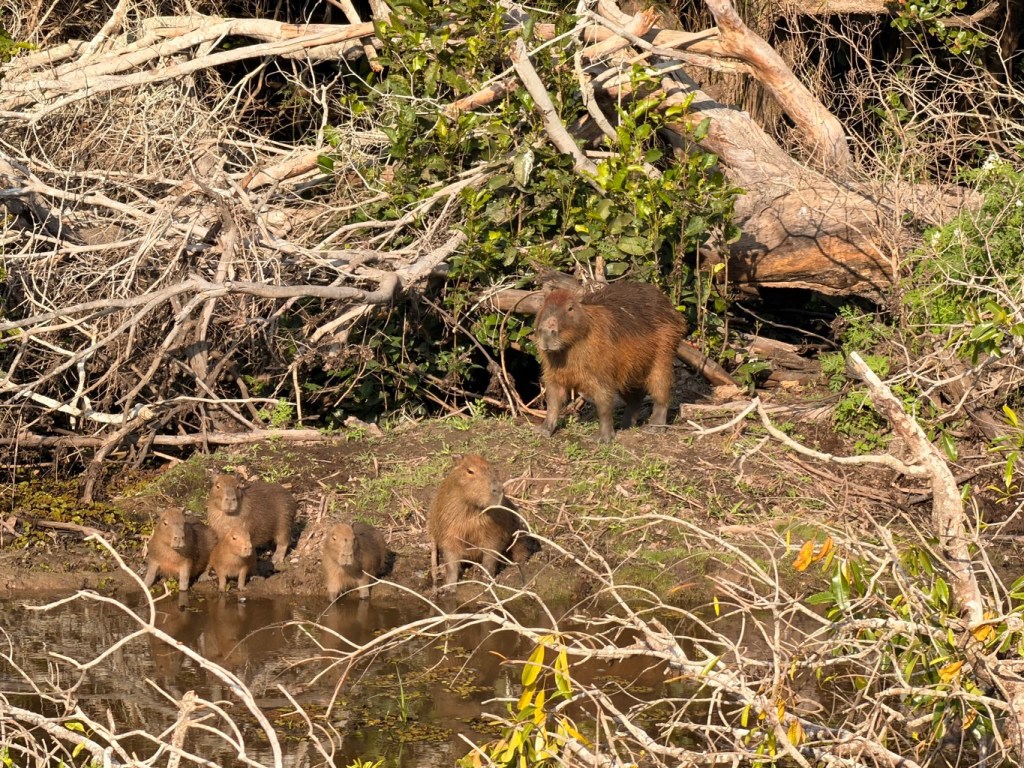
I managed to pick up a cold (flights are disease-laden), and so we spent a few hours relaxing (coughing, blowing nose, etc), and going for a walk in the intense heat, spotting our first Capybara and Tapirs.
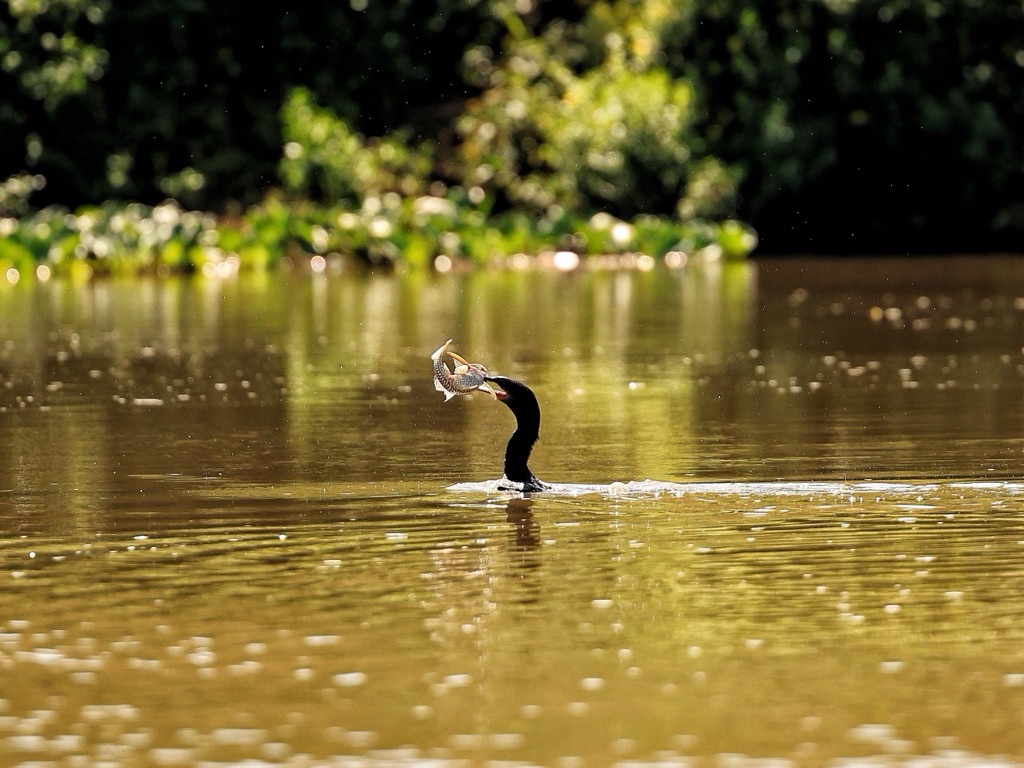
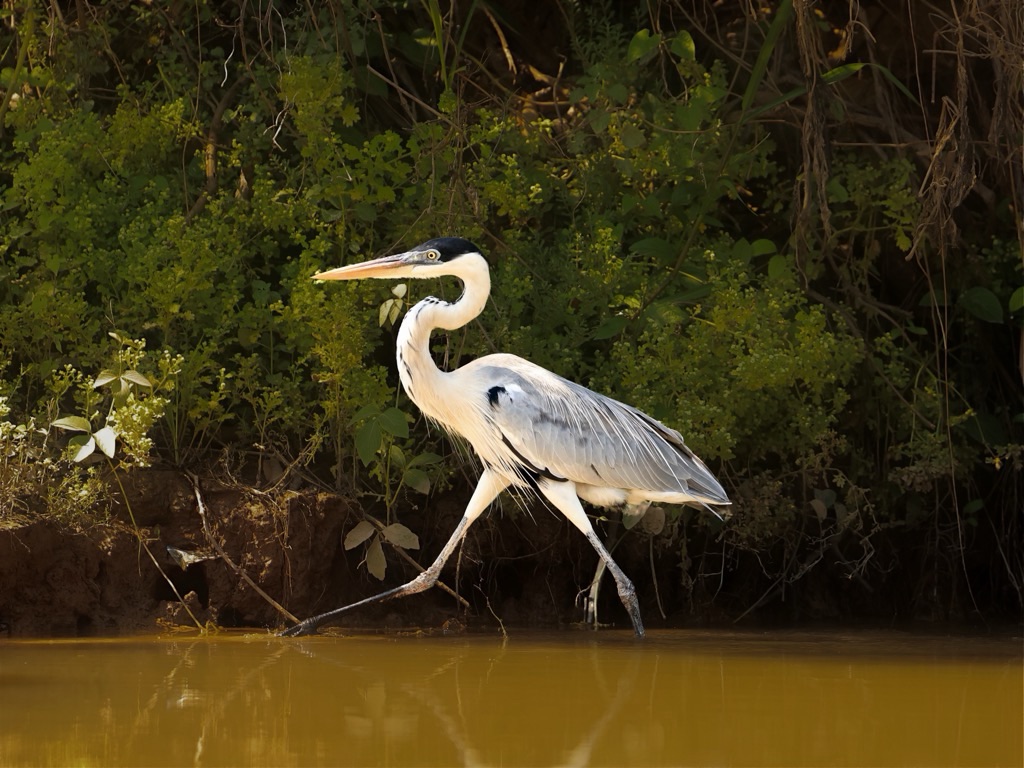
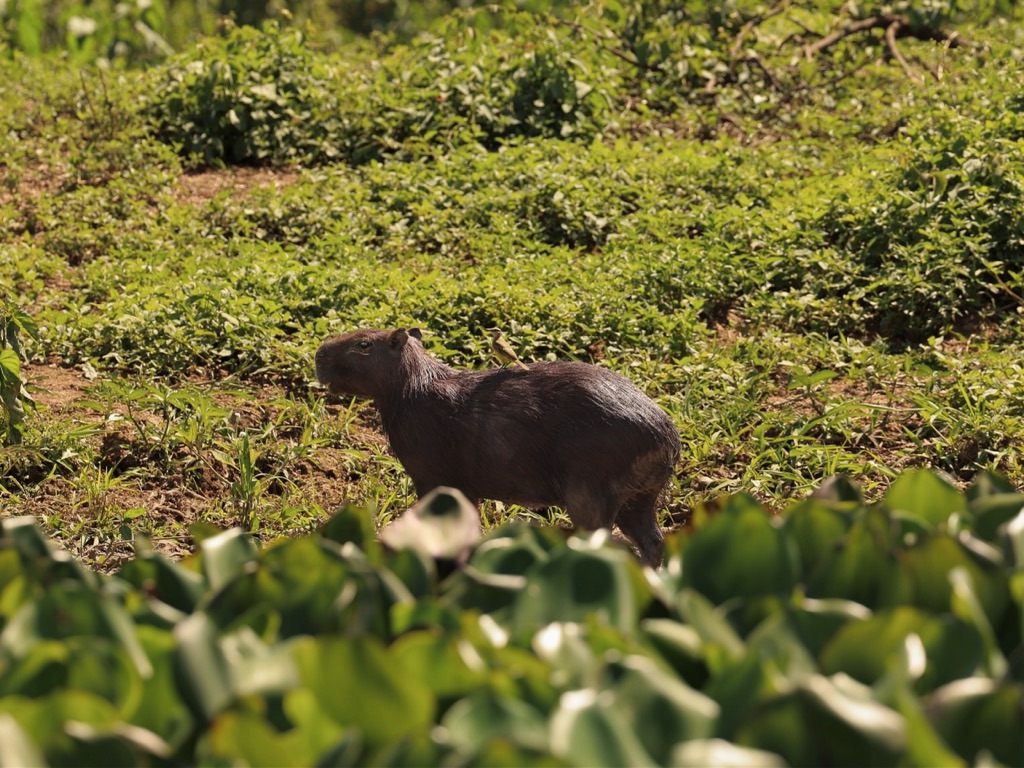
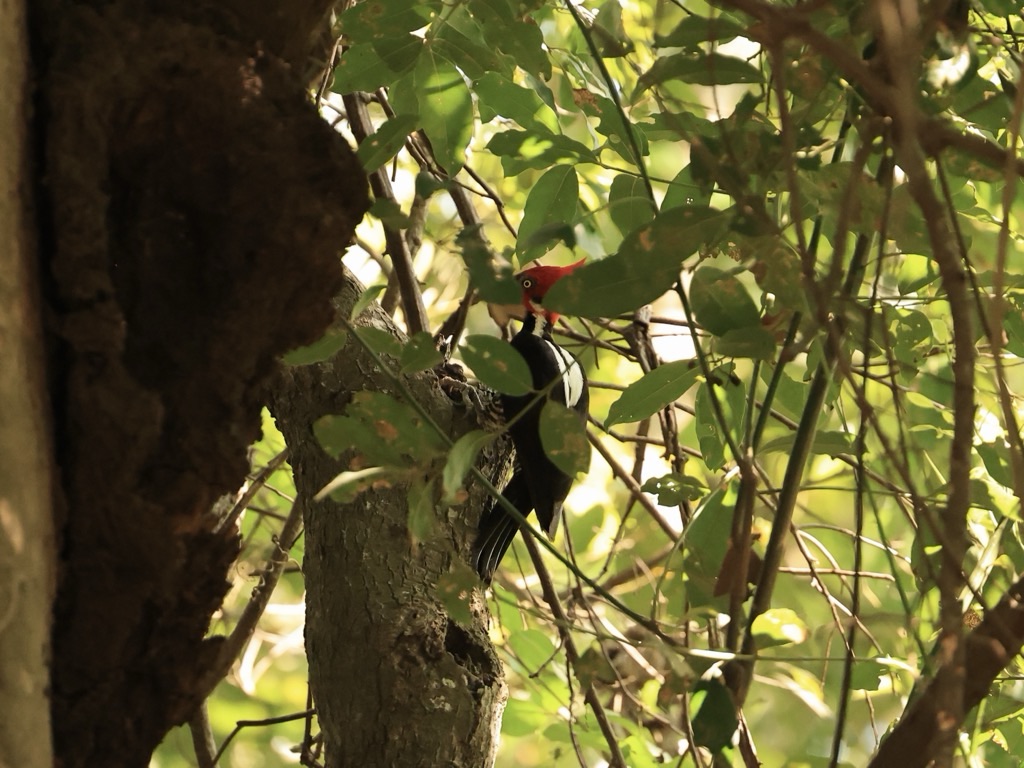
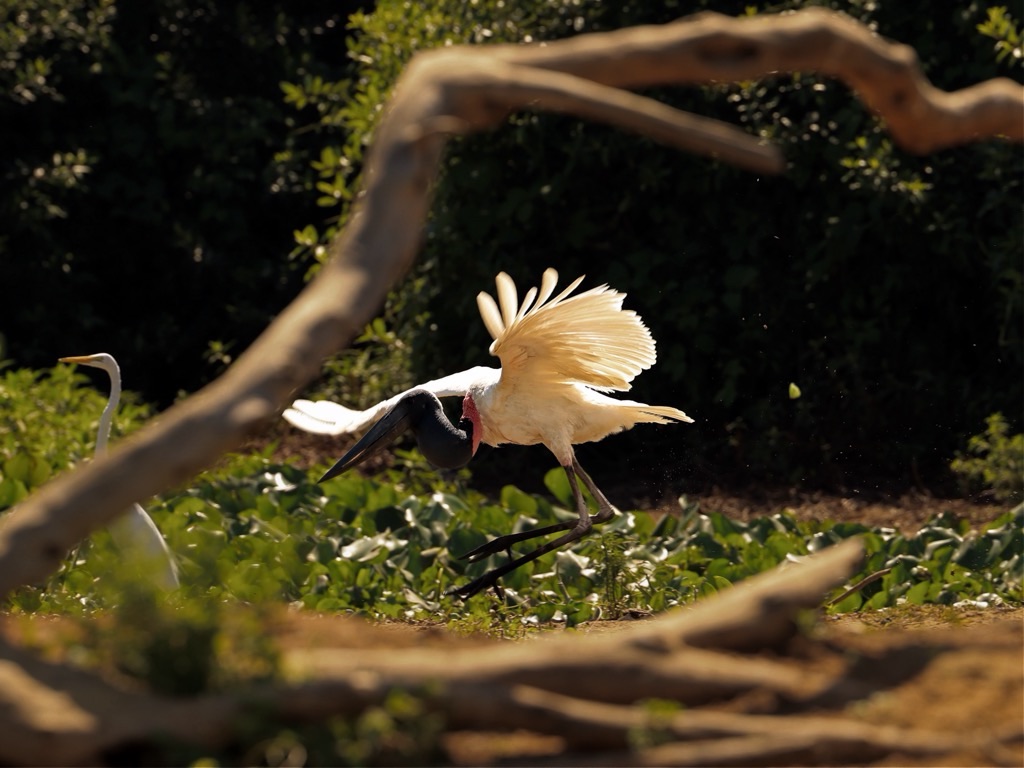
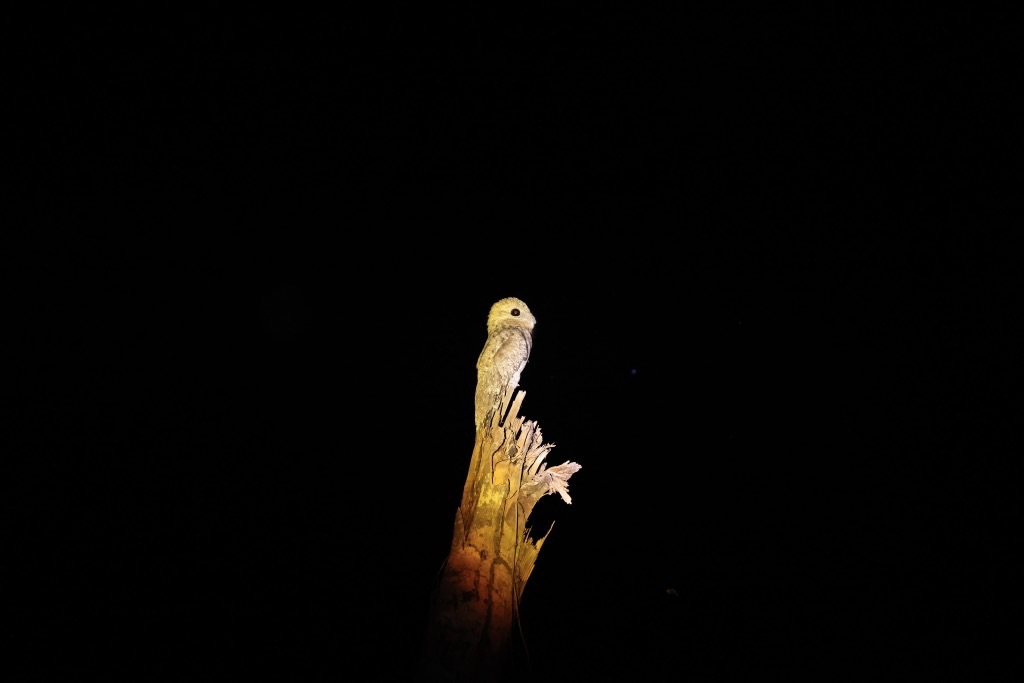
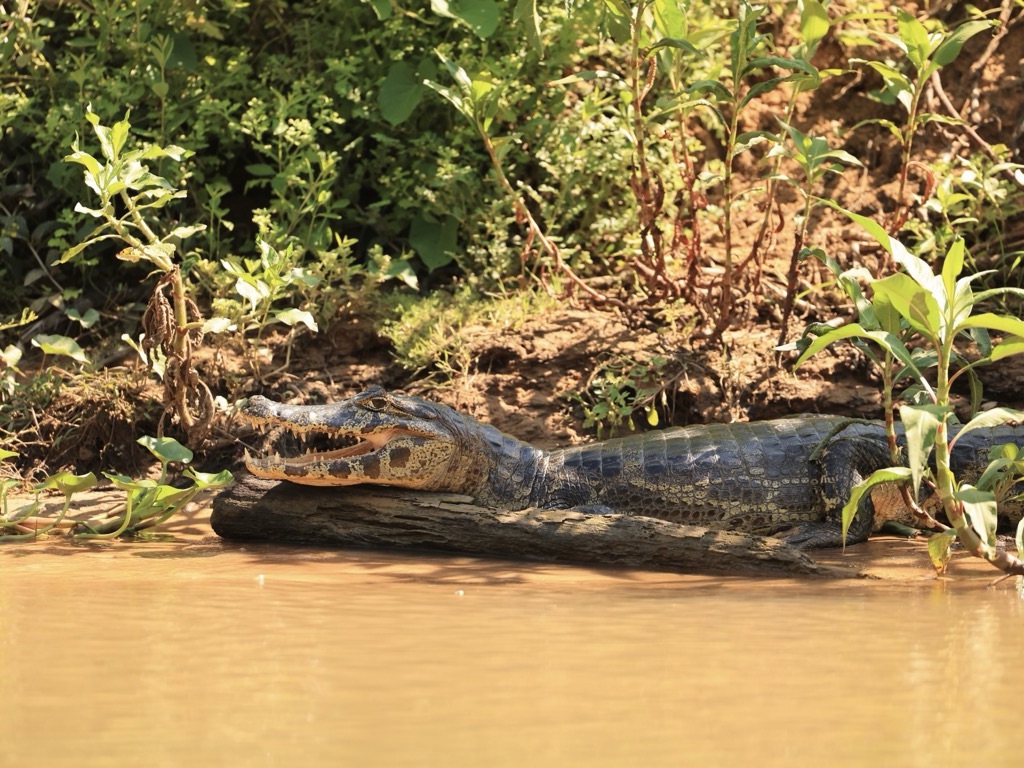
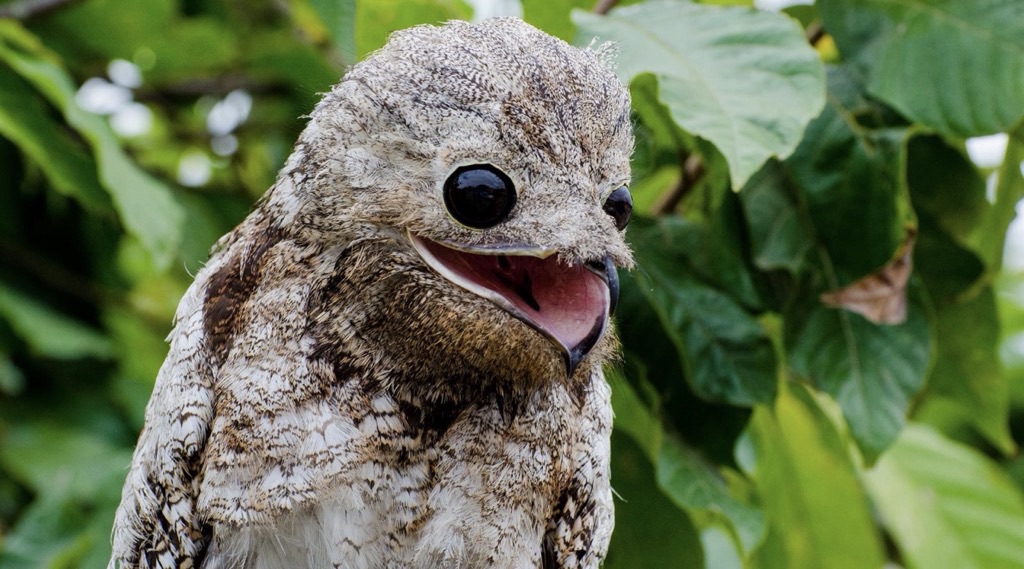
That evening, we joined a Brazilian couple and their wee boy for a nighttime boatride through along the river. We immediately spotted many Caymen including a couple of nests; far more ubiquitous sightings here than in the Amazon. We saw more Capybara, water birds, and even a Great Potoo – a bird I’d never even heard of, but is the stuff of nightmares (being fed to the Great Potoo is apparently a threat used with local children who misbehave).
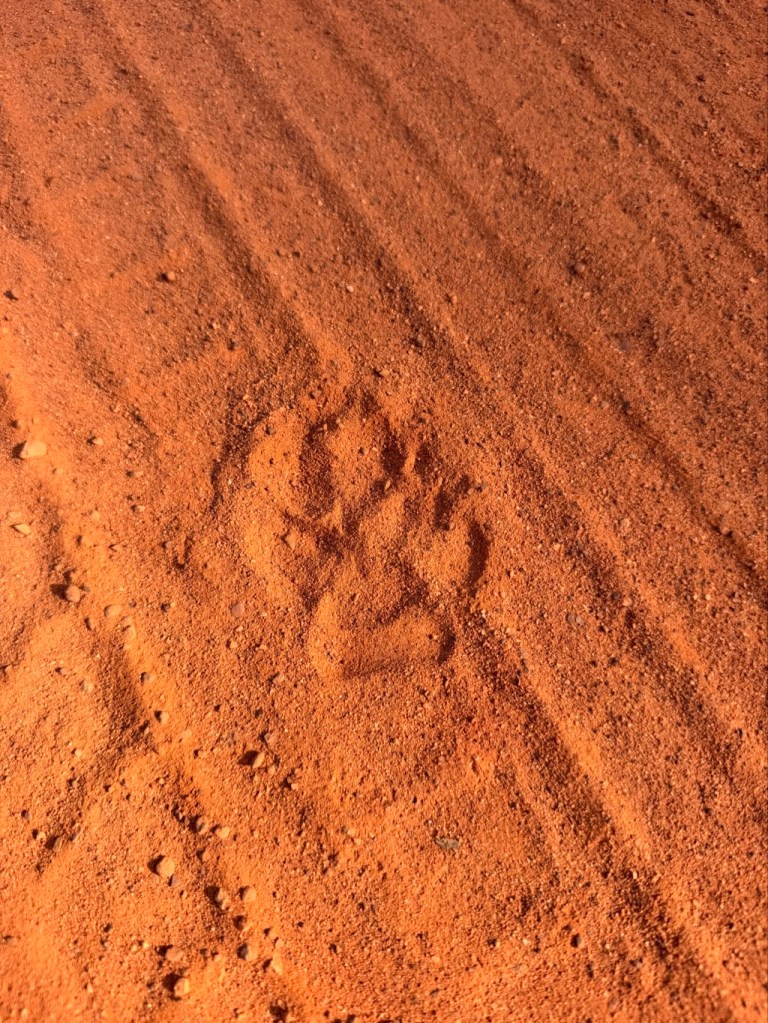
On another boat ride the next morning, we passed many homes lining more populated areas of the rivers, fisherfolk and farmers living in this abundant reserve. We were carrying a slim hope of seeing Jaguar, as they can very occassionaly be seen here. Unfortunately it wasn’t to be. Jaguar are the enemy of the cattle farmer, whose herds make easy prey, and any intruders sadly find themselves dispatched. I did however spot a footprint, which is likely to have been a Puma (definitely a large cat, but probably too small to be a Jaguar).
The last excursion we did was land-based, perched on safari-style seating on the top of a converted pickup truck. We headed out in the early evening after sunset to spot animals along the dirt roads carving their way across the region. It was a near total bust! Aside from a herd of wild pig, our local Cabybara and one small Burrowing Owl, there was nothing about.
It’s been a really pleasant stay in the Sia Mariana Lodge. The staff have been lovely, and the manager (who speaks very good English) extremely helpful. The location on the river is beautiful and a bird-watcher’s paradise. I’ve never been much of a ‘Twitcher’ but with the benefit of the Merlin bird app, I’ve started to really warm to the joy of spotting new species (download Merlin if you don’t have it – it’s free, identifies birds by their song/screech, or by photo, and works offline).
The Pantanal was on the list due to the abundance of wildlife, and the season we’re in; the tail end of the dry season is ideal spotting time, particularly for Jaguar. Much of the research we’d done was using AI to help narrow our focus and locate great places to stay. The lodge was definitely a good choice, but not the best place if you want to see Jaguar. We’ve discovered (through talking with locals and others we’ve met), that Porto Jofre, 7 hours drive south-west of us is the only place in Brazil where sightings at this time of year are ubiquitous. We’ve kicked ourselves a bit for not doing more research. We even considered cutting this stay short and making our way there, but the cost would have been prohibitive, with sightings not 100% guaranteed, especially as the rains have started.
It’s not the first time that we’ve missed key things when travelling (they’re indelibly etched on my brain), but we need to remind ourselves that this isn’t like booking an annual holiday. The depth and complexity of piecing together an itinerary as complex as this is months of work, and so not having 100% hit rate is, I suppose, forgivable (as Ben kicks himself again).
Today we are back on planes, this time making our way to Salvador – the one in Brazil, not the country.

