
Salvador
Rain dampens everything; people, streets… and spirits. And so our time in Salvador was inevitably blunted. We were only here for two days, and it rained for most of it. We landed at midnight and were staying in an apartment amongst the faded colours of the old town. Shona’s bag didn’t show up. Her AirTag showed that it was still in São Paulo. Fortunately a kindly baggage assistant tracked it, helped us complete an online form, and advised it would be with us in the morning. Our drive from the airport was through dark, foreboding streets, painted with shadowy figures, half-naked in the moonlight. We got to our apartment at 1:30am. Retreating quickly to bed, I was awoken at 5am by a call from an excited delivery driver, who dropped the missing bag at the door – a great result.
After limited sleep, we decided against much exploring, electing instead to spend the next day doing Life Admin. Following some calls, we dropped off laundry at a sign-less doorway in the morning. We then caught an Uber to a shopping centre for the longest haircut in history (Shona, 3+ hours) and some necessary shopping for new clothes. After a late lunch, we Ubered back with new clothes and excellent hair, but tired and uninspired, we stayed in that evening.
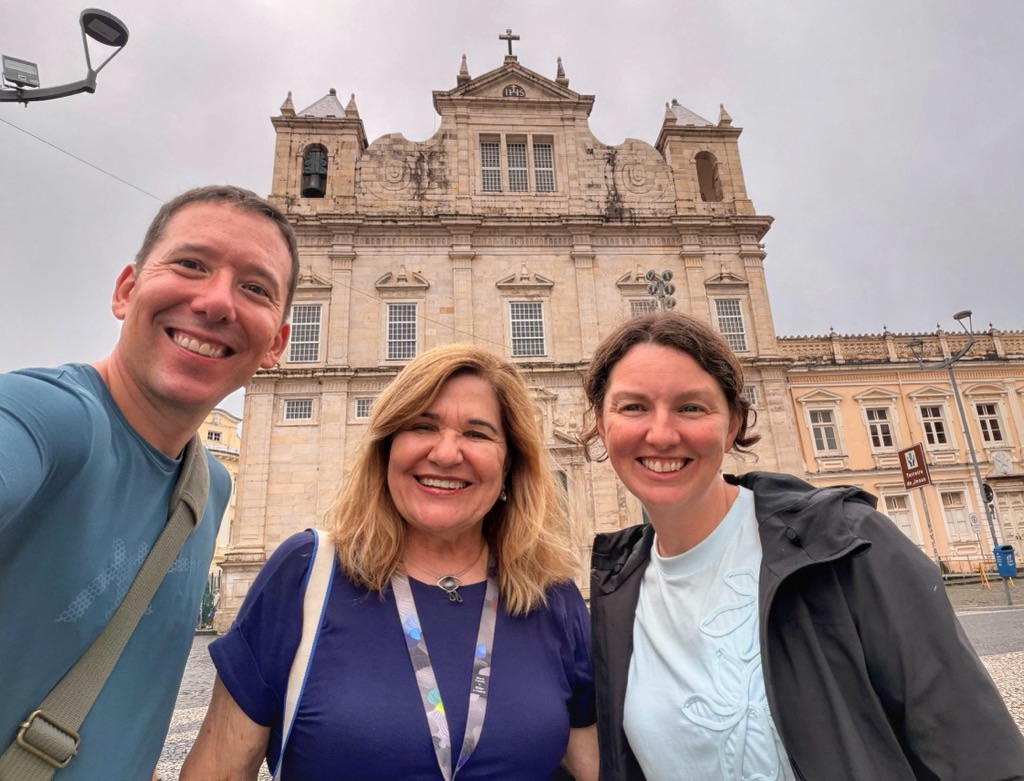
The following day, we were met by Ana, a local trilingual guide. Through the rain, Salvador showed flashes of its former glory; grand buildings; colonial mansions; art deco facades. But Salvador today is a twilight relic of its former self. Once the prosperous capital of Brazil, without intervention, it felt to us like a city many decades into terminal decline.
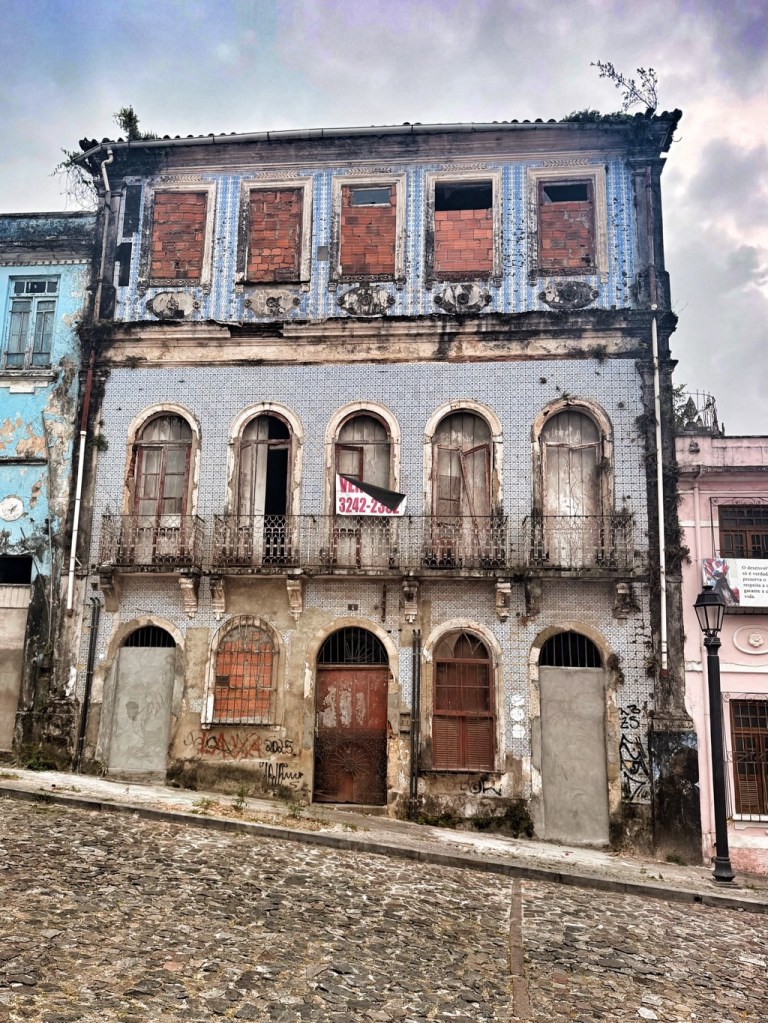
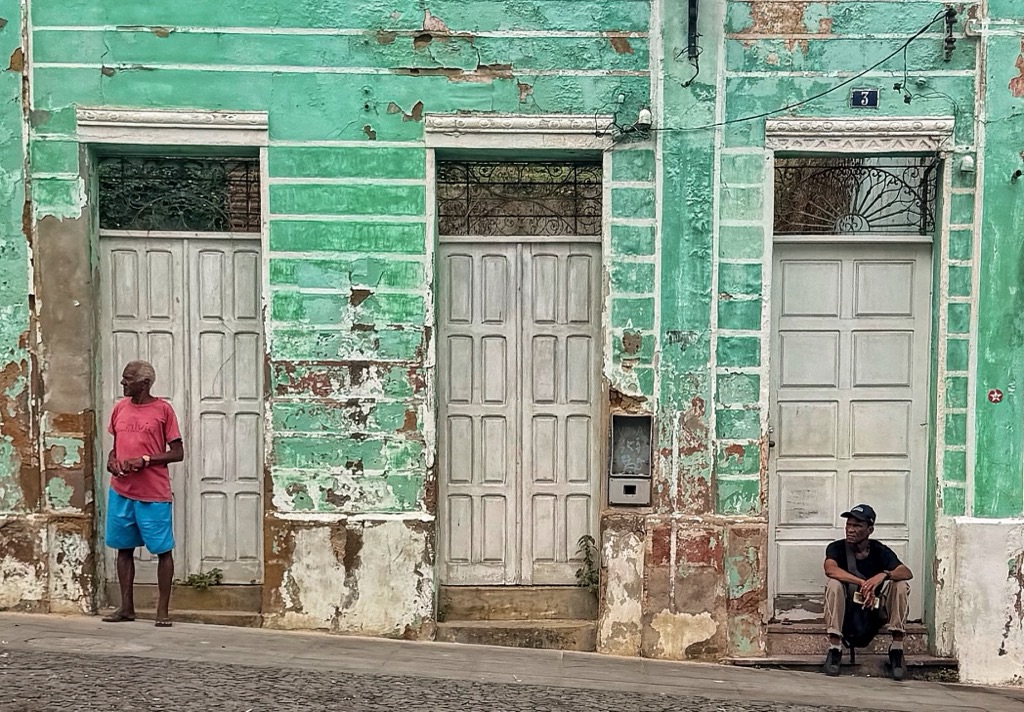
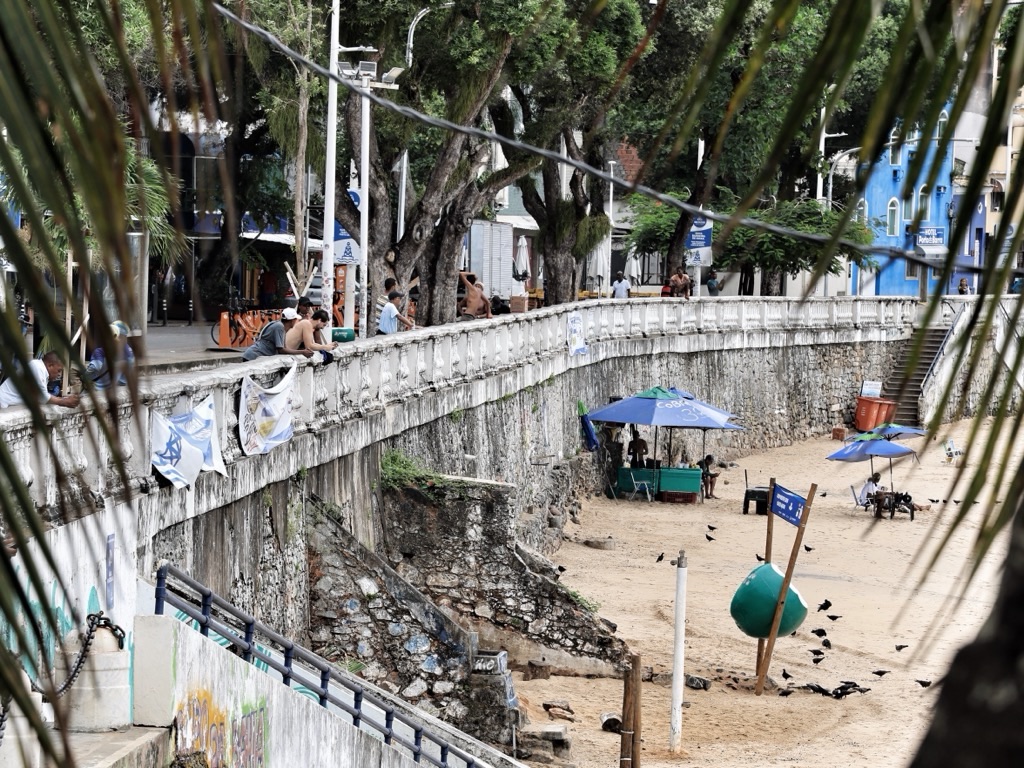
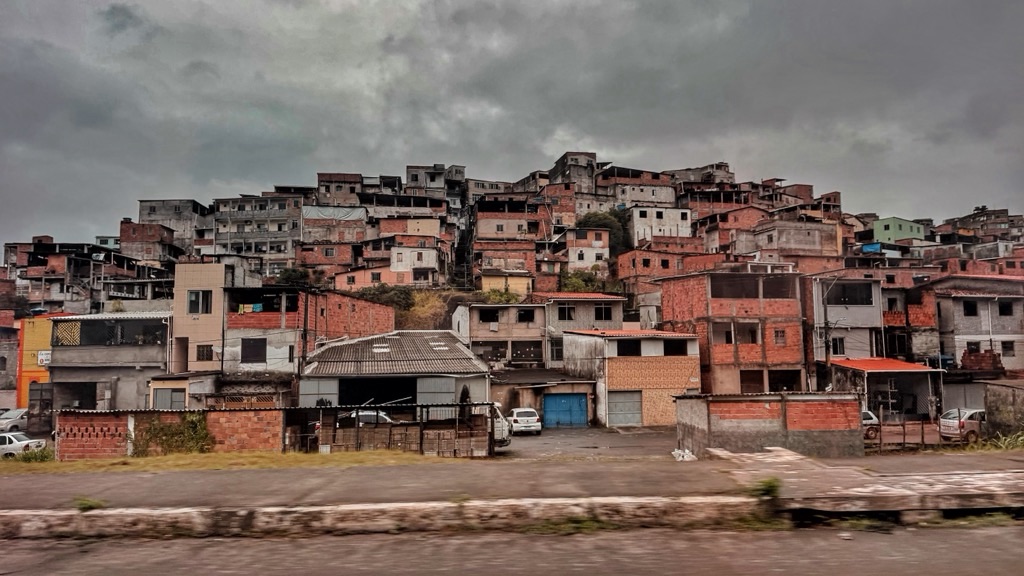
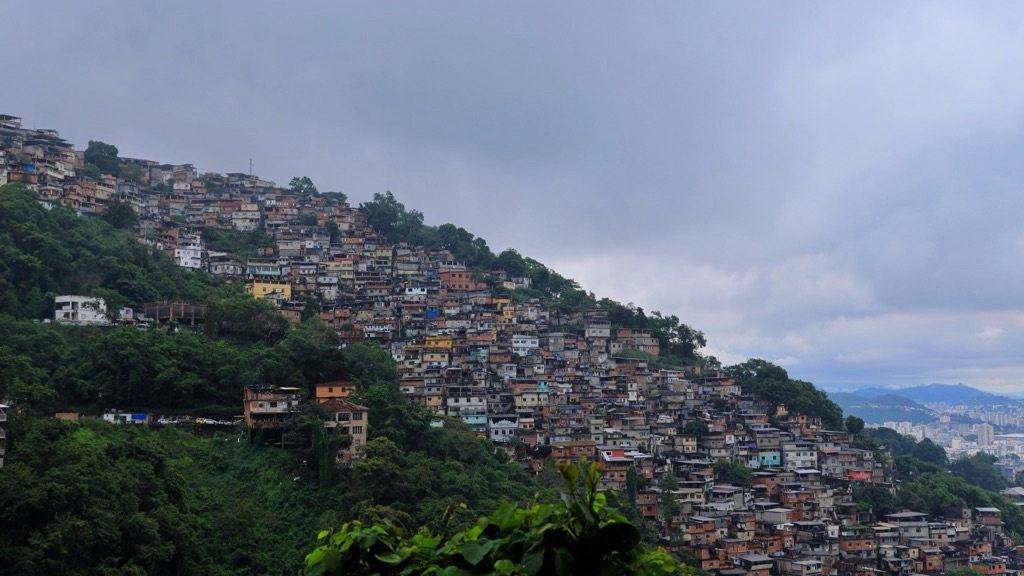
It’s hard to assess whether the degradation is noticeable when you live there or whether it erodes around you, incrementally. Ana spoke fondly of how nice areas were in the past, lamenting the decline, but also buoyed by areas of renewal. We saw lots evidence of decline, but only a thin trickle of redevelopment. The first thing you notice about Salvador are the favelas. These ramshackle dwellings are not confined to one area; a sea of slums occupy every spare bit of land throughout and around the city, precariously perched on crumbling cliffs or squeezed into gaps of barren land. Asked why developers don’t build over them was met with disbelief, as if it would be impossible to move so many people. I’m not sure how you recover a city without helping people move into better accomodation.
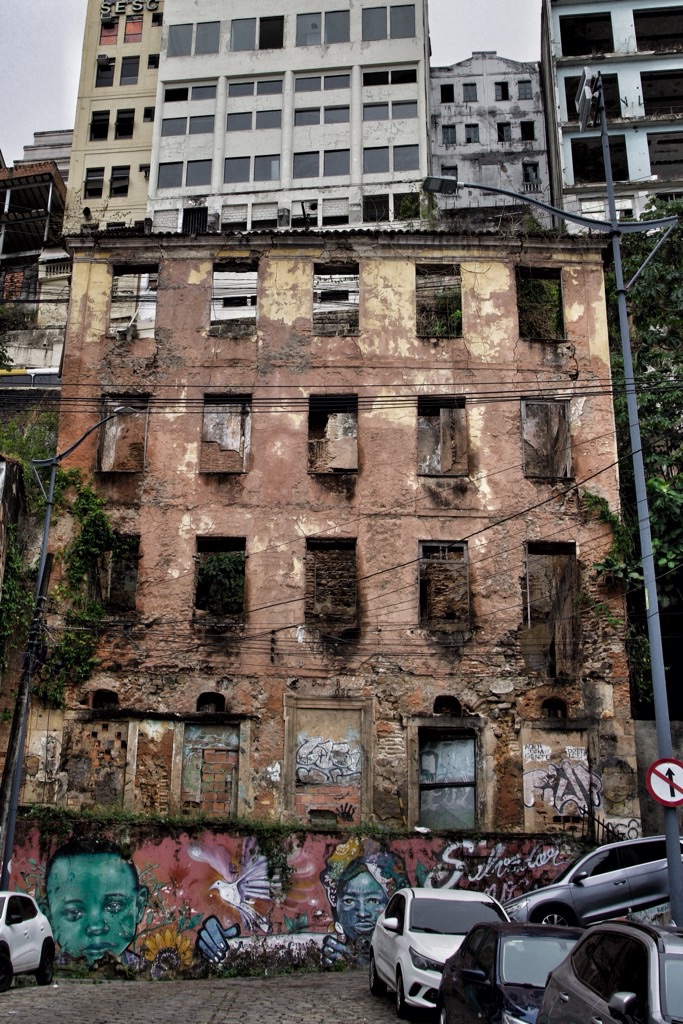
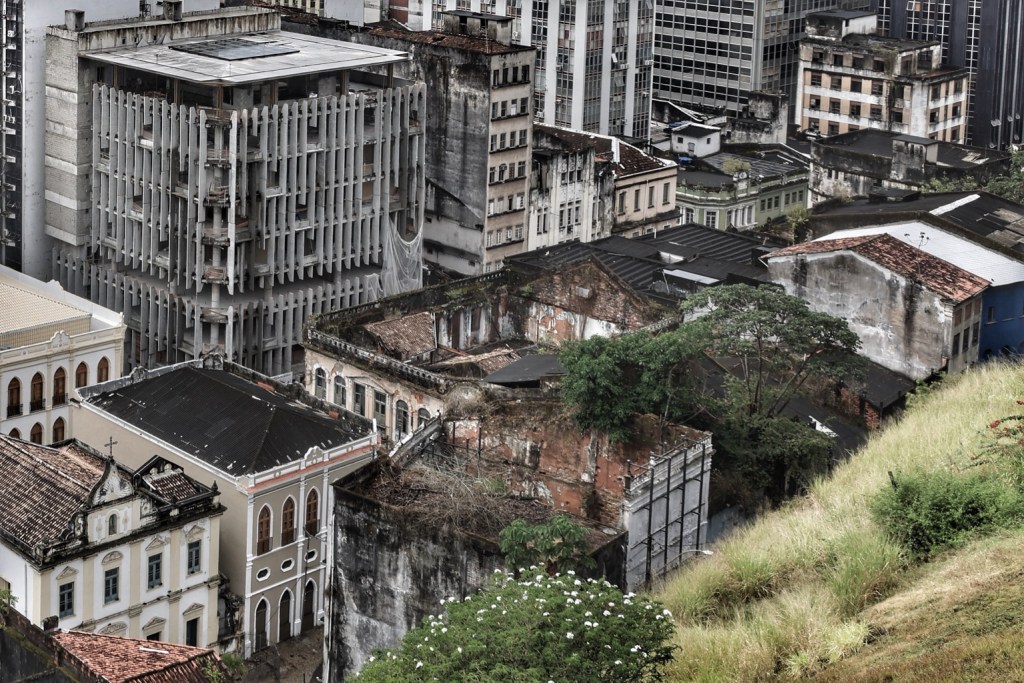
We drove though a wealthier area, Victoria, full of residential tower blocks. But they’ve been built on the site of tree-lined colonial mansions, demolished without care, taking with them any sense of history, architectural integrity, or urban planning. Salvador was granted UNESCO World Heritage status in 1985. At this rate, we wondered how long it will retain it. The city is decaying. One famous church, the Church of São Francisco de Assis, a Baroque tourist highlight is now closed to visitors. The ceiling suddenly collapsed last year, killing a tourist. An area beneath the historic Art Deco elevator that takes you from the shore front up to the old town was literally rotten; a roofless morass of mouldy buildings, left to spoil in the sea air. In any other city, this would be prime real estate but it seems there is no demand, and no inward investment.
In the summer, we’re told this city comes alive; a centre for music and dance. It’s the site of a huge carnival, to match Rio’s famous festival. We saw hints of this, with music and movement in shops and cafes as we toured the city. Certainly, the people here exude the Latin-American spirit.
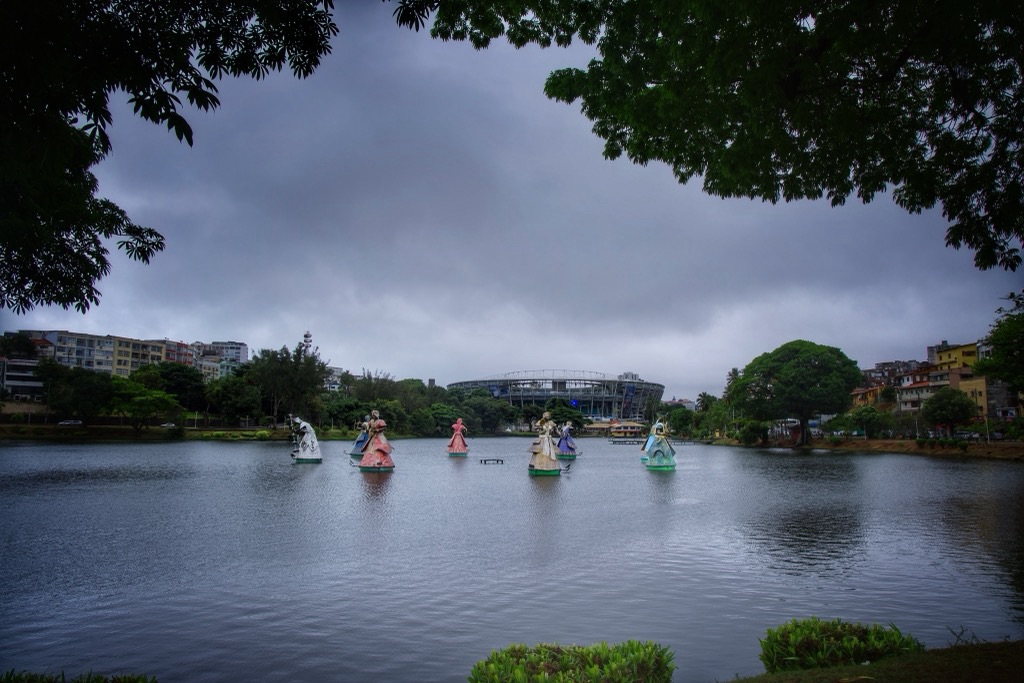
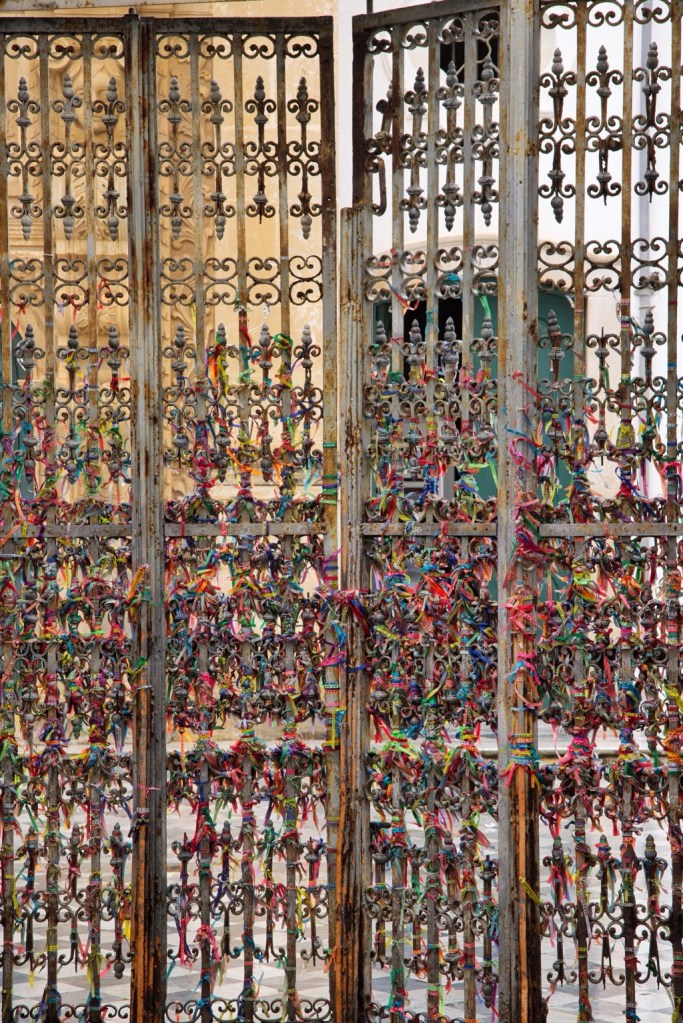
The population is culturally very diverse, with a significant Afro-Brazilian contingent, a hangover from historic slavery. The local religion, Candomble is widely celebrated and practiced, blending a native African religion (Yoruba), with the historically forced conversion to Catholicism. It has survived by followers renaming their Yoruba deities to those of Christian saints – a clever strategy. Today, their deities are openly celebrated; statues of the gods reside in a local lake, and their gods’ representative ribbons adorn catholic church gates and railings. I’ve no idea how this idolatry persists under the strictures of catholicism.
We stopped to taste a local street food vendor’s lime and coconut drink (I immediately started humming the song) – it was excellent. Later, we had lunch near the collapsed church, trying the local Mouqueca – a delicious fish stew made with coconut milk and palm oil. During lunch, 67yr old Ana was giddy with excitement as she got a notification that a chap she’d met in Canada six months ago had received his visa to visit her next week. They’d spoken every day for the past six months. Ah, young love!
The rain persisted, and we were drenched through. After visiting a 3rd church, and picking up lots of grime from grimy streets and grimy seats, we rushed the last stops on the tour to collect our laundry and gratefully retreated to the apartment. Showering and changing, we nipped out for another excellent meal at a nearby restaurant. The food here is good.
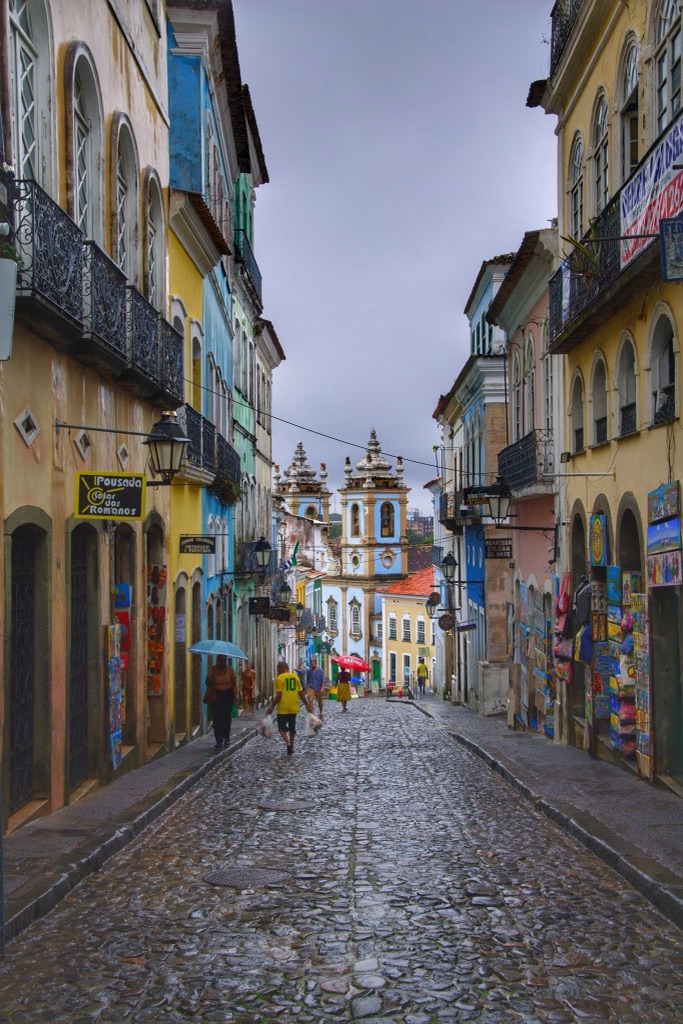
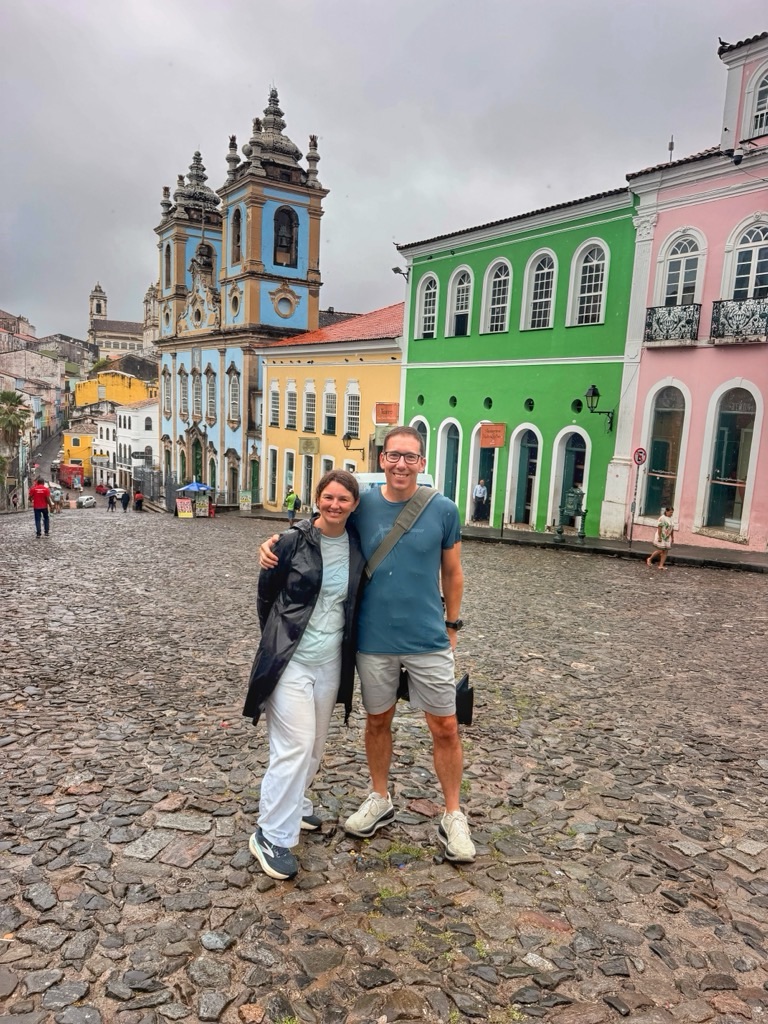
Leaving the next morning, we both agreed that we probably haven’t seen Salvador at its best. This is a city that once shone, but whose decline tracks unabated. Favelas dominate the landscape; 45% of the population live in them. I know this has been a less upbeat bracket of our travel, and for that I apologise, but it’s this isn’t somewhere we’d rush back to. Despite the cultural wealth locked up in its people, Salvador has not been a salve at all.
Rio de Janeiro
Confession. I wasn’t really looking forward to this bit. We have travelled a lot over the years, and many years ago set out to see the ‘new’ 7 wonders of the world – the 2007 list compiled through public voting. The last site on the list for us was Christ the Redeemer. It’s been sat there, unfulfilled for years. It’s not just that we aren’t religious, or that it only made the list due to some concerted effort on the part of Brazil (who ran a campaign ‘vote for Christ’ and made the voting lines toll-free). It’s because Rio has always felt like a city of extremes. Of poverty, of crime, of drugs, of beaches, partying and religious fervour. And the thought of travelling here has felt difficult.
Well, I’m delighted to say that Rio surpassed our expectations. Our visit wasn’t perfect; rain continued here, and our hotel, the Mirimar by Windsor was not the best (unfortunately, all the rains have caused some sewage issues, one of which was steaming right outside the front door of our hotel. Suffice to say, running that gauntlet every day was traumatic). However, rain and stink aside, it really is an amazing city.
Photos of the place rarely do it justice. It’s truly a three-dimensional landscape. With towering Avatar-like mountains, often flowing in cloud; long, sandy beaches, dense forest, and colourful, architecturally inviting urban infrastructure. It’s a real treat for the eyes.
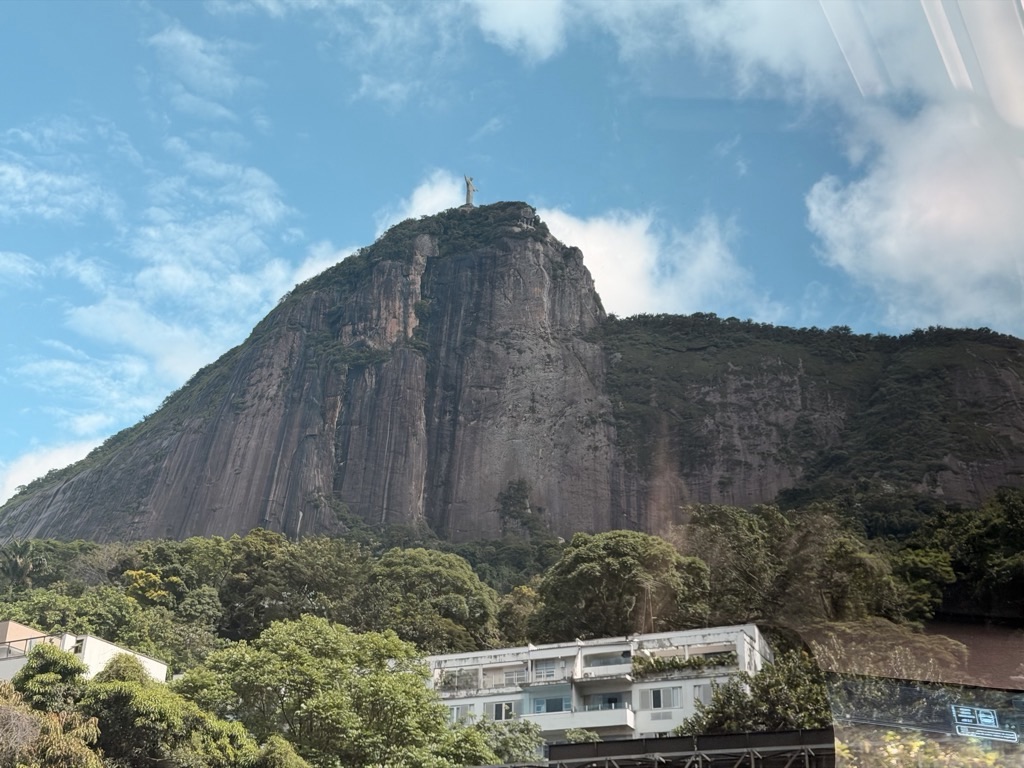
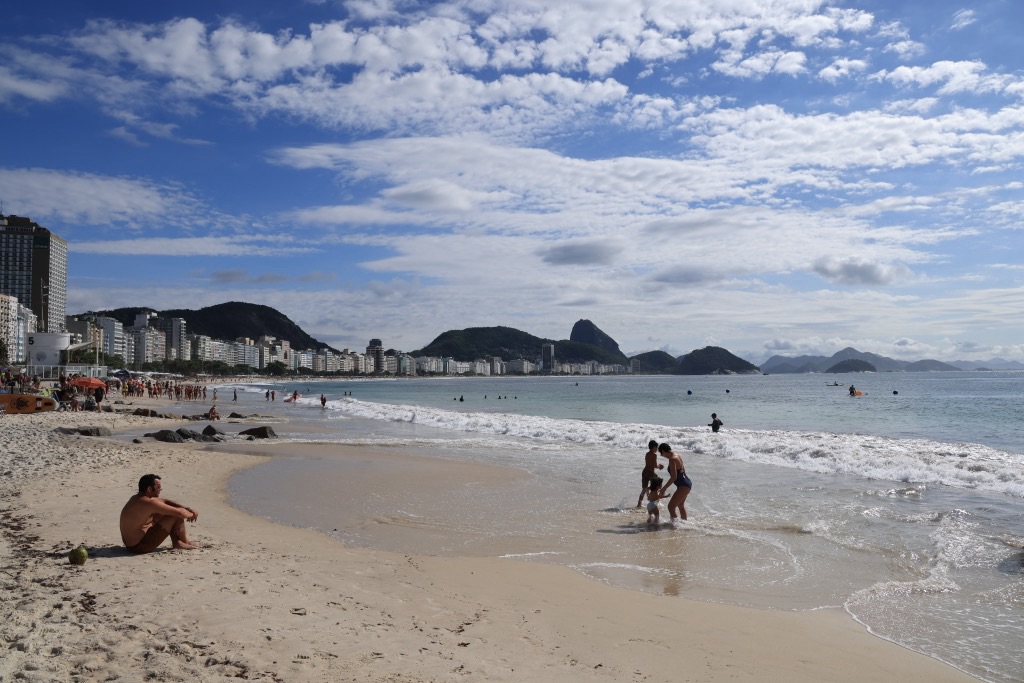
We were staying at Copacabana… Yep, you’re humming the song already. Obviously a more touristy spot, but we figured a safer one to explore on foot. After checking in (holding our noses), we went for a walk along the long beachfront, past bars and endless volleyball nets along the beach. I took the opportunity to run on the flat running beach front running path, while Shona went to the hotel gym. We ate that evening at a decent pizza place, which was deeper into the city, darkened streets now glistening with the rain.
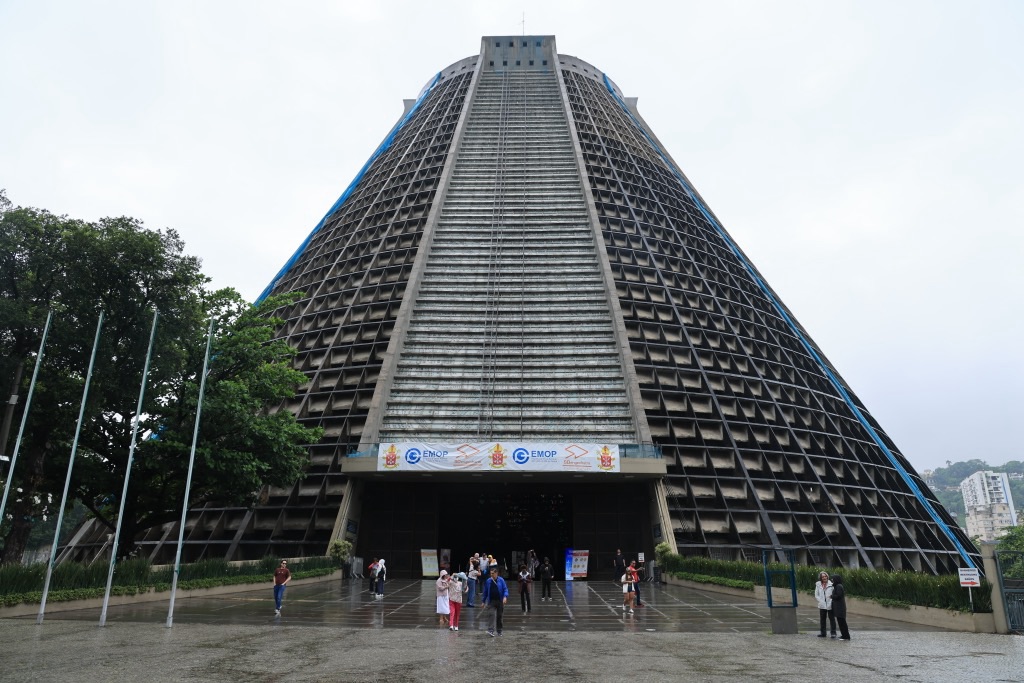
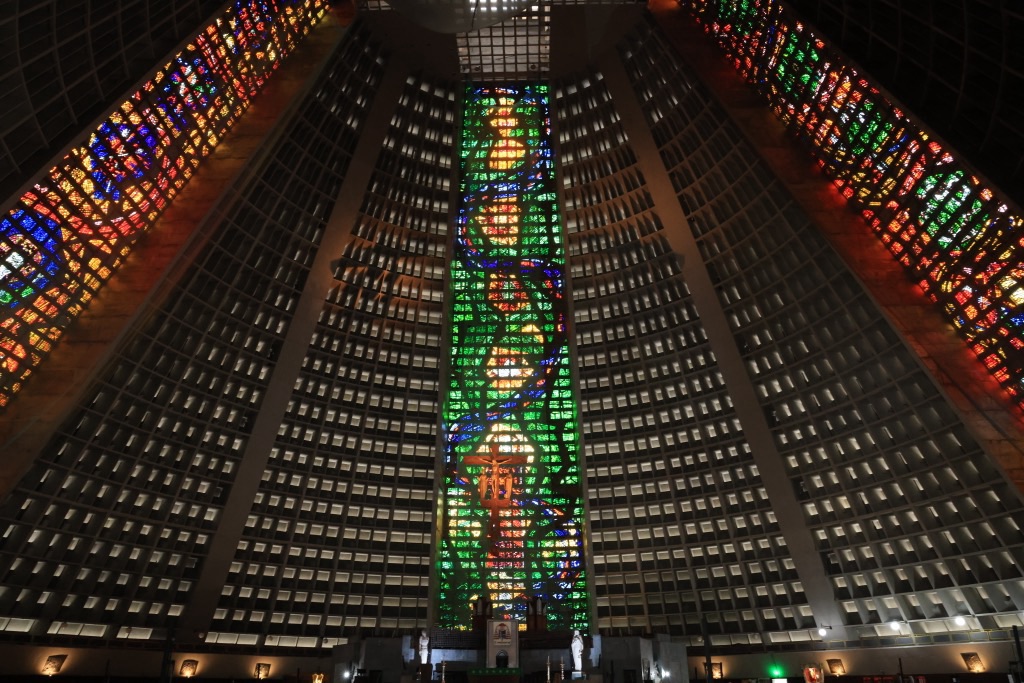
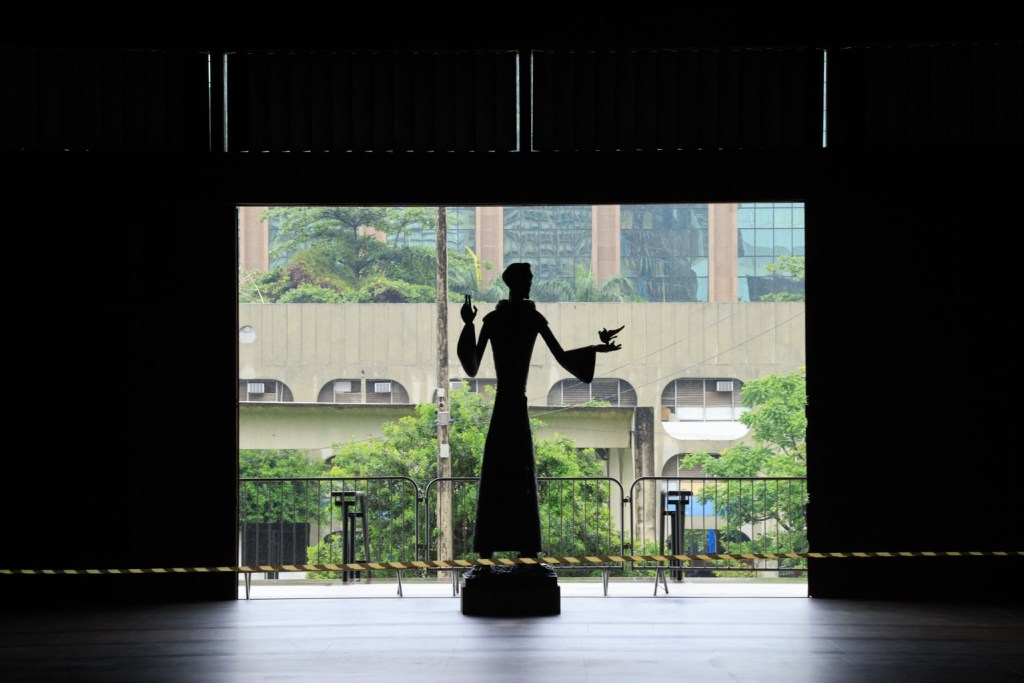
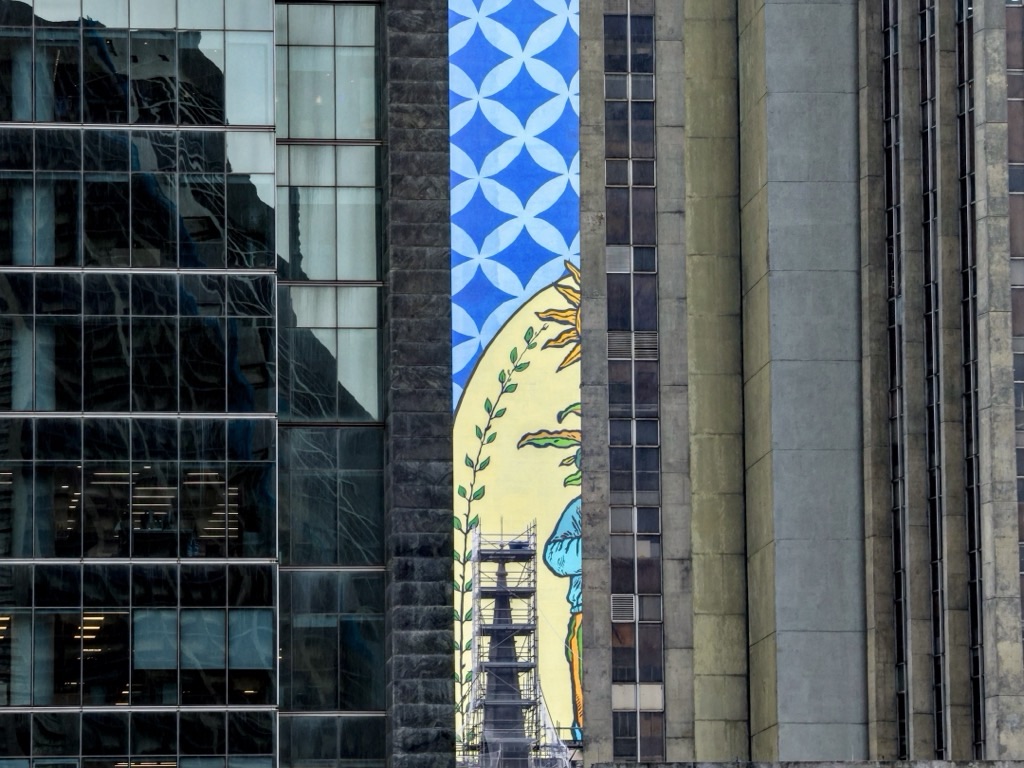
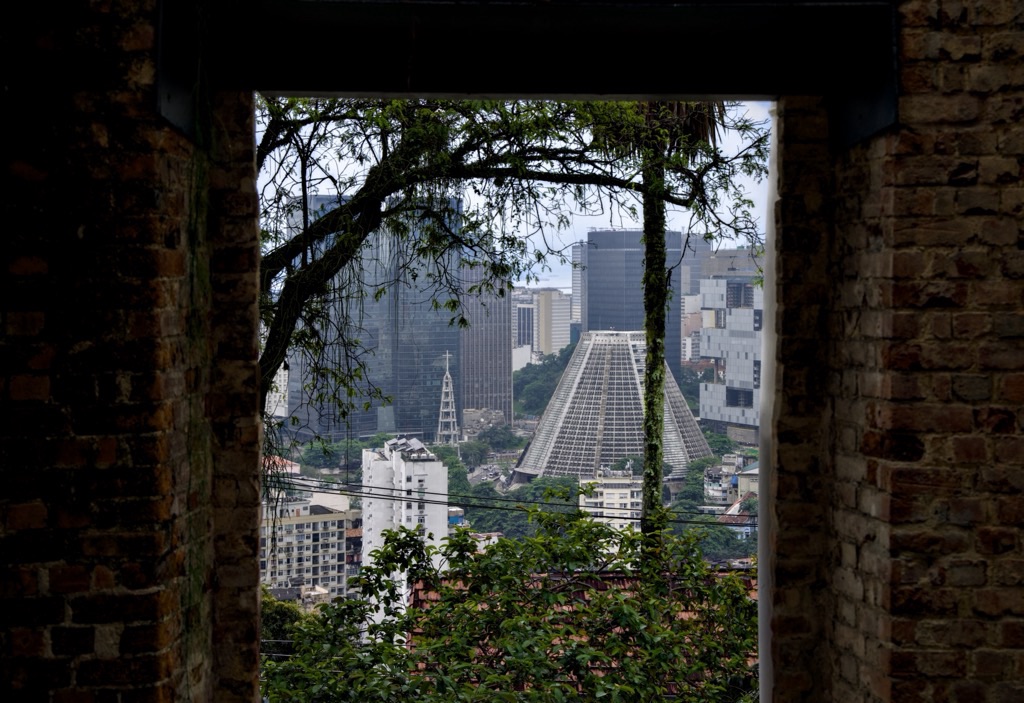
The following morning, we were met by our guide, Meilin and driver Maurico for a tour of the city. The tour had been recommended by one of Shona’s friends, Katrina, and it was definitely worthwhile. Meilin was a lovely local guide, who, similar to Ana in Salvador, had changed careers later in life. She announced that she’d start by showing us a cathedral. Our hearts sank. However, Rio’s first revelation was it has a very excellent cathedral. The Metropolitan Cathedral of Saint Sebastian was designed by Edgar de Oliveira da Fonseca in a brutalist style, inspired by Mayan step pyramids (think Chichen Itza). It was an imposing concrete structure from the outside, but once inside, the waffled design and huge stained glass panels create an airy and compelling light show.
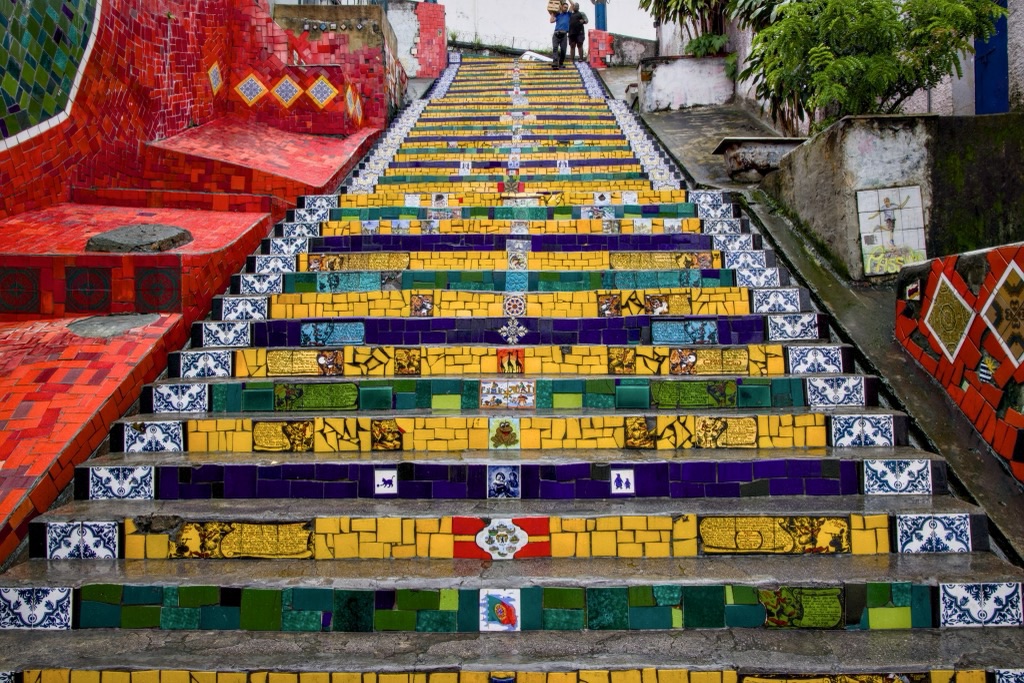
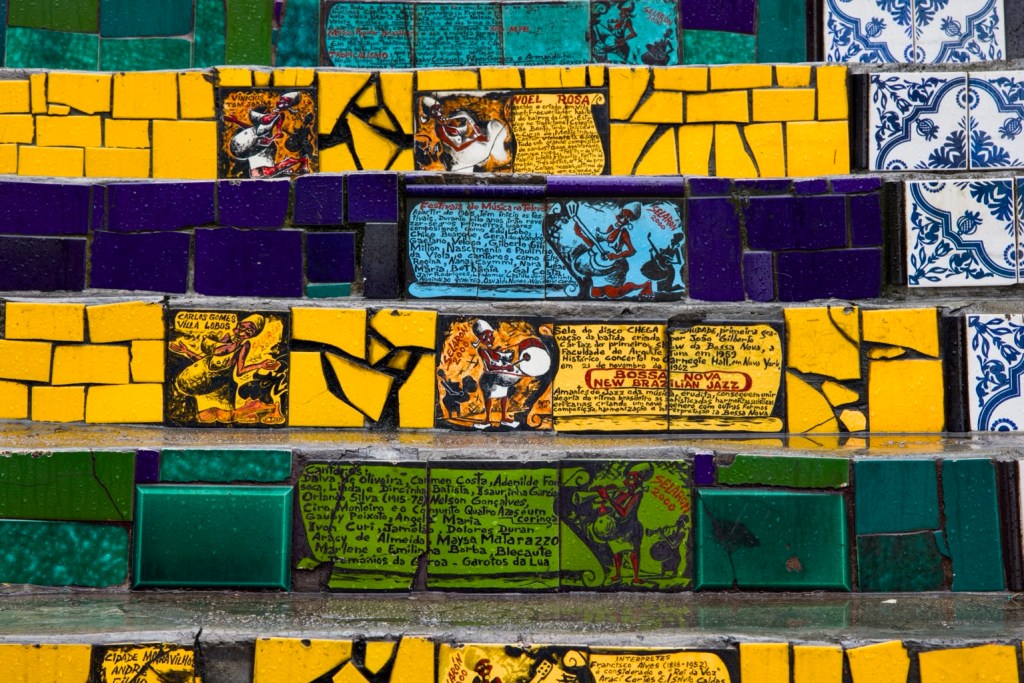
We next visited the Santa Teresa area, known for art and artists, and home of the famous tiled steps; a lifetime’s work by Jorge Selaron, who after starting to tile the steps in his neighbourhood as an art project, started receiving international donations of painted tiles, and the area took on a life of its own.
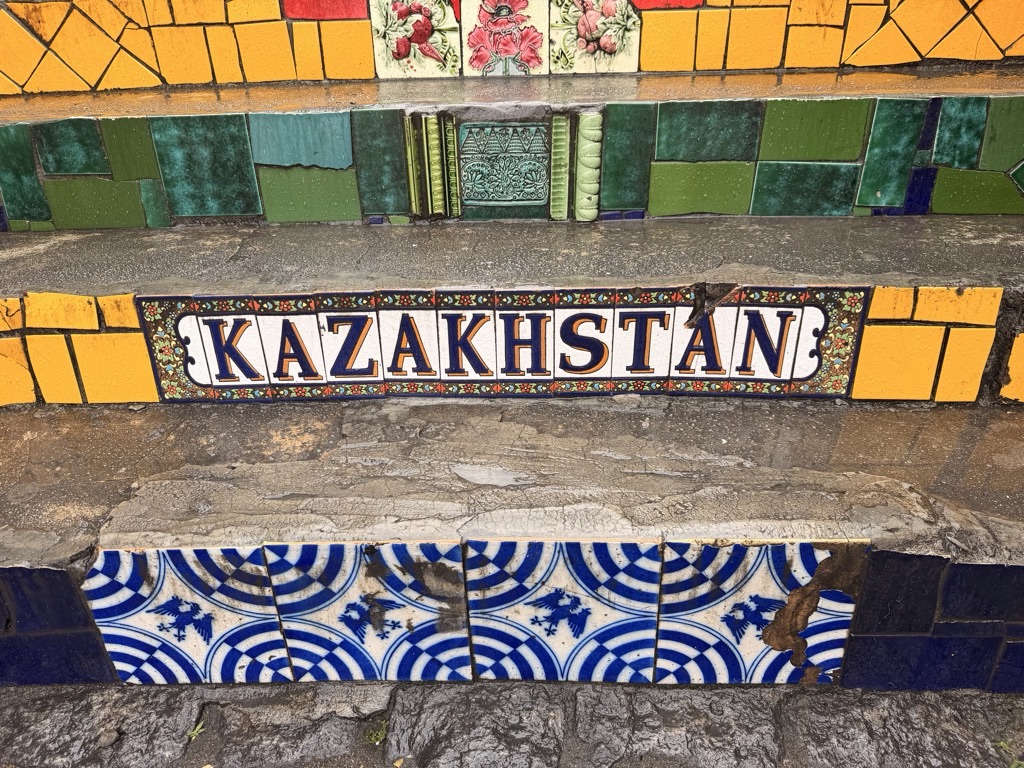
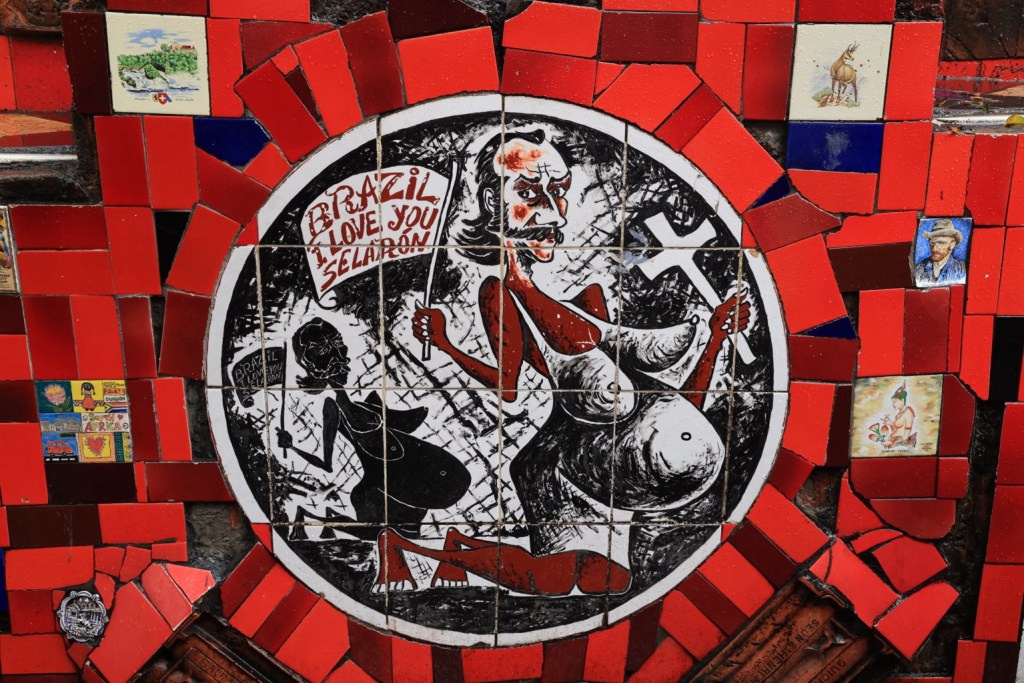
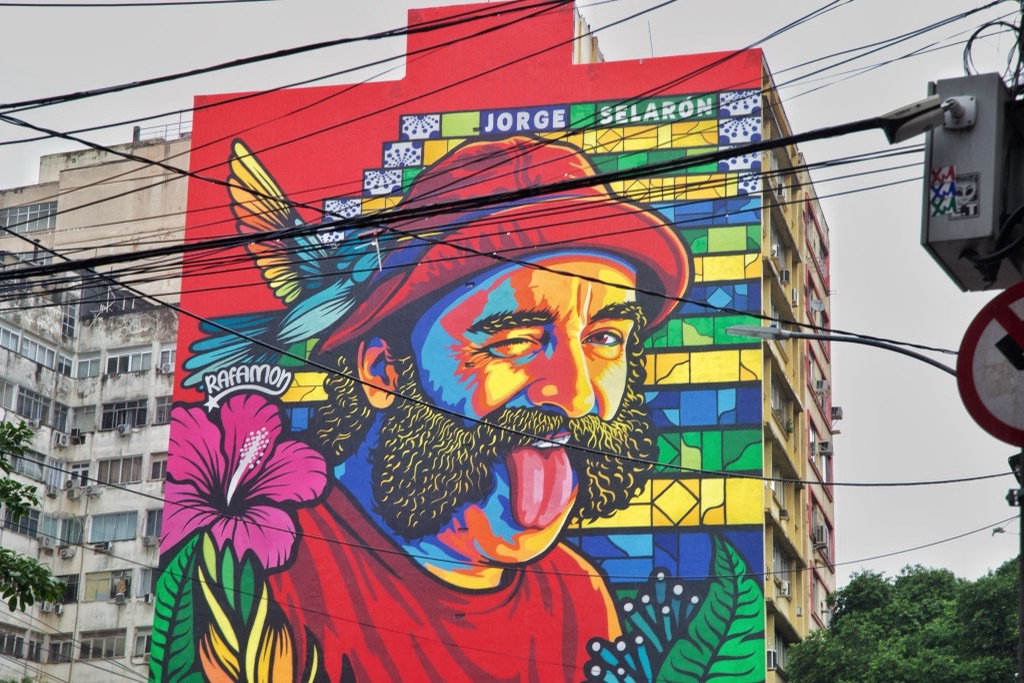
Above Santa Teresa, we drove up to an abandoned house, spotting the favelas made famous in the Fast and Furious films en route. The abandoned house was reclaimed by the city and is now repurposed as a gallery and viewpoint. We were not awarded with a view of Christ the Redeemer – shrouded as it was, in cloud, but did see much of the city scape.
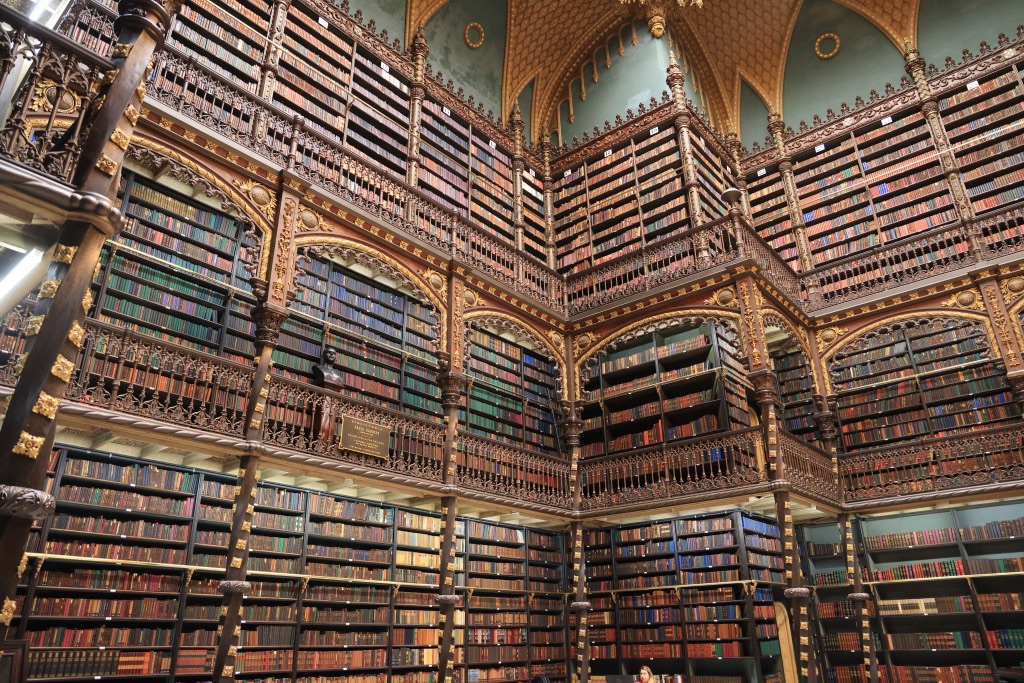
Afterwards, following a brief stop for Shona to pick up a cheap pair of hiking boots (required in a week or two), we visited the beautifully preserved (and privately funded) library, the Royal Portuguese Cabinet of Reading. A towering gothic building with stunningly well preserved collections of Portuguese language books.
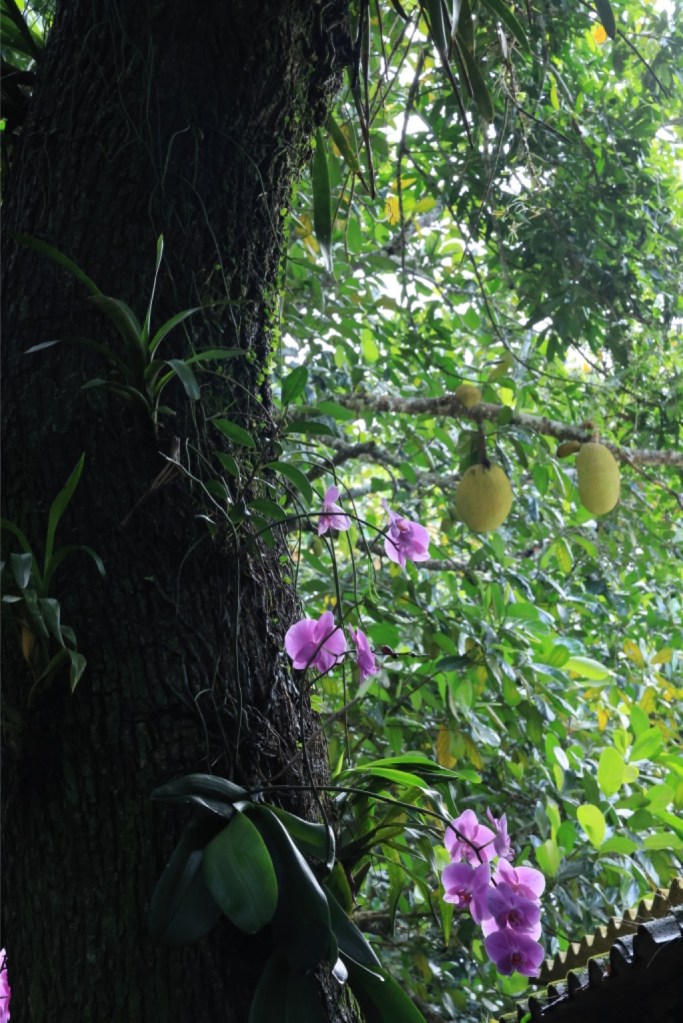
Our next stop was the statue itself, and we headed to the funicular railway to take us up through the Tijuca forest to the statue. In 1861, Emperor Dom Pedro II of Brazil ordered massive replanting of this forest, following depletion of the city water supply, which had been destroyed by coffee and sugarcane monocropping. Unfortunately, he used the invasive but fast-growing Jackfruit tree as the primary crop, and now this forest is an enormous Jackfruit plantation. This is controversial not just because of the invasive nature of the tree (it outcompetes native trees), but also because it was originally introduced here from Asia by slave owners, as a cheap source of highly calorific food for their slaves.
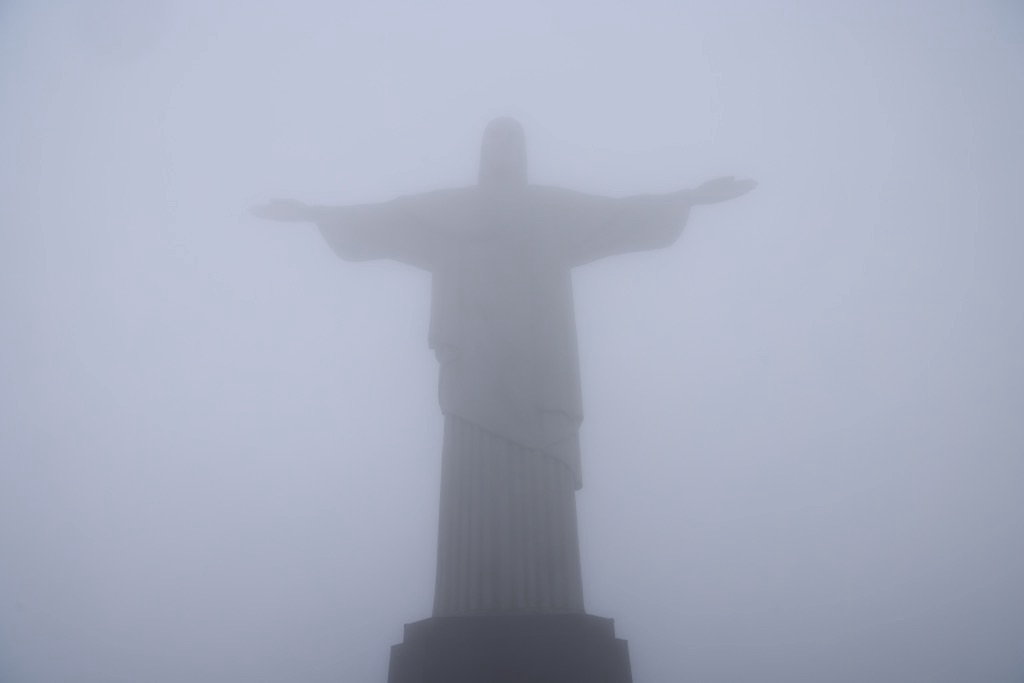
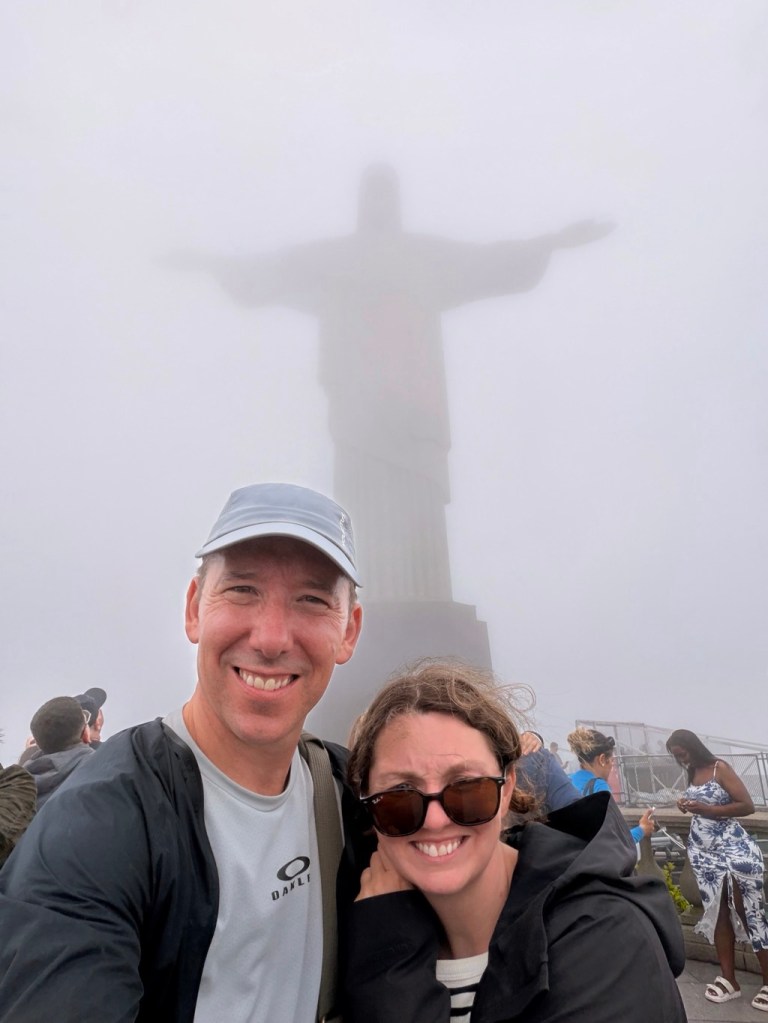
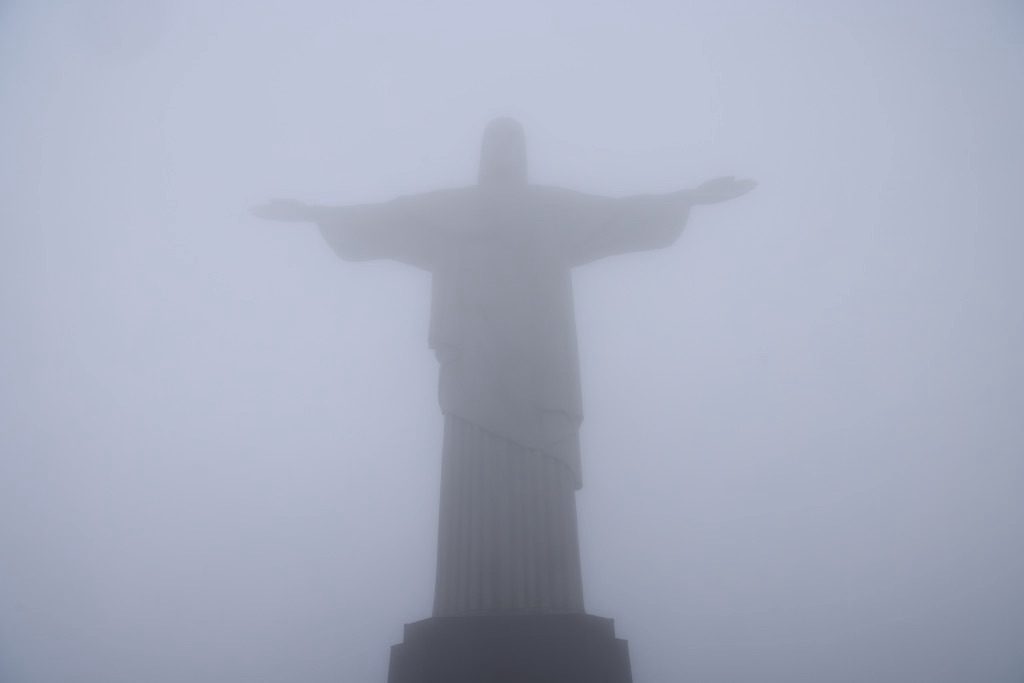
We reached the top of the funicular, which was completely embedded in dense cloud. Hiking up to the statue itself, we were rewarded by a shadowy figure of Jesus looming over us and the gathered crowds. We weren’t too bothered though; it added atmosphere. I have to say though, we have seen bigger Buddhas! It’s really not that big.
The cloud was blowing in and out and we decided to gamble on getting the cable car up to Sugar Loaf mountain. While I knew that it was named after Sugar Loaf, I realised I didn’t actually know what this was (assuming it was a cake). Apparently, it’s a mould where crystallised sugar cane would be melted into for transporting the precious cargo to Europe, at a time when sugar was valued higher than gold. In shape, this ‘sugar loaf’ is identical to that of the mountain.
We stopped for lunch at the first cable station, then, as if with biblical intervention, the clouds parted as we topped out onto Sugar Loaf itself, delivering great views of Rio de Janerio from this iconic peak.
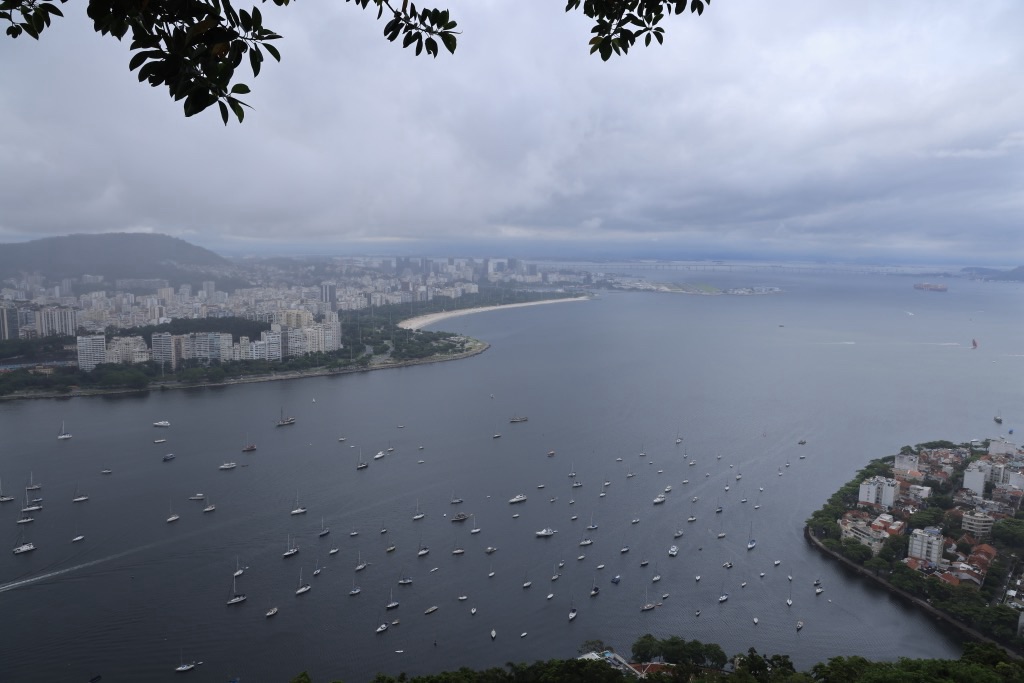
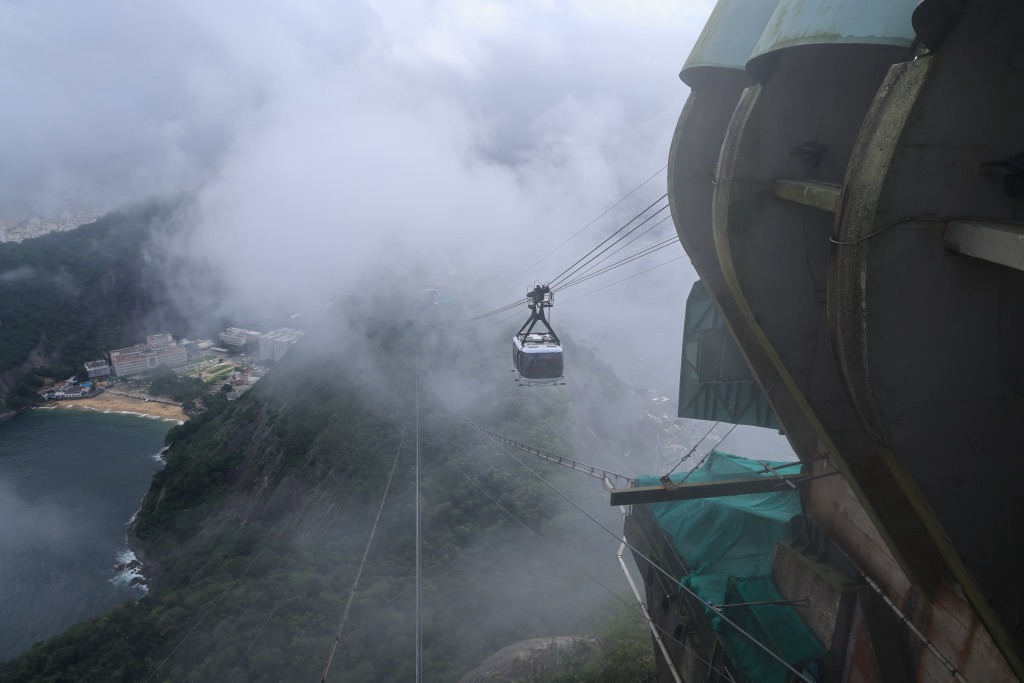
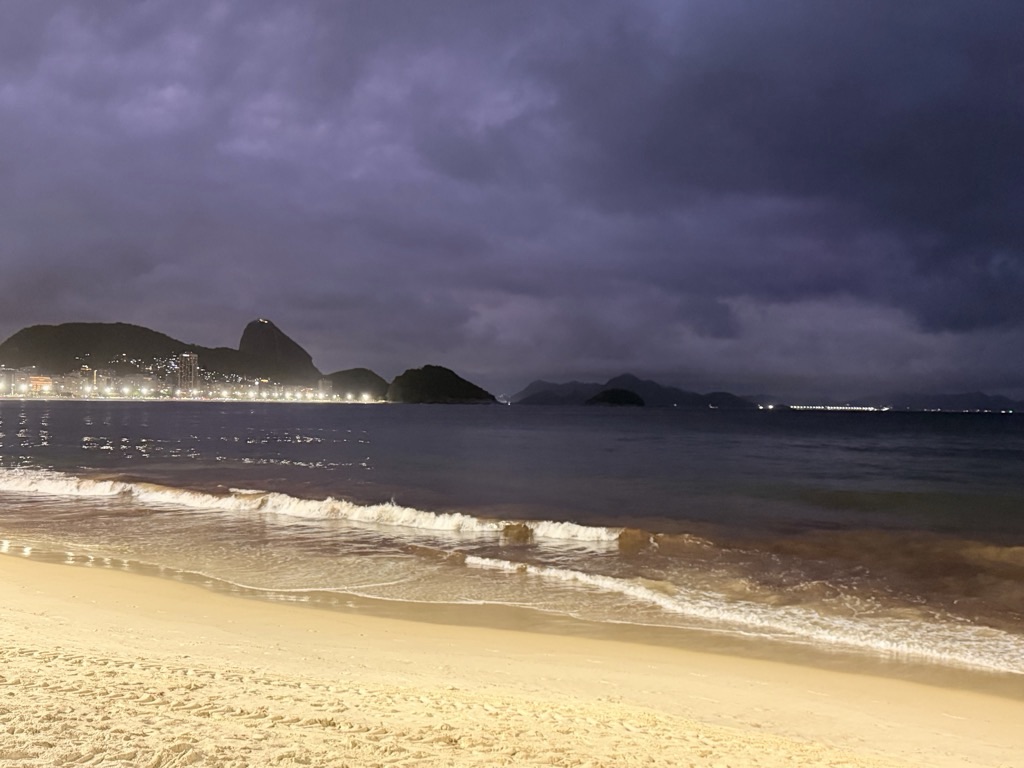
That evening, we had a drink at one of the many beachside bars, and watched as a few evening swimmers braved the large breakers and black, polluted seas of Copacabana. We’ve had a very brief visit to this city. Like so many places in South America, the pockets of poverty are palpable, but the landscapes and people are beautiful. Rio suffered from the decision to move the capital to Brazillia, and has seen a decline in many of its industries since. However we can see how this place stands out as one of the world’s truly iconic cities. It would be amazing to see it in the sunshine, and more amazing still at Carnival.
We’re still in Brazil for a wee while longer, so expect one more, somewhat shorter post in a few days time.

