
Shkodër, Albania
Our route needs us to be in Turkey by the 22nd of August. We had a choice from Montenegro: Either we head north via Serbia, or east via Kosovo to reach Bulgaria. Or, we make our way south through Albania/North Macedonia to Greece, before pivoting back up through Bulgaria. We checked the long range weather forecasts, and while these heatwaves are still hovering about, we decided that there was just too much of a pull towards Greece, so we gambled on south.
Leaving Montenegro, we chose to head inland, avoiding the congested coast, and making the border crossing at Hani i Hotit / Bozhaj. The driving was fairly typical of what we’d come to expect in Montenegro, but it racheted up a level as we approached Albania. The border queues were long, adding an extra hour to our planned journey, and entering Shkodër, our stop for the night, the traffic became pretty nuts. We could feel the distance from the Schengen area, as driving became more erratic. I found myself just relenting and going with the flow, where giving way on roundabouts is a sign of weakness and a certain degree of ‘assertive optimism’ is in order.
We were staying in The Chicago Hotel, a grandly named establishment, which was anything but. After a challenging arrival (circling to find parking down crazy ‘one-way’ (actually two-way) streets, we eventually got a space. It was 40ºc and felt every bit of it. We found a local restaurant for a late lunch and enjoyed a little aircon before checking into our basic room. That afternoon, we explored the local area, but after a long drive and with the oppressive heat, we declined to head up to Rozafa castle, the grand ruin on the hill. Instead we stayed local, and dining in the old town near our hotel. It was a pretty, gentrified area with decent bars and restaurants, but the surrounding streets quickly deteriorated, showing the relative poverty of the area; more reminiscent of North Africa than wider Europe.
We were only in Albania for two days and with me being ill, we didn’t give it a fair crack of the whip. However, this was more challenging travel. The chaotic roads and fruity driving, the border crossings, the heat, it being largely cash-only (even petrol stations only take cash), and the big language/alphabet barrier, all made for a more difficult stint.
Lake Ohrid, Macedonia
We pushed on the next day, in what became the longest driving day so far. Estimated at 3hr 30m, it took us 6 hours to get through Albania and into North Macedonia. Albania was slow – most of the roads there are single-lane and the speed limits are low. While there were some lovely sections, through mountains on glorious winding roads, and there was obviously investment to improve them – with huge infrastructure builds of new tunnels and flyovers underway; sadly none were in operation for us.
Then there was the border at the Qafë Thanë mountain pass. This took a Very Long Time. Many sweaty men kept getting out of their cars, standing hands on hips, grumpily smoking while staring at the lack of movement in cars ahead. We eventually realised they were stoating about because they didn’t have aircon in their cars and it was marginally cooler to posture noisily outside than within. Poor buggers.
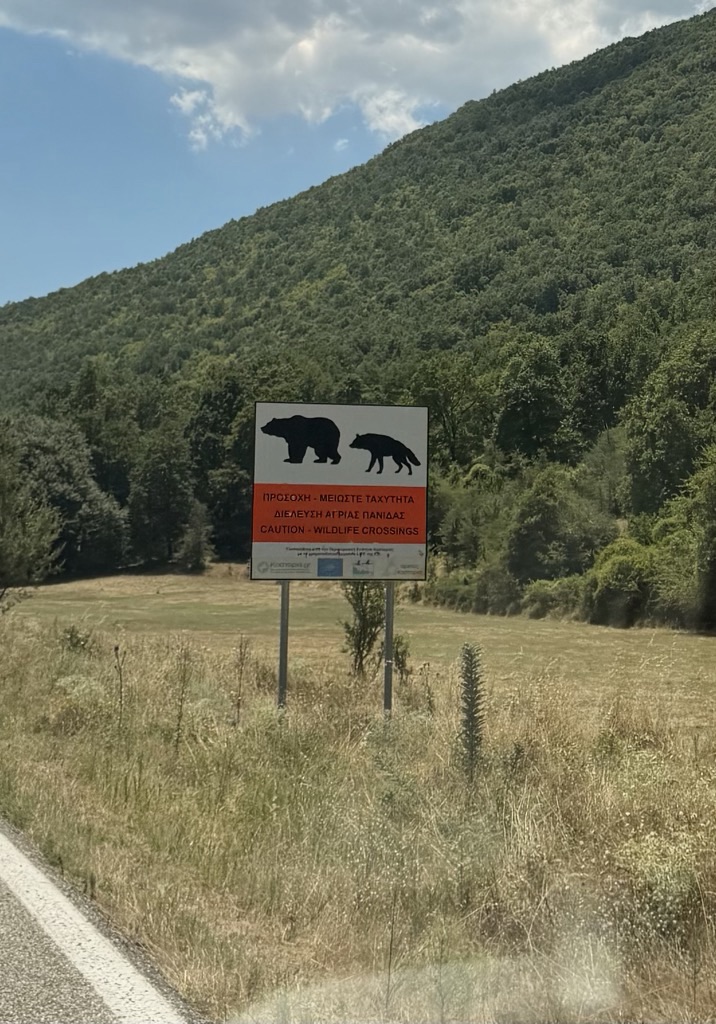
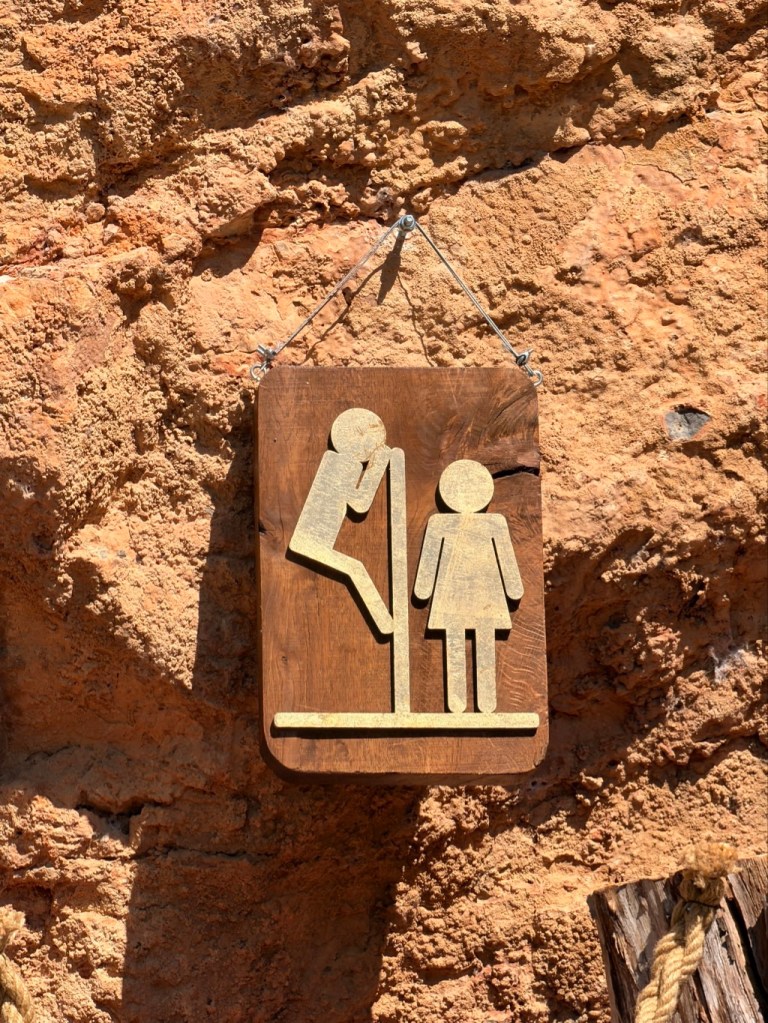
One thing we’ve become quite adept at is fluid-management. Driving so much requires careful monitoring of inputs and outputs – particularly when you’re minimising stops. This border was a more challenging one, particularly where previous border crossings have proven less than sanitary. But we were eventually through, with Shona managing the customs and frontier insurance administration admirably (we had to buy ‘Frontier Insurance’ both here and in Albania to give us 3rd party cover to drive. €50 each; it stacks up!).
Once over the border, everything suddenly seemed much more ordered. We stopped for fluid-management, and took on fuel. The roads were good, the driving improved, and we smoothly sailed around Lake Ohrid, parking just outside the old town of Ohrid on the north east of the lake. We grabbed our day bags (avoiding dragging the big cases), and wandered down to our lovely Airbnb for the next two nights.
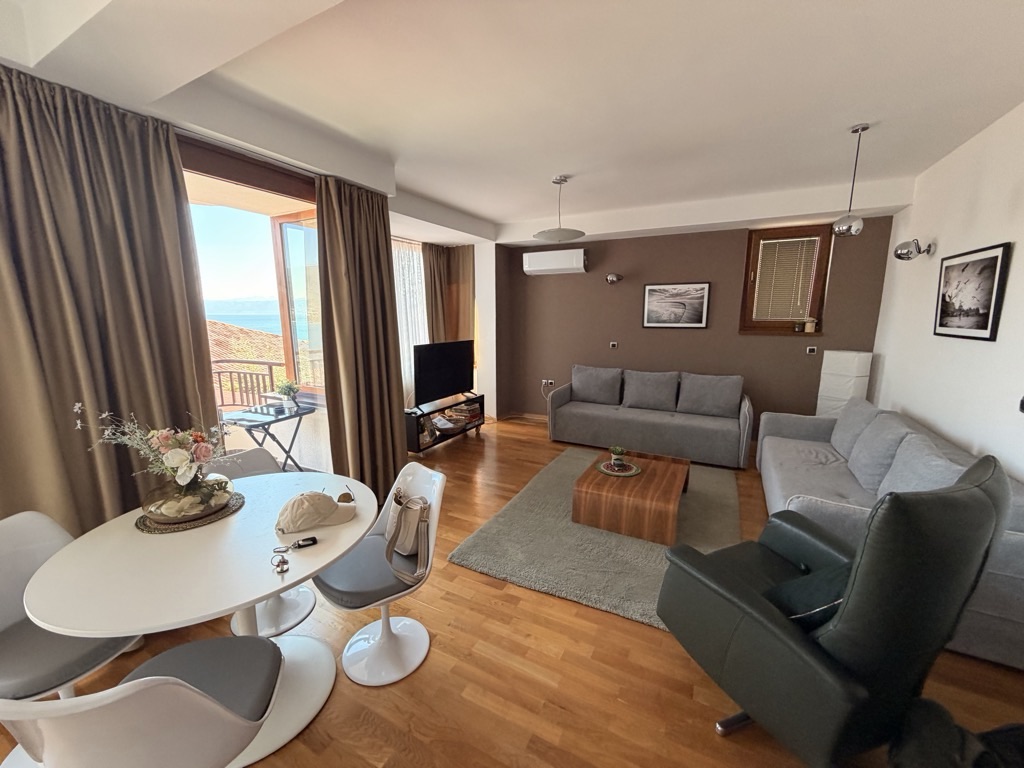
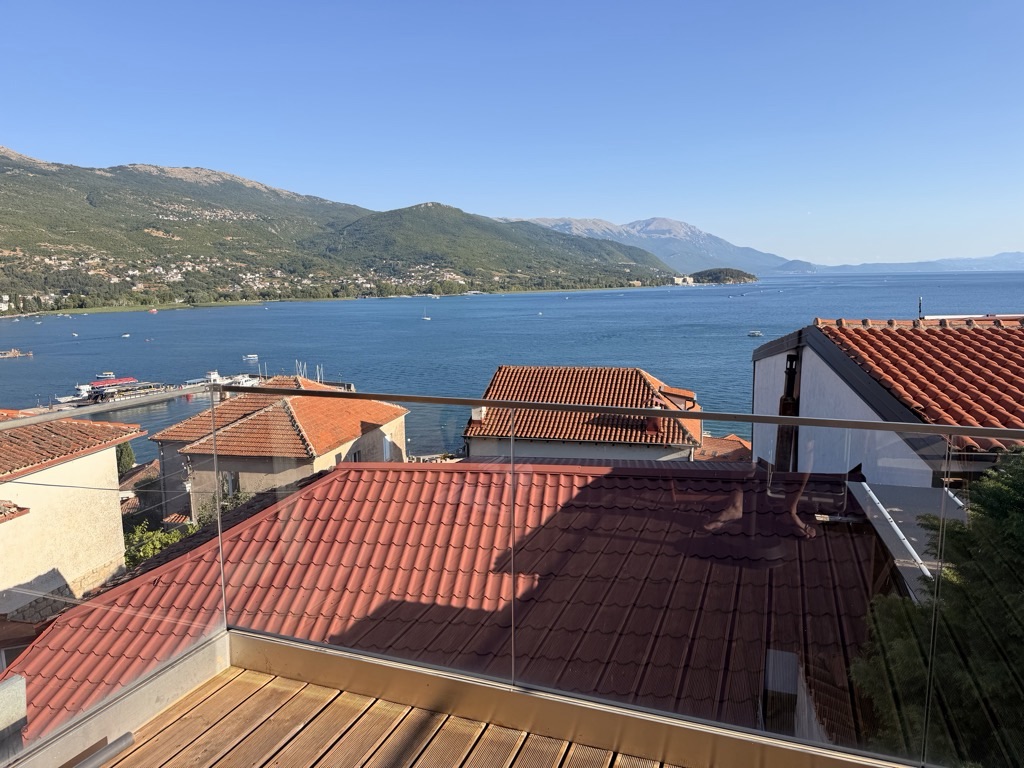
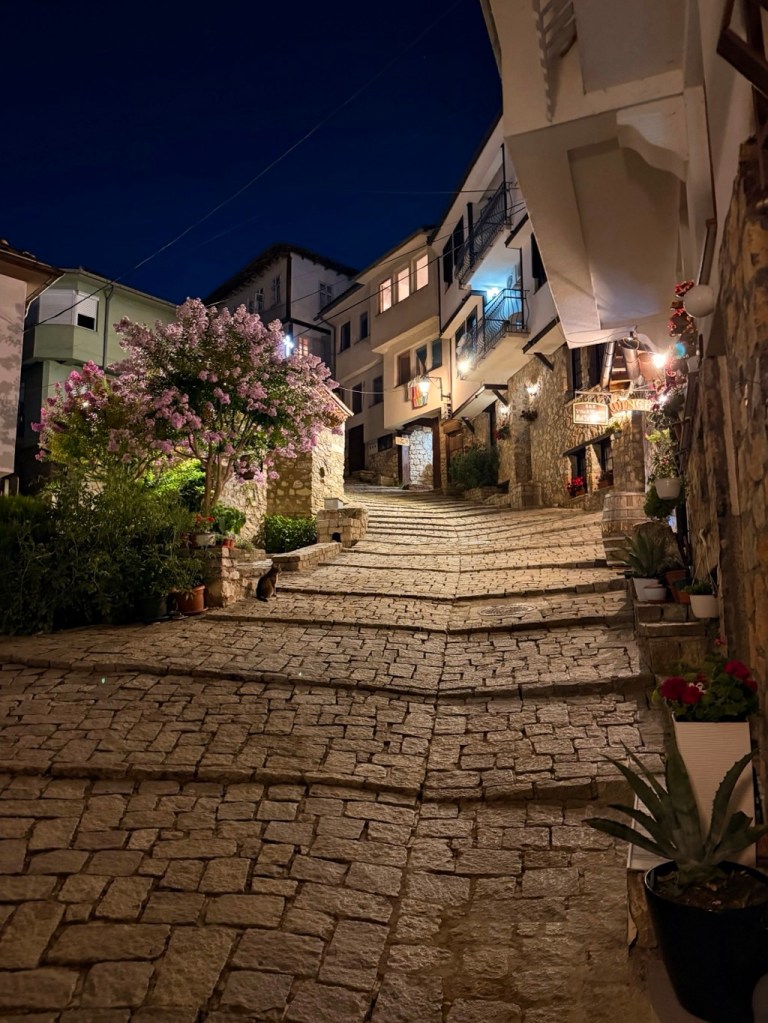
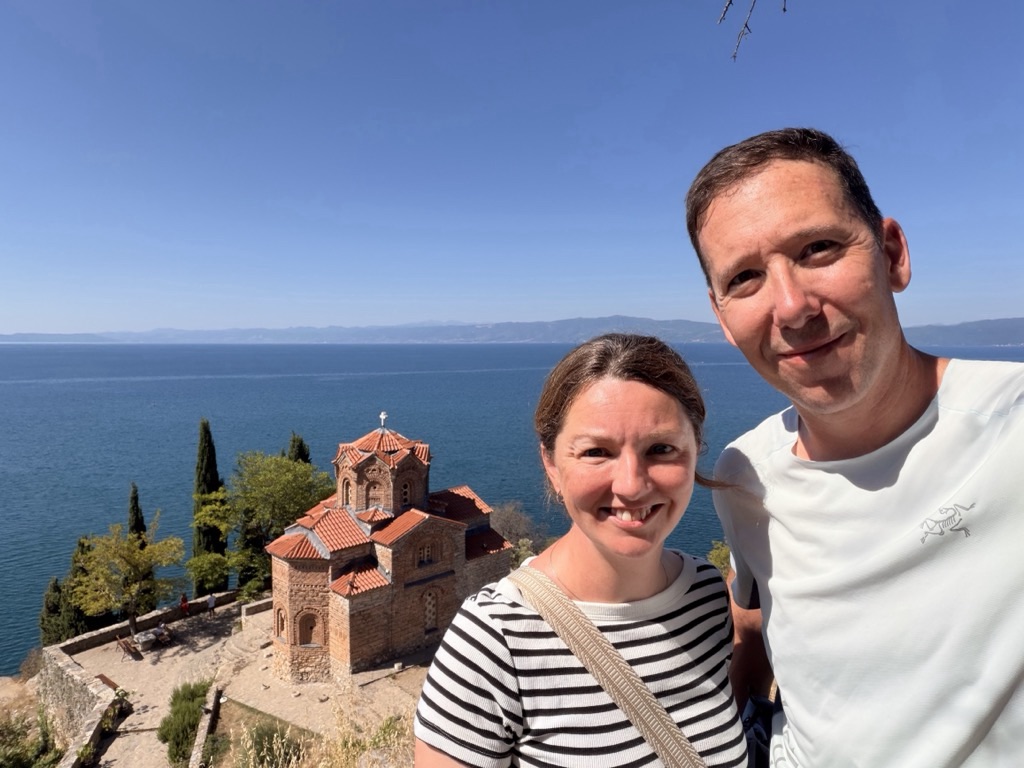
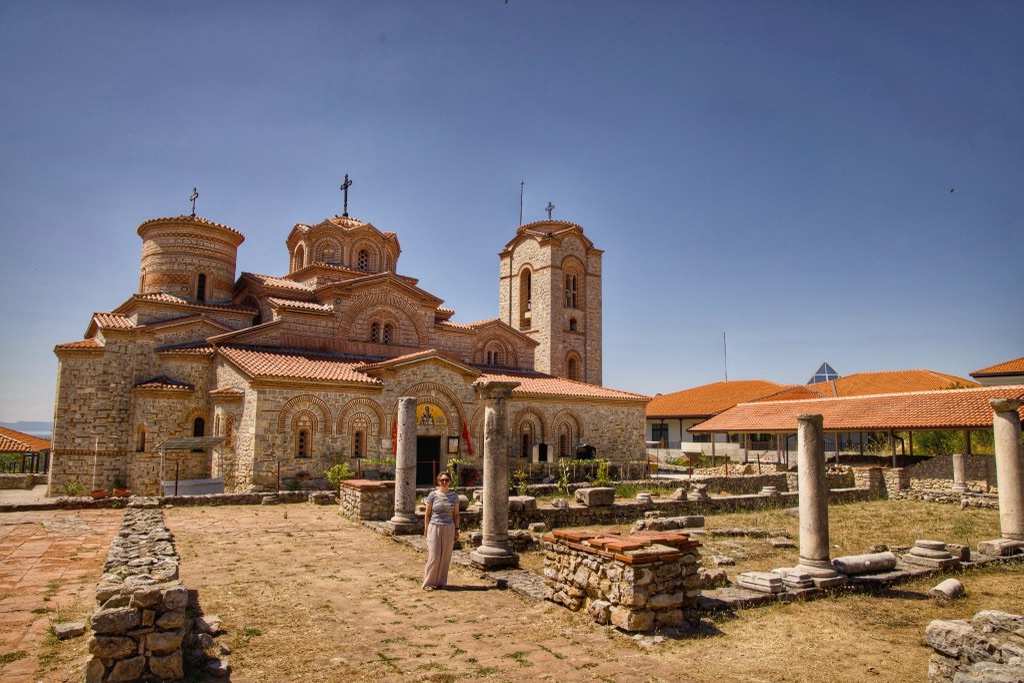
Ohrid was outstanding. Without hyperbole, this place is a genuine gem – and not one that’s widely known about in the UK. In fact, we heard very few British voices when there, with the majority of visitors being either locals or Albanians, with a smattering of other European languages. Thankfully, English was still the lingua franca!
600m above sea level, Lake Ohrid benefits from a slightly cooler climate than surrounding areas, and is fed from higher lakes in the surrounding mountains, providing beautifully clean water. It’s one of the oldest and deepest lakes in the world. Ohrid town itself is an ancient place, with a castle whose foundations were from 400BC, and churches with origins from almost 1000 years ago. Surviving the breakup of the Roman Empire, Ohrid was part of the Byzantine Empire and subsequently became a melting pot of many religions, the marks of which are seen all around the old town. It’s been part of Serbia, Bulgaria, Albania, and Yugoslavia, before becoming part of North Macedonia in 1999.
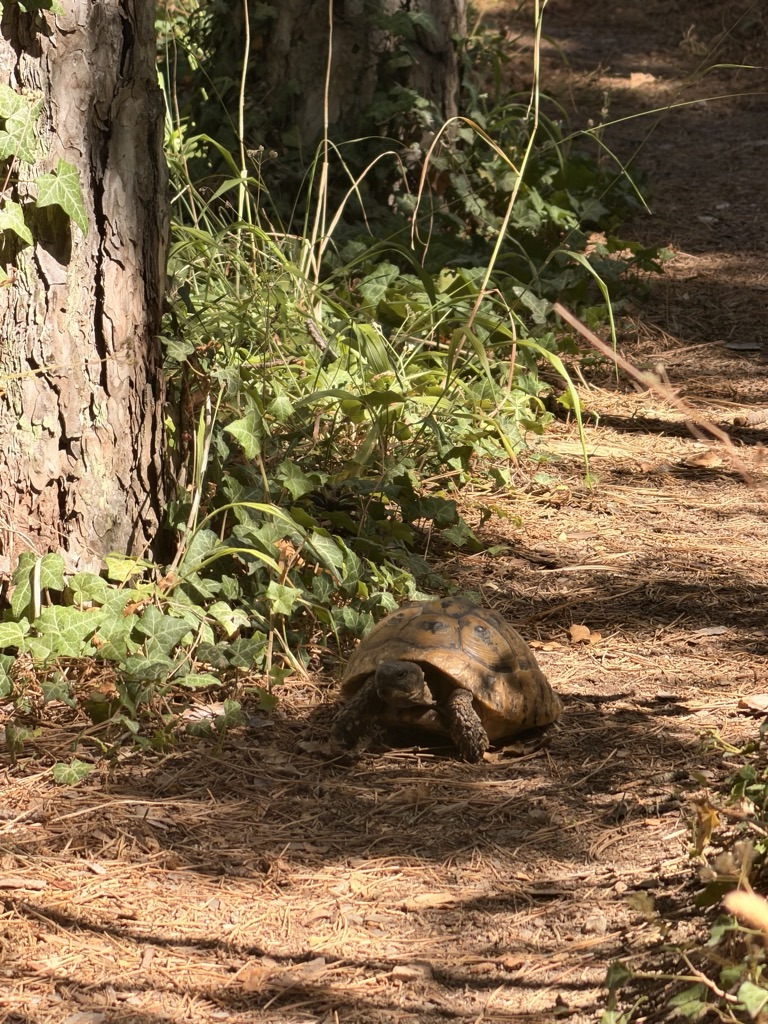
We spent an idyllic two days here, wandering around the town, visiting the castle, churches, narrow streets and restaurants and taking a boat ride along the lake. Wild tortoises roam here, a surprise to us, but when we enthusiastically mentioned it, received a grunt about them ‘being pests’ from a local. A lovely couple of days, which trounced both Kotor and Como for a sea/lakeside holiday, and somewhere we may well return in future.
Kastoria, Greece
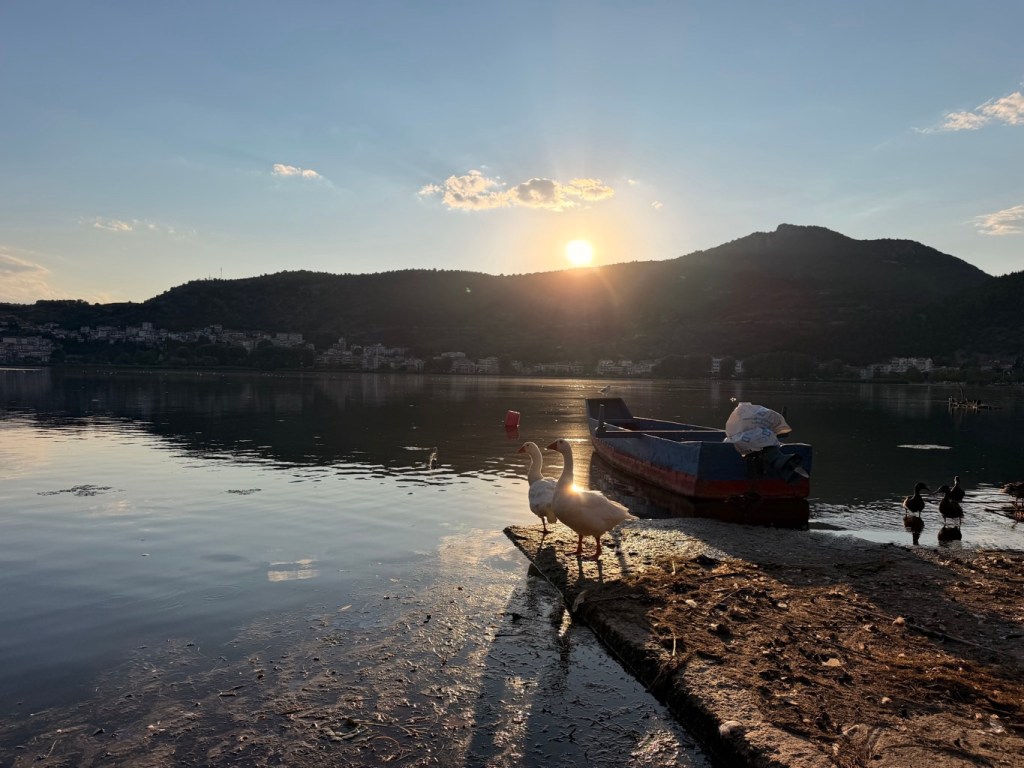
Reluctantly, we left Ohrid on Monday 3rd August, and made our way south to Greece. Having to force the Satnav to take the longer route, we avoided two further Albanian border crossings, and crossed into Greece without fuss. Surprisingly, we both felt ourselves relaxing as the familiar EU ground led us deeper into Greece. We drove the next hour along stunning, empty, mountain roads, arriving at Kastoria early that afternoon.
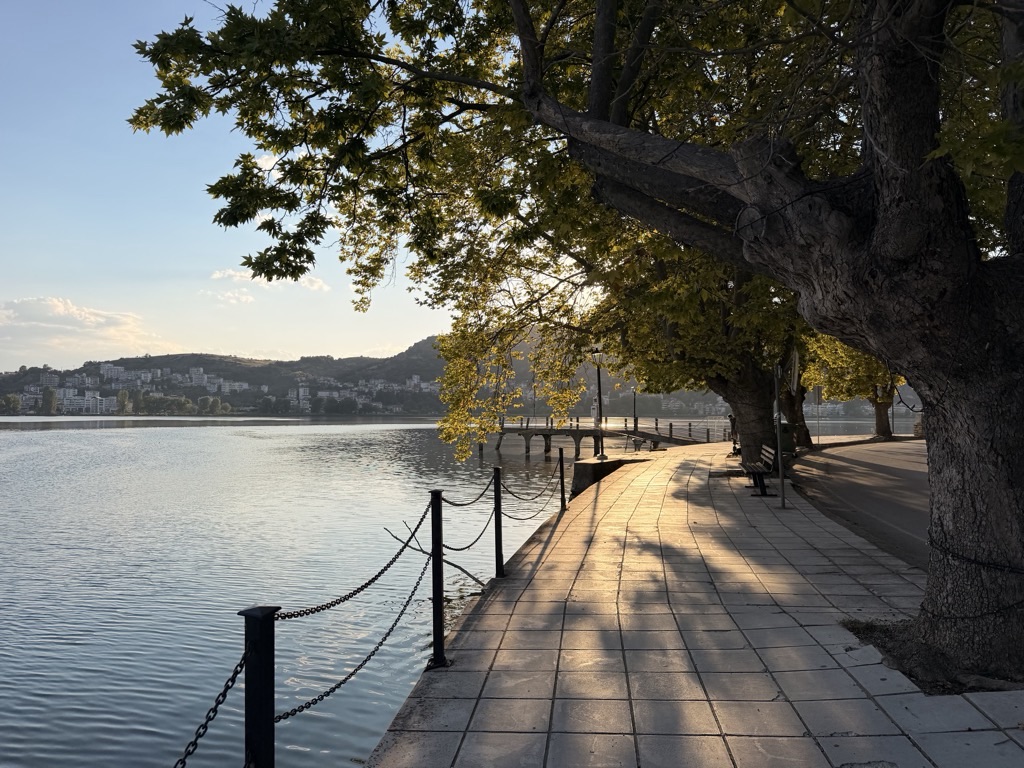
Unfortunately my aforementioned cold had not abated and after checking into our grandly-named-but-not-in-reality Orologopoulos Mansion, I conked out for a few hours while Shona went for a run, exploring the local area. On rising a few hours later, we took a gentle stroll along Lake Kastoria, and had a bite to eat before retiring for the night.
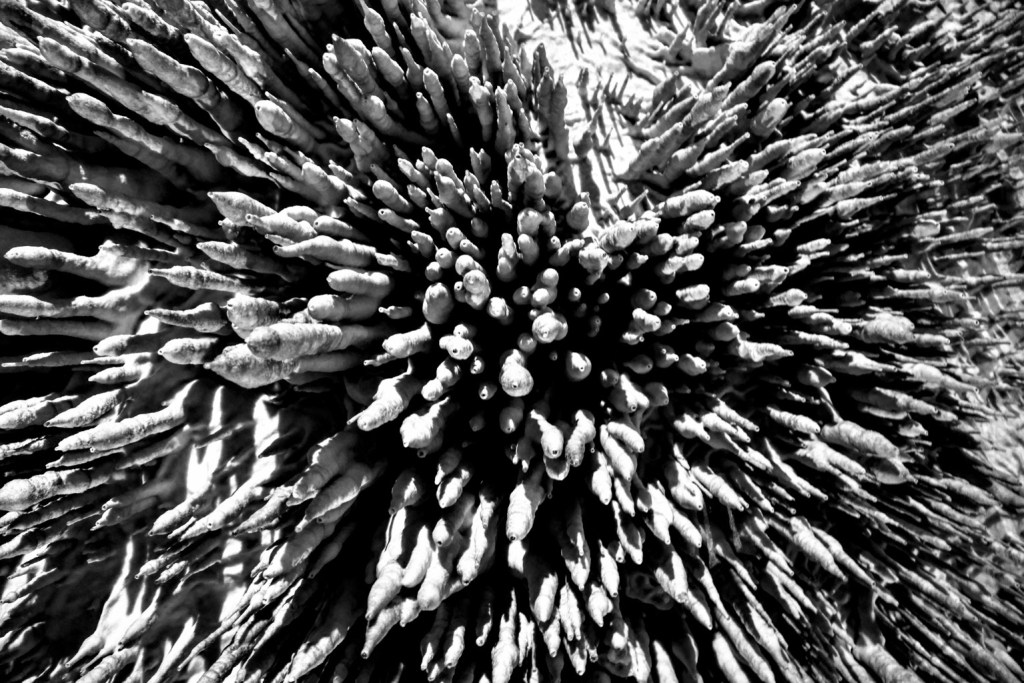
Leaving the next day, but with me feeling a bit more human, we took the longer route around the peninsular, and visited the Dragon’s Cave, an impressively preserved cave in the limestone/Karst rocks at the edge of the lake.
Monodendri, Greece
On our way south, we built in a few stops to keep the drives short and allow time for exploring. Few places were we more glad of doing this than Monodendri. Working our way south from Kastoria over more stunning mountain roads (this really has been the best driving of the trip so far), we descended one mountain range, only to ascend another. We first made our way to stop at the small stone-built town of Papingo! (it benefits from an exclamation mark). This is a beautiful little place, perched high up a winding road, repleat with little restaurants and tavernas. Unfortunately, by the time we’d booked our accommodation we couldn’t find availability here, so after a lovely lunch, we descended down the winding road, and back up another one to our stop for the night, Monodendri.
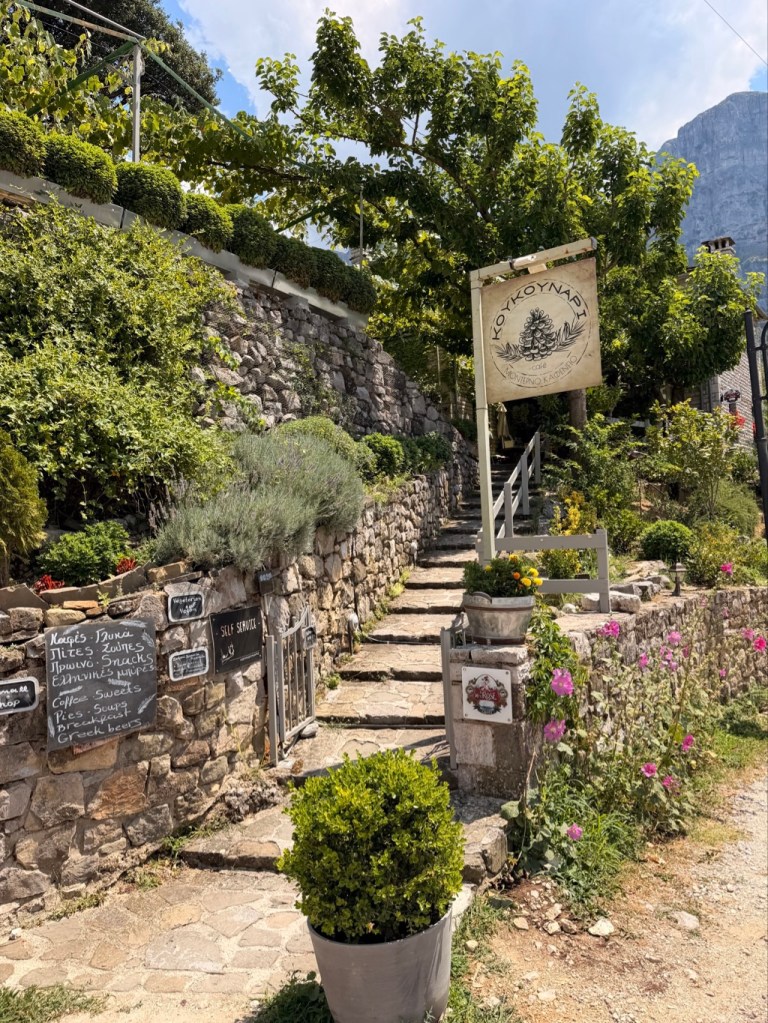
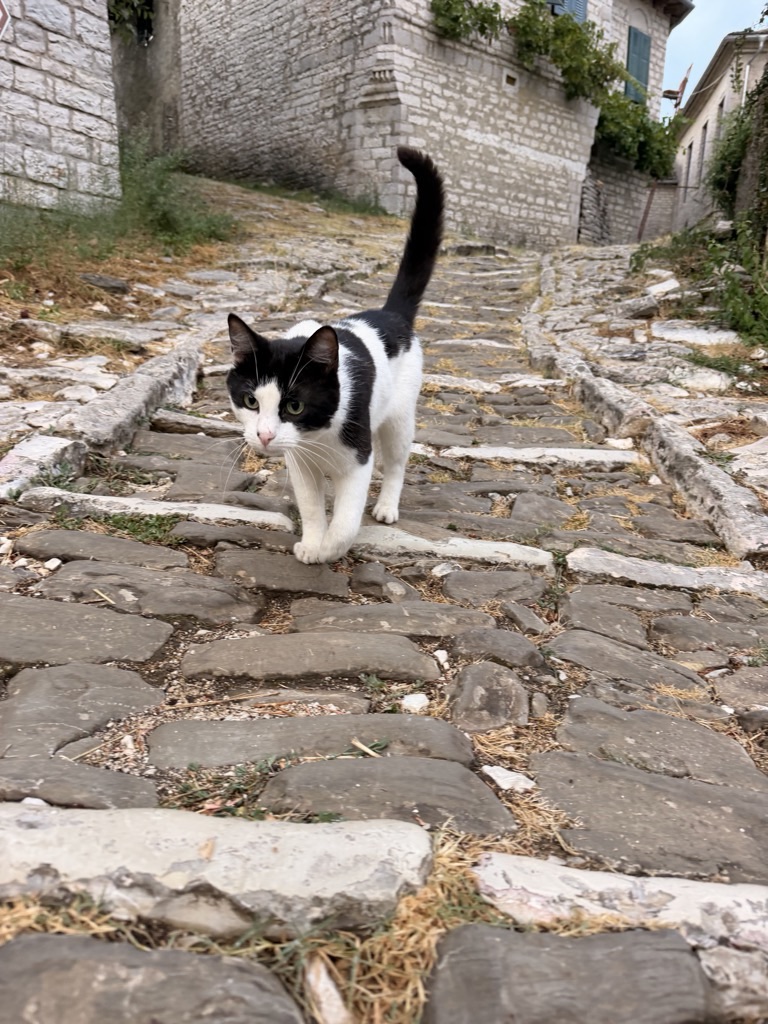
After a challenging drive to our hotel’s car park (up a ‘traditional’ road – read: terrible and only suitable for ATVs), we checked into our lovely property (the MounTrace, or Mount Grace Suites – they weren’t sure which) with a room and balcony overlooking the surrounding mountains. We ate at a local restaurant and retired to our room after a long day.
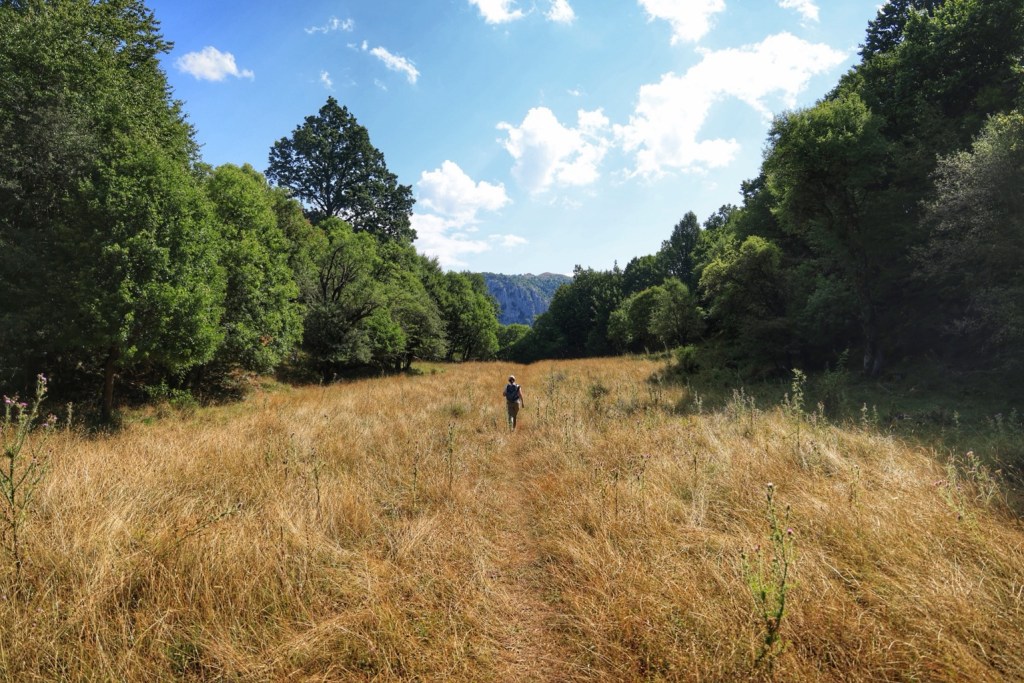
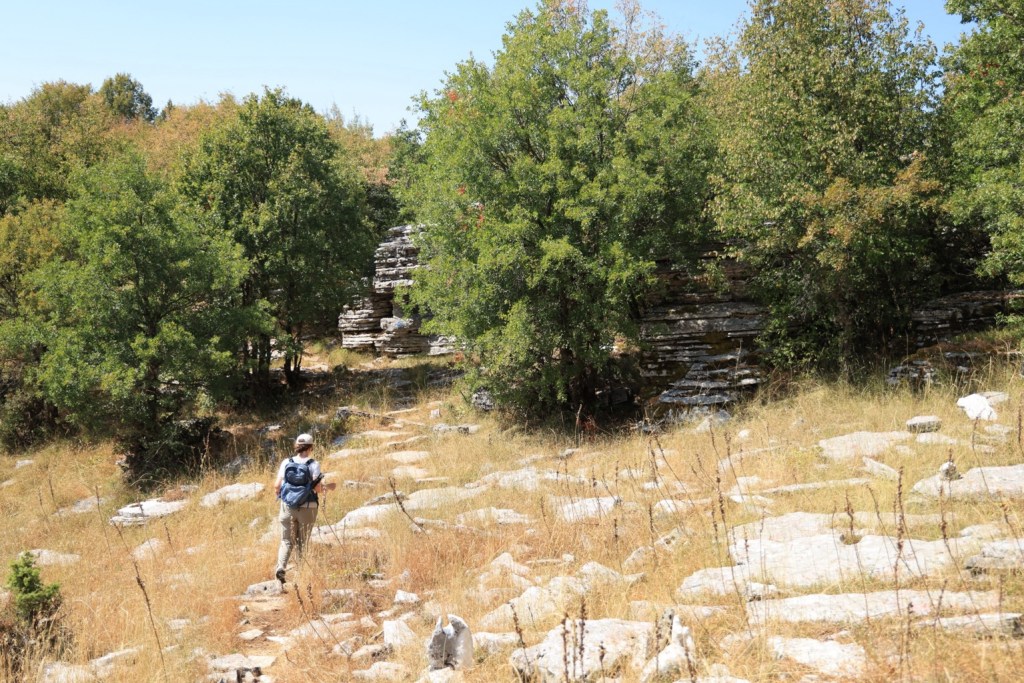
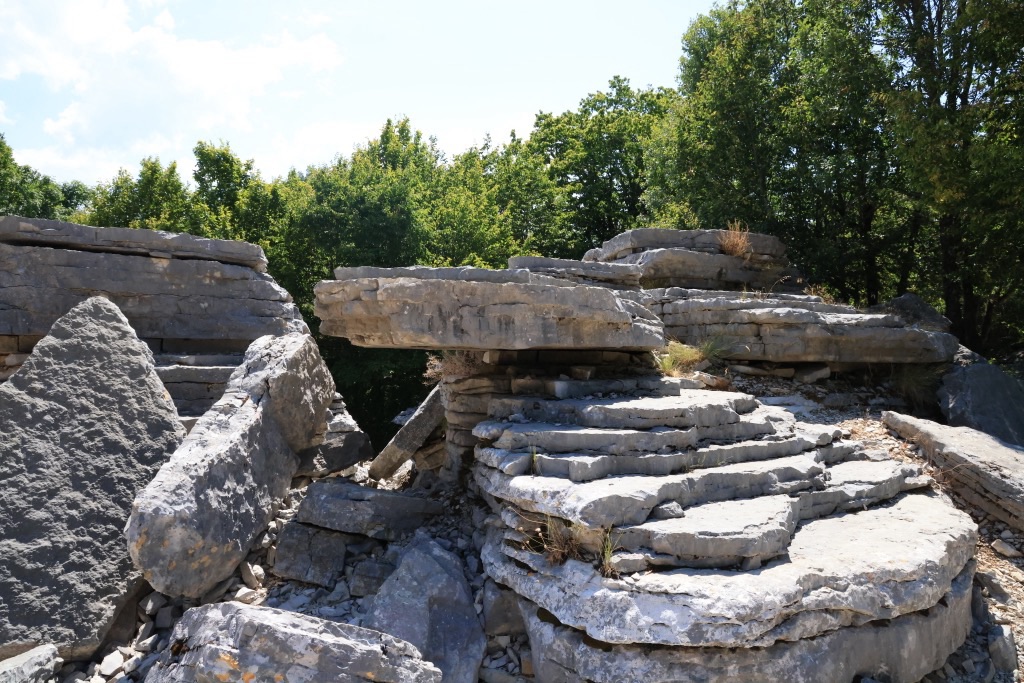
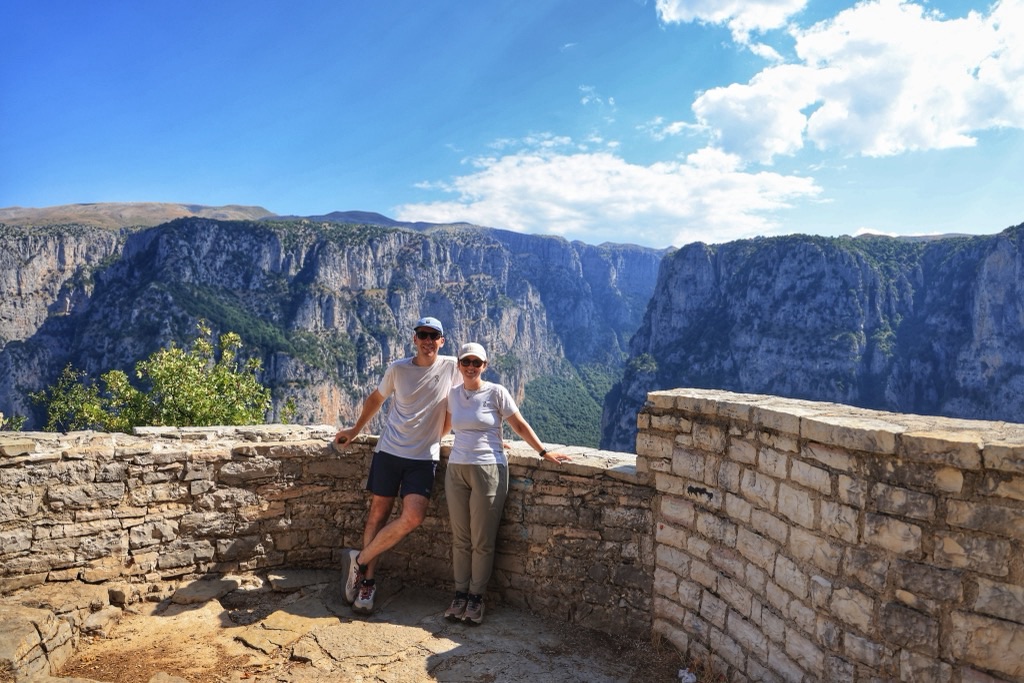
The next morning, we rose early, had a ridiculously good breakfast, checked out and leaving the car in the inaccessible car park, hiked up the mountainside, past a Stone Forest (Karst structures of many-layered slabs of rock, brilliant for building materials!), and up to the rim of the Vikos Gorge, the deepest and narrowest gorge in the world (the world record is the ratio, not the depth). It was a great hike. Once down and after a car park clothing-change, we sent off to Parga, our stop for the next two nights.
Parga, Greece
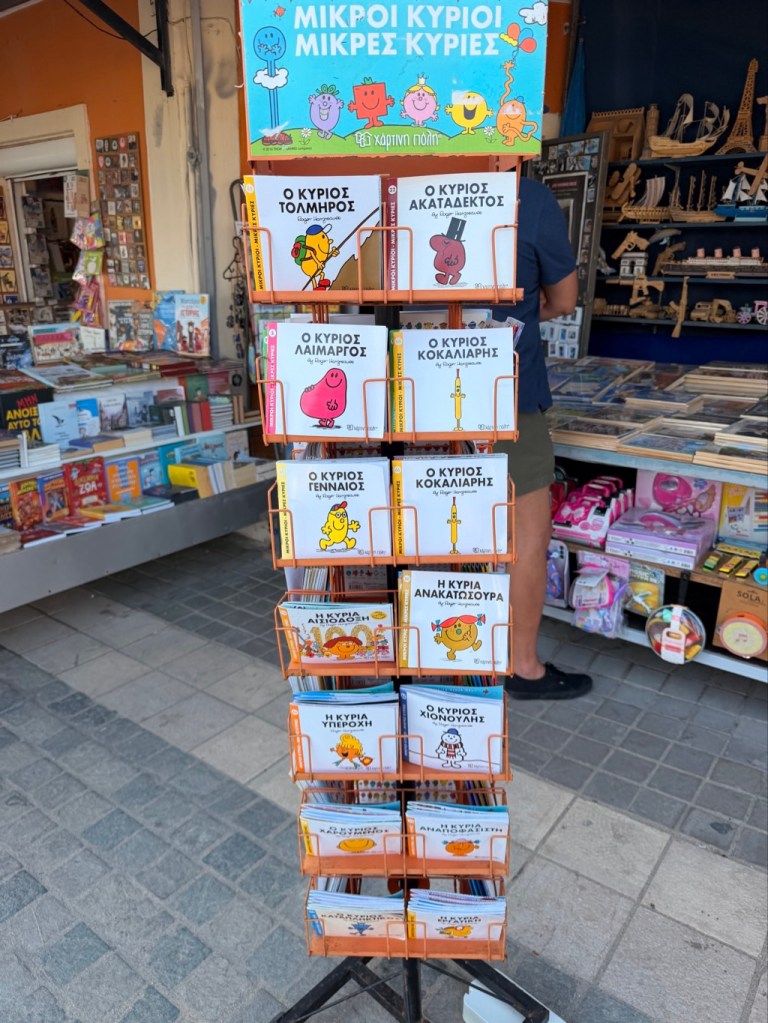
Parga is a seaside town on mainland Greece, on the shores of the Aegean Sea. It has a beautiful setting, wrapping around a sheltered bay, with a few islands accessible from the shore. Towering over the town at the top of a cliff is a ruined castle, which can be explored ‘at your own liability’. The town itself is every bit the bustling seaside resort, packed with cafes, tavernas, bars and restaurants. Tat shops, and souvenirs. It’s on a hillside, so there’s a lot of climbing to get down to the bay and back up to accomodation.
We were staying in what was described (and sold) as the Elia Suites Boutique Hotel. Not to be fussy, but it wasn’t a hotel. We spent a bit of driving-time debating what makes a hotel a hotel, but I’d contend that a portacabin with a part-time reception desk and a prefab set of units reminiscent of US Motels, does not a boutique hotel make. Nonetheless, it did have very good aircon, which helped as it was pretty toasty.
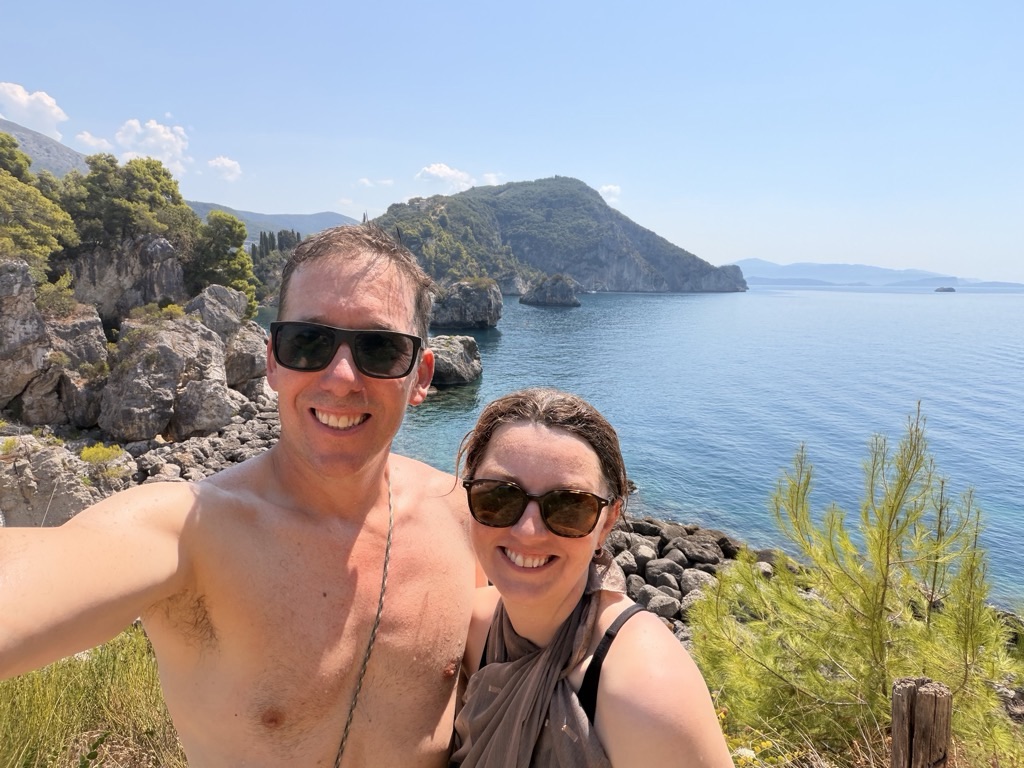
Parga was a nice wee place, and if a bit touristy for our taste (with nose-to-tail deckchairs on the packed little beach, with crowds mainlining sunshine), it was a nice stop for a couple of days. In our one full day there, we hiked up to the castle (where the ‘own liability’ point became clear – it’s not exactly structurally sound), then after a quick change back at the shipping container, we packed a phone, cash, towel and clothes in a dry bag, fashioned a strap, and after buying some urchin-proof water shoes, swam out to Panagia Island in the Parga bay. We explored the island, climbing up past an old church to the peak, then returned, before hiking over to another beach and hiring kayaks to scoot around the coast. A great day out in the hot sun, followed by a decent meal in one of the many restaurants.
The next day, we were leaving mainland Greece (by car & boat, not swimming), and heading to Kefalonia, next to Ithaca, to find Captain Correlli’s Mandolin and see what Homer was on about. More on that later.

