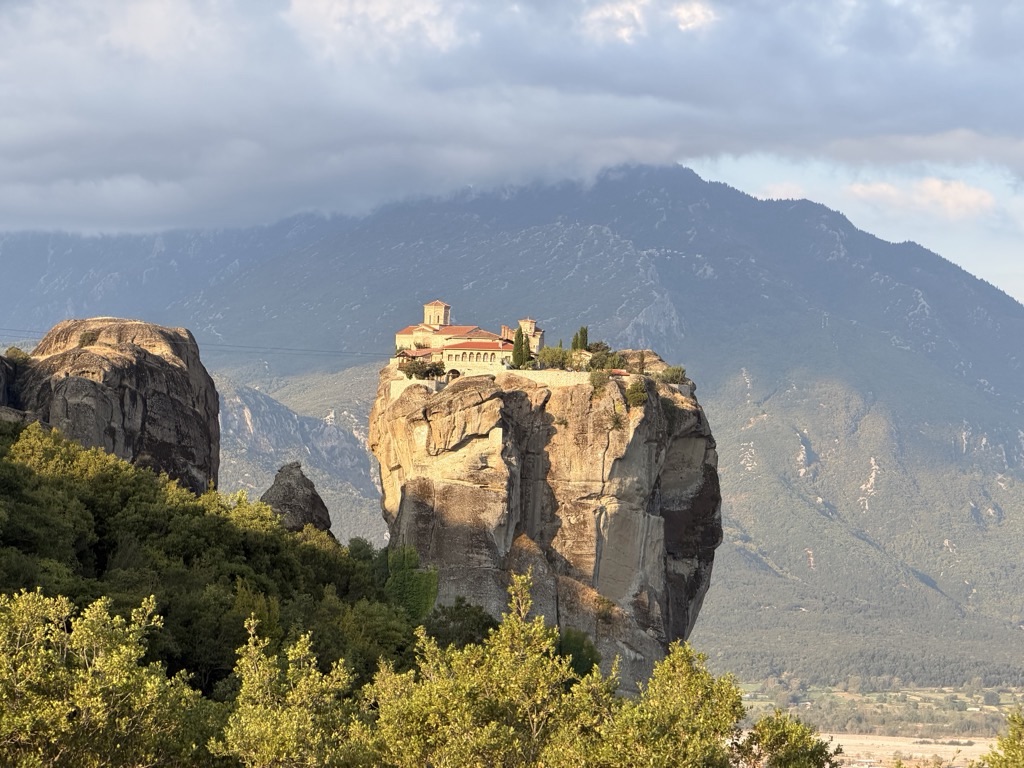

Kefalonia
We drove along the coast from Parga, down to the small port town of Astakos. After flailing around for a while looking for a ferry port, we accosted a Coastguard and were told that we were at the port, but to park somewhere else as the cars need room to get off. Turns out, this ferry port is a sea wall, which joins a single lane road with no parking and no queueing system. It was pretty hilarious – I could not have worked there; it was pure chaos.
We once we’d jostled our way onto the ferry, we made the 2.5hr crossing, arriving in Sami, and after a 15 minute drive along the coast, we were at our lodgings, the Odyssey Boutique Hotel in Agia Effimia. This is a small harbour town, slightly off the heavily beaten tourist track, but popular with yachts docking alongside the cafe and restaurant-strewn sea front.
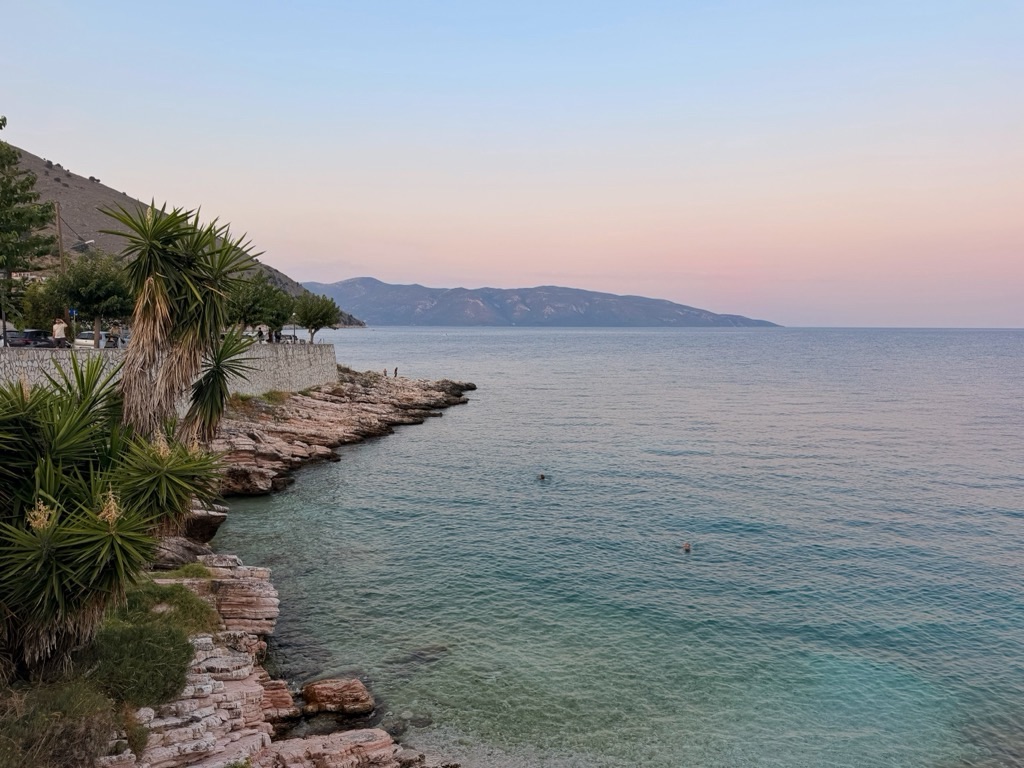
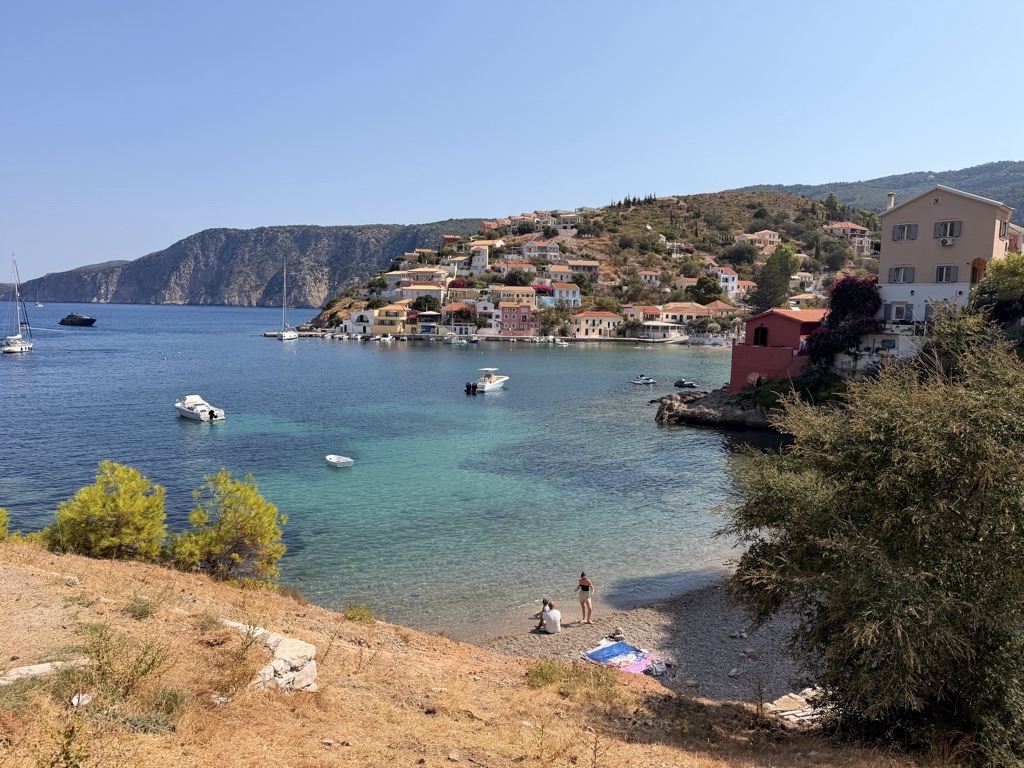
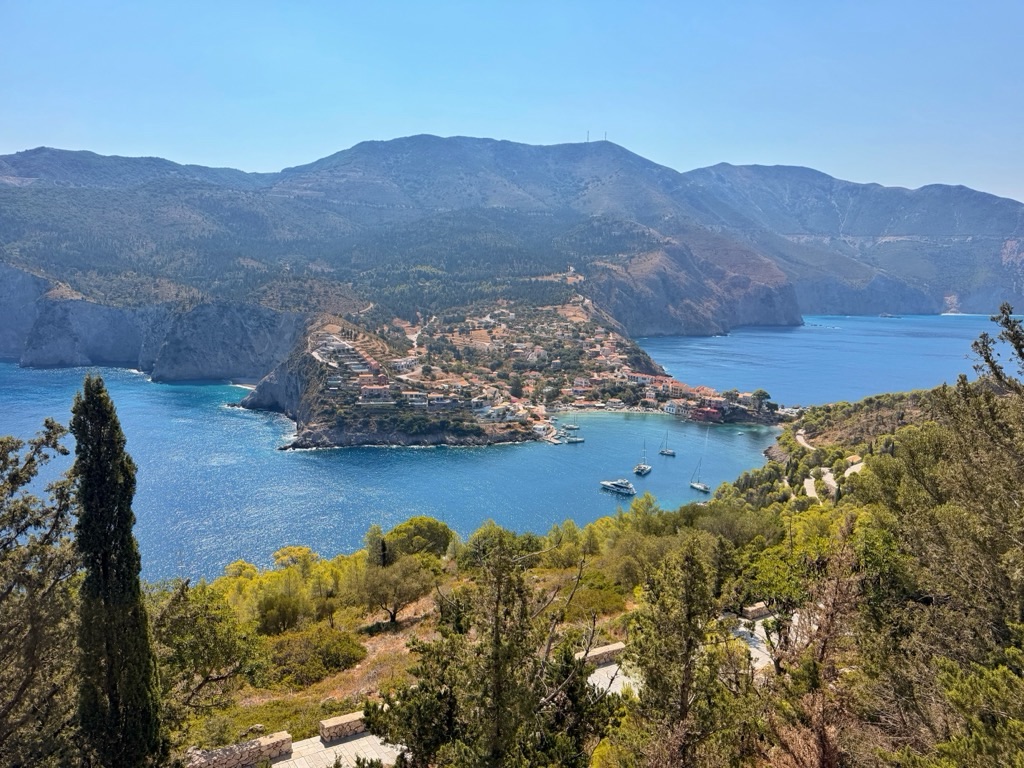
We spent a relaxing* 6 nights on Kefalonia. One day, we hired a boat and pootled along the coast, swimming in the secluded bays. Another, we drove to Assos and climbed up to the Venetian Castle of Assos, high above the pretty little town. We visited Fiskardo, the more upmarket but-very-busy tourist hotspot in the north of the island, and we did a lot of swimming in the lovely pool at our hotel. We also had time to read a lot; Shona had ploughed through Captain Corelli’s Mandolin, and I’ve consumed a swathe of Kindle books.
*One night, Shona decided to attack the bed frame in our hotel, with her toe. The bed frame won, and Shona was in a lot of pain with a very odd looking toe (it bent entirely the wrong way). Being about midnight, there was nothing we could really do – local clinics wouldn’t help and the main hospital was unlikely to have an overnight radiologist.
We drove over to the capital, Argostoli, the next morning to visit the General Hospital, which was a literal building site. After a couple of hours queuing, we got seen and an X-ray taken of the offending toe. Another 2.5hrs of waiting for orthopaedics was pure comedy. The locals use every trick in the book to try and queue-jump, and some succeed. We variously saw: Full on wailing/tears (fake – failed); charm (1 of 2 attempts successful), pleading (about 50% successful), rushing the orthopaedic surgery as soon as the door opened (saw this about 8 times, of which 3 were successful). The poor nurse trying to manage all this was just about the most resilient person I’ve ever met.
Anyway, the upshot was, Shona eventually got her toe re-set (the jaunty angle being a pretty big fracture in the middle bone), and she hobbled out with a simple splint to the adjoining toe. A relief as we didn’t want any boot or stookie (plastercast for the non-Scottish reader). This does however kill our 20k+ steps a day that we’ve been doing while travelling.
All in, and toes aside, Kefalonia was a lovely break. The hotel was great (the staff were wonderful), the island was relaxed, with lovely roads. The sea was clear and clean and great to swim in, and it was nice being somewhere amongst locals; again, few British voices heard in Agia Effimia. Also, as my younger sister loves tells me on repeat… the light in Greece is something else.
Meteora
On 13th August, we left Kefalonia (in a much more ordered fashion, with actual queuing at the ferry terminal), sailed back to Astakos, then drove a couple of hours back north and inland to the magic of Meteora.
I’ve been wanting to visit this UNESCO World Heritage destination for around 10 years. It landed on my bucket list after I saw photos of the towering cliffs, adorned with ancient Monestaries in a travel guide. It doesn’t seem that well known, and maybe Greece wants to keep it this way – it abutts relatively smalls towns and the infrastructure around the sites is excellent, but not made for large volumes of traffic.
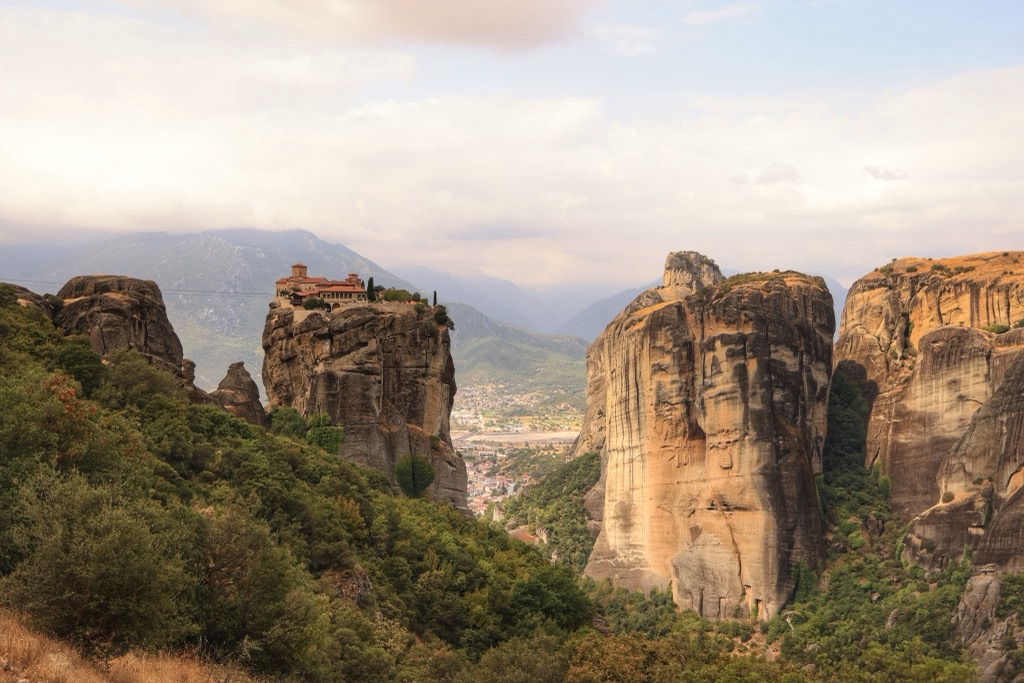
Without hyperbole, this is an awe-inspiring Wonder of the World. It is a staggeringly beautiful and impressive place that (in our view) lives alongside Machu Picchu or the Tiger’s Nest Monastery.
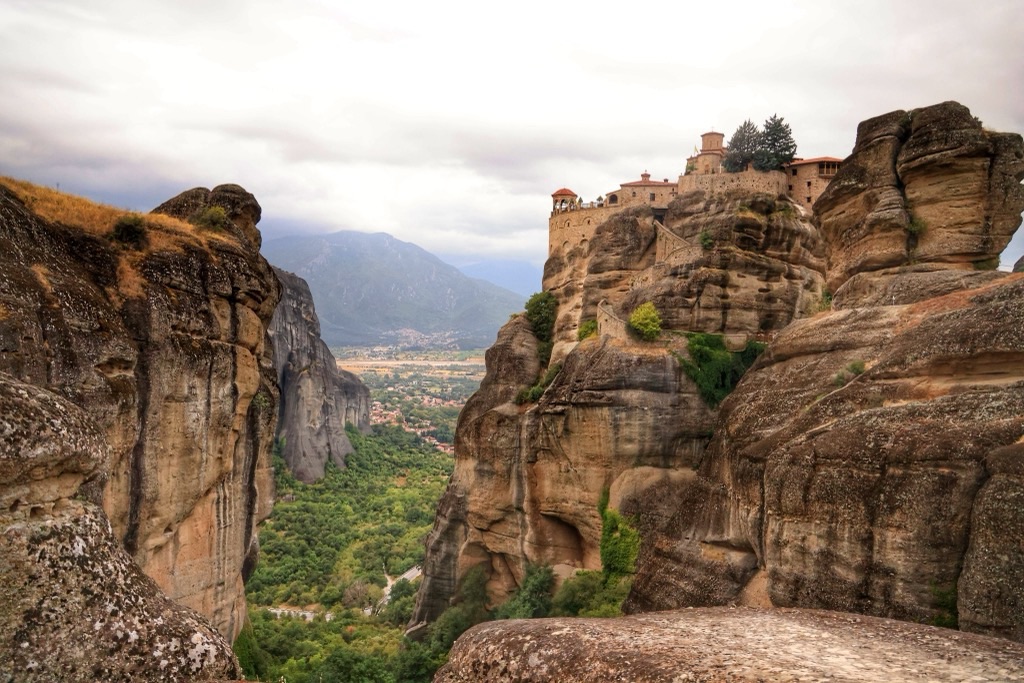
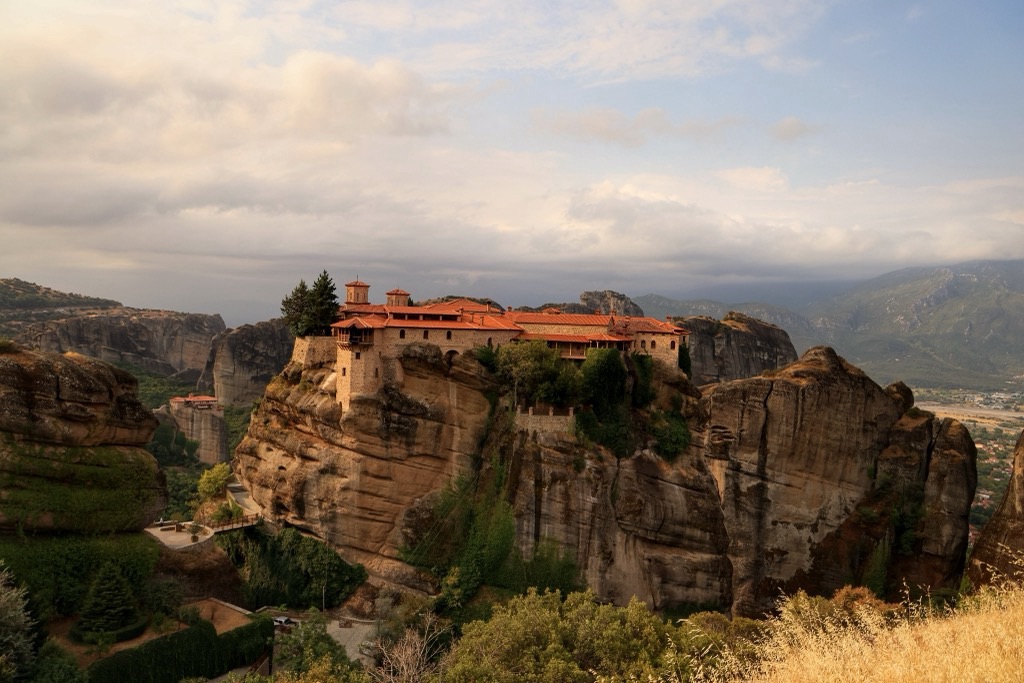
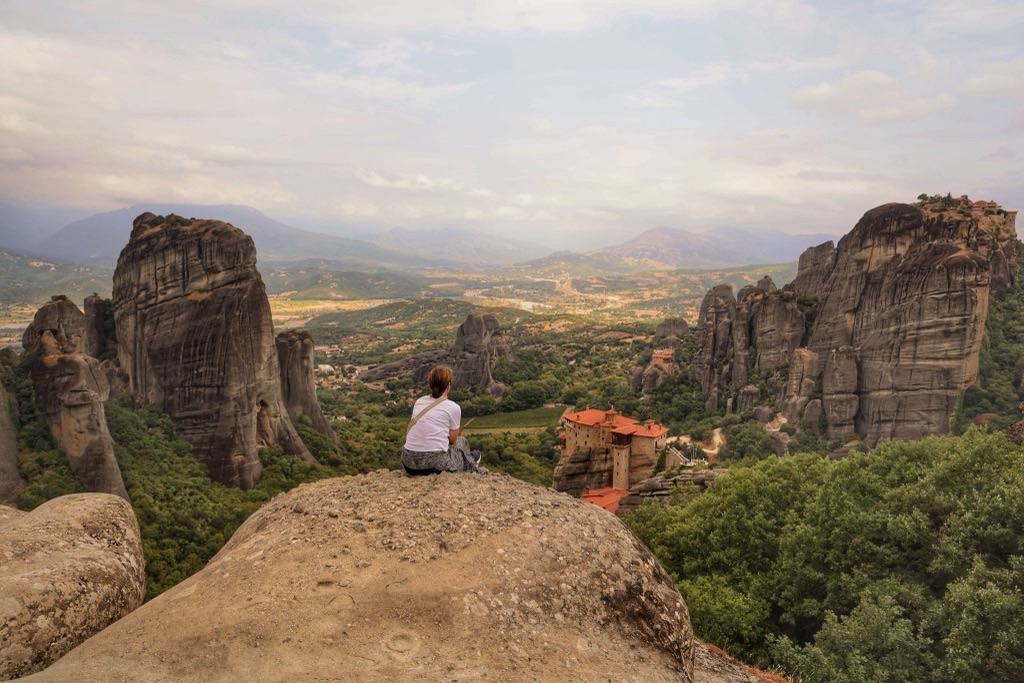
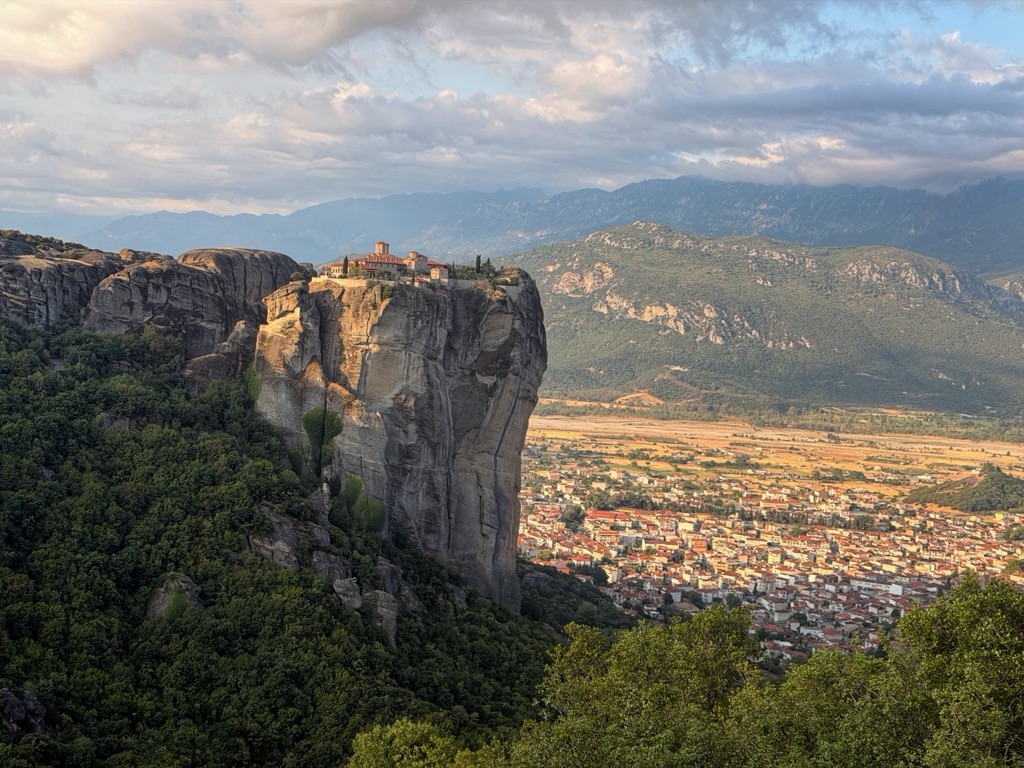
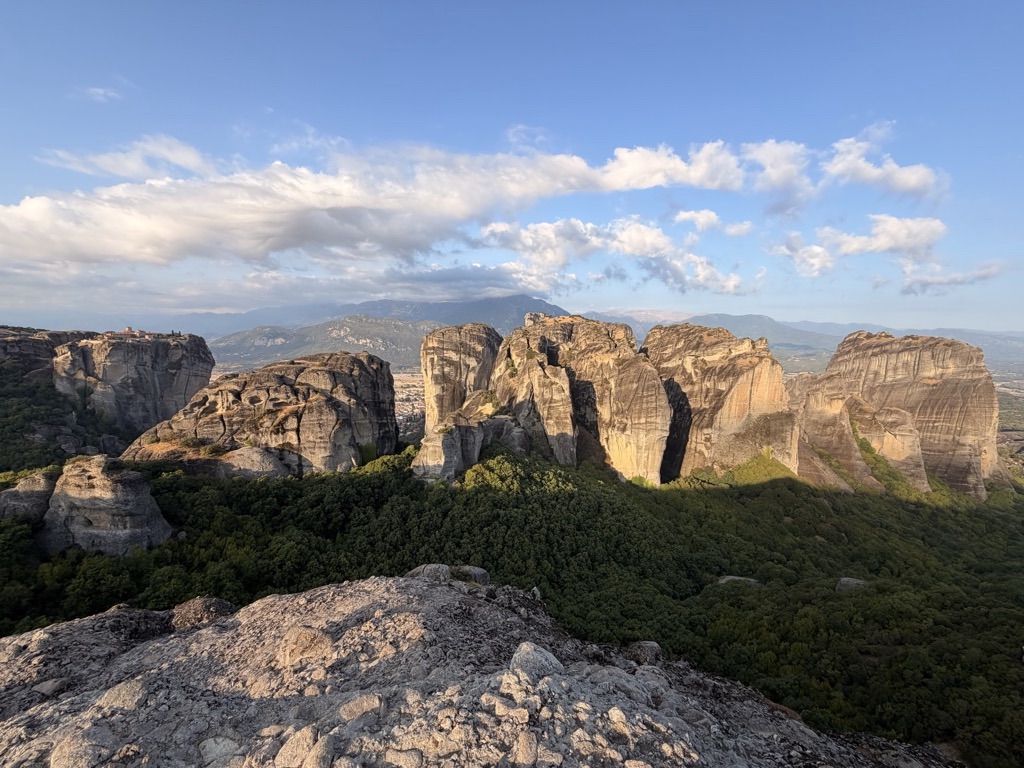
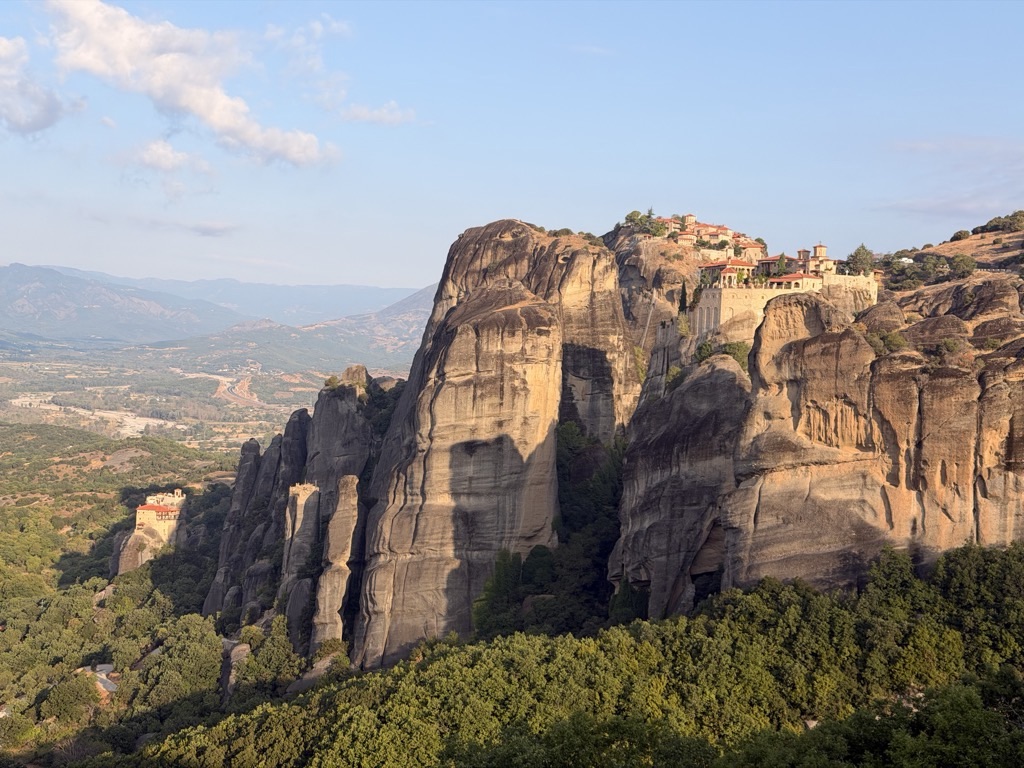
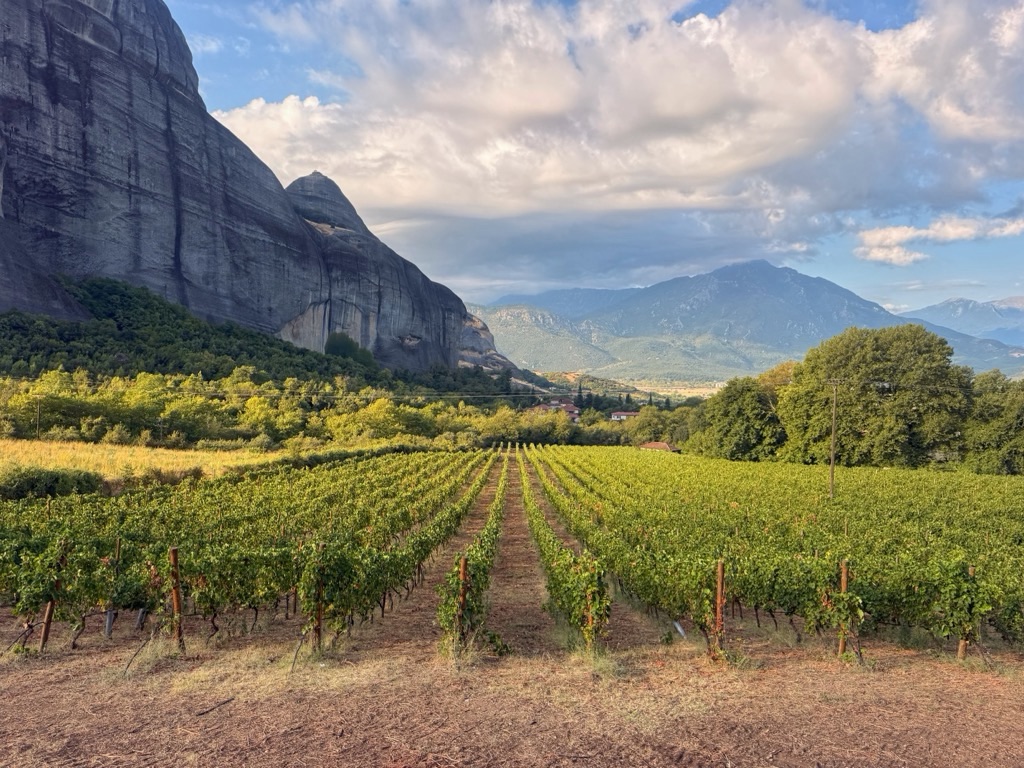
We stayed in Kalabaki, a small local town at the edge of a vast plain stretching across the landscape and in the foothills of the enormous sandstone cliffs of Meteora. At 60 million years old, the Meteora cliffs are the remnants of an ancient mountain, jutting out of the landscape in towering pillars, eroded over aeons by wind and rain. The sides of the cliffs are dotted with natural caves, which were first inhabited by paleolithic cave dwellers, over 100,000 years ago. In the 9th century, christian aescetic ‘Hermit Monks’ moved into the caves for peace and prayer, and over the following centuries, established monasteries in the cliffs. By the 15th Century, 24 monasteries adorned these giant clifftops, only accessible by rope and net.
Today, only 6 monasteries remain and are now connected by a road which snakes into the hills, with steps carved in the cliffs taking visitors up to the monasteries themselves.
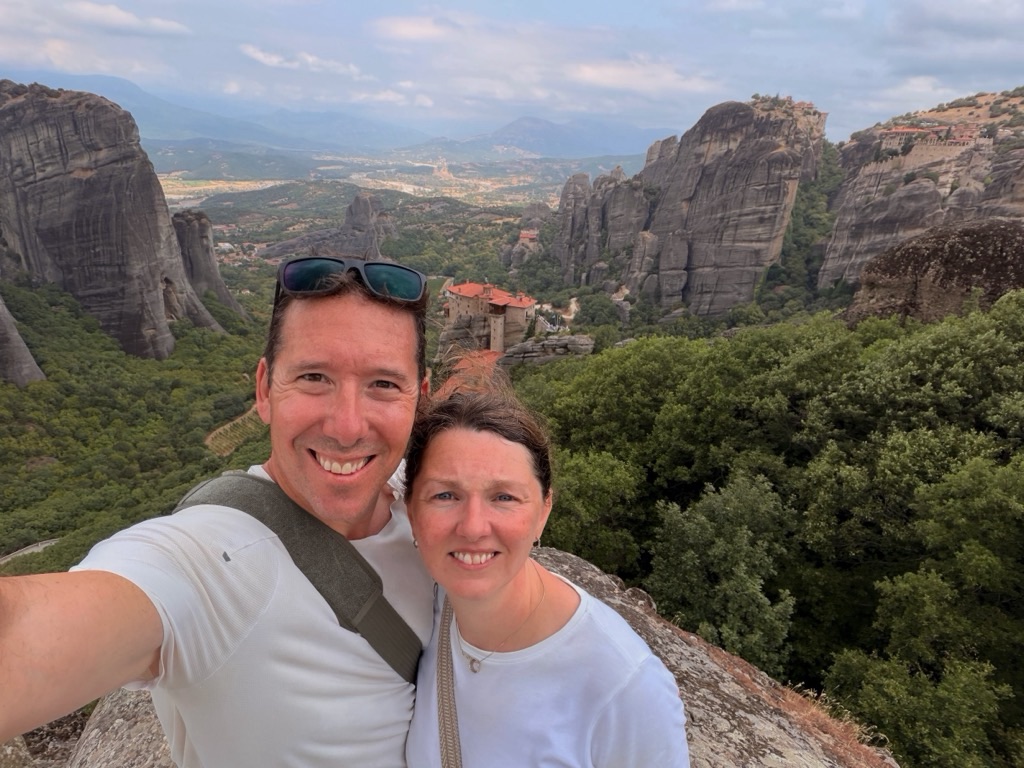
We visited 3 monasteries and the one nunnery (much smaller), which were all beautiful and serene places. However, Meteora’s impact was most certainly in the aesthetic of the cliffs soaring above the pan-flat plains, capped with intricate and evocative buildings.
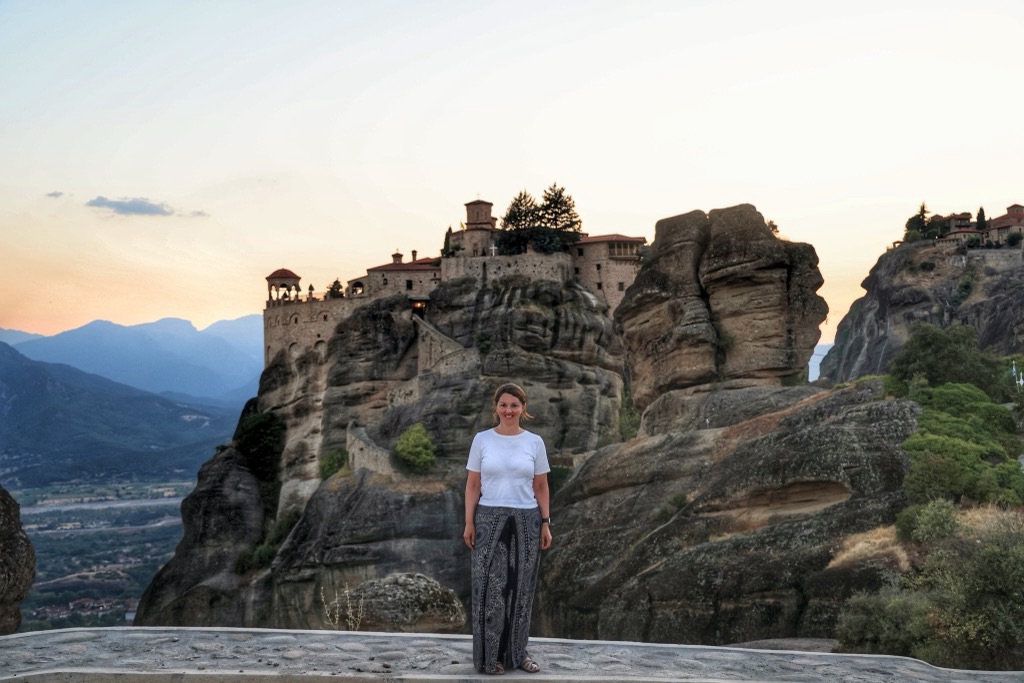
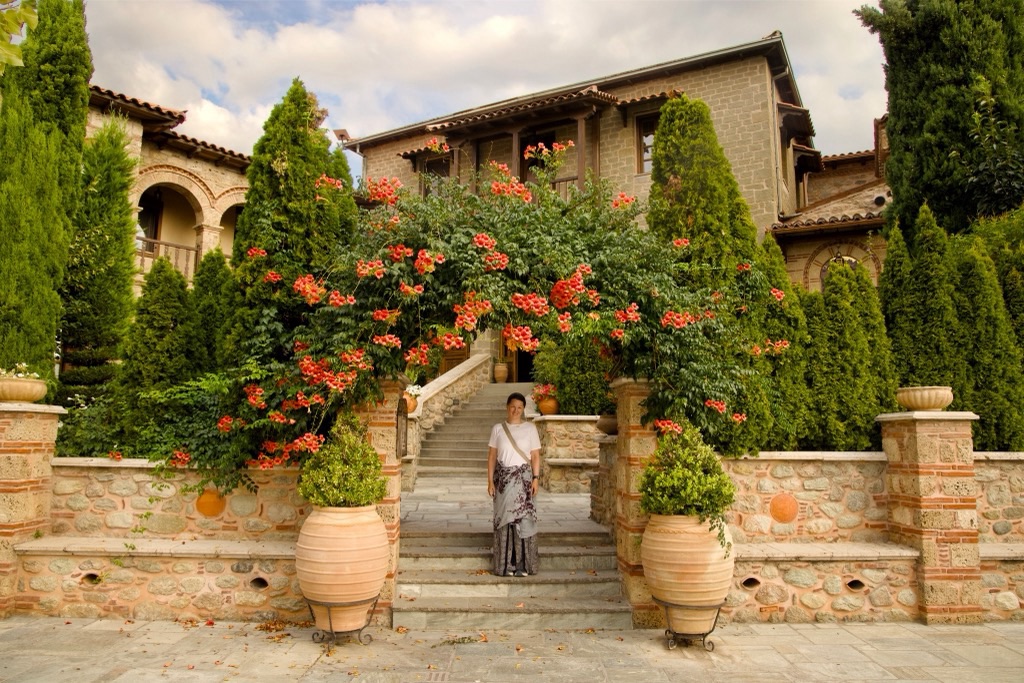
We spent two nights here in a stunning boutique hotel called Storyteller’s House, heading up to catch sunset the evening we arrived, then a day exploring the monasteries, before a final visit on foot by me on the final morning, taking a long run around the looping road that carves its way up into the hills to connect the sites.
Lichotoro / Mount Olympus
I’ve long-loved the tales of the Greek Gods. They are enormously rich in their depth, yet manage to illuminate the frailty of the human condition through both the fables and the gods themselves, each devoted to a particular emotion, trait or desire. I’ve always found these stories so much more inventive and attractive than monotheism which boringly demands that you worship only one God.
I also rather like the reward system of the Greek Gods, where prayers, offerings and sacrifices were part of a reciprocal, graceful relationship. The Gods enjoyed being honoured, and bestowed favours on the people as part of the contract. Prayers were practical tools, helping in day to day life. Do ut des (I give so that you might give). Again, unlike e.g. the Christian God who is perfection already and you spend your life trying to be more like [Him] but [He] doesn’t gain direct sustenance from your prayers.
Anyway, all this rambling is really to say that if we could visit, I wanted to see Mount-bloody-Olympus, the home of the most excellent Greek Gods. So we did.
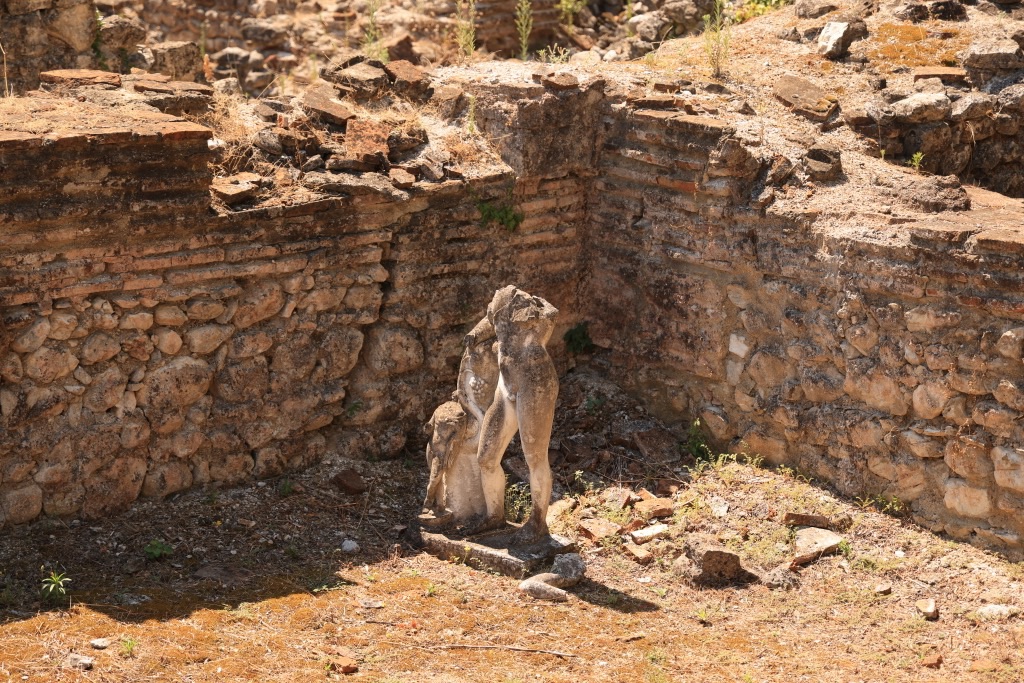
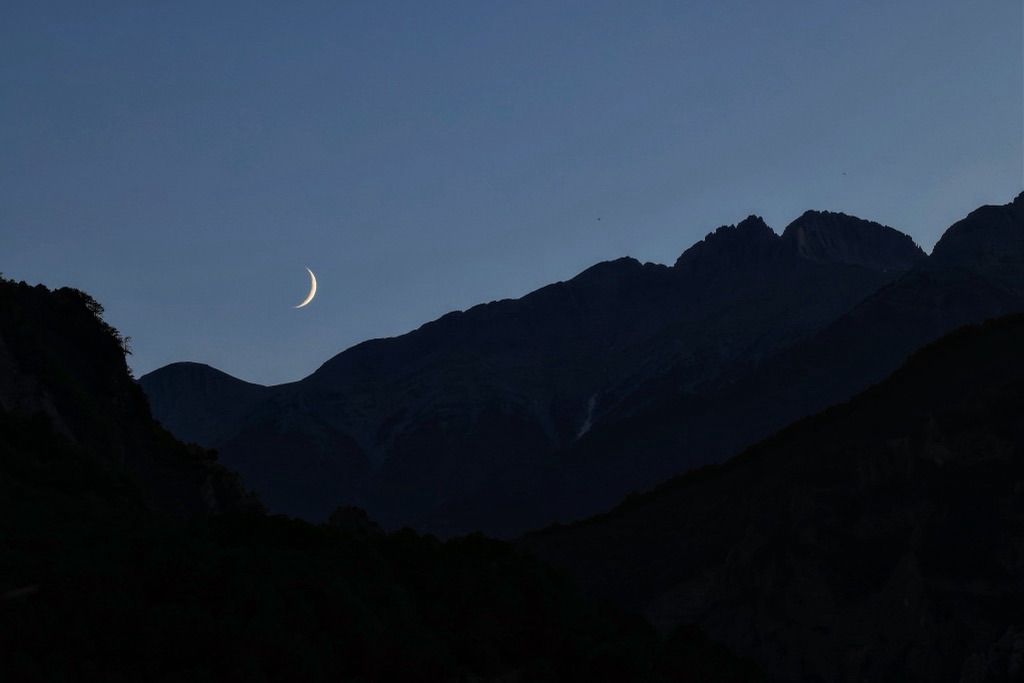
After a brief stop for a [painful for some] walk around the Dion Archeological site, we arrived in Lichotoro, at the base of the mountain. While we weren’t going to have time (or working toes) to climb to the top, we took a drive up the winding road to a viewpoint, looking up into the realm of the Gods. The vast gorge carving the mountain on the way up, the wide, fertile plains below and the view of the sparkling Aegean beyond… it’s easy to see why the Greeks assigned this the earthly home of their deities.
Today, we left for Bulgaria, our 17th country on this trip, and – while we’re talking stats – the 80th country we have visited.

